





























Learn how Australian e-commerce sellers can run a profitable AliExpress dropshipping business–from product research and supplier selection to managing multi-currency payments
Key takeaways
- Marketplace sellers in Australia, New Zealand and other countries can use AliExpress to dropship products with no minimum order quantity, ordering one item at a time as customer orders come in.
- Ordering the product yourself first gives you first-hand knowledge of shipping times, packaging and product quality, so you can spot issues before customers do.
- Cross-border dropshipping involves three sets of payments: paying AliExpress suppliers in CNH or USD, paying freight forwarders in their preferred currency, and collecting customer payments (or marketplace payouts) in the currency each channel pays out in.
- The World Account from WorldFirst handles all three from a single account. Pay AliExpress suppliers with the World Card, collect payments from Amazon, Shopify and Etsy in the marketplace’s local currency through local receiving accounts in 20+ currencies
![How to set up your AliExpress dropshipping business in Australia [2026]](https://mdn.marmot-cloud.com/worldfirst/sites/8/2026/10/20261001222121715.webp)
AliExpress is one of the most accessible platforms for dropshipping because there’s no minimum order quantity, suppliers are experienced with international shipping, and the range of products spans virtually every consumer category. Whether you’re selling through your own Shopify store, listing on Amazon or eBay, or building a niche website, AliExpress can supply the products.
The operational challenge of running an AliExpress dropshipping business from Australia is managing the money flow. You’re paying suppliers in China (usually in CNH or USD), paying international freight forwarders where applicable, and collecting payments from customers or marketplaces in whichever currency each channel operates in. Converting AUD to CNH to pay a supplier, then converting USD from Amazon back to AUD as sales revenue, adds up quickly across a year of trading.
WorldFirst is a payments provider that helps Australian businesses manage this full cross-border workflow from a single account. Through the World Account, you can pay AliExpress suppliers using the World Card, collect customer payments and marketplace payouts in the original currency through local receiving accounts in 20+ currencies, and lock in exchange rates on future conversions with forward contracts.
This guide covers how to set up and run an AliExpress dropshipping business, including product research, supplier selection, marketplace strategy and how to structure the payments side so it doesn’t quietly drain margin.
What is AliExpress?
AliExpress is a global retail marketplace based in China. It was founded in 2010 by Alibaba, the Chinese multinational company that also owns Alibaba.com, Tmall, Taobao and various other subsidiaries. Businesses located in China list their products on AliExpress to reach a global customer base.
While customers can directly buy products from AliExpress, marketplace sellers in Australia and other countries can use AliExpress to dropship products.
How does AliExpress dropshipping work?
AliExpress dropshipping is a retail fulfillment method where you don’t keep an inventory of the products you sell. When a customer places an order, you purchase the product from an AliExpress dropshipper who is then responsible for packing and shipping the product directly to the customer.
You act as the main storefront that customers can visit and place orders from. You charge the customer and the AliExpress dropshipper charges you.
Your profit = What you charge the customer
- What the dropshipper charges you
- Online dropshipping store maintenance costs (Marketplace listing fees, website hosting fees, marketing fees, currency conversion costs)
If you are listing dropshipped products on marketplaces, you must be aware of each marketplace’s dropshipping rules before you list your products.
For instance, this is Amazon Australia’s dropshipping policy:
To become a dropshipper selling on Amazon AU, you need to:
- Be the seller of record of your products
- Identify yourself as the seller of your products on all packing slips and other information included or provided in connection with them
- Be responsible for accepting and processing customer returns of your products
- Comply with all other terms of your seller agreement and applicable Amazon policies
→ Alternatively, you can also consider dropshipping from other B2B marketplaces in China like 1688 and Alibaba. Take a look at our 1688 vs AliExpress and Alibaba vs AliExpress comparison.
Pros and cons of AliExpress dropshipping
Some of the main advantages of dropshipping from AliExpress for your online business include:
Cost-effective: Many AliExpress sellers are wholesalers or distributors, offering products at cost-effective prices. Dropshipping also involves a small upfront expenditure since you don’t need to order bulk products in advance and maintain inventory.
Wide range of products: You can easily find unique products on AliExpress that align with the needs of your target customers. Trending products appear quickly on AliExpress due to China’s streamlined manufacturing sector. If you have recently seen viral products on TikTok or Instagram, there is a big chance you will find them on AliExpress.
Experienced and reliable dropshipping suppliers: AliExpress sellers have experience in handling global dropshipping. They are already aware of the international shipping guidelines and dropshipping policies of different marketplaces. Of course, you need to ensure you are partnering with reliable dropshipping suppliers that have previous experience and positive reviews on AliExpress.
No minimum order requirements: There is no MOQ for dropshipping from AliExpress. You can even place an order for a single product to get dropshipped to your customers directly.
There can also be some drawbacks of dropshipping from AliExpress
Longer shipping time: Shipping from China can take 5-15 days, depending on your customers’ locations. You can choose a faster shipping option, but it can be more expensive and decrease your margins.
Language barrier: Since most product suppliers on AliExpress are based in China, they may only have a basic understanding of English which could lead to communication issues. Although, this can be easily rectified by hiring an interpreter or using a translator.
Currency conversion costs: When you have a dropshipping agent in China and customers across multiple countries, currency conversion costs can quickly stack up and affect your profit margins.
How to dropship with AliExpress: Step-by-step guide
1. Find products to dropship
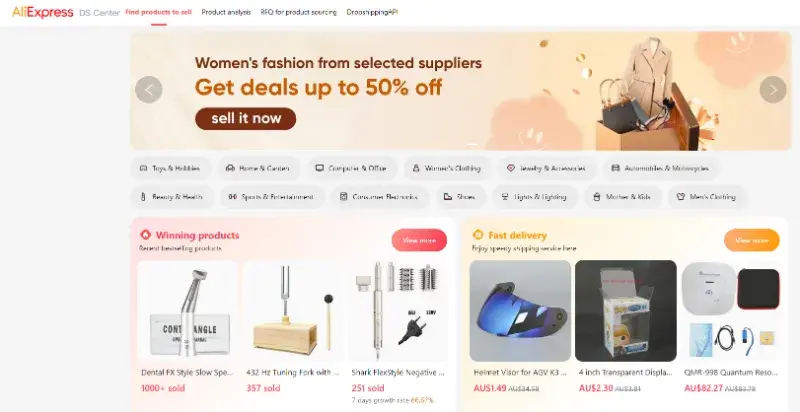
AliExpress has a dedicated section where you can find products available for dropshipping.
Start by looking for products that are high in demand. You can check how many orders have been placed for those products recently or sort the products based on their price and number of sales
Other than that, here are a few other platforms that can help you find top selling products to dropship:
- Trend Hunter: Trend Hunter uses data, artificial intelligence and tips from everyday consumers to highlight the latest consumer insights and market opportunities
- Reddit: Reddit helps you discover specific topics within niche communities. These topics can confirm that the problem you aim to solve is actually relevant and important
- BuzzSumo: BuzzSumo can help you identify trending topics on social media platforms such as X and Meta
- Jungle Scout: Jungle Scout gives insights into trending items on marketplaces such as Amazon. There are also data visualisations on historical product sales, rankings and reviews based on the product you’re looking to sell
- Tiktok: You can check the trending reels to find out which products are the most popular on social media
2. Find suppliers (And negotiate prices)
Now, the next step is to find dropshipping suppliers. After you have found the products you want to dropship, open the product page to learn about the supplier.
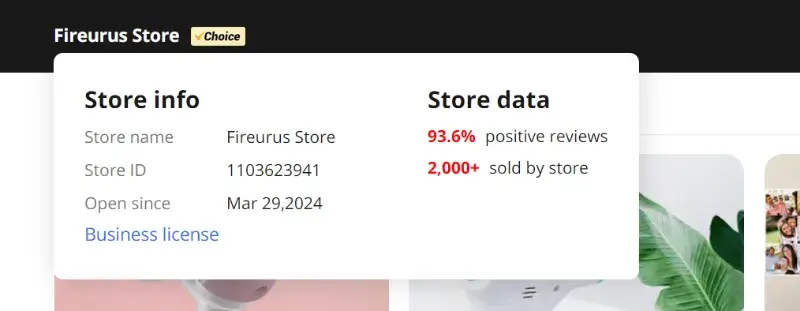
Oftentimes, you will find multiple suppliers selling the same product.
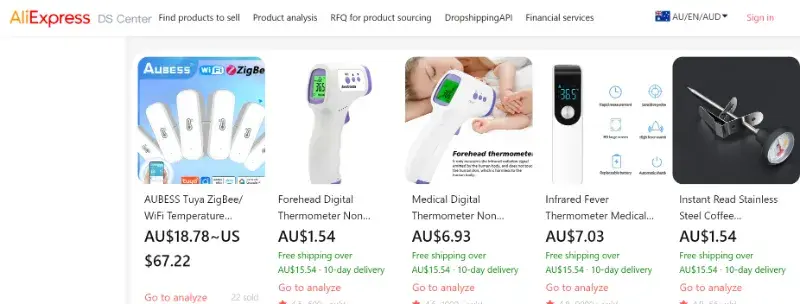
While pricing is not the only factor, it is an important factor to consider when dropshipping because your margins are already very low.
Go to Amazon to check how the other sellers are pricing the same product. To remain competitive, you will have to price your product within the same range.
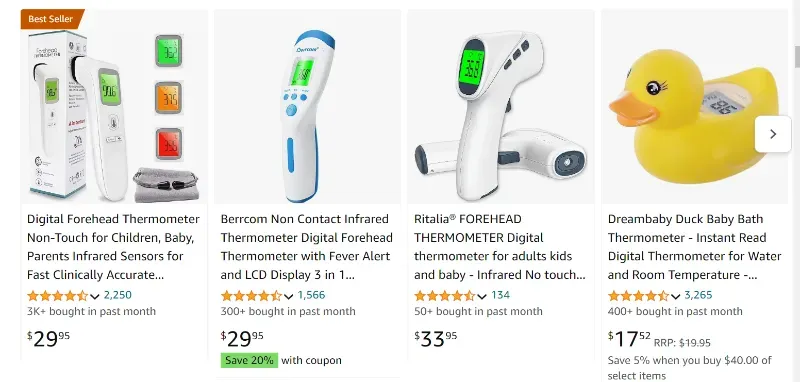
The pricing offered by AliExpress suppliers should be low enough to give you a healthy profit margin (Make sure to factor in other marketing expenses like listing fees and advertising fees). You can also negotiate with suppliers to get the right price for products.
But remember: Just because a supplier offers products at a lower price doesn’t mean they can provide good quality.
Look through the reviews for the product and supplier. You can also buy a sample product to check the quality yourself before you finalise the supplier.
3. Connect your online store to AliExpress
You can use your own website, platforms like Shopify, BigCommerce, and Wix, or plugins like Woocommerce that offer dropshipping integration options.
By integrating your online store with your AliExpress account, you can sync product details and automatically send orders from the store to your AliExpress supplier. Once the products are shipped, you can also share the shipping details with your customers.
If you are listing products on a marketplace like Amazon or eBay, you will have to handle everything manually.
→ Take a look at how to setup your Shopify store as a new seller
4. Go live and market your venture
Just going live with your online store is not enough. You need to market your products constantly to increase sales.
Many marketplace sellers drive traffic with a combination of paid and organic marketing tactics.
Paid channels include:
- Pay-per-click (PPC) advertising like Google AdWords
- Paid social media adverts
- Affiliate marketing
- Influencer marketing
Organic marketing strategies include:
- SEO website optimisation
- SEO-enhanced articles
- SEO-enhanced blog posts
- Word of mouth
5. Convert site sales into AliExpress orders
If you don’t use a connected app for dropshipping, you’ll need to monitor orders as they come in and create AliExpress orders manually. In principle, this is a simple process:
- A customer orders and pays for a product on your website
- You visit AliExpress and order the product at the wholesale price
- At checkout, you enter the customer’s details in the shipping fields
- The AliExpress merchant sends the product directly to your customer
6. Monitor site and sales performance
Most e-commerce platforms let you track site visits, sales and other stats via your dashboard. You can also use tools like SEMrush and Google Analytics to keep tabs on key performance indicators (KPIs). Track your sales over time and adjust the AliExpress-sourced products you offer to take advantage of seasonal and consumer trends.
Choosing the best AliExpress dropshipping products to sell
When deciding on the best product to source from AliExpress, it’s worth checking through their product categories. Once you’ve chosen your category and the product you want to resell from AliExpress, there are a few points you’ll need to consider:
Branded products: As a dropshipper and reseller, you should not sell products with any brands and logos to avoid infringing on another company’s intellectual property – unless you’re looking to be a licensed reseller. However, being a licensed reseller will impact your margins and overall profitability.
ePacket delivery: Third-party logistics providers can help support faster shipping from local manufacturers in China and Hong Kong to your customers. This is important to consider when choosing a seller on AliExpress, as some sellers offer ePacket shipping and others don’t. It’s best to pick a seller who does, so your products can be shipped more quickly to customers in the US and Europe with local distributors such as UPS, Canada Post and Royal Mail.
Ranking and sales: Pick products that have 4.5-star ratings or higher and choose from sellers who have positive customer reviews. For more insights into the seller, use third-party tools such as AliExpress Seller Check. Additionally, you’ll want to check the number of sales the seller has made. You could also specifically look for top Aliexpress suppliers. If the seller has sold to many other customers, you’ll know that there’s demand for their product and possibly repeat orders.
Difference in price: Price will always determine what your overall profit margin will be. When looking at a product on AliExpress, check how much the seller has it listed for. Then cross-check the same product on marketplaces such as Amazon. You’ll then be able to determine the average sale price of the product and the overall profit margin you may receive when you start to sell.
Product details: Order the product yourself so you have first-hand knowledge of the customer experience. You’ll be able to see shipping times, whether the product is high quality, how it’s packaged and how to use it. This will help you understand any issues if customers have negative feedback later. You can also ask the seller for additional information before you place an order with them.
Business bank account: On AliExpress, you can choose to purchase products in a selection of specific currencies, including Dollars, Pounds and Euros. On the site, you can configure the currency you want to make purchases in and the price of all items will be displayed in that currency. Many AliExpress sellers will mark up goods in international currencies. You can negotiate and purchase the goods in currencies such as USD or CNH. To do this, you must have an international business bank account with the ability to store funds and payout in multiple currencies.
Best items to dropship on AliExpress
The best items to dropship from AliExpress are lightweight, easy to ship, and have a proven track record of demand. Ideally, they should also offer good profit margins while appealing to your target audience.
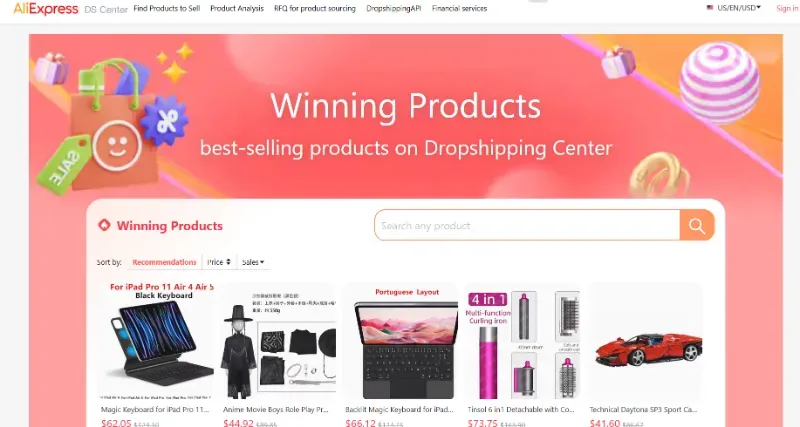
If you already have an online store, start by choosing products your audience is likely to buy. If not, AliExpress has a ‘Winning Products’ section where you can discover trending items, complete with sales data. But remember: if you enter too late, competition may already be fierce.
Here are some of the current trending products to dropship from AliExpress:
- Mini portable projectors
- Keyboards for iPads
- Smartwatches with Bluetooth calling
- UV nail lamps and nail polish kits
- Plush toys (boosted by the Labubu hype)
- Baby monitors
- Multifunctional kitchen tools
- Fashion sneakers and casual shoes
Beyond specific items, here are some product categories consistently perform well for dropshippers:
Gadgets and electronics
Compact projectors, wireless earbuds, phone accessories, and smartwatches are hot sellers. They’re low-cost, high-demand, and always in style.
Fashion accessories
Jewelry, watches, sunglasses, and handbags are inexpensive to source and easy to ship, making them staples of AliExpress wholesale dropshipping.
Beauty and personal care
Nail kits, skincare tools, and hair accessories see steady demand. Many customers are happy to try affordable alternatives before committing to premium brands.
Pet supplies
Pet grooming kits, toys, and feeding accessories are high-margin and appeal to a passionate customer base.
Home and kitchen decor
Compact storage solutions, wall art, and multipurpose tools have global demand, especially among younger consumers decorating their first homes.
How much does it cost to dropship on AliExpress?
One of the biggest advantages of AliExpress dropshipping is that it’s free to use. Unlike some wholesale marketplaces or supplier directories that charge monthly subscription fees, AliExpress allows you to browse and connect with suppliers at no cost.
Of course, there are operational costs:
- Paying for the products you sell
- Marketing and ad spend (Meta, Google, TikTok)
- E-commerce platform fees (Shopify, WooCommerce)
- Payment processing fees (Stripe, PayPal)
Compared to traditional retail, the startup investment is minimal. This makes AliExpress dropshipping a low-risk option for new entrepreneurs.
How to dropship from AliExpress to Amazon
If you have been wondering, can I dropship from AliExpress to Amazon, then the short answer: yes. Here’s what the entire process looks like
- Source products from AliExpress
- List those products on Amazon (with your branding)
- When customers order on Amazon, forward the order to your AliExpress supplier
- Supplier ships directly to your customer on your behalf
But there are also some challenges that you might have to tackle
- Amazon’s policy: Amazon allows dropshipping, but you must be the seller of record. This means packaging and invoices must not mention AliExpress. You’ll need suppliers who can ship “blind” (without their branding)
- Shipping times: Many AliExpress suppliers often take 10-30 days for international deliveries, depending on the region. Amazon Prime shoppers expect fast shipping, so this can hurt your ratings
- Branding limitations: You won’t have much control over packaging and unboxing experiences
- Competition: Many Amazon sellers already use AliExpress dropshipping, making certain niches saturated
If you choose this route to sell on Amazon, focus on niche products, communicate clearly with suppliers, and manage customer expectations around shipping times. Alternatively, you could also sell on Amazon from Alibaba.
Impact of tariffs on AliExpress dropshipping
Tariffs have become a major issue for businesses sourcing from China and selling in the US especially. Many AliExpress suppliers are based in China, and their imports into the US and other countries might be subjected to tariffs.
To handle tariffs, you can either consider partnering with suppliers outside China for your customers in the US, or you can dropship products with higher margins and lower tariff rates to absorb the operational costs.
Ordering tips for AliExpress dropshipping
Tell suppliers you’re dropshipping: When placing orders, leave a note in checkout: “This order is for dropshipping. Please don’t include invoices or promotional material.” This prevents customers from seeing wholesale prices or unrelated marketing. If you are selling on Amazon, you also would have to ask the supplier to add your business name on the seller invoice.
Track deliveries: Always monitor shipment status. If items don’t arrive on time, follow up with suppliers and use AliExpress Buyer Protection when necessary.
Refunds and returns. Many AliExpress sellers don’t accept returns, so build your own refund policy.
- If an item is damaged, request photos from customers and share them with suppliers
- If the item never arrives, escalate the issue through AliExpress for a refund
- If a customer is dissatisfied, sometimes offering a partial refund helps retain trust
How WorldFirst supports AliExpress dropshipping from Australia
Running an AliExpress dropshipping business involves cross-border payments in multiple directions:
- Outbound: paying AliExpress suppliers, freight forwarders, marketplace fees, ad platforms and SaaS tools, mostly in USD, CNH or EUR
- Inbound: collecting customer payments through your ecommerce store, or marketplace payouts from Amazon, eBay, Etsy and others, in the marketplace’s local currency
Routing every payment through an AUD bank account means paying FX conversion twice on every dollar that passes through the business: once to pay the supplier in USD or CNH, and again when the sales revenue comes back from Amazon in USD or GBP and gets converted to AUD.
The World Account from WorldFirst is a multi-currency account that handles the entire cycle from a single account. Australian dropshippers can use it for sourcing, shipping and collecting payments without moving between multiple providers.
Pay AliExpress suppliers with the World Card
The World Card is a Mastercard-powered business payment card linked to your World Account. Use it at AliExpress checkout the same way you’d use any Mastercard, but with the difference that when you pay in one of the 15 supported currencies (including USD and CNH) and hold sufficient balance in that currency, the payment comes straight from that balance with no foreign exchange fee.
- Pay in USD or CNH directly from your World Account balance, avoiding the FX markup that a standard card would apply
- Fast supplier payments that clear like a normal card transaction, keeping orders moving
- Cashback on eligible spending (Terms and Conditions Apply)
- Up to 20 World Cards per account at no additional cost, useful for separating supplier payments, ad spend and business travel across teams
- Transaction visibility in your WorldFirst dashboard so you can track supplier spend across vendors
Collect customer payments and marketplace payouts
The same World Account gives you local receiving details in 20+ currencies including USD, GBP, EUR, CNH, SGD, JPY, HKD, NZD and CAD. Instead of every payment being converted to AUD on arrival, you can collect in the original currency and hold the balance.
- Ecommerce store payments through payment processors settle in the customer’s currency through your local receiving accounts, rather than converting on every transaction
- Marketplace payouts from 130+ marketplaces and payment gateways including Amazon, eBay, Etsy, Shopify and Walmart settle into the same account in the marketplace’s local currency (USD from Amazon.com, GBP from Amazon.co.uk, and so on)
- Add local receiving details to each channel as the payout destination, so your USD sales revenue from Amazon.com lands in your USD balance ready to fund your next USD supplier payment
For a dropshipper selling to US customers through Amazon and paying US-quoted AliExpress suppliers, this means USD comes in from Amazon and USD goes out to suppliers from the same balance, without conversion in either direction.
Pay freight forwarders and other business expenses
The World Account handles outbound payments across the wider dropshipping operation:
- Send payments in 100+ currencies to 200+ countries and regions for paying freight forwarders, 3PL partners, contractors and international vendors
- Pay for tools and subscriptions billed in USD (Shopify, Meta Ads, Google Ads, SEMrush, keyword research platforms) from your USD balance without conversion
- Pay Alibaba, AliExpress and other supplier platforms using the World Card across 150+ currencies at Mastercard’s rates when spending outside the 15 supported currencies
Lock in exchange rates with forward contracts
For dropshippers with predictable payment cycles (paying a specific supplier every month, or receiving a specific marketplace payout schedule), forward contracts let you lock in an exchange rate now for a currency conversion that happens later, subject to eligibility.
This is particularly useful for:
- Fixed-price supplier contracts where you’ve agreed a per-unit CNH price with a supplier for the next 3, 6 or 12 months and want to protect against AUD/CNH movement over that period
- Predictable marketplace payouts where you know roughly how much USD you’ll be converting to AUD each month and want to reduce the impact of currency movement on your effective margin
- Larger one-off supplier orders where the payment timing is fixed but the exchange rate at that future date is unknown
One account for the whole workflow
The end result: sourcing, shipping and collecting payments all happen through the same account, with the same set of currency balances, the same dashboard and the same reconciliation. USD collected from an Amazon US sale can fund a USD supplier payment on AliExpress two days later without conversion in between. GBP collected from an Etsy UK sale can pay for a UK-billed shipping service. CNH held in the account can pay Chinese suppliers directly.
Other features that support Australian dropshippers:
- Xero and NetSuite integrations for automated reconciliation
- Zero fees on account opening, monthly maintenance and receiving funds
- World Pay for 1688.com, the authorised international payment provider for 1688.com, if you also source from 1688 alongside AliExpress
- Fully online setup with no branch visits required
FAQs
1. Can I pay AliExpress suppliers directly in CNH or USD from Australia?
Yes. The World Card is a Mastercard-powered business payment card linked to your World Account. You can pay AliExpress suppliers in CNH or USD directly from your World Account balance, avoiding the FX markup a standard AUD card would apply. The card supports payments in 150+ currencies, with zero fees when paying in any of the 15 supported currencies (with sufficient balance held in that currency).
2. How do I collect payments from Amazon or my ecommerce store as an Australian dropshipper?
With a multi-currency account like the World Account, you can add local receiving details in USD, GBP, EUR, SGD and other currencies to your Amazon Seller Central, Shopify or Etsy account as the payout destination. Payments settle in the marketplace’s local currency, so USD sales revenue from Amazon.com lands in your USD balance rather than being converted to AUD on arrival.
3. Can I use one account for both paying AliExpress suppliers and collecting sales revenue?
Yes. The World Account handles both directions from the same account. Collect USD sales revenue from Amazon and other marketplaces into your USD balance, then use that same USD balance to pay AliExpress suppliers through the World Card, without needing separate accounts or additional currency conversions.
4. What are forward contracts and how are they useful for dropshipping?
Forward contracts let you lock in an exchange rate now for a currency conversion that happens later, subject to eligibility. For dropshippers with predictable payment cycles (fixed-price supplier contracts, regular marketplace payouts) they can help protect margins against currency movement between agreeing a price and actually paying or receiving the money.
5. How long does AliExpress shipping take to Australia?
Standard AliExpress shipping to Australia typically takes 15 to 45 days depending on the supplier and shipping method chosen. ePacket and other expedited options can reduce this to 7 to 15 days at higher cost. For dropshipping to customers in the US or Europe, similar variability applies depending on the shipping method the supplier offers.
6. Can I dropship from AliExpress to Amazon compliantly?
Yes, but you must be the seller of record on every package. Amazon requires that packing slips, invoices and external packaging identify your business, not the AliExpress supplier. Ask suppliers to ship “blind” (without their own branding) and confirm the supplier can meet Amazon’s shipping speed expectations before listing.
7. What’s the difference between AliExpress dropshipping and 1688 dropshipping?
AliExpress is set up for retail and international dropshipping with English-language listings, buyer protection and international shipping built in. 1688.com is a wholesale platform focused on the Chinese domestic market, with lower unit prices but no built-in dropshipping support for overseas buyers. Most cross-border dropshippers start with AliExpress and move to 1688 (through a sourcing agent or freight forwarder) as they scale.
Disclaimer: The information contained is general only and largely our views. Before acting on the information you should consider whether it is appropriate for you, in light of your objectives, financial situation or needs. Although information has been obtained from and is based upon multiple sources the author believes to be reliable, we do not guarantee its accuracy and it may be incomplete or condensed. All opinions, estimates, mentioned products/services and referenced material constitute the author’s own judgement as of the date of the briefing and are subject to change without notice. WorldFirst shall not be responsible for any losses or damages arising from your reliance of such information.