





























Learn how to sell physical and digital products on Etsy Australia while reaching a global audience.
Key takeaways
- Etsy is a unique marketplace for selling handmade, vintage, or personalised products, both physical and digital
- Etsy prohibits mass-produced or generic products
- Popular categories on Etsy include home décor, clothing, jewellery, toys, and collectibles, catering to a wide range of creative products
- Customising your Etsy storefront with a professional look can help your business stand out and attract more buyers

Etsy has a unique positioning in the sea of marketplaces. It allows you to sell handmade, vintage, and one-of-a-kind products. While physical products are popular on Etsy, you can also sell digital products like art, sewing patterns, fonts, and planners.
The majority of Etsy users identify as women, making it a great marketplace to sell products if women are your primary target audience.
In 2023, Etsy’s revenue was $2.74 billion, a 7% year-on-year increase. As of 2023, the marketplace had 96 million active buyers and 8.3 million sellers.
If you’re planning to list your products on Etsy, don’t miss our complete guide—it’s packed with actionable tips and insights to help you stand out and succeed on the competitive marketplace.
What is Etsy?
Etsy is an online marketplace where business owners, artists, and individuals can sell their products. It’s different from the other marketplaces because it is home to millions of unique, vintage, and craft supply products.
Etsy acquired music equipment marketplace Reverb in 2019 and clothing reseller Depop in 2021. The acquisitions made by Etsy directly mirror the company’s vested interest in the vintage community.
You can sell handmade items (whether physical or digital) or curate goods. Etsy doesn’t have a warehouse where you can send and store your goods. As an Etsy seller, you have to manage your orders, inventory, and shipping yourself.
What can you sell on Etsy?
The first thing you should know about selling on Etsy is that the usual mass-produced items are not allowed. However, you can sell items that are sourced or handpicked.
If you plan to sell sourced products, they should enable the buyer’s creativity in some way. So, you can source products like party decorations, craft suppliers, or even personalised products. Before you list products on Etsy, make sure to review the platform’s Creativity Standards Policy.
Some of the popular product categories on Etsy include:
- Home decor
- Clothing
- Jewellery and accessories
- Toys
- Collectibles
Here are the products that are prohibited on Etsy (make sure to recheck Etsy’s official list for the updated information):
- Dangerous or hazardous products
- Recalled items
- Alcohol, drugs, tobacco, or medical devices
- Weapons
- Internationally regulated products
- Animal products
Selling on Etsy Australia in 5 simple steps
Here are the steps to open your Etsy store and start selling on the marketplace:
1. Register for an Etsy seller account
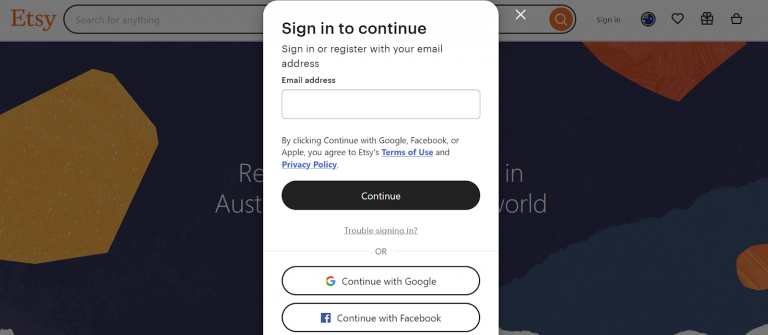
The first step is to create an Etsy account, if you haven’t already. Visit the Etsy Australia page and click the ‘Get started’ button. You’ll have to register with your email address and details about yourself and your business.
2. Build and customise your Etsy storefront
While you can list products directly without customising your storefront, building a fully customised storefront with your business branding helps you stand out from the competition.
Your potential customers may visit the storefront before deciding to make a purchase. They may also be interested in the products you offer.
To customise your shop homepage, go to your seller dashboard → open Shop Manager → Info and appearance.
Here are some ways you can customise your Etsy storefront:
- Add your profile picture, business logo, store banner, and shop icons
- Introduce yourself as the shop manager in the About section. Adding a personal touch helps customers connect with you better
- Add details about your shop policies, including returns, payments, and more
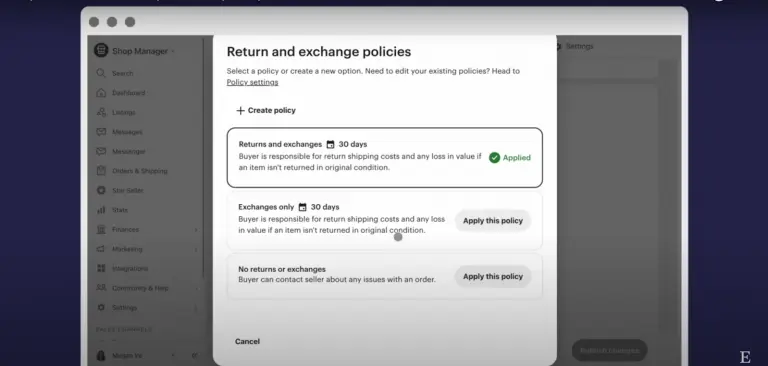
- Share shop announcements if you’re running a sale or might have delayed shipments
3. Create your product listing
The next and most important step is to create your first product listing.
To add a new product, go to Shop Manager → Listings → Add a new listing.
You’ll have to add all the details about your product, including:
- Product title: Keep the title within 140 characters and try to include keywords so it is easy for potential customers to find the product when they search for a related keyword
- Photos and videos: You can add up to 10 pictures and 1 video
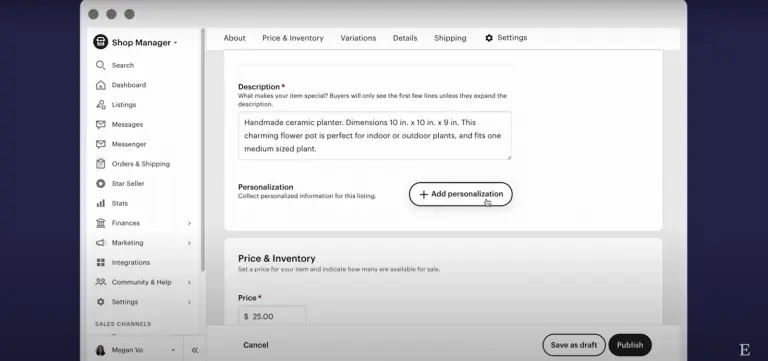
- Description: Add details about your products so your customers know exactly what they will be getting
- Personalisation: In case the product can be personalised, add instructions for the same
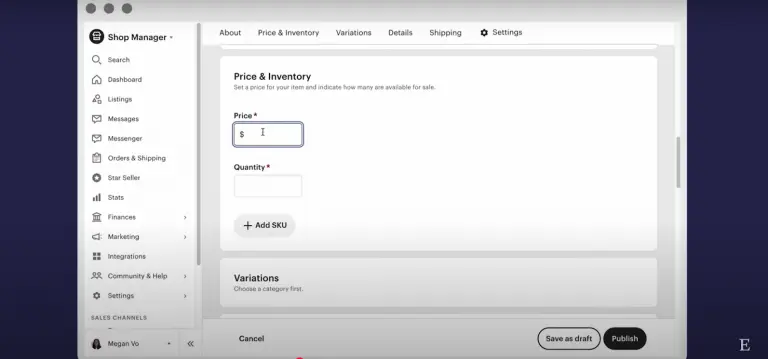
- Quantity and variations: Add the available product quantities and details of different product variations (if unavailable)
- Price: Add the pricing in your preferred currency. Your customers may see the prices in their supported currencies. For instance, if your shop currency is AUD, but your customers are based in the UK, they may see the product pricing in GBP when browsing Etsy
When customers search on Etsy, the product title, images, and price are the key factors that determine if they’ll click on your listing in the search results.
Etsy is a marketplace where customers seek visually aesthetic products, so getting your listing images right is very important. The first photo should be eye-catching and encourage customers to look closer at the product.
The photos should be high resolution, well-lit, and at least 2000px for the shortest side of the image with a 72PPI. Etsy recommends not using collages for the first product image as it can confuse customers. Your images should also not have any placeholder text on them.
Etsy is built on a search engine that connects customers with sellers, so you must get your SEO right to increase listing visibility. Take a look at our complete guide on Etsy SEO.
4. Add shipping information
You’ll also have to add shipping details to your product listing to give customers a clear idea about shipping costs and timelines. You can use shipping/ delivery profiles to add the same shipping information to multiple listings.
To create delivery profiles, go to Shop Manager → Settings → Delivery settings → Create profile. Now, you can add shipping details, including fixed or variable shipping rates based on location and product weight. Give a name to your delivery profile and save it.
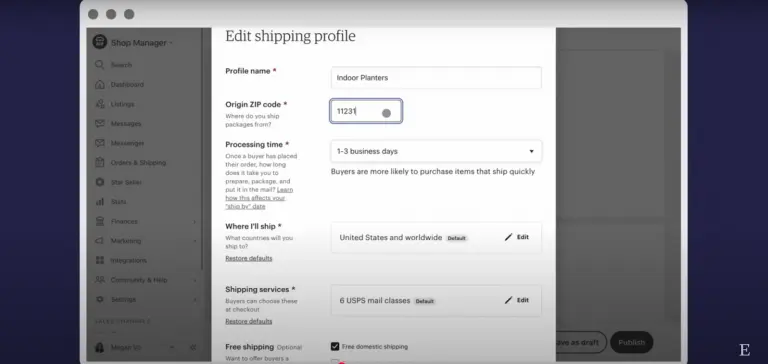
Once you have saved the delivery profile, you can apply it to different delivery product listings. Here are the steps to add a delivery profile to a product listing.
- Go to Shop Manager → Listings
- Select the checkbox of all the listings that should have the same delivery profile
- Go to ‘Editing options’
- Select ‘Change delivery profiles’ from the dropdown menu
- Select the profile and click on Apply
Etsy offers global shipping labels for US-based sellers, allowing them to generate and download shipping labels directly. But if you’re based in Australia, then you’re on your own. You’ll have to manage the entire shipping process end to end and share the tracking information with the customers.
5. Add your bank account details to get paid
Etsy Payments is the main way to get paid for all your sales on Etsy. When you open your shop on Etsy, you can enrol for Etsy Payments at the same time.
Enrolling for Etsy payments allows you to support various payment options on your Etsy store, including:
- Credit/ debit cards
- Etsy gift cards or credits
- PayPal
- Google Pay
- Apple Pay
- Klarna
When you get a new order on Etsy, the funds are first deposited into your Etsy Payment account. You can then withdraw the funds according to the deposit schedule and the daily deposit minimum threshold amount.
For Australia, the deposit minimum is AUD 25. That means to withdraw funds into your bank account, you’ll at least need to have AUD 25 in your Etsy account.
You need a valid bank account connected to your Etsy account to receive payments. Whenever you update or change your bank account details, there will be a 5-day holding period, after which you can continue withdrawing funds.
Before you can accept or withdraw any funds from Etsy, the platform will take steps to verify your identity and bank account. When you register as a business on Etsy, you’ll have to provide information like:
- Entity name (as specified on your government-issued business verification document)
- Legal business address
- Business identification number
- Details of Any Ultimate Beneficial Owners (UBOs) of your shop who own at least 25% of your business’ capital
Etsy may ask for additional information, too and if you cannot provide it within the speculated timeframe, your account may be blocked until the verification process is complete.
How much does it cost to sell on Etsy?
Etsy may charge you a one-time shop setup fee when you open your Etsy storefront. But, Etsy doesn’t state the exact fee that may be charged or who is required to pay this fee. You’ll only be able to find this out when you complete your Etsy store’s final setup.
| Fee type | Amount/Percentage | Details |
|---|---|---|
| Listing fee | AUD 0.30 (or USD 0.20, converted to account currency) | Charged for every product listed. Listing remains live for 4 months or until the product sells out |
| Transaction fee | 6.50% | Charged on every sale made |
| Payment processing fee | AUD 0.25 | Charged per transaction |
| Currency conversion fee | 2.50% | This applies if your shop listing currency differs from your connected bank account’s currency. The currency conversion rate includes a markup |
For instance, if you’re using an AUD bank account and listing products in USD to attract US-based customers, then the total fee levied on every sale will include
- 2.5% currency conversion fee
- 6.5% transaction fee
- AUD 0.25 payment processing fee
- Current currency conversion rate
Fast, reliable, and secure Etsy payment collections with WorldFirst
Etsy has a truly international customer base that small businesses shouldn’t ignore. Fortunately, it’s never been easier for small businesses to expand into new foreign markets by accepting local currencies – all they need is a multi-currency account.
WorldFirst’s multi-currency account supports 20+ virtual currency accounts, including USD, EUR, CAD, GBP.
So, if you want to list your products in USD, you can get details for your USD bank account from World First and connect it to your Etsy account – all without needing a local address.
With the World Account, you can hold multi-currency funds, make conversions at competitive exchange rates, remit to your bank account, or pay your third-party suppliers abroad.
Learn how to connect your Etsy account to your World Account
Disclaimer: The information contained is general only and largely our views. Before acting on the information you should consider whether it is appropriate for you, in light of your objectives, financial situation or needs. Although information has been obtained from and is based upon multiple sources the author believes to be reliable, we do not guarantee its accuracy and it may be incomplete or condensed. All opinions, estimates, mentioned products/services and referenced material constitute the author’s own judgement as of the date of the briefing and are subject to change without notice. WorldFirst shall not be responsible for any losses or damages arising from your reliance of such information.





![How to set up your AliExpress dropshipping business in Australia [2026]](https://mdn.marmot-cloud.com/worldfirst/sites/8/2026/10/20261001222121715-300x200.webp)