























Built for faster payments, smarter liquidity, and robust compliance-all powered by our next-gen API toolkit and Al-native architecture.

Named a Top Global Fintech Company by CNBC & Statista, we’ve supported 1.5M+ businesses since 2004.

Europe

Asia

Oceania

Africa

We provide coverage in South Asia and Middle East: servicing 210+ countries and territories.

International payment methods for Singapore importers: a comparison guide

Contents

A supplier invoice may look straightforward at first, but there’s more to think about than just the amount you need to pay.

The payment method you choose can affect the final SGD cost, supplier timing, fees, FX conversion and the records your team has for reconciliation. All of that matters when you buy from the same suppliers again and again.

SingStat’s latest data shows Singapore’s total trade reached SG$154.3 billion in May 2026, including SG$75.1 billion in imports. Every dollar of that value moved through a payment method someone chose—and that choice affects what the transfer actually costs.

This guide explains how to compare international payment methods, where different routes fit and what to check before you pay overseas suppliers.

Key takeaways:

  • Choose the payment route around the supplier order: A sample order, repeat invoice and high-value production balance each need a different mix of cost control, speed, proof and risk protection
  • Bank wires and SWIFT still suit formal supplier payments: They work well when a supplier wants funds in a named company bank account, but you need to check the FX margin, bank deductions and fee arrangement
  • Repeat payments need a full-cost comparison: The real cost is the final amount your business pays to settle the invoice, including the exchange rate, transfer fees, intermediary charges and receiving bank deductions
  • Multi-currency accounts can reduce unnecessary FX steps: If you receive revenue and pay suppliers in foreign currencies, holding balances can give you more control over conversion timing and payment records
  • WorldFirst can support recurring supplier payment flows: For Singapore importers managing regular overseas payments, a World Account can bring currency balances, conversions, supplier transfers and payment records into one place

Power your global growth with one account

To manage repeat supplier payments with clearer currency, payment and invoice records.

Which payment method works best for your supplier order?

Use the comparison table to see how each payment method works, what it may cost and what to check before you pay:

Payment method

Best for

Cost drivers

Speed

Trade-off

Bank wires and SWIFT

Larger supplier invoices and named company bank accounts

FX margin, sending fees, intermediary and receiving bank charges

Usually a few business days

Clear bank trail, but less predictable final amount

Multi-currency business account

Repeat supplier payments across currencies

FX margin, transfer fees, currency and destination coverage

Varies by currency and destination

Better currency control, but provider coverage matters

Corporate cards and virtual cards

Samples, smaller deposits, checkout payments and business spend

Card FX fees, supplier surcharges and platform fees

Often fast at checkout

Good speed and spend control, but weaker for large invoices

Payment gateways and wallets

Checkout-led payments and customer collections

Platform fees, withdrawal fees, FX costs and limits

Fast at checkout, payout timing varies

Useful for checkout, but less suited to supplier payment control

Marketplace and sourcing platform payments

Samples, test orders and early supplier relationships

Platform fees, FX costs, limits and platform rules

Depends on the platform

Buyer protection, but less control as orders grow

Letters of credit and documentary collections

Higher-value or higher-risk orders

Bank fees, document handling and admin time

Usually slower

More risk control, but heavy for routine payments

1. Bank wires and SWIFT for supplier invoices

Bank wires and SWIFT transfers are useful when the supplier wants funds in a named company bank account, and your team needs a formal payment trail.

For Singapore importers, international payment methods often matter when paying suppliers in China, Malaysia, Vietnam, Europe, the UK or the US.

Bank wires make most sense when:

  • The supplier only accepts bank transfer
  • The invoice value is high
  • The supplier wants payment into a named company bank account
  • Your team needs a formal bank record
  • The payment deadline allows enough processing time

Main trade-off

The final amount can be hard to predict. Costs can include a sending fee, FX margin, intermediary bank charge and receiving bank fee.

That visibility gap is common in cross-border payments. The FSB’s 2025 progress report found that around 40% of B2B and B2P payment services remained non-transparent on cost and speed.

A bank transfer can leave your account successfully, but deductions may reduce the amount your supplier receives. If the supplier needs the full invoice value before dispatch, you may have to settle the shortfall first.

What to check

Before sending a bank wire, confirm:

  • The sending, intermediary and receiving fee arrangement
  • The currency the supplier expects
  • The beneficiary name and bank details
  • The invoice reference
  • The proof of payment the supplier accepts before dispatch

2. Multi-currency business accounts for repeat supplier payments

A multi-currency business account can work for importers who regularly pay overseas suppliers and want more control over FX timing and currency balances.

If your business is expanding into new markets or managing local entities, the account you opt for should make it easier to manage the currencies used in those markets.

For example, you may receive USD from an overseas marketplace, choose to hold part of that USD balance and use it to pay a future USD supplier invoice, instead of converting the money to SGD first and back to USD later.

An increasing number of businesses are already comparing these routes. McKinsey research from 2024 found that 35% to 50% of SMEs across surveyed regions, including Emerging Asia, used a fintech or non-traditional provider for cross-border payments in the year before.

For importers, a multi-currency account can support the same goal in a more flexible way. You can hold the currencies you use, pay repeat suppliers from those balances and reduce unnecessary conversions between payments.

Multi-currency accounts are worth comparing when:

  • You pay repeat suppliers in USD, CNH, EUR, GBP or other currencies
  • You receive revenue in foreign currencies and do not want to convert it back to SGD straight away
  • You want to use existing foreign currency balances for upcoming supplier payments
  • You manage several supplier invoices each month
  • You need clearer payment and FX records

Main trade-off

The value of a multi-currency account depends on the provider’s coverage and pricing. It only works well if it supports the currencies, destinations and payment records your business needs.

What to check when comparing providers

Before choosing a provider, compare:

  • Supported receiving currencies
  • Supported payout currencies and destinations
  • FX margin and transfer fees
  • Payment tracking and proof of payment
  • User permissions
  • Accounting integrations

3. Corporate cards and virtual cards for smaller supplier costs

This method allows your business to pay by card instead of sending money by bank transfer. A corporate card is usually tied to a business account or card programme, while a virtual card gives you digital card details that can be used online or assigned to specific team members.

They work best for lower-value supplier costs where speed, spending limits and internal control matter more than a direct bank transfer trail.

Corporate and virtual cards can work well for:

  • Small supplier deposits
  • Urgent sample purchases
  • Online sourcing platform payments
  • Software and cloud subscriptions
  • Freight, ads and travel costs

Main trade-off

Cards become less useful when invoice values increase. Some suppliers do not accept cards, while others add a processing surcharge. For larger production invoices, many manufacturers still prefer bank transfers.

Card FX fees can also reduce your margin when the payment currency differs from your card currency. 

What to check

Before paying by card, check:

  • Supplier surcharge
  • Card FX fee
  • Payment limit
  • Refund process
  • Reconciliation record

4. Payment gateways and digital wallets for checkout-led payments

Payment gateways and digital wallets allow a business to send or receive money through a checkout flow rather than via a direct bank transfer. 

A gateway usually processes card or online payments on a website or platform, while a digital wallet lets the payer use stored balance, linked cards or linked bank details.

For importers, digital payments work best when the supplier already accepts that route and when the payment is low-value or platform-based. They make checkout more convenient, but they may not give the same supplier payment control, FX visibility or bank transfer record as other methods.

Gateways and wallets are useful for:

  • Online store payments
  • Card, PayNow or wallet checkout
  • Smaller supplier payments within a platform
  • Orders where the payment record stays linked to checkout

Main trade-off

For larger supplier invoices, gateways and wallets can add payment limits, withdrawal rules, platform charges, FX costs and additional reconciliation work.

If your main issue is paying overseas suppliers, a payment gateway may not be enough. Supplier payments often need bank details, clear FX costs, invoice references and proof of payment, not just a checkout flow.

What to check

Before using this route, check:

  • Supplier acceptance
  • Payment and withdrawal limits
  • FX and withdrawal fees
  • Payout timing
  • The way the record connects to your accounting process

5. Marketplace and sourcing platform payments for early supplier orders

Marketplace and sourcing platform payments can work well when an established importer wants to test a new supplier, product line or lower-value order before moving to regular direct payments.

Platforms such as Alibaba, 1688 and other B2B sourcing sites can keep order details, payment history and dispute records in one place. That can be useful when your team wants more visibility before adding a supplier to its regular payment process.

Platform payments are a good option for:

  • Testing a new supplier relationship
  • Smaller trial orders
  • New product samples before a larger purchase
  • Orders where buyer protection matters
  • Suppliers already set up for platform checkout
  • Teams that want order and payment details in one place 

Main trade-off

Platform payments can become limiting once the supplier relationship becomes regular because the platform sets the available payment options, currencies, fees, dispute methods and payment timing. 

For your team, that can mean less flexibility over when you convert currency, how much payment evidence you can share with the supplier and how easily you can reconcile repeat invoices.

What to check

Before paying outside a platform, confirm:

  • The buyer protection available 
  • The supplier’s company name on the invoice
  • The beneficiary name on the bank account
  • The agreed currency and payment terms
  • The records your finance team needs

6. Letters of credit and documentary collections for higher-risk orders

Letters of credit and documentary collections are trade finance instruments that use banks and shipping documents to add more control around payment and delivery. They can support larger or higher-risk orders where the supplier wants payment assurance and the buyer wants documents checked before funds move.

For routine supplier payments, these methods are usually too heavy because they add bank fees, paperwork and time.

Trade finance routes are worth considering for:

  • First high-value orders with a new supplier
  • Shipments where documents control the goods release
  • Suppliers that want stronger payment assurance
  • Buyers that want payment linked to agreed conditions
  • Orders where the value justifies bank fees and admin

Main trade-off

Trade finance can slow routine orders. For samples, urgent replenishment, low-value invoices or repeat low-risk payments, the admin can outweigh the protection.

What to check

Before choosing trade finance, check:

  • Order value
  • Bank fees
  • Document requirements
  • Supplier readiness
  • Payment and shipment timeline

How to compare the real cost of international payment methods

The invoice amount is only the starting point. The final cost depends on the exchange rate, the fees added along the route and the amount your supplier is supposed to receive.

For repeat supplier payments, compare each payment route by the final amount your business pays to settle the invoice, not only the fee shown at checkout or booking. 

Use this simple cost check:

Total payment cost = converted invoice amount + transfer fee + intermediary fees + receiving bank deductions + card or platform charges

Read more: Best money changers in Singapore

Example cost comparison

Say your Singapore business pays a US$80,000 supplier invoice.

If one provider applies a 0.9% FX markup and another applies a 0.5% FX markup, the 0.4 percentage-point difference amounts to US$320 on a single payment before transfer fees, intermediary deductions or receiving bank charges.

If you make that payment every month, the FX difference alone equals US$3,840 across 12 payments.

That does not mean every payment should use the lowest-rate provider at all costs. Speed, supplier acceptance, payment proof and support still matter. But for repeat importers, small FX differences can become a real annual cost.

How to reduce friction when paying overseas suppliers

Repeat supplier payments are easier to manage when your team starts the payment process well before the invoice due date:

  1. Confirm the invoice currency before choosing the route: The currency choice affects FX, supplier expectations and bank deductions. Confirm the currency the supplier expects before you approve the payment
  2. Keep supplier bank details in a single controlled process: Confirm the beneficiary name, account country, bank code, SWIFT/BIC and payment purpose. If any details change, verify them through a trusted channel before sending funds
  3. Plan conversion around the payment date: A payment due before shipment needs different planning from a balance due in 30 days. Holding the right currency can reduce last-minute conversion pressure
  4. Save payment proof with the invoice and purchase order: Keep proof of payment, FX conversion records and invoice references together. That makes supplier follow-up and reconciliation easier
  5. Review repeat payment costs every quarter: Repeat invoices create repeat costs. Review FX margins, transfer fees, payment speed and supplier deductions every quarter, especially for high-value supplier routes

How WorldFirst gives Singapore importers more control over international payments

Once supplier payments become repeatable, you need a clearer way to manage revenue, currency balances, conversions and supplier transfers without losing track of each invoice.

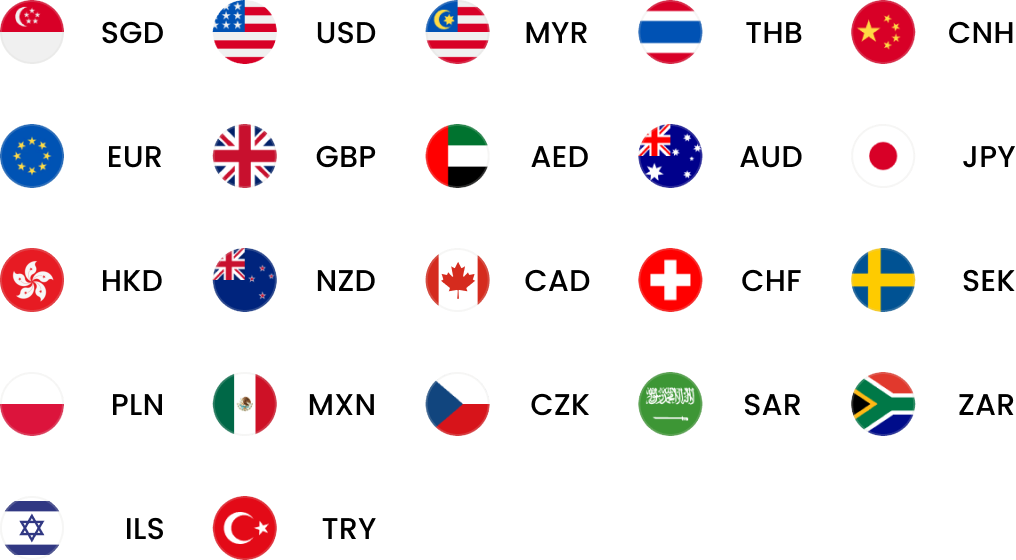
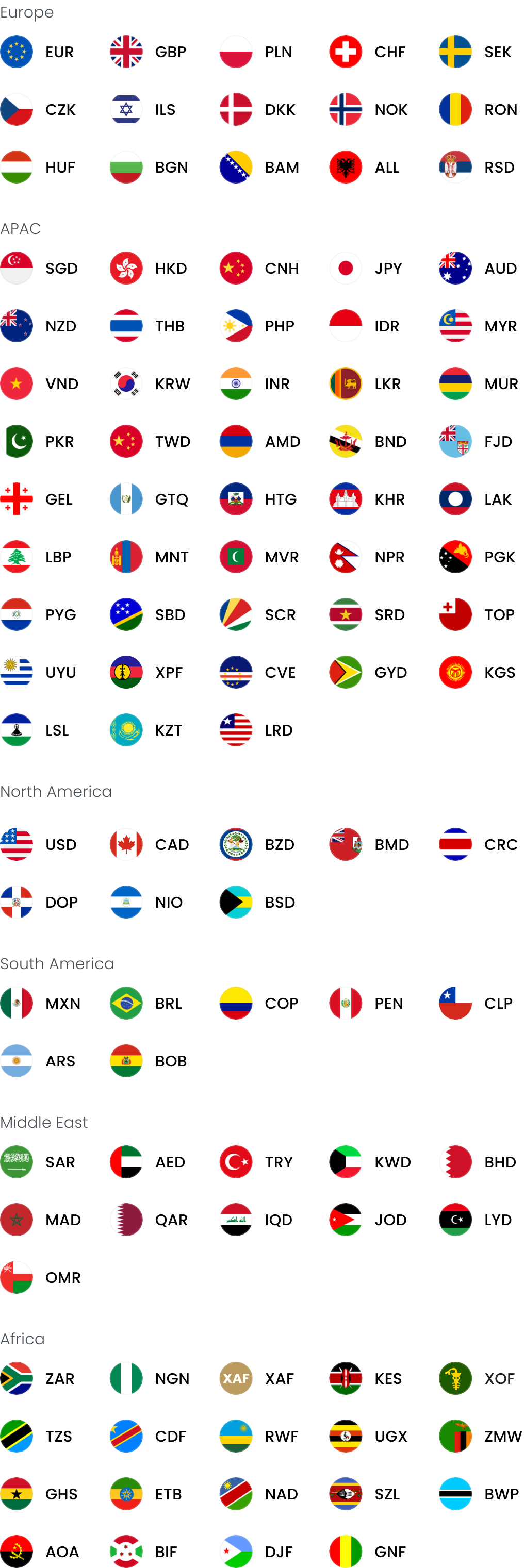
With a World Account, you can collect payments in 20+ currencies, pay suppliers in 100+ currencies to 210+ countries and territories, convert between currencies and manage payments from one account. When you import regularly, you have a clearer way to track supplier payments before, during and after each transfer.

For example, say your Singapore business pays a US$80,000 supplier invoice every month. If one provider applies a 0.9% FX markup and WorldFirst applies a 0.6% markup on a major currency conversion, the 0.3 percentage-point difference equals US$240 on one payment, before any transfer fees or bank deductions. Across 12 monthly payments, that FX difference alone equals US$2,880.

The saving on one transfer matters, but it is only part of the picture. The bigger benefit is control over when you convert currency and how you use foreign currency balances.

WorldFirst isn’t a bank. It is a regulated payments provider, and WorldFirst entities in Singapore hold MAS licences for services including account issuance, domestic and cross-border money transfers and e-money issuance.

WorldFirst example: OSG

OSG used WorldFirst’s multi-currency account to collect global payments and pay suppliers in currencies including USD and renminbi. In its WorldFirst customer story, the company reported around 35% faster supplier payments, 60% fewer delays and around 40% fewer FX fees, saving more than SG$30,000 a year

For repeat importers, that control matters because the same tasks repeat across monthly supplier invoices: converting currency at the right time, checking fees, keeping records and sending proof of payment.

Power your global growth with one account

To manage international supplier payments, FX and records from one place.

FAQ

1. Who pays SWIFT fees on an international supplier payment?

When you send a SWIFT payment, the fee instruction tells the banks who should pay the transfer charges: OUR means your business pays, SHA means charges are shared, and BEN means the supplier pays from the amount received.

Confirm the SWIFT fee instruction with the supplier before sending payment, because intermediary or receiving bank deductions can leave them short of the invoice amount.

2. What should I check if a supplier sends new bank details?

If the supplier changes bank details, confirm the change through a trusted contact before sending funds. Before paying a new supplier account, confirm the beneficiary name, bank country, account number, SWIFT/BIC code, payment currency and invoice reference.

3. How often should I compare FX fees on repeat supplier payments?

Review FX margins, transfer fees and supplier deductions at least every quarter for repeat payments. A small FX difference can become a real cost when you pay the same supplier monthly, especially on high-value invoices.

Sources:

    1. https://www.singstat.gov.sg/find-data/explore-data-themes/trade-investment/merchandise-trade/latest-news-data
    2. https://www.fsb.org/uploads/P091025-1.pdf
    3. https://www.mckinsey.com/industries/financial-services/our-insights/banking-matters/how-banks-can-win-back-lower-value-cross-border-payments-business

Joan Poon leads marketing across Southeast Asia at WorldFirst, driving growth and brand leadership in key markets including Singapore, Malaysia and the Philippines.

Joan Poon

Author

Head of Marketing SEA, WorldFirst Singapore

Continue reading

Open a World Account for free

Get local currency accounts, fast payments and competitive FX – all in one place.

international payment methods

The simpler way to pay and get paid

Save money, time, and have peace of mind when expanding your global business.

Ads Solution

TikTok For Business

TikTok is home to a vibrant and engaged global community.

Increase online sales, drive app installs, grow your brand awareness, or build a community. TikTok ads support your goals whatever they are. Enjoy flexible spending, easy setup and effective advertising.

Up to $1,000 USD in ads credit

How to redeem:

· Click on link above

· Spend $1,500 and get $1,000 in free TikTok Advertising Credit

China product sourcing marketplace

TaoWorld

Effortless China sourcing. Simplified fulfillment and global shipping.

Accounting Saas

Netsuite

Run your business on one platform. Cloud ERP for growth-focused companies.

Return logistics

Return Helper

Offers one-stop logistics for cross-border sellers, including first-mile and last-mile delivery, fulfillment, and returns management solutions.

SGD150 Credits In Wallet

How to redeem:

· Sign up through the above link

· Write to [email protected] quoting [WorldFirst150]
· Only new users of Return Helper enjoys this promotion

Digital marketing service

VERZ DESIGN

Offers full-suite e-commerce web development & digital marketing services, driving client success and growth for DTC, B2C, and B2B businesses. With a strong presence across SEA, Verz Design has been entrusted as one of the region's few Shopify Plus partner agencies.

· Complimentary Website & Digital Marketing Audit for Supercharged Business Growth
· Please reach out via email to [email protected] and [email protected] for further information.

Digital marketing service

AnyMind Group

Marketing automation redefined. AI-powered solutions for brands to scale.

Digital marketing service

Eber

Leading provider in the realm of loyalty solutions across multiple channels, including online, in-store, and mobile platforms.

US Marketplace

Amazon Global Selling

Reach millions of customers worldwide.Sell internationally on Amazon's trusted platform.

China product sourcing marketplace

1688.com

China's leading wholesale marketplace. Source high-quality products directly from manufacturers.

US Furniture and Home living Marketplace

Wayfair

Your one-stop shop for home. Discover millions of furniture and décor items online.

CRM, Digital Service Integrator

Peakommerce

Your All-in-One payment gateway platform. Benefit from highly competitive rates and Integrate seamlessly with our easy-to-use management system in a single, unified solution

Click to sign up for a WorldFirst Account now!
*By registering via this link, you agree that applicable World Card cashback rate will be 1.0% unless otherwise notified. For further details, kindly refer the T&Cs.

Online payment gateway

2C2P

Seamless online payments across Asia. Trusted payment processing for your global business.

Accounting Saas

Xero

Beautiful, cloud-based accounting software designed for small businesses.

HR services Saas

Talenox

A cloud-based HR software that simplifies payroll, leave, and employee management, tailored to meet local compliance needs in Singapore, Malaysia and Hong Kong.

80% off on the first 3 months for Talenox’s Paid Plans.

How to redeem:

· Click on link above

· Input [WFCTAL80] to redeem this deal on Talenox’s website

Loan financing

CHOCO UP

Provides fast, flexible, and zero-equity working capital solutions to empower businesses. Every business should have the chance to grow, which is why Choco-Up offers a range of solutions beyond just financing.

Up to 10% cashback of fees.

How to redeem:

· Upon successful closure of adopting Revenue based financing/Invoice financing + complete repayment
· Up to 10% cashback of fees charged by Choco Up on funding amount
· Simply sign up via link, Choco Up will initiate agreement specifically for the promo signups thereafter

Logistics

DHL

DHL offers a comprehensive range of parcel, express, freight transport, and supply chain management services as well as e-commerce logistics solutions.

Collect money in 20+ currencies

You can collect money in 20+ currencies. It only takes a few minutes to open an account in the currency you need.

Get Paid by 130+ marketplaces

Seamlessly get paid by 130+ marketplaces and pay your suppliers anywhere.

Send money in 100+ currencies

You can send money in your WorldFirst account to any of the currencies we support.

Pay in 16 currencies with World Card, no FX fees

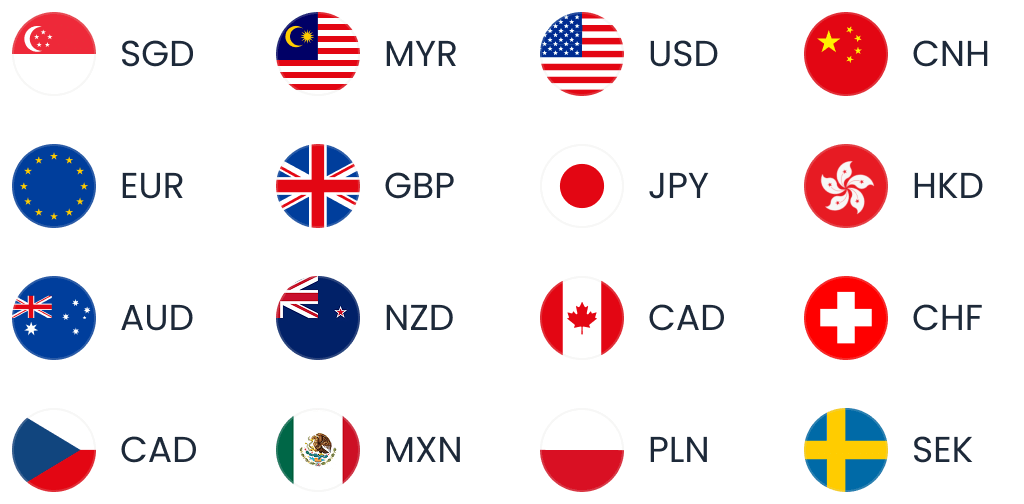
Enjoy zero FX fees when paying in the following 16 currencies with World Card.