




























Traditional banking remains a default financial decision for many Singapore businesses, rather than a strategic one.
Singapore has more than 130 licensed banks, including around 30 full-service institutions that offer the broadest range of services, such as deposit-taking and corporate accounts, alongside nearly 100 wholesale or specialist banks focused on business clients.
Businesses often open local bank accounts to use established rails and lock in cash management, before international activity becomes significant.
But when cross-border payments increase, that structure can introduce new constraints. Banks embed FX margins into exchange rates, route settlements through correspondent networks and reduce a business’s control over when funds arrive.
This guide explains how traditional banks in Singapore handle business banking in practice, including common fees, how international payments are routed and how currency conversions work.
It also shows where this model adds costs, delays and operational complexity to cross-border activity, before outlining an alternative approach: managing payments and currencies through the World Account from WorldFirst.
Key takeaways:
- Traditional banks in Singapore work best for domestic, SGD-centric businesses: They offer trust, strong local payment rails and access to loans and trade finance, which makes them a solid choice when most payments, receipts and cash flow stay within Singapore
- International payments expose the limits of traditional bank accounts: Once money crosses borders, businesses face embedded FX margins, slower settlement via correspondent banks, forced currency conversions and reduced visibility across systems
- Costs and complexity increase as cross-border activity becomes routine: Frequent overseas supplier payments or multi-currency revenue introduce FX uncertainty, settlement delays and manual reconciliation
- WorldFirst offers a practical alternative for international cash flow: The World Account isn’t a bank but a multi-currency business account built for global trade. It allows you to hold and manage 20+ currencies, avoid forced FX conversions, access funds faster and manage international payments from one place
Open a World Account today to support international trade without managing multiple bank accounts in different regions.
What do we mean by traditional banks in Singapore?
Traditional banks in Singapore operate as licensed full-service and wholesale banks, providing standard business banking services such as deposit accounts, lending, trade finance and domestic and international payments under the Banking Act.
Regulated by the Monetary Authority of Singapore, these banks typically:
- Structure business banking around a primary SGD account, with foreign currency activity layered on top
- Route international payments through SWIFT and correspondent banking networks
- Apply foreign exchange rates at execution rather than at invoice approval
- Impose cut-off times that affect same-day and next-day settlement
- Require manual review or additional documentation for higher-value or repeat cross-border payments
- Separate cash management, FX and payment workflows across multiple systems or portals
5 major traditional banks in Singapore
Here are five traditional banks in Singapore and what businesses can expect when using them for international activity:
1. DBS (Development Bank of Singapore)
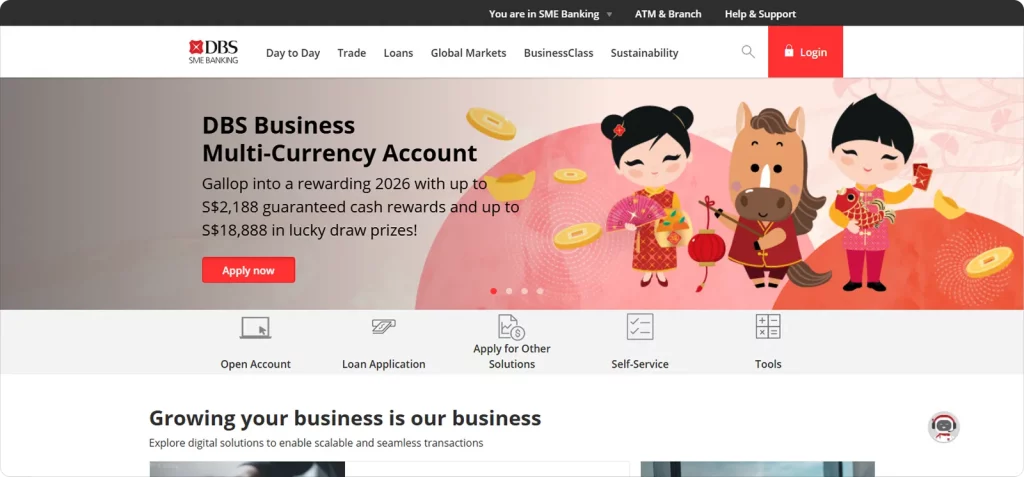
DBS is one of the most widely used banks among Singapore-based SMEs and corporations. It offers strong domestic coverage, an extensive branch and ATM network and a broad suite of business banking products.
Internationally, DBS uses conventional banking processes. The bank routes cross-border payments through SWIFT, applies FX rates at execution and allows businesses to hold foreign currencies only when the account structure supports it.
Key features:
- Account fees: Business accounts typically incur an SG$40 monthly fee if the average daily balance falls below SG$10,000. Starter bundles may reduce fees initially, but still rely on balance thresholds
- Multi-currency: The DBS Business Multi-Currency Account supports 13 major currencies within a single account
- Transfers: DBS lists a SG$30 flat fee for outward telegraphic transfers on the BMCA page (agent fees may apply separately)
Best suited to: SGD-centric operations and businesses with infrequent international payments.
Limitations: FX transparency and settlement predictability decline as cross-border volume grows.
2. OCBC (Oversea-Chinese Banking Corporation)
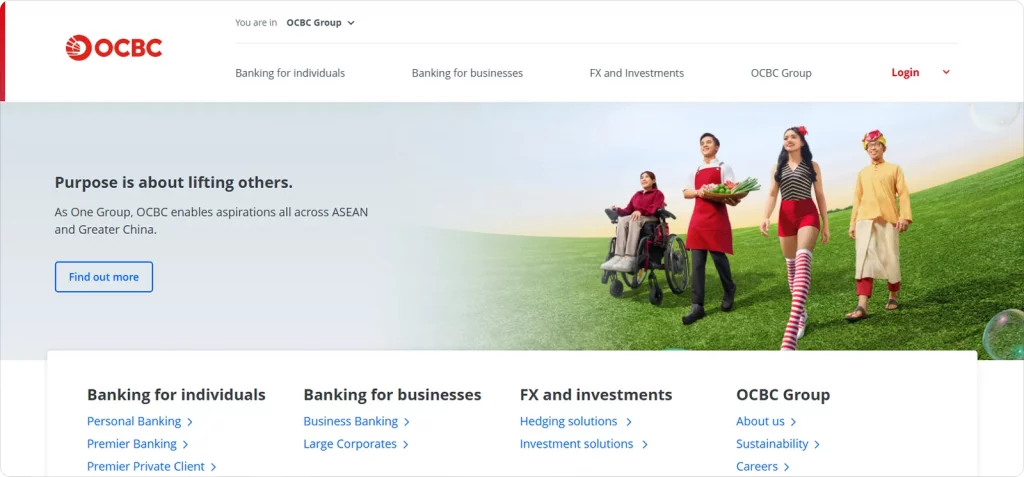
OCBC is another common choice for Singapore businesses, combining solid local banking with regional connectivity. Businesses often view OCBC as competitively priced for international transfers among traditional banks.
Currency management remains account-based and FX pricing isn’t fully visible until execution. While some corridors benefit from faster settlement, international transfers still depend on correspondent networks.
Key features:
- Account fees: The Business Growth Account carries an SG$10 monthly fee, with additional charges if balances fall below minimums. Higher-tier accounts require substantially larger deposits
- Multi-currency: OCBC’s Multi-Currency Business Account supports up to 13 currencies and automatically activates them when funds are received
- Transfers: OCBC charges SG$30 for online telegraphic transfers and advertises settlement within 1–2 business days, with SWIFT gpi tracking
Best suited to: Businesses making regular international transfers that value flat fees.
Limitations: Minimum balance requirements and FX opacity remain constraints.
3. UOB (United Overseas Bank)
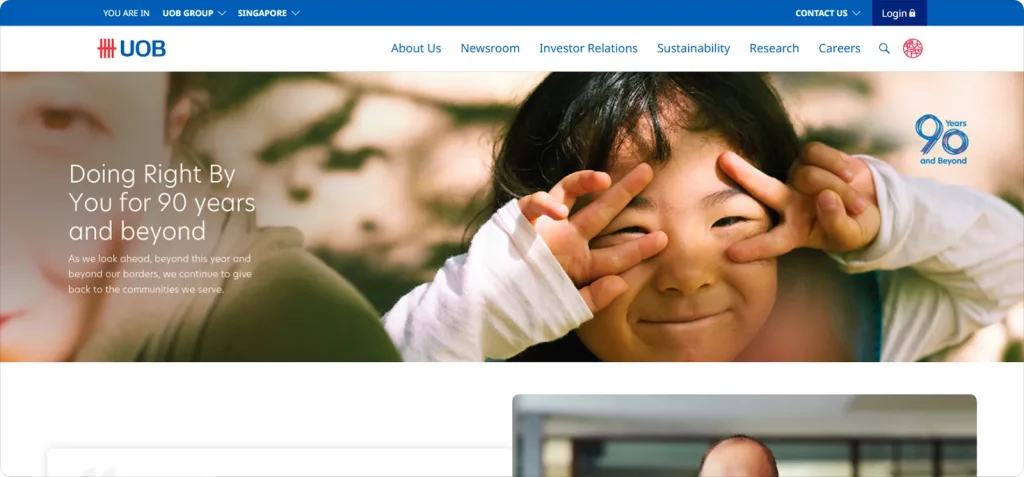
UOB supports a wide range of SMEs and corporates across Southeast Asia, with particular strength in domestic payments, trade finance and regional banking relationships.
Its international banking structure is currency-specific. Foreign currencies are managed through separate accounts, each with its own balance requirements and fees, increasing administrative complexity.
Key features:
- Account fees: SGD current accounts require an average balance of SG$10,000 to avoid monthly and annual charges. Foreign currency accounts carry separate thresholds
- Multi-currency: UOB doesn’t offer a unified multi-currency wallet. Businesses open individual Global Currency Accounts per currency
- Transfers: UOB Infinity lists International TT (SWIFT) at 1/16% (min SG$10, max SG$100) plus cable and agent bank charges
Best suited to: Trade-heavy businesses already operating within UOB’s ecosystem.
Limitations: Managing multiple currency accounts becomes costly and time-consuming at scale.
4. Standard Chartered
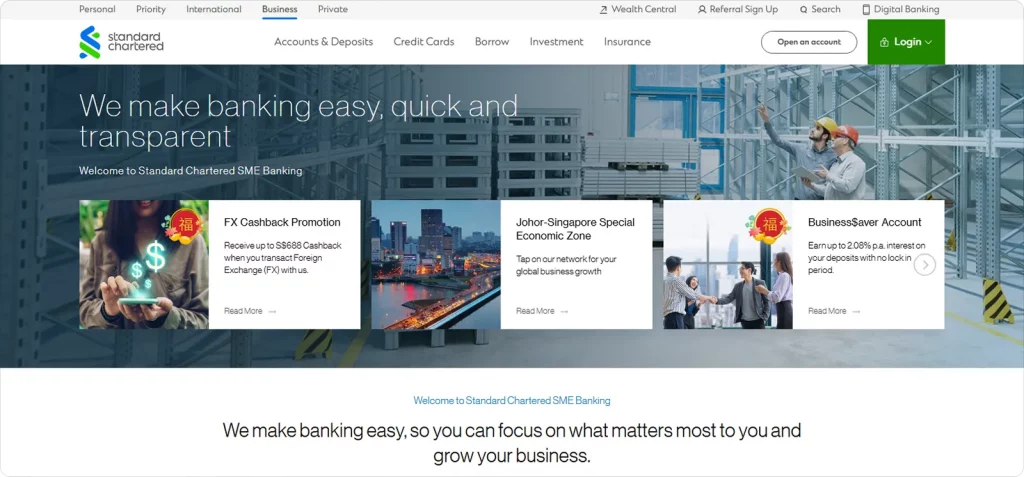
Standard Chartered brings deep experience in international trade and cross-border banking, making it attractive to businesses with structured regional or global operations.
For routine supplier payments and collections, however, the balance requirements and remittance pricing can feel heavy, particularly for smaller finance teams.
Key features:
- Account fees: BusinessOne applies an SG$50 fall-below fee on SGD accounts when balances fall below the required minimum
- Multi-currency: The core account supports only SGD and USD; other currencies require separate accounts
- Transfers: Outward telegraphic transfers with FX incur 0.125% handling commission (min SG$30, max SG$100)
Best suited to: Businesses with formal treasury structures and trade finance needs.
Limitations: High minimum balances and higher remittance costs.
5. HSBC (Hongkong and Shanghai Banking Corporation)
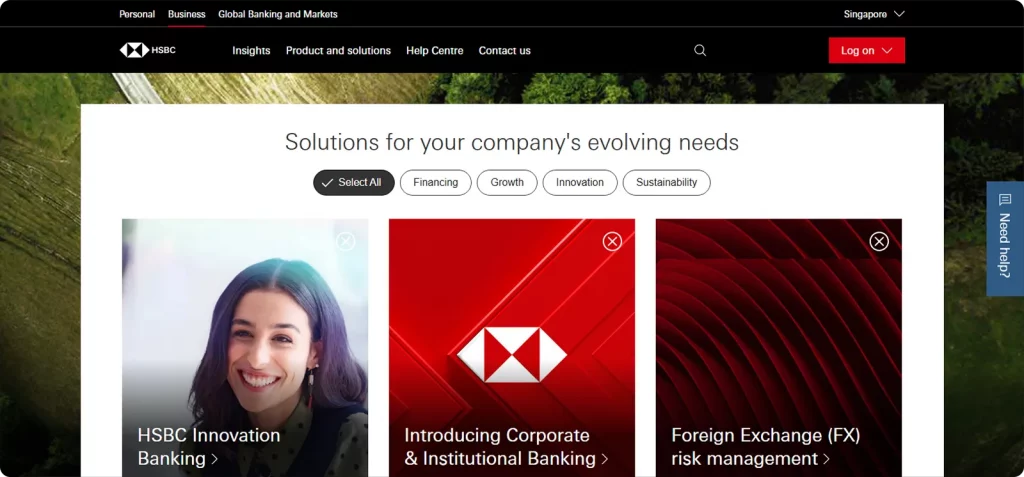
HSBC’s global footprint appeals to businesses operating across multiple regions. Its international network and FX tools stand out among traditional banks.
That reach comes with layered systems, approval processes and high balance requirements that can slow execution for everyday payments.
Key features:
- Account fees: HSBC states that SGD Operating Accounts require an SG$50,000 monthly average balance or incur a SG$70 monthly fall-below fee; USD Operating Accounts require a US$50,000 monthly average balance or incur a US$50 monthly fall-below fee. Other currencies have no minimum balance fees
- Multi-currency: HSBC supports a wide range of foreign currency accounts and offers virtual account structures for selected currencies
- Transfers: Online international transfers typically cost SG$25, with selected local-currency corridors offered at reduced or zero cost.
Best suited to: Larger, internationally distributed businesses.
Limitations: Cost and process complexity for smaller or fast-moving operations.
Pros of using traditional banks in Singapore
Traditional banks continue to play an essential role for many Singapore businesses, particularly where domestic operations, financing and regulatory certainty are priorities.
Key advantages include:
- Institutional trust and stability: Long operating histories, strong balance sheets and broad recognition among regulators, auditors and counterparties
- Deep integration with domestic payment systems: Reliable access to FAST, GIRO, cheque processing, statutory payments and local clearing, with predictable settlement and cut-off times
- Access to credit and trade finance: Loans, overdrafts, guarantees, letters of credit and other trade facilities typically sit alongside operating accounts, simplifying funding and procurement workflows
- Established compliance and reporting frameworks: Well-understood KYC, AML and reporting processes that reduce onboarding friction and audit complexity for specific organisations
For businesses that operate primarily in SGD or rely heavily on traditional financing structures, these strengths remain relevant.
Cons of traditional banks for international business
The challenges that traditional banks face in international use cases stem from the structure of their systems, not from service quality.
Common limitations include:
- Single base-currency account design: Business accounts centre on SGD, with foreign currencies layered on rather than treated as core balances
- Forced currency conversion at receipt or execution: Holding or receiving foreign currencies can trigger conversion unless specific accounts are opened and configured in advance
- Limited FX transparency: Banks apply FX pricing at execution, with margins embedded into rates, making it harder to forecast costs or reconcile realised FX
- Slower and less predictable international payments: Cross-border transfers move through correspondent banking networks, introducing additional intermediaries, cut-off times and variable settlement timelines
- Manual reconciliation across currencies and markets: Payments, FX activity and balances sit across multiple systems or statements, increasing month-end workload
- Fragmented cash flow visibility: Real-time visibility into global balances and incoming funds is limited, particularly for businesses operating across multiple regions
As international payment volume increases, these constraints directly affect cost control, timing predictability and operational efficiency, especially for businesses that frequently pay suppliers or manage cross-border revenue.
When traditional banks still make sense
Traditional banks continue to work well when a business’s financial activity stays narrow in scope and predictable in timing.
They tend to make sense when:
- Most money moves in and out in SGD: Payments, collections, payroll and taxes remain domestic, so FX pricing and settlement timing rarely affect day-to-day decisions
- International payments are the exception, not the routine: An occasional overseas supplier or one-off international invoice doesn’t justify rethinking the entire account structure
- Financing sits at the centre of the relationship: The bank provides overdrafts, working capital facilities, guarantees or trade instruments that the business relies on for operational purposes
Currency exposure is small enough to manage informally: FX conversions happen occasionally and the cost impact remains manageable without dedicated currency controls
When businesses start looking beyond traditional banks
A survey across Singapore found that 75% of SMEs say they are ready to switch away from traditional banks for their payment needs and 52% cite slow processing and settlement times for international payments as a key pain point.
The following signals suggest that a business’s payment setup may not longer match the scale and complexity of international activity:
- International payments become part of the weekly workflow: Paying suppliers in China, the US or Europe becomes the norm. FX margins, intermediary fees and settlement timing recur, making costs harder to absorb as overhead
- Revenue arrives in multiple currencies and on different schedules: Marketplaces, overseas clients and payment platforms settle funds in various currencies, often days apart, complicating cash planning and reconciliation
- FX is applied by default: Automatic conversion at receipt or execution removes control over timing, locking in rates
- Settlement timing disrupts planning: Even when payments process successfully, usable funds arrive later than expected, affecting supplier relationships, inventory planning or payroll
- Finance teams spend more time stitching data together: Tracking balances, FX movements, fees and incoming payments across accounts and systems becomes manual and time-consuming
At this stage, the question changes. It’s no longer only which bank to use, but whether the account structure itself fits how the business now operates internationally.
[Insert SG World Account generic global block option 3]
Why do Singapore businesses choose the World Account from WorldFirst over traditional banks?
Once international activity becomes routine, many Singapore businesses find that traditional bank accounts simply weren’t designed for global cash flow – and begin looking for alternatives built around how cross-border trade actually works.
One such alternative is the World Account from WorldFirst, a multi-currency business account built explicitly for international payments and collections.
WorldFirst isn’t a bank, but a multi-currency account and payment platform licensed as a Major Payment Institution in Singapore. It’s designed to help businesses receive, hold, convert and pay in multiple currencies without opening bank accounts in each market.
Here’s what makes the World Account a practical choice if you operate internationally:
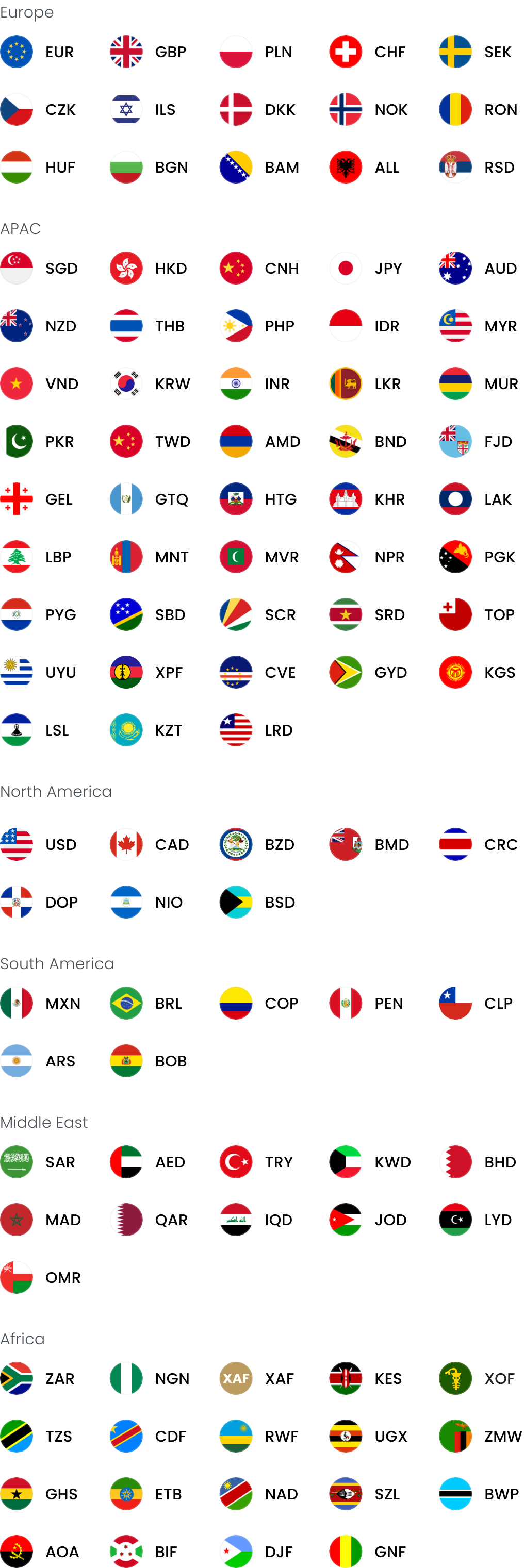
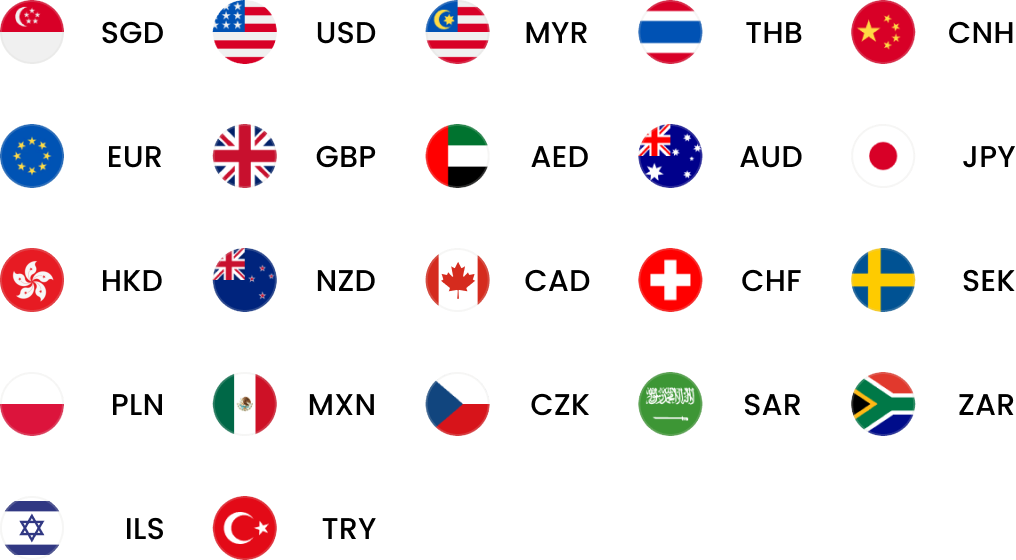
- Hold and manage 20+ currencies in one place: Businesses get local receiving account details in over 20 currencies, including USD, EUR, GBP, SGD, MYR, THB, AUD, CNH and HKD, making it easy to collect revenue like a local without multiple bank accounts
- No minimum balance, setup or ongoing account fees: The account is free to open and maintain with no minimum balance requirement, so businesses don’t need to lock away capital to avoid charges
- Faster, more flexible international payments: Currency accounts come with local account details, helping many payments land faster than through legacy correspondent bank chains. 80% of payments reach recipients on the same day and transfers between WorldFirst accounts in the same currency are instant and free
- Competitive and transparent FX: Currency conversion fees are clear and competitive. For major currencies, they’re capped at 0.6% above the mid-market rate. You can also target a specific conversion rate, or lock it in for up to 24 months
- Multi-currency card for spend: The World Card lets businesses pay in 150+ currencies, with zero foreign exchange fees in 15 major currencies and up to 1.2 % cashback on eligible business spend
For Singapore businesses that pay suppliers abroad or collect revenue in multiple currencies, the World Account from WorldFirst offers a more flexible way to manage global cash flow.
Open a World Account for free and manage international payments, collections and currencies from one place.
Sources:
- https://fred.stlouisfed.org/series/SGPFCIODCNUM
- https://asianbankingandfinance.net/news/75-singapore-smes-mull-ditching-banks-payment-needs
- https://www.business.hsbc.com.sg/en-sg/regulations/important-notices
- https://www.worldfirst.com/sg/
- https://www.dbs.com.sg/corporate/forms-and-guides/deposit-account-and-transaction-fees
- https://www.ocbc.com/business-banking/help-and-support/accounts-and-services/business-pricing-guide
- https://www.sc.com/sg/business-accounts/businessone/
- https://www.dbs.com.sg/corporate/forms-and-guides/deposit-account-and-transaction-fees
- https://www.dbs.com.sg/sme/default.page?pk_source=typed&pk_medium=direct&pk_campaign=bookmarked
- https://www.ocbc.com/business-banking/outward-telegraphic-transfer
- https://www.hsbc.com.sg/foreign-exchange/worldwide-transfers
- https://www.sc.com/global/av/sg-scb-business-banking-fees-guide-ec1-nc.PDF


![Trust card review [2027]: Features, fees and more](https://mdn.marmot-cloud.com/worldfirst/sites/9/2026/10/20261020214810193-300x200.webp)
![HSBC business account review [2026] Singapore: Features, fees and more](https://mdn.marmot-cloud.com/worldfirst/sites/9/2026/10/20261020213428771-300x200.webp)

![Revolut Business Card review Singapore [2027]: Features, fees & more](https://mdn.marmot-cloud.com/worldfirst/sites/9/2026/09/20261001002258848-300x200.webp)