





























Need an offshore bank account outside Singapore for your business? Here are three routes to consider before applying
Key takeaways
- An offshore bank account is a bank account held outside where a business is registered, used to hold foreign currencies, receive international payments and pay overseas suppliers
- Singapore businesses have three main routes: an international bank account (opened directly with a foreign bank), a traditional foreign account (requires a foreign entity setup) and a multi-currency account (opened online, no separate country setup)
- Multi-currency accounts typically open in days, international bank accounts in weeks, and traditional foreign accounts in months
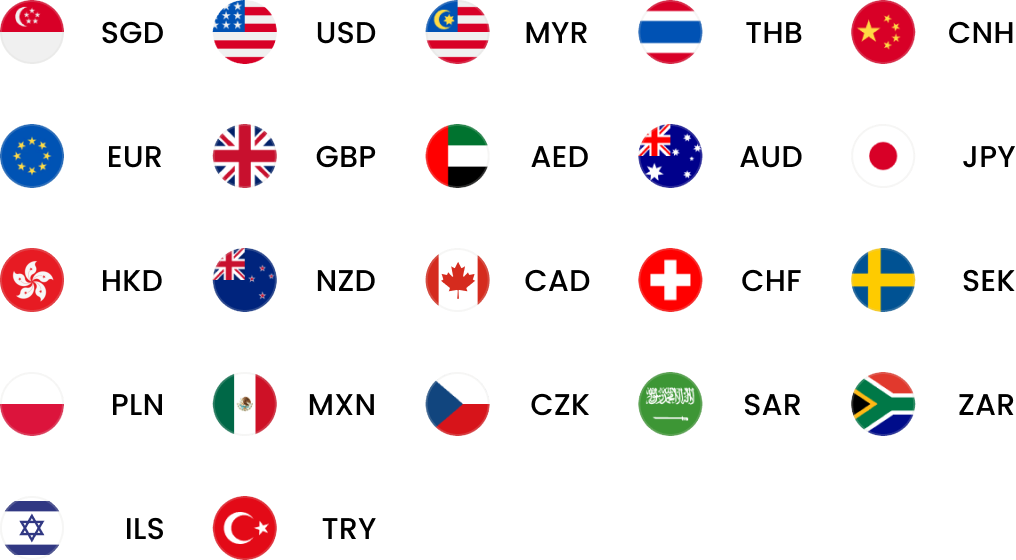
- A multi-currency account like the World Account holds balances across 20+ currencies and provides local receiving details in each, so international customers can pay through their own local payment rails rather than international wires
For Singapore businesses trading internationally, an offshore bank account can make cross-border payments faster, cheaper and easier to manage. Whether you’re receiving USD from US customers, paying suppliers in EUR, or holding CNH balances to pay Chinese suppliers on 1688, having a bank account outside Singapore, or a multi-currency account that gives you the equivalent capability, can reduce the friction of international operations.
This guide covers what an offshore bank account actually is, the different types available to Singapore businesses, and how to open one.
What is an offshore account?
An offshore bank account is any bank account you hold in a country outside of where you live or where your business is registered. For a Singapore-registered business, that could mean a USD account with a US bank, a GBP account with a UK bank, or a HKD account with a Hong Kong bank.
Offshore accounts work like any regular bank account. You can receive payments, send funds, hold balances and manage transactions. The main difference is that you’re banking in a foreign jurisdiction, usually to make international money movement smoother, cheaper or more targeted to a specific market.
Types of offshore accounts for Singapore businesses
Singapore businesses generally have three main routes for offshore banking. Each comes with different trade-offs on cost, setup complexity and flexibility.
| Account type | How you open it | Typical setup time | Best for |
| International bank account for non-residents | Apply with a foreign bank that accepts non-resident applicants | Several weeks | Businesses needing a single foreign currency account in one specific market |
| Traditional foreign bank account | Set up a foreign entity in the offshore market, then open a bank account there | Months | Businesses with substantial operations or presence in that market |
| Multi-currency account | Apply online with a multi-currency account provider | Days | Businesses needing multiple currencies without separate setups per country |
International bank accounts for non-residents
Some foreign banks accept applications from non-resident individuals or companies, but eligibility rules, minimum balances and documentation requirements are typically stricter than for domestic customers. Approval times can run several weeks, and applicants often need to visit in person or work through a wealth management or private banking programme with substantial minimum assets.
Traditional bank accounts (with foreign entity setup)
For businesses with more substantial international operations, setting up a foreign entity in the offshore market (a subsidiary, branch or representative office) and opening a bank account through that entity is the more established route.
Multi-currency and foreign currency accounts
Multi-currency accounts are typically the fastest and simplest offshore banking option. Instead of opening separate accounts in different countries, you open one account that holds balances in multiple currencies. Local receiving details are provided for each currency, so international customers can pay you through their local payment rails as if the account were domestic to their country.
For most Singapore businesses whose offshore banking need is really about managing multi-currency payments (rather than accessing local credit or trade finance in a specific market), a multi-currency account covers what an offshore account is meant to do.
How to open an offshore bank account in Singapore
Regardless of which type of offshore account you choose, the process broadly follows the same steps.
Step 1: Decide the type of offshore account you need
Based on your business’s actual requirements, decide whether you need an international bank account, a traditional foreign bank account (with entity setup), or a multi-currency account. If your main need is receiving international payments in multiple currencies and paying overseas suppliers efficiently, a multi-currency account is usually the fastest fit.
Step 2: Choose your provider or jurisdiction
For a traditional or international bank account, research which foreign bank fits your needs based on the market you’re targeting, minimum balance requirements, fees and non-resident eligibility. For a multi-currency account, compare providers on supported currencies, FX rates, transfer fees and integration capabilities.
Step 3: Prepare your documentation
Standard requirements typically include:
- Certificate of Incorporation and business registration documents (ACRA BizFile profile for Singapore businesses)
- UEN and tax identification information
- Identification and proof of address for all directors and beneficial owners holding 25% or more
- Board resolution authorising the account opening
- Proof of business address (utility bill or lease agreement)
- Source of funds documentation
- A clear statement of the business’s activities and why you need the offshore account
For foreign bank applications, additional documents may need to be notarised or apostilled, which can add several weeks to the process.
Step 4: Submit your application
Multi-currency account providers typically offer fully online applications. Traditional banks may require in-person visits, especially for private banking or corporate account tiers.
Step 5: Complete KYC and AML checks
Every offshore account application goes through Know Your Customer and anti-money laundering verification. This includes checks on business activities, beneficial owners, source of funds and expected transaction volumes. Being prepared with clear documentation upfront significantly reduces back-and-forth during this stage.
Step 6: Fund and activate the account
Once approved, complete any required initial deposit (multi-currency accounts typically have no minimum), and the account is ready to use.
WorldFirst lets you set up accounts in 20+ currencies
The World Account is a multi-currency account from WorldFirst that lets Singapore businesses hold, send and receive funds in 22 currencies from a single online application. Account opening is fully online with no minimum balance requirement and no monthly account fee.
Key features for Singapore businesses:
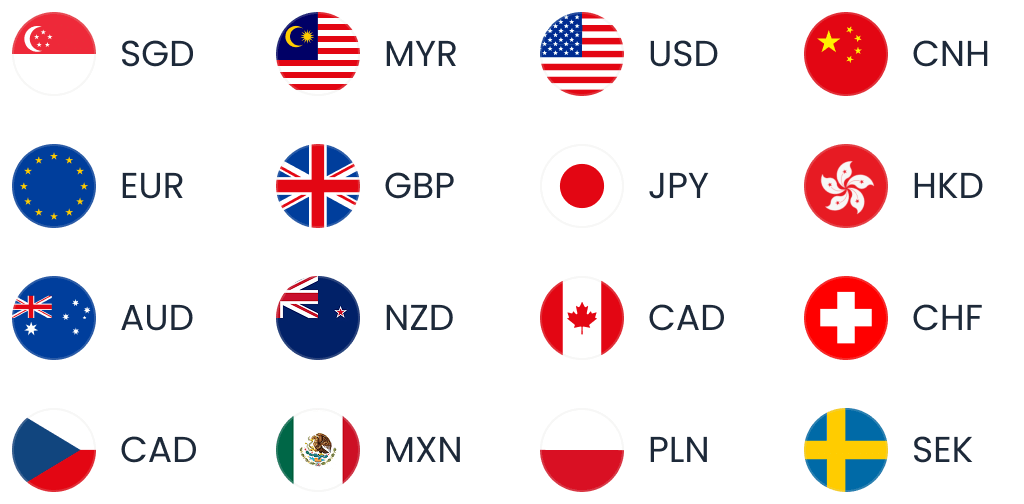
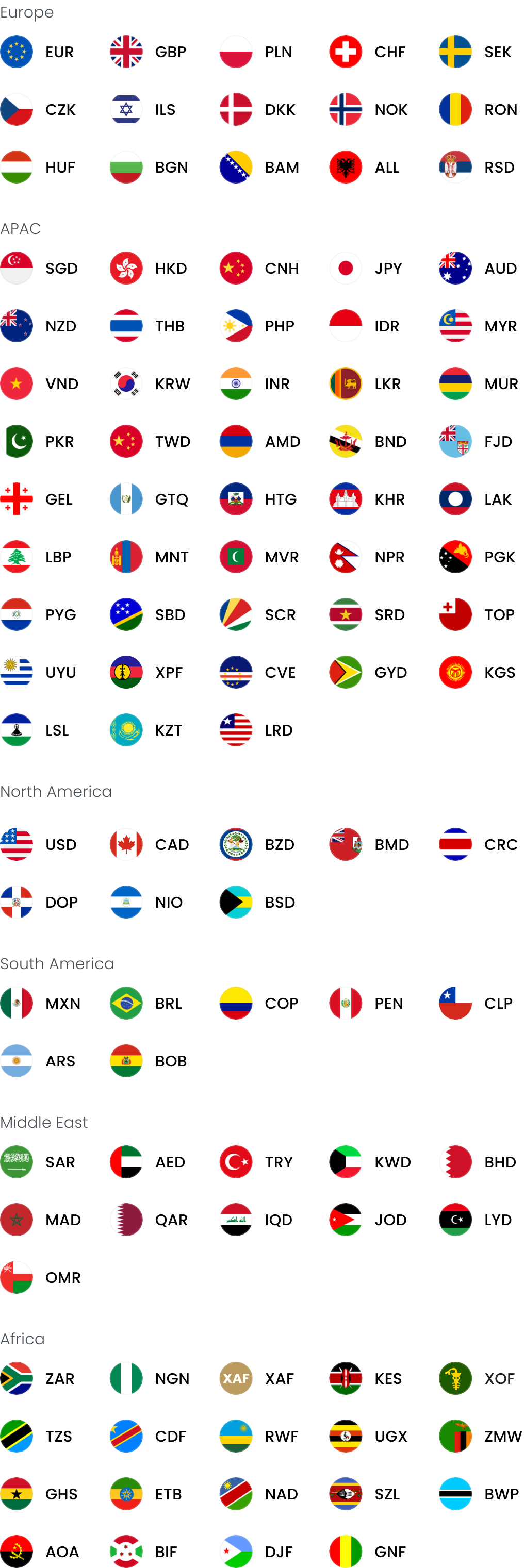
- Local receiving accounts in 22 currencies, including SGD, USD, GBP, EUR, JPY, CNH, AUD, HKD and MYR, so international customers can pay you as if the account were domestic to their country
- Send payments in 100+ currencies to 200+ countries and regions directly from the same account
- Forward contracts for locking in exchange rates on future currency conversions
- Rate Alerts for tracking specific currency pairs
- The World Card, a Mastercard-powered business payment card supporting 150+ currencies with zero FX fees in 15 supported currencies when sufficient balance is held (with cashback on eligible spending, Terms and Conditions Apply)
- World Pay for 1688.com, the authorised international payment provider for 1688.com
- Xero and NetSuite integrations for reconciliation
Disclaimer: The information contained is general only and largely our views. Before acting on the information you should consider whether it is appropriate for you, in light of your objectives, financial situation or needs. Although information has been obtained from and is based upon multiple sources the author believes to be reliable, we do not guarantee its accuracy and it may be incomplete or condensed. All opinions, estimates, mentioned products/services and referenced material constitute the author’s own judgement as of the date of the briefing and are subject to change without notice. WorldFirst shall not be responsible for any losses or damages arising from your reliance of such information.


![AliExpress dropshipping: How to source and pay suppliers from Singapore [2026]](https://mdn.marmot-cloud.com/worldfirst/sites/9/2026/10/20261021131155864-300x200.webp)

![Trust card review [2027]: Features, fees and more](https://mdn.marmot-cloud.com/worldfirst/sites/9/2026/10/20261020214810193-300x200.webp)
![HSBC business account review [2026] Singapore: Features, fees and more](https://mdn.marmot-cloud.com/worldfirst/sites/9/2026/10/20261020213428771-300x200.webp)