





























A guide to Singapore’s Tax Identification Number (TIN), covering what it is, the different types for individuals and businesses, how to apply online, and how to check your TIN
Key takeaways
- A Tax Identification Number (TIN) in Singapore is a unique identifier used for tax filing, banking, government transactions, and regulatory compliance
- Singapore citizens and permanent residents use their NRIC as their TIN. Foreigners use their FIN. Registered businesses use their Unique Entity Number (UEN)
- Individuals and businesses don’t need to apply for a TIN separately. It’s automatically assigned when the NRIC, FIN or UEN is issued by the relevant authority
- TINs are managed by IRAS (Inland Revenue Authority of Singapore) for tax purposes, with underlying identifiers issued by ICA, MOM or ACRA depending on the type of taxpayer.
- Businesses can check their UEN on the BizFile portal, while individuals can find their TIN on their NRIC card, work pass, or through SingPass

If you’re setting up a business in Singapore, working here as a foreigner, or dealing with any kind of tax or banking paperwork, you’ll come across the term Tax Identification Number (TIN). It’s the unique code the government uses to identify you or your business for tax and regulatory purposes.
The good news: getting a TIN in Singapore isn’t a separate process you need to apply for. It’s automatically assigned based on your status as a citizen, permanent resident, foreign resident, or registered business. This guide covers what a TIN is, the different types in Singapore, how the underlying identifiers are issued, and how to find yours when you need it.
What is a Tax Identification Number (TIN) in Singapore?
A Tax Identification Number is a unique identifier that Singapore’s government uses to track tax obligations and financial dealings for individuals and businesses. Every taxpayer, whether a citizen, permanent resident, foreign worker or registered business, is assigned a TIN that links their tax records, government transactions and financial activity to a single reference.
The TIN is administered by IRAS (Inland Revenue Authority of Singapore) for tax filing purposes, though the underlying identifier is issued by different agencies depending on who the taxpayer is. For individuals, it’s issued at birth (for citizens), when permanent residency is granted, or when a work pass is issued (for foreigners). For businesses, it’s issued at the point of company registration with ACRA.
Think of your TIN as your official tax identity in Singapore. It’s what links your income, your CPF contributions, your GST filings, your banking activity and your business records back to one consistent reference number.
Types of tax identification numbers in Singapore
Singapore uses three main types of TIN, and which one applies depends on who you are.
National Registration Identity Card (NRIC)
Singapore citizens and permanent residents receive an NRIC number. This nine-character alphanumeric code is issued at birth for citizens or when permanent residency is granted. It’s printed on the front of your NRIC card and doubles as your Tax Reference Number with IRAS.
Format: S/T + 7 digits + checksum letter (example: S1234567D)
- S prefix indicates citizens or permanent residents born before 1 January 2000
- T prefix indicates those born on or after 1 January 2000
- The seven digits are a serial number
- The final letter is a checksum used for verification
Foreign Identification Number (FIN)
Foreigners with valid passes (employment pass, work permit, student pass, long-term visit pass) receive a FIN. This is issued by the Ministry of Manpower (MOM) or the Immigration & Checkpoints Authority (ICA) when the pass is approved.
Format: F/G/M + 7 digits + checksum letter (example: G1234567X)
- F prefix indicates FINs issued before 1 January 2000
- G prefix indicates FINs issued between 1 January 2000 and 31 December 2021
- M prefix indicates FINs issued on or after 1 January 2022
The FIN works the same way as an NRIC for tax purposes, letting foreign residents fulfil their tax obligations while working or studying in Singapore.
Unique Entity Number (UEN)
Registered businesses, companies and organisations receive a UEN, which serves as their TIN. This is Singapore’s standardised business identifier, used across all government agencies.
Format: Varies by entity type. A local company might have a UEN like 202012345K (year of incorporation + serial + checksum), while a sole proprietorship or partnership might use a format like 53123456A. Foreign companies typically have UENs beginning with F.
The UEN is permanent and doesn’t need to be renewed. It stays with the business throughout its existence.
How to apply for a TIN number online in Singapore
For individuals
Singapore citizens and permanent residents: Your NRIC number becomes your TIN automatically. You don’t need to apply for it separately. If you’re a Singapore citizen, this is assigned at birth. For new permanent residents, it’s issued as part of the PR application process by ICA.
Foreign residents: Your FIN is assigned automatically when your work pass, student pass or long-term visit pass is approved by MOM or ICA. Once your pass is issued, your FIN appears on it.
You can access your tax records through the IRAS myTax Portal using SingPass authentication.
For businesses
Businesses get a UEN automatically when they register their entity with the relevant government agency:
- Companies, LLPs, sole proprietorships and partnerships: register through the ACRA BizFile portal. Once registration is approved, your UEN is issued as part of your Certificate of Incorporation.
- Trade unions: registration is handled through the Ministry of Manpower.
- Societies: registration is handled through the Registry of Societies (ROS).
- Charities and non-profit organisations: registration is handled through the Ministry of Culture, Community and Youth (MCCY).
For most companies, the UEN is issued through ACRA’s BizFile portal at the point of business registration. Registration fees are SGD 15 for name reservation and SGD 300 for company incorporation.
Once you have your UEN, you can access GST registration, corporate tax filing and other government services through the IRAS myTax Portal using your CorpPass credentials.
How to check Tax Identification Number
Whether you’ve misplaced it or need to look up someone else’s TIN for a legitimate purpose, here’s how to find it.
For individuals
- Your NRIC card: Your NRIC number is printed on the front of your card, labelled as “Identity Card No.”
- Your work pass: For foreigners, the FIN is printed on your employment pass, work permit, student pass or other long-term visit pass.
- SingPass account: Both NRIC and FIN are shown when you log into your SingPass account.
- IRAS myTax Portal: Your TIN appears on all IRAS communications and inside your myTax Portal account.
For businesses
- BizFile portal: The ACRA BizFile portal lets you search for any registered entity’s UEN using the company name. This is publicly accessible.
- Certificate of Incorporation: Your UEN is printed on the Certificate of Incorporation issued by ACRA when your business was registered.
- IRAS correspondence: Any tax correspondence from IRAS to your business includes the UEN.
- Government-issued documents: Business licences, permits and any government-related documentation display the UEN.
Multi-currency payments made east with WorldFirst
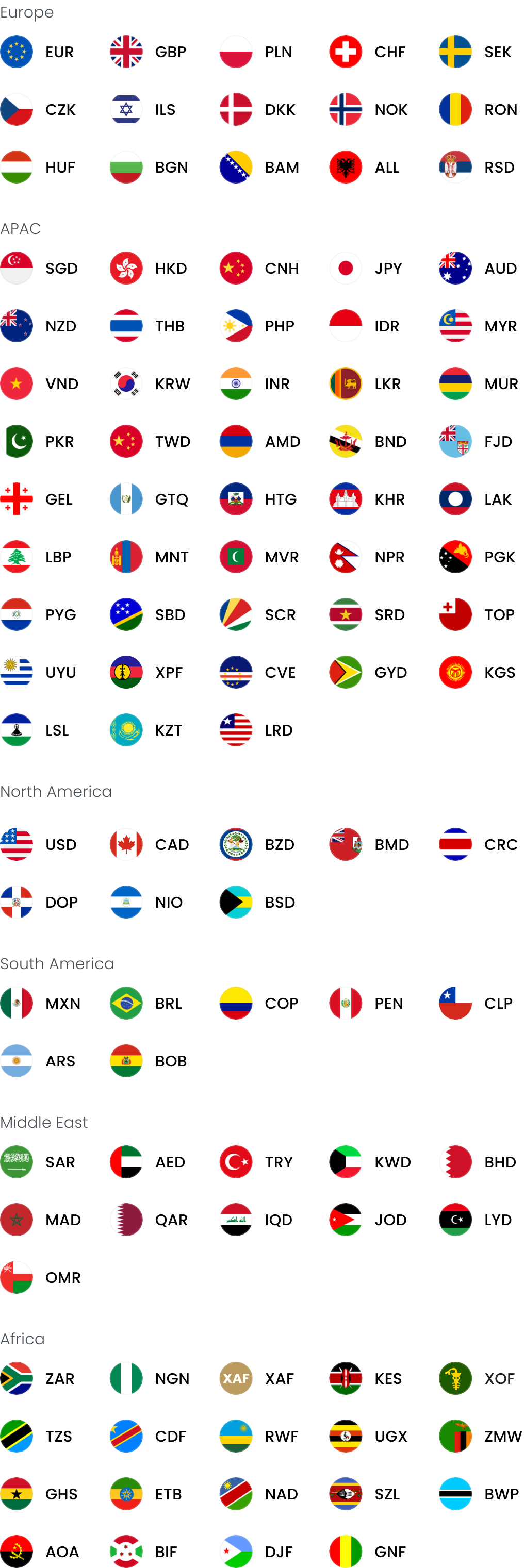
The World Account from WorldFirst is a multi-currency account that lets Singapore businesses hold, send and receive funds in 22 currencies including SGD, USD, GBP, EUR, CNH and MYR. Account opening is fully online, requires your UEN and standard business documentation, and doesn’t carry a monthly account fee or minimum balance requirement.
Features that support Singapore businesses handling international operations:
- Local receiving accounts in 22 currencies for collecting international income as if the account were domestic to that country
- Send payments in 100+ currencies to 200+ countries and regions
- The World Card, a Mastercard-powered business debit card with zero FX fees when spending in any of the 15 supported currencies (with sufficient balance held), plus cashback on eligible spending (Terms and Conditions Apply). Up to 20 virtual cards per account at no additional cost. World Pay for 1688.com, the authorised international payment provider for 1688.com
- Forward contracts for locking in exchange rates on future currency conversions
- Xero and NetSuite integrations for reconciliation
FAQs
1. What is the difference between TIN and UEN in Singapore?
TIN (Tax Identification Number) is the general term used internationally for taxpayer identifiers. UEN (Unique Entity Number) is Singapore’s specific version of a TIN for businesses. When you’re asked for a TIN as a Singapore business, your UEN is what you provide.
2. Does every business need a TIN in Singapore?
Yes. Every registered business in Singapore needs a UEN, which functions as its TIN.
3. How can I get a TIN number online in Singapore?
You don’t need to apply for a TIN separately. For individuals, it’s automatically assigned as your NRIC or FIN when those identifiers are issued. For businesses, register your company with ACRA through the BizFile portal. Once registration is approved, your UEN is issued automatically as part of your Certificate of Incorporation.
4. Does a foreigner need a TIN to work in Singapore?
Yes. Foreigners working in Singapore automatically receive a FIN when their work pass is approved by MOM or ICA. This FIN acts as their TIN for tax purposes, letting them file personal income tax and receive CPF contributions if applicable.
Disclaimer: The information contained is general only and largely our views. Before acting on the information you should consider whether it is appropriate for you, in light of your objectives, financial situation or needs. Although information has been obtained from and is based upon multiple sources the author believes to be reliable, we do not guarantee its accuracy and it may be incomplete or condensed. All opinions, estimates, mentioned products/services and referenced material constitute the author’s own judgement as of the date of the briefing and are subject to change without notice. WorldFirst shall not be responsible for any losses or damages arising from your reliance of such information.



![AliExpress dropshipping: How to source and pay suppliers from Singapore [2026]](https://mdn.marmot-cloud.com/worldfirst/sites/9/2026/10/20261021131155864-300x200.webp)

![Trust card review [2027]: Features, fees and more](https://mdn.marmot-cloud.com/worldfirst/sites/9/2026/10/20261020214810193-300x200.webp)