

























Compare five secured credit cards in Singapore, for business owners, freelancers and self employed individuals who do not meet standard income requirements
Key takeaways
- A secured credit card is backed by a fixed deposit pledged to the issuer, and the five cards covered here require at least S$10,000
- The issuer assesses the application and sets the credit limit, so the deposit does not guarantee approval or a limit equal to the deposit
- Some issuers add conditions beyond the deposit, such as HSBC’s total relationship balance of at least S$50,000
- The deposit is locked as the card is active, hence a secured credit card results in blockage of capital for business owners and freelancers
- The World Card by WorldFirst, a multi-currency business payment card, addressed the tradeoffs of a secured credit card with no security deposit or credit line

Credit card issuers in Singapore set minimum annual income requirements for Singapore citizens and PRs and higher for foreigners, and often ask for income documents as proof.1 Business owners, freelancers and self employed individuals with irregular income, a short business history or no Singapore credit history can find these requirements harder to meet.
A secured credit card is the alternative several issuers offer. The applicant deposits a fixed amount as collateral and the issuer checks the application and sets the credit limit. The deposit stays pledged while the card is active, and interest and late payment charges still apply.
What are secured credit cards?
A secured credit card is a credit card backed by collateral such as a fixed deposit given by the cardholder to the card issuer. The bank sets the credit limit, so the pledged deposit does not guarantee approval or a limit based on the deposit.
Interest and late payment charges still apply if bills are not paid. Since the card issuers report to credit bureaus, repayment behaviour can affect credit history, and missed payments can hurt it.
Secured vs unsecured credit cards: What’s the difference?
| Feature | Secured credit card | Unsecured credit card |
| Collateral | Fixed deposit pledged to the issuer, can be equal to or more than the credit limit | None |
| Credit limit | Depends the on deposit amount; typically 80-100% for most cases | Set by the issuer using income, credit history and other criteria |
| Income requirement | An alternative if the minimum income requirement is not met; age, documents and approval checks still apply | Minimum annual income applies, such as S$30,000 for Singaporeans and S$45,000 for foreigners at DBS, with income documents required1 |
| Builds credit history | Yes, the issuers report to credit bureaus | Yes, the issuers report to credit bureaus |
| Rewards and benefits | Depend on the underlying card | Depend on the card |
| Annual fee | Depends on the underlying card | Depends on the card |
| Deposit release | Set by the issuer’s terms after cancellation and settlement of balances | Not applicable |
| Interest on unpaid balances | Standard card interest rates apply | Standard card interest rates apply |
| Who it’s for | People who don’t meet the minimum income requirement, new-to-credit, rebuilding credit or with irregular income | People with established credit scores, and regular income |
The secured route suits applicants without qualifying income or a Singapore credit history who can pledge at least S$10,000. The tradeoff is capital locked for as long as the card is active.
The unsecured route suits applicants who meet the income requirement and provide income documents, and the tradeoff is that approval and the limit depend on income and credit assessment.
Top secured credit cards in Singapore
| Fees* | DBS Secured Credit Card | HSBC Secured Revolution Card | CIMB Visa Signature Secured | UOB PRVI Miles Card | POSB Everyday Card |
| Minimum security deposit | S$10,000 SGD fixed deposit1 | S$10,000 fixed deposit within a total balance of S$50,0004 | S$10,000 CIMB SGD fixed deposit6 | S$10,000 fixed deposit10 | S$10,000 SGD fixed deposit13 |
| Annual fee | S$196.20 for the principal card and S$98.10 for the supplementary card, with the first year annual fees waived2 | Zero4 | Zero for life7 | S$ 261.60 for the principal card, with the first-year annual fee waived. The first supplementary card is free, with subsequent supplementary cards charged at S$130.80 each.10 | S$196.20 for the principal card and S$98.10 for the supplementary card, with the first-year annual fees waived.14 |
| Interest on unpaid balances | 27.8% p.a.3 | 27.8% p.a.4 | 27.8% p.a.9 | Not specified | 27.8% p.a.3 |
| Late payment fee | S$1003 | S$1004 | S$1009 | Not specified | S$1003 |
| Foreign currency transaction fee | 3.25%3 | Up to 3.25%4 | 3% (1% Mastercard or Visa fee plus 2% CIMB administrative fee)
1% network fee on SGD transactions processed outside Singapore9 |
3.25% administrative fee
1% international processing fee on SGD transactions processed outside Singapore12 |
3.25%3 |
1. DBS Secured Credit Card
DBS offers a secured credit card route for applicants who do not meet its minimum annual income requirement of S$30,000 for Singaporeans and S$45,000 for foreigners.1
Applicants must be aged 21 to 75 and maintain an SGD fixed deposit of at least S$10,000.
DBS does not publish a fixed deposit-to-credit limit ratio.1 The standard DBS Altitude Card earns up to 1.3 miles per S$1 spent locally and up to 2.2 miles per S$1 spent overseas in foreign currency. DBS Points do not expire.2
| Fees* | DBS Secured Credit Card |
| Minimum security deposit | S$10,000 SGD fixed deposit1 |
| Annual fee | S$196.20 for the principal card and S$98.10 for the supplementary card, with the first year annual fees waived2 |
| Interest on unpaid balances | 27.8% p.a.3 |
| Late payment fee | S$1003 |
| Foreign currency transaction fee | 3.25%3 |
*Fees checked in November 2026.
2. HSBC Secured Revolution Card
HSBC offers the Revolution Credit Card through its secured route. You need a fixed deposit of at least S$10,000 and a total relationship balance of at least S$50,000, inclusive of the deposit.4
HSBC gives you a credit limit of up to 100% of the approved deposit amount. Applicants must be at least 21 years old.3 The card earns 10 HSBC reward points per S$1 spent on eligible purchases online, and 1 point per S$1 on other eligible purchases. Bonus points are capped at 9,000 per calendar month.5
| Fees* | HSBC Secured Revolution Card |
| Minimum security deposit | S$10,000 fixed deposit within a total balance of S$50,0004 |
| Annual fee | Zero4 |
| Interest on unpaid balances | 27.8% p.a.4 |
| Late payment fee | S$1004 |
| Foreign currency transaction fee | Up to 3.25%4 |
*Fees checked in November 2026.
3. CIMB Visa Signature Secured
CIMB’s secured route requires a minimum fixed deposit of S$10,000 for the CIMB Visa Signature.6 Applicants must be at least 21 years old. The fixed deposit is for applicants who do not meet the minimum income requirement of S$30,000.6 Foreigners cannot apply directly for this card.7
The card earns 10% cashback on eligible spending across online shopping, veterinary services, cruises etc, only if S$800 in eligible spending is done within the statement month. Cashback is capped at S$100 per statement month, with a maximum of S$20 per category. Other eligible spending earns 0.2% cashback.7
| Fees* | CIMB Visa Signature Secured |
| Minimum security deposit | S$10,000 CIMB SGD fixed deposit6 |
| Annual fee | Zero for life7 |
| Interest on unpaid balances | 27.8% p.a.9 |
| Late payment fee | S$1009 |
| Foreign currency transaction fee | 3% (1% Mastercard or Visa fee plus 2% CIMB administrative fee)
1% network fee on SGD transactions processed outside Singapore9 |
*Fees checked in November 2026.
4. UOB PRVI Miles Card
UOB PRVI Miles Card needs a deposit collateral of at least S$10,000.10 Applicants must be at least 21 years old. The income requirements, otherwise, are S$30,000 for Singapore citizens and permanent residents aged 55 or below, S$15,000 for those aged 56 and above. For foreigners, it is S$40,000.10
UOB directs secured card applicants to a branch and does not publish a fixed deposit-to-credit limit ratio.10,11 The card earns 1.4 miles per S$1 spent locally, 2.4 miles per S$1 on other overseas spending, and 3 miles per S$1 spent in Malaysia, Indonesia, Thailand and Vietnam.10
| Fees* | UOB PRVI Miles Card |
| Minimum security deposit | S$10,000 fixed deposit10 |
| Annual fee | S$ 261.60 for the principal card, with the first-year annual fee waived. The first supplementary card is free, with subsequent supplementary cards charged at S$130.80 each.10 |
| Interest on unpaid balances | Not specified |
| Late payment fee | Not specified |
| Foreign currency transaction fee | 3.25% administrative fee
1% international processing fee on SGD transactions processed outside Singapore12 |
*Fees checked in November 2026.
Compare virtual credit cards for Singapore businesses
5. POSB Everyday Card
POSB’s secured route requires a fixed deposit of at least S$10,000. Applicants must be aged 21 to 75. There is no card specific fixed deposit-to-credit limit ratio.13 The standard POSB Everyday Card requires a minimum annual income of S$30,000 for Singapore citizens and permanent residents aged 55 or below, S$15,000 for those aged 56 and above, and S$45,000 for foreigners.14
Cash rebates reach 10% on selected categories, subject to S$800 in qualifying monthly spending and applicable category caps. These include 10% cashback on selected online food delivery transactions and 5% on dining.14
| Fees* | POSB Everyday Card |
| Minimum security deposit | S$10,000 SGD fixed deposit13 |
| Annual fee | S$196.20 for the principal card and S$98.10 for the supplementary card, with the first-year annual fees waived.14 |
| Interest on unpaid balances | 27.8% p.a.3 |
| Late payment fee | S$1003 |
| Foreign currency transaction fee | 3.25%3 |
*Fees checked in November 2026.
Compare the best cashback credit cards and the best travel credit card options
How to apply for a secured credit card in Singapore
- Choose the secured credit card: Compare the deposit, rewards, annual fee and any additional requirement, and confirm the issuer accepts applications for that card through its secured route
- Prepare the security deposit: The cards covered here require a fixed deposit of at least S$10,000
- Gather the required documents: Identity documents such as an NRIC or passport, and, depending on the need, proof of address, an Employment Pass or income documents for self-employed and variable income applicants1,7
- Submit the application: Use the issuer’s secured card form or branch process, as UOB directs secured applicants to a branch10
- Place the security deposit: Follow the bank’s instructions for putting the fixed deposit, as the credit limit is set by the bank and may not equal the deposit.
- Receive the card and activate it: The bank approves the application and sets the credit limit before the card can be used.
Read more about corporate credit cards in Singapore
The limitations of secured credit cards
A secured credit card gives access to credit to applicants who do not meet standard income requirements. The trade offs are:
- Capital lockup: The security deposit is pledged for as long as the card is active, so the business owner or freelancer cannot use it.
- Deposit interest rates: Funds held as collateral cannot be deployed elsewhere, so the return the business could earn on that capital is an opportunity cost.
- Credit limit tied to deposit: The issuer sets the limit with reference to the deposit, which may not match the business’s monthly spending.1
- Release of deposit on cancellation: The deposit is returned only after the issuer’s terms are met, such as after all secured cards are terminated and balances are settled.6
- Interest on carried balances: Secured status does not lower the rate on unpaid balances, which is 27.8% p.a. at DBS, HSBC and CIMB.1,3,9
- Card management for business and personal expenses: The card is issued to the individual and not the business, so business and personal spending share one statement and one credit limit.
For business owners and freelancers who need a card for business expenses with no locking of capital, interest rates on carried balances and a separate line of credit for business expenses, a business payment card tied to a multi-currency business account can come in handy.
The World Card: A business payment card with no account opening fee or minimum deposit
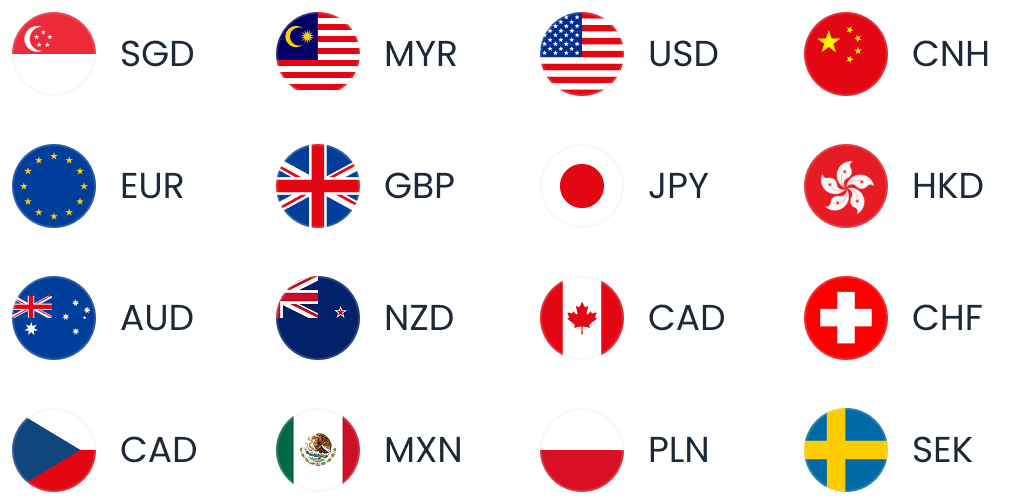
The World Card by WorldFirst is a multi-currency card for businesses. It is a debit card that draws on balances held in the World Account, so there is no credit line, interest charges, or security deposit. You can get your World Card issues both virtually and physically. You can get up to 25 cards issued and there’s zero FX fees when paying in 15 supported currencies, as long as you have sufficient funds in that currency.
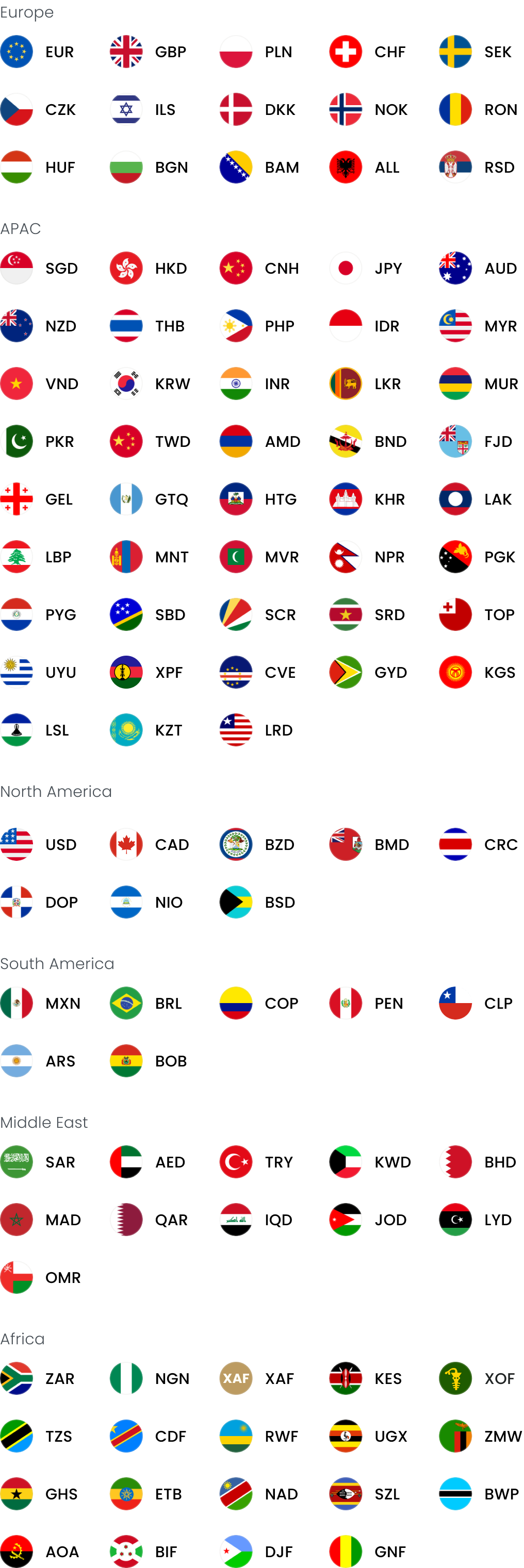
The World Account, a multi-currency account for Singapore businesses offers local currency accounts in 20+ currencies. You can also send payment to 100+ different currencies across 200+ countries and regions.
Key features of the World Card:
- Mastercard-powered virtual and physical cards
- Issuance to verified directors or authorised non-directors, managed online by the main account user
- Up to 25 cards, including up to 10 physical cards
- Zero issuance fee for virtual cards
- Spending limits, freeze and cancel functionality and 3D Secure protection
- Payments in 150+ currencies wherever Mastercard is accepted
- Cashback on eligible purchases every month (Terms and Conditions Apply)
Pricing: Zero account opening fee, zero monthly fee and zero receiving fees, with no minimum balance requirement and currency conversion up to 0.6%.
*Fees checked in November 2026.
FAQs
1. What are the best secured credit cards in Singapore?
The best secured credit card depends on the applicant’s circumstances like the type of work and income, the capital for the deposit, and the interest rate and annual fee. The most secure credit card for you would depend on minimum deposit, additional balance requirements, rewards and deposit release, which differ by issuer.
2. How do freelancers get a credit card in Singapore?
Freelancers apply through the same issuer process as other applicants. The documents required differ for salaried, self employed and variable income applicants. Some issuers accept a pledged fixed deposit, at least S$10,000 among the cards covered here, through a secured card application. The issuer still assesses the application and sets the limit.
A business payment card is another option for eligible businesses and freelancers. It draws on balances held in a business account, so it involves no credit application and no security deposit, and it provides no credit.
Sources
- https://www.dbs.com.sg/personal/support/card-application-eligibility.html
- https://www.dbs.com.sg/personal/cards/credit-cards/dbs-altitude-cards
- https://www.dbs.com.sg/personal/cards/cards-rates-fees.page
- https://www.hsbc.com.sg/credit-cards/products/revolution
- https://www.hsbc.com.sg/content/dam/hsbc/sg/documents/credit-cards/revolution/offers/revolution-credit-card-10x-reward-points-terms-and-conditions.pdf
- https://www.cimb.com.sg/content/dam/cimbsg/personal/document/cards/forms/form-secured-card.pdf
- https://cimb.com.sg/en/personal/banking-with-us/cards/credit-cards/cimb-visa-signature.html
- https://www.cimb.com.sg/content/dam/cimbsg/personal/document/faq/cards/FAQ%20-%20VS%20Cashback%20Promotion_1Aug23.pdf
- https://www.cimb.com.sg/en/personal/help-support/rates-charges/fees-charges/cards.html
- https://www.uob.com.sg/prvi
- https://www.uob.com.sg/personal/cards/credit/uob-prvi-miles-card/apply-now.html
- https://pib.uob.com.sg/assets/pdfs/gen_info_cards.pdf
- https://www.posb.com.sg/personal/support/card-application-eligibility.html
- https://posb.com.sg/EverydayCard