




























Singapore’s economy is built on global trade and financial connectivity. In 2024, its total merchandise trade reached SG$1.28 trillion, emphasising the economy’s reliance on cross-border transactions.
Yet even in one of the world’s most advanced financial hubs, moving money internationally can still feel complex. Fees often hide behind exchange rate margins, transfers can take days to clear and reconciling payments across multiple currencies drains valuable time and focus.
The good news is that Singapore’s payment infrastructure is evolving fast, with the Monetary Authority of Singapore (MAS) linking instant networks across borders for quicker, more transparent transfers.
This guide explains how cross-border payments in Singapore work and how to simplify operations, cut costs and protect margins with solutions like the World Account from WorldFirst.
Key takeaways:
- Cross-border payments keep Singapore’s economy moving: Businesses rely on fast international transfers to pay suppliers, receive overseas revenue and manage cash flow efficiently
- Traditional banking routes slow growth: Older systems like SWIFT add delays, costs and limit visibility, making it harder for Singapore businesses to stay competitive
- Instant and fintech-powered payments are reshaping cross-border transfers: New links such as PayNow–DuitNow and PayNow–UPI enable near-instant transfers, while fintech platforms offer faster, more transparent and more affordable options
- Multi-currency control gives businesses flexibility: Modern platforms let companies hold, convert and pay in foreign currencies, reducing FX risk and simplifying reconciliation
- WorldFirst simplifies cross-border payments for Singapore businesses: With the World Account, you can send, receive and manage payments globally with transparent FX rates, same-day transfers and complete control from one platform
Open your World Account today and give your Singapore business a faster way to pay and get paid worldwide.
Why cross-border payments matter in Singapore
A cross-border payment is any transaction in which the payer and recipient are in different countries or use different currencies. In Singapore, these transactions drive the country’s trade and international growth. From sourcing raw materials to paying regional teams, cross-border payments keep supply chains and cash flow moving.
For Singapore businesses, the most common use cases include:
- Paying overseas suppliers and manufacturers
- Receiving marketplace or e-commerce revenue from abroad
- Paying service providers, contractors or remote teams in other markets
- Settling B2B invoices in a client’s preferred currency
In traditional models, cross-border transfers route through a chain of correspondent banks using SWIFT messaging. Each intermediary bank can add delays and costs. But the newest models are rewriting that playbook: they combine local accounts, one-leg-out (OLO) settlement and instant-payment links to slash time, cut fees and provide end-to-end transparency.
How cross-border payments in Singapore work
Here’s a step-by-step look at how international payments move from Singapore to another country (and vice versa):
1. Payment initiation and input
You initiate a payment via your bank’s portal, a fintech dashboard or a multi-currency account interface. You provide:
- Beneficiary details (name, bank, account number or identifier)
- Currency and amount
- Purpose/payment reason (required under regulatory rules)
At this point, the transaction is screened under Singapore’s regulatory framework – including anti-money laundering (AML), counter-financing of terrorism (CFT) and sanctions checks – as mandated by the Payment Services Act (PSA), enforced by the Monetary Authority of Singapore (MAS).
2. Debit and currency conversion
Once the system clears the payment, your provider (bank or platform) debits your domestic account or your balance in the home currency (e.g., SGD). If the recipient’s currency differs:
- The provider performs a foreign exchange conversion
- The rate applied includes a margin or spread above the market rate
- Some providers offer rate locking in advance (e.g., “good-till-cancelled”) to protect against FX volatility
In some payment corridors, routing may involve double conversion (for example, SGD → USD → another currency) if a direct currency pair isn’t available, which increases cost. Holding funds in multiple foreign currency balances in advance can reduce unnecessary conversions.
3. Compliance, routing and network choice
After conversion, the transaction undergoes deeper compliance and routing logic:
- Final checks for KYC, AML/CFT and sanctions screening
- The routing decision is made based on the destination country, currency, cost and speed
Routes include:
Correspondent banking – SWIFT path
The provider sends a SWIFT message to intermediary or correspondent banks within the recipient’s currency zone. Each intermediary bank forwards it further until it reaches the local bank for crediting. This approach offers a wide global reach but is slower and often more expensive due to the involvement of multiple parties.
Instant payment link – local rails
Singapore’s fast payments system, PayNow, is now connected to partner systems in other countries. For example:
- Singapore and Thailand linked PayNow to PromptPay in April 2021, enabling instant, direct transfers
- Singapore and Malaysia established a linkage between PayNow and DuitNow for real-time P2P transfers in November 2023
- Singapore and India’s UPI systems are now connected via PayNow, enabling instant transfers between the two systems
Fintech/pre-funded local accounts
Fintech platforms are reshaping cross-border payments by simplifying the process and removing unnecessary intermediaries. Instead of sending funds through a chain of correspondent banks, specialist providers give businesses access to local collection accounts in key currencies. This allows them to route payments through domestic payment networks where available and apply transparent FX rates with no hidden markups.
This approach offers several clear advantages for Singapore businesses:
- Faster delivery: Payments often arrive the same day, without multiple intermediary banks
- Transparent costs: FX rates and fees are visible upfront, helping you manage margins – and there are no intermediary banks to take a cut of the final amount
- Multi-currency flexibility: You can receive, hold and pay in the currencies you use most
- Integrated operations: APIs and ERP integrations automate reconciliation, reporting and cash flow visibility
Project Nexus is an initiative aimed at scaling and standardising connections between domestic instant payment systems worldwide to enable seamless cross-border transfers. In 2024, the BIS Innovation Hub tested a prototype connecting Singapore, Malaysia, Thailand, the Philippines and Indonesia. The objective is for participating instant payment systems to connect through a common infrastructure.
4. Settlement and credit
How the funds are settled and reach the recipient depends on the network:
- On correspondent / SWIFT paths, funds are settled via nostro/vostro accounts or through clearing and settlement systems (e.g., CLS), depending on currency and market infrastructure.
- On real-time rails and fintech pre-funded networks, the provider or payment operator prearranges settlement by holding local-currency liquidity in advance. This allows the recipient’s bank to credit funds immediately or within seconds.
- Singapore continues to expand cross-border instant-payment linkages, meaning some low-value transfers can settle in seconds.
For example, the Singapore–Malaysia, Singapore–Thailand and Singapore–India linkages offer instant routes in supported corridors.
Depending on route and intermediaries, transfers may take:
- Seconds or under a minute via instant rails
- One to three business days via traditional correspondent banking
Some service providers, such as WorldFirst, enable instant transfers between accounts within their own network, regardless of country.
5. Notification and reconciliation
Once the beneficiary bank has received the funds, a credit message (such as SWIFT MT103 or an instant messaging protocol) notifies the payer and recipient of completion. You then reconcile this payment against invoices, orders or accounting entries.
Many modern platforms connect directly to ERP or accounting systems (e.g., NetSuite) to automate reconciliation, reduce manual work and detect distinctions such as short pays or FX differences.
Considerations and constraints:
- Speed vs reach trade-off: Instant rails are fast but only available between certain countries. Traditional banking networks provide global reach but slower execution.
- Cost layers: Margins on FX, interbank fees, intermediary charges, compliance overhead and routing inefficiencies can all stack up.
- Regulatory and compliance overhead: Every transfer must pass global AML/CFT and sanctions checks, which can introduce delays or risk if there’s suspicion in the chain.
- Liquidity/funding constraints: Delays also occur when money isn’t readily available in the recipient’s currency. Fintechs help solve this by keeping local balances in major markets.
- Standardisation and and system compatibility: Different countries use different payment formats and systems. The global move towards shared standards like ISO 20022 – and initiatives like Project Nexus – aims to align these systems and reduce errors.
- Industry evolution: In 2025, Singapore announced a plan to consolidate its national payment schemes (e.g., PayNow, FAST, Inter-bank GIRO) under a single entity. This could improve governance and flexibility for future cross-border growth.
How Singapore businesses use cross-border payments across key sectors
Cross-border payments power Singapore’s most globally connected sectors. From e-commerce and manufacturing to financial services, businesses rely on fast, transparent and compliant international transactions to stay competitive.
E-commerce and online retail
Singapore’s exporters and online merchants depend on efficient cross-border payments to reach customers and suppliers worldwide. Every international order requires reliable collection in foreign currencies and low-cost payouts to vendors.
Take a typical example: a Singapore retailer selling on Amazon US receives revenue in USD. With a multi-currency account, the merchant can hold the balance in USD and use it for future supplier payments, rather than converting it to SGD immediately. This helps them avoid unnecessary FX costs.
Case study: Nook Theory
Singapore-based e-commerce brand Nook Theory uses the World Account to simplify supplier payments and improve cash flow. By managing collections and payouts in multiple currencies, the company eliminates unnecessary conversions and avoids the delays common to traditional banking routes.
Nook Theory also reduced supplier payment times by up to 90%, allowing faster inventory turnover and stronger vendor relationships.
The World Card, linked to the World Account, gives the team additional flexibility to pay overseas partners and Google ads in different currencies, while earning cashback rewards on eligible transactions.
This combination of faster payments, transparent FX and multi-currency control shows how Singapore e-commerce businesses can compete globally through more innovative financial infrastructure.
See how Christina, the entrepreneur behind Nook Theory, reached seven figures in just one year. She reveals her top three growth strategies and how she streamlined her operations to support them:
Manufacturing and trade
Singapore’s manufacturing and trade ecosystem thrives on just-in-time operations and regional supply networks. Any payment delay can disrupt production and logistics.
A Singapore-based manufacturer importing components from Malaysia or China, for example, can streamline supplier payments using PayNow–DuitNow or PayNow–UPI links. These real-time rails enable instant cross-border fund transfers, ensuring materials move without interruption.
For larger firms, currency volatility adds another layer of risk. Many now use fintech platforms to fix exchange rates in advance with forward contracts or manage FX directly within their accounts. By stabilising FX costs, businesses can protect their margins while improving supplier confidence and on-time delivery.
Financial services and corporate operations
In Singapore’s financial and professional services sectors, the demand for speed, compliance and transparency is even greater. Corporate treasuries, funds and service providers manage high-volume cross-border flows daily – from investment redemptions and client settlements to international payrolls.
Many businesses have adopted single-platform payment solutions that integrate directly with their ERP or accounting systems. For instance, a corporate treasury department can manage hundreds of overseas transactions through a World Account integrated with NetSuite, automating payment workflows, reconciliation and reporting.
Advantages of a WorldFirst World Account
For Singapore companies handling international payments, WorldFirst’s World Account offers many benefits compared to traditional methods:
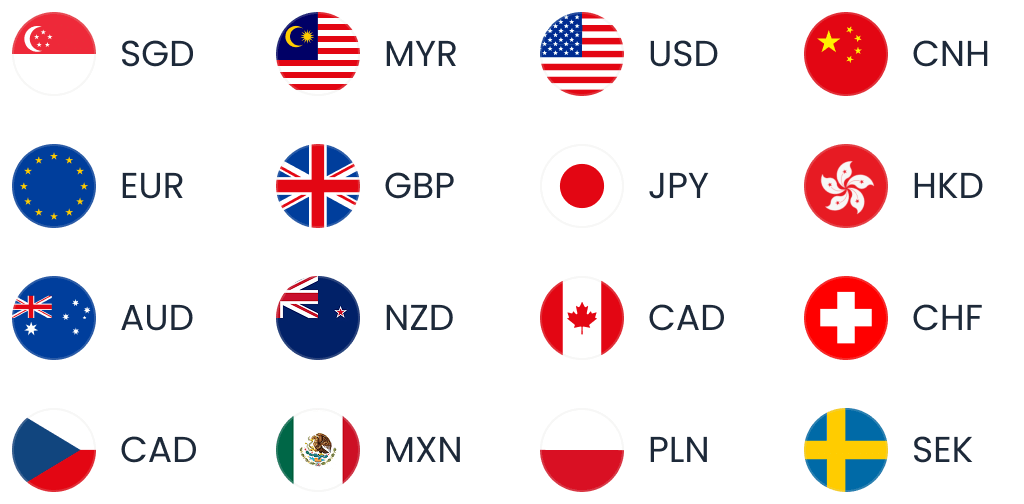
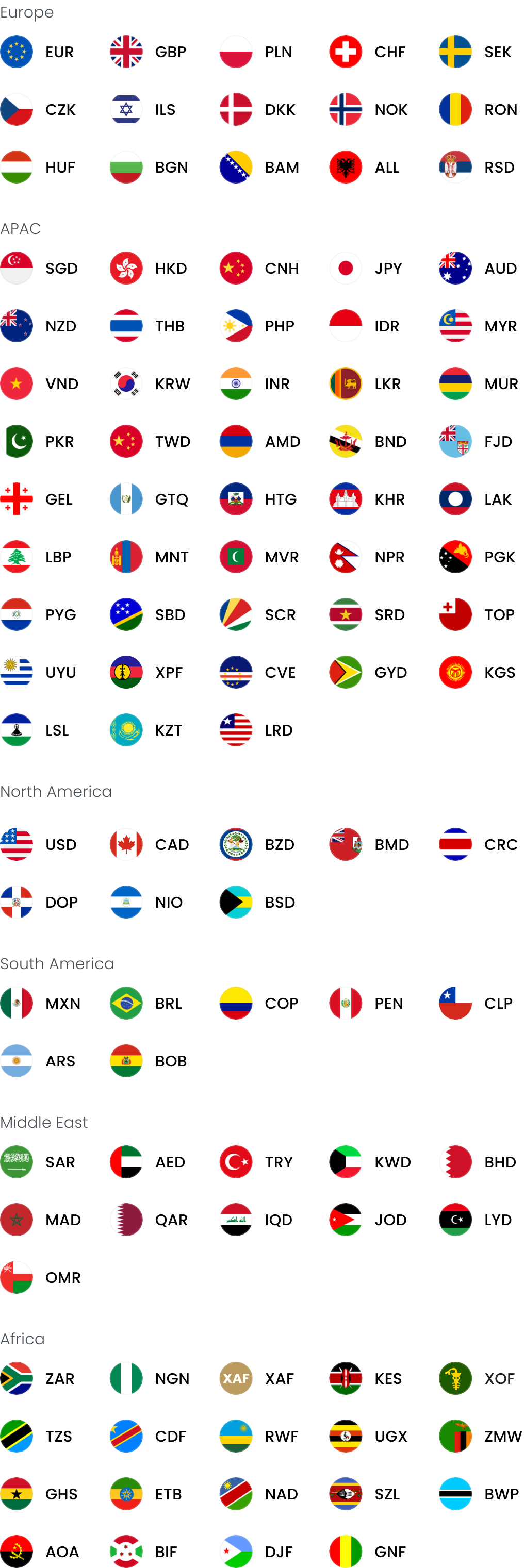
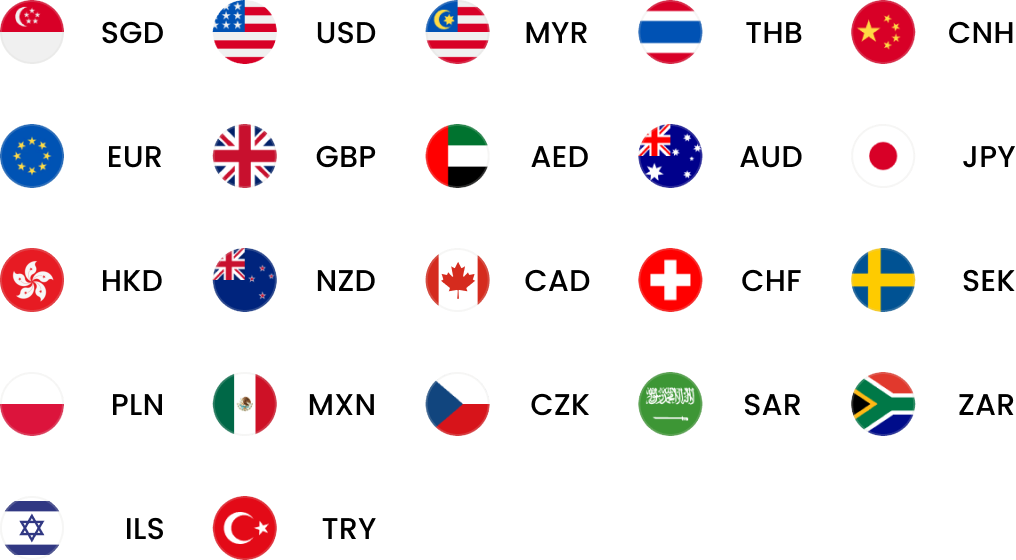
- Multi-currency management: A World Account is an all-in-one multi-currency account that lets you hold funds in 20+ currencies and pay out in 100+. Instead of converting funds for each transfer, businesses can store funds in USD, EUR, JPY and other currencies, and transfer on demand. This flexibility reduces FX conversions and timing risk.
- Fast transfers, low fees: Funds transferred through World Account typically arrive on the same day or next day (depending on currency corridor). WorldFirst offers competitive exchange rates and no hidden fees. In practice, this means a Singapore exporter can pay overseas vendors much faster than via SWIFT and at a fraction of the cost, with no SWIFT fees or inflated FX margin.
- Integration with business tools: The World Account integrates with major accounting platforms. For example, it integrates with NetSuite, allowing businesses to sync their international transactions into NetSuite automatically. This can save hours of bookkeeping and reduce errors.
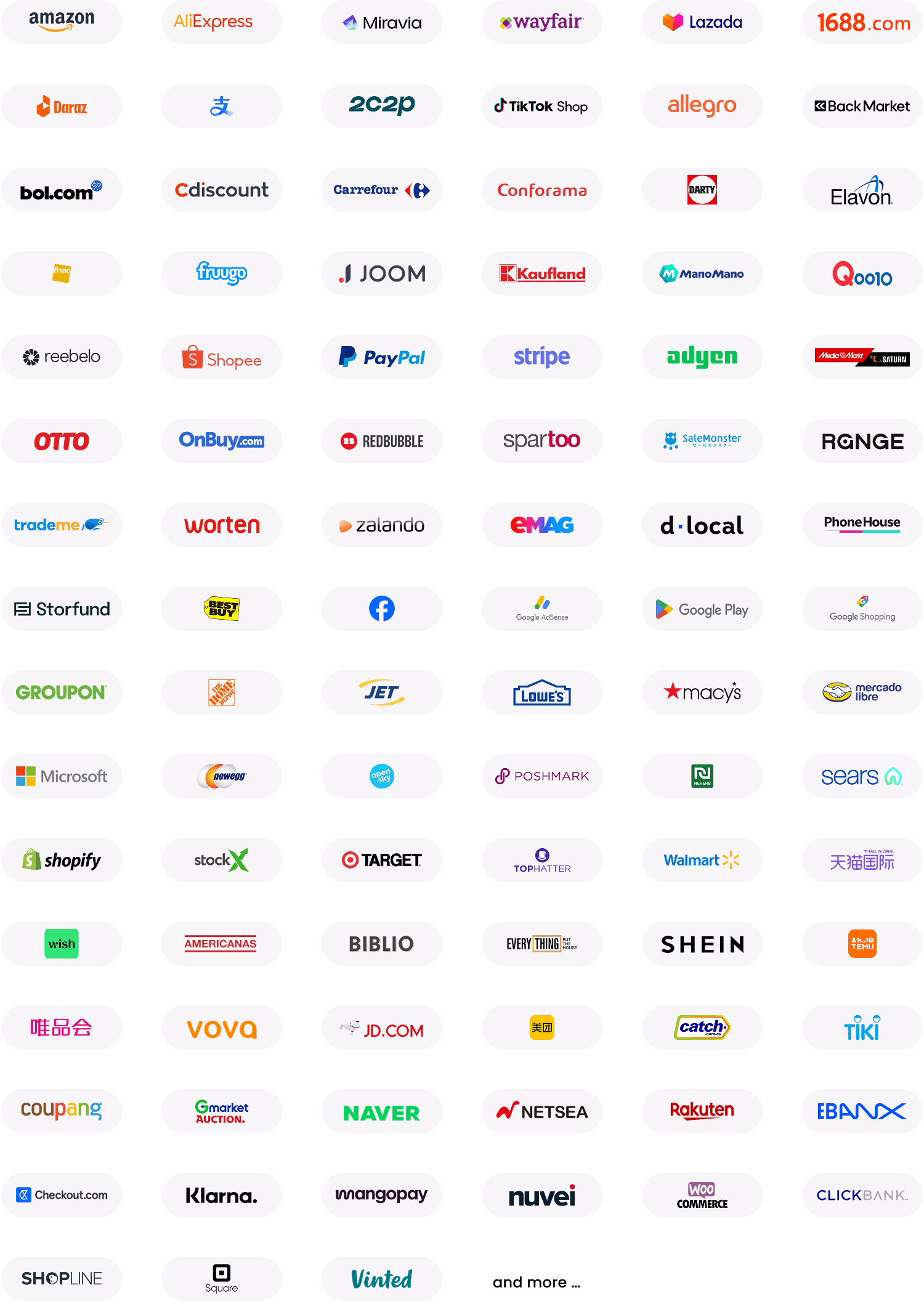
- Marketplace integrations: The World Account allows free collections from global marketplaces. In Singapore, an Amazon or Shopee seller can receive payments in USD, MYR or THB directly into virtual accounts. You can open 20+ local currency accounts and collect from 130+ marketplaces and payment gateways (Amazon, Etsy, PayPal, Shopify, etc.) at no charge. This is a huge advantage for e-commerce sellers who would otherwise pay up to 4–6% to convert those funds to SGD.
- World Card: Alongside the account, WorldFirst offers a business virtual card that draws from their World Account balance. Use the card to pay for business expenses, without manual transfers.
- Instant payments: If your supplier also holds a World Account, payments in the same currency are instant and free.
A World Account gives businesses greater control and visibility over cross-border payments. With transparent FX rates and forward contracts of up to 24 months, you can manage cash flow confidently and avoid hidden costs.
WorldFirst operates under the regulatory framework set by the Monetary Authority of Singapore, ensuring every transaction meets the highest standards of security and compliance.
Open your World Account today for free and simplify cross-border payments for your Singapore business.
Sources:
- https://www.mas.gov.sg/regulation/payment-services
- https://www.mas.gov.sg/regulation/faqs/payment-services
- https://www.mas.gov.sg/news/media-releases/2023/launch-of-paynow-upi-linkage
- https://www.mas.gov.sg/news/media-releases/2023/paynow-duitnow-link-launch
- https://www.bis.org/about/bisih/topics/payments/nexus.htm
- https://www.worldfirst.com/sg/
- https://www.worldfirst.com/sg/product/
- https://www.worldfirst.com/sg/product/pay/pay-business-partners/
- https://www.worldfirst.com/sg/product/manage/integrate-accounting-software/
- https://www.worldfirst.com/sg/api/
- https://www.youtube.com/@worldfirst
- https://www.pilotoasia.com/guide/cross-border-payments-singapore-smbs-2025
- https://www.worldbank.org/en/news/feature/2024/01/23/the-promise-of-faster-safer-cross-border-payments
- https://www.reuters.com/world/asia-pacific/singapore-regulator-banking-association-set-up-new-payments-entity-2025-02-12


![Trust card review [2027]: Features, fees and more](https://mdn.marmot-cloud.com/worldfirst/sites/9/2026/10/20261020214810193-300x200.webp)
![HSBC business account review [2026] Singapore: Features, fees and more](https://mdn.marmot-cloud.com/worldfirst/sites/9/2026/10/20261020213428771-300x200.webp)

![Revolut Business Card review Singapore [2027]: Features, fees & more](https://mdn.marmot-cloud.com/worldfirst/sites/9/2026/09/20261001002258848-300x200.webp)