




























Every time you change money at a counter, you pay a spread you didn’t set and convert on a day you didn’t choose. For a one-off holiday that’s fine. For a business moving foreign currency every month, that markup and the forced timing quietly eat your margin.
Singapore clears more FX than almost anywhere. Average daily volumes hit US$1.485 trillion in April 2025, third globally after the UK and US. But the rate a business gets at a walk-in counter has little to do with that headline liquidity.
This guide breaks down how the best money changer in Singapore prices foreign exchange, when a counter is the right tool, and when a multi-currency account gives you better control over rate, timing and records.
Key takeaways:
- The best money changer in Singapore depends on context, not just the headline rate: Rates vary based on location, competition, currency availability, transaction size and timing. Counters in competitive areas often have better deals. And if you’re exchanging a large sum, consolidating it into one transaction can help you negotiate a better rate
- Physical money changers work best for occasional, cash-based needs: They still make sense for a rare emergency or a small cash requirement, but for recurring supplier payments or foreign-currency revenue the cash-only model works against you
- Retail money changers struggle to support ongoing business activity: Cash-only transactions, forced immediate conversion, limits on transaction size and manual receipts make them inefficient for recurring payments, supplier settlements or foreign-currency revenue
- A multi-currency platform offers a more scalable alternative for businesses: For companies that import, export or sell internationally, solutions like the World Account allow funds to be received, held, converted and sent digitally, with clearer pricing, better control over timing and workflows designed for regular cross-border activity
Open a World Account for free and streamline cross-border payments from a single platform.
How money changers work in Singapore
Money changers in Singapore operate under a simple retail model: customers walk in with cash and walk out with another currency, at an offered rate.
Several practical factors affect the rates and services:
1. Location and competition
Exchange rates vary depending on the level of local competition around a counter. Areas with a high concentration of licensed money changers tend to offer a smaller difference between buy and sell rates, as operators compete directly on price.
In contrast, outlets serving captive demand, such as transport hubs, residential areas or leisure districts, face less pressure to discount and often quote less favourable pricing.
Consumer finance platforms consistently advise choosing locations where multiple changers operate side by side, as price competition generally leads to better rates.
2. Currency stock and volume
Each outlet carries its own stock of currencies.
High-demand currencies (USD, EUR, GBP, JPY) are usually readily available and priced tightly. Less liquid currencies or smaller denominations can have wider spreads.
In some cases, a changer may quote a significantly less favourable rate or decline the transaction altogether if demand is limited or stock levels are low.
3. Transaction size
Many changers offer better rates on larger transactions.
Pricing reflects how money changers operate. A single large exchange is easier to process and more profitable than multiple smaller ones.
For example, converting SG$10,000 at once might incur the same fixed fee as 10 conversions of SG$1,000 – so doing it in one go saves money. Always check if there’s a higher or “corporate” rate for bulk.
4. Rate booking and short-term locking
While traditional currency exchange remains walk-in and cash-based, some money changers now allow customers to reserve a rate in advance and complete the transaction later.
These arrangements usually involve selecting the currency and amount online, then collecting and paying in person within a defined time window. Lock-in periods are typically short and subject to availability, but they can reduce exposure to short-term rate movements.
5. Operating hours
Most city-based money changers operate standard business hours on weekdays, with reduced availability on weekends. Access outside these hours is more limited and generally costs more.
Businesses requiring currency exchange late at night, on Sundays or during public holidays should expect wider spreads due to reduced competition and higher operating costs.
6. Note condition and denominations
Money changers generally accept only clean, standard banknotes and don’t handle foreign coins. Worn, damaged or unusual notes may be rejected or exchanged at less favourable rates.
Presenting widely used denominations in good condition helps avoid delays and pricing adjustments.
5 best money changers in Singapore
Here’s a detailed comparison of the best money changers in Singapore, with context on where exchange offices operate and which currencies they most commonly offer:
| Money changer / hub | Representative store | Address | Common currencies offered | Typical opening hours |
| The Arcade (Raffles Place) | Arcade Money Changers | 11 Collyer Quay, #01-18, Singapore 049317 | Major currencies including USD, EUR, GBP, JPY, MYR, THB and more | Mon-Fri: ~09:30–18:30; Sat: ~09:30–14:30; Sun: Closed (varies by shop) |
| Mustafa Foreign Exchange | Mustafa’s Foreign Exchange | 145 Syed Alwi Rd, Level 1, Singapore 207704 | Wide range including PKR, INR, IDR, MYR, CNY, HKD, PHP and more (varies by counter) | 24/7 |
| Raffles Money Changer | Raffles Money Change | 11 Collyer Quay, #2-10, Singapore 049317 | Major currencies (varies by counter and demand) | Typical retail hours (e.g. ~09:30–18:00; actual times vary) |
| People’s Park Complex (Chinatown) | Right Angel Exchange and others like Crante Money Changer | 101 Upper Cross St, Singapore 058357 | USD, EUR, CNY, HKD, MYR, PHP and others (varies by operator) | ~09:00–21:00 (varies by counter) |
| Lucky Plaza (Orchard Road) | Examples: K S S N Foreign Exchange Pte. Ltd., S.Abdul Hamid Money Changer, Rabi Trading | 304 Orchard Rd, Lucky Plaza, Singapore 238863 | PHP, MYR, IDR, INR, THB and other currencies (varies by shop) | Generally ~09:30–20:30 |
*Note: Information in this table is accurate as of January 2026
1. Arcade Money Changers
Arcade Money Changers is one of the most frequently cited money changers in Singapore.
It operates a physical counter and also offers an online rate booking feature that allows customers to reserve a quoted rate for collection within a short time window, typically up to the next business day.
The service is commonly praised for competitive rates on major currencies during business hours and for its centralised, high-traffic setting, which allows customers to easily compare rates before transacting.
Best suited for: High-value exchanges where pricing accuracy and timing both matter.
2. Mustafa Foreign Exchange
Mustafa Foreign Exchange is known for extended operating hours, including late nights, weekends and most public holidays. This makes it one of the few money changers in Singapore that remains accessible outside regular business hours.
It supports a wide range of currencies and is often considered a practical option when other retail FX counters are closed.
Best suited for: Urgent or off-hours exchanges when access outweighs marginal rate differences.
3. Raffles Money Changer
Quotes provided by Raffles Money Changer are straightforward, transactions move quickly and pricing remains stable within a narrow range for commonly traded currencies.
There is little emphasis on negotiation or special handling, which appeals to teams that value speed and predictability.
For businesses executing routine exchanges, that consistency reduces operational friction even if the rate is not always the lowest available on a given day.
Best suited for: Routine conversions where speed and predictability matter more than optimisation.
4. People’s Park Money Changers
People’s Park Money Changers operate in close proximity to one another, which creates a competitive environment where rates can change quickly from counter to counter.
This setup allows businesses to compare quotes in real time and choose the most favourable option when exchanging larger amounts.
Outcomes vary by individual counter and timing, but taking the time to check multiple quotes often results in better overall pricing than accepting the first rate offered.
Best suited for: Price-sensitive exchanges where comparing multiple quotes improves outcomes.
5. Lucky Plaza Money Changers
Lucky Plaza Money Changers attract customers primarily for availability rather than consistent pricing.
Several independent counters operate in the exact location and some maintain access to currencies that may be less consistently available elsewhere. Such availability can simplify exchanges for specific regional markets, even though quoted rates and spreads often vary across currencies and counters.
As a result, businesses tend to use Lucky Plaza selectively, based on currency access rather than as a default option for regular exchanges.
Best suited for: Region-specific currency needs where availability takes priority over consistency.
When to use physical money changers
A money changer is still the right tool for some jobs, just rarely a business’s core FX. It makes sense when:
- You need physical cash: If a trip or an in-person deal genuinely requires foreign notes, a counter hands them over on the spot with no account setup
- You need cash urgently: When you’re caught short outside banking hours, 24/7 counters like Mustafa or the shops in Jewel Changi have you covered
- You top up petty cash occasionally: If someone in the business refills a small multi-currency cash float now and then, a local changer is the simplest option
The pattern in all three: small amounts, physical cash, one-off. The moment FX becomes recurring – paying suppliers, receiving overseas revenue, reconciling it, the counter stops being the right tool.
Why money changers don’t meet business needs
For large or recurring business transactions, physical changers become impractical and costly.
Common limitations businesses encounter when using money changers include:
- Cash-only, one-off transactions: If your business regularly pays foreign suppliers, you’d have to make repeated trips with cash or cheques. This is highly inefficient for high volumes
- Forced conversions: Money changers don’t allow you to hold foreign balances. If your company receives a USD payment today, you must immediately convert it to SGD at the counter. You have no choice to “keep USD on hold” for a better future rate
- Limits and convenience: Many changers set daily or per‑transaction limits. Exchanging, say, hundreds of thousands of dollars would be time-consuming (and might require prior notice or multiple visits)
- Lack of records: Corporate accounting demands clear records. Money changers will give a slip, but it won’t link to invoices or digital systems. You can’t upload that slip into your accounting software; you have to enter it manually
- Limited transaction scope: Changers can’t send funds to suppliers’ bank accounts, issue local currency transfers or integrate with e-commerce platforms. Businesses often need a mix of payment types – wire transfers, local transfers, etc. – which changers don’t support
- Lack of digital ordering: As noted, only a few changers offer any online booking (Arcade’s 24h lock). There’s no automated scheduling or rate alert
- Time and opportunity cost: Repeated visits, cash handling and manual tracking require staff to spend time on administration rather than on core operations
How WorldFirst supports global businesses
WorldFirst offers the multi-currency World Account for companies that import, export or sell internationally.
WorldFirst isn’t a bank. It offers a single online platform to receive, hold, convert and send multiple currencies easily, with transparency:
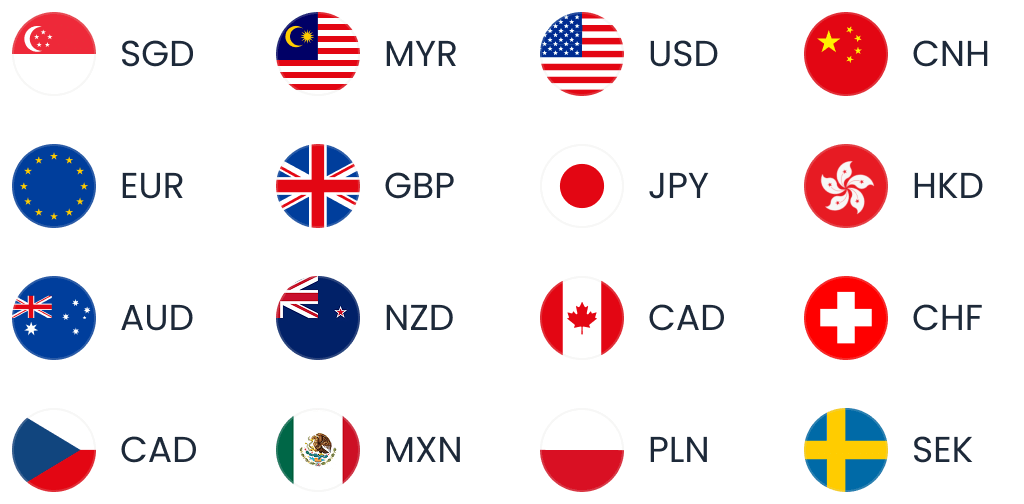
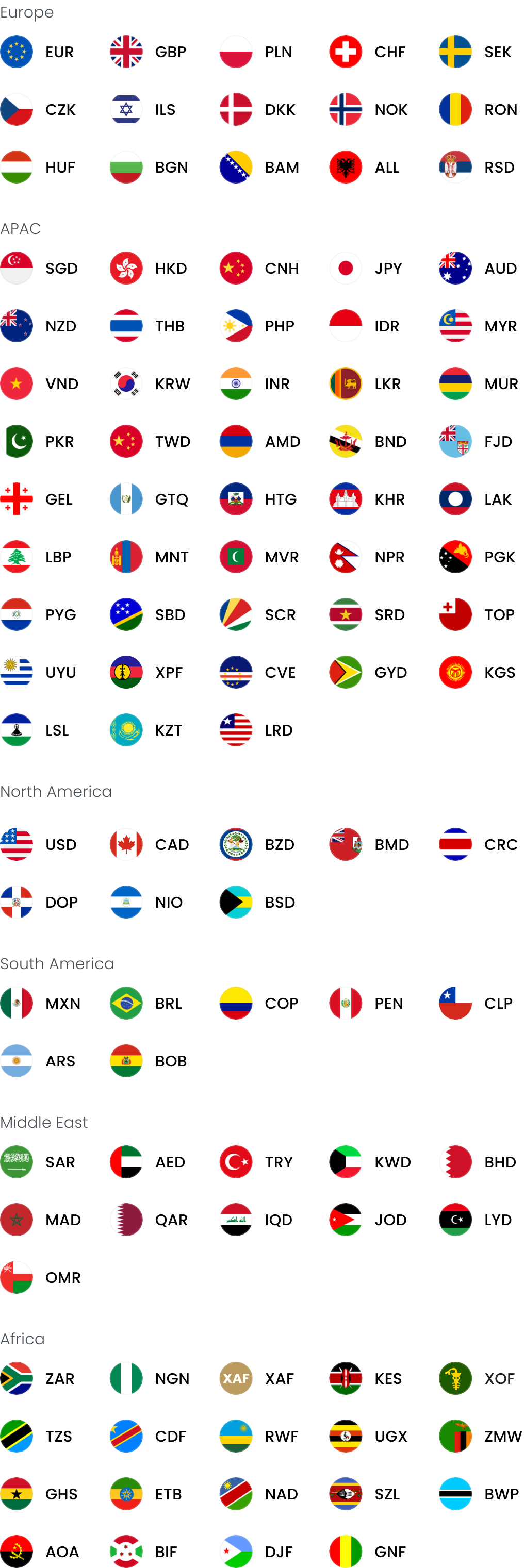
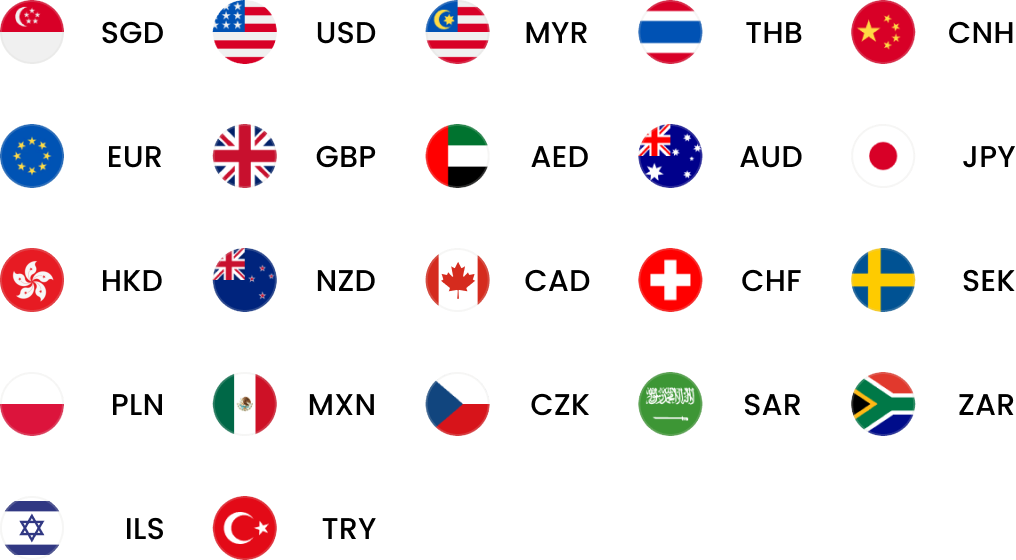
- Multi-currency balances: Businesses can open local account numbers in 20+ currencies, including USD, EUR, GBP, AUD, JPY, SGD and more. For example, a Singapore e-seller can receive USD sales into a USD balance or a UK exporter can hold GBP. There’s no requirement to convert immediately – you control the timing
- Transparent FX rates: When converting between currencies, WorldFirst uses the mid-market interbank rate with only a small, clearly stated margin (unlike hidden mark-up spreads). The platform shows you the exact rate and fees before you confirm
- Fast, low-cost transfers: WorldFirst uses local clearing networks wherever possible. Sending USD from Singapore to the US, for instance, incurs no cable fees. Many routes (e.g., SGD→USD, SGD→EUR) are eligible for same-day payments with zero remittance fees
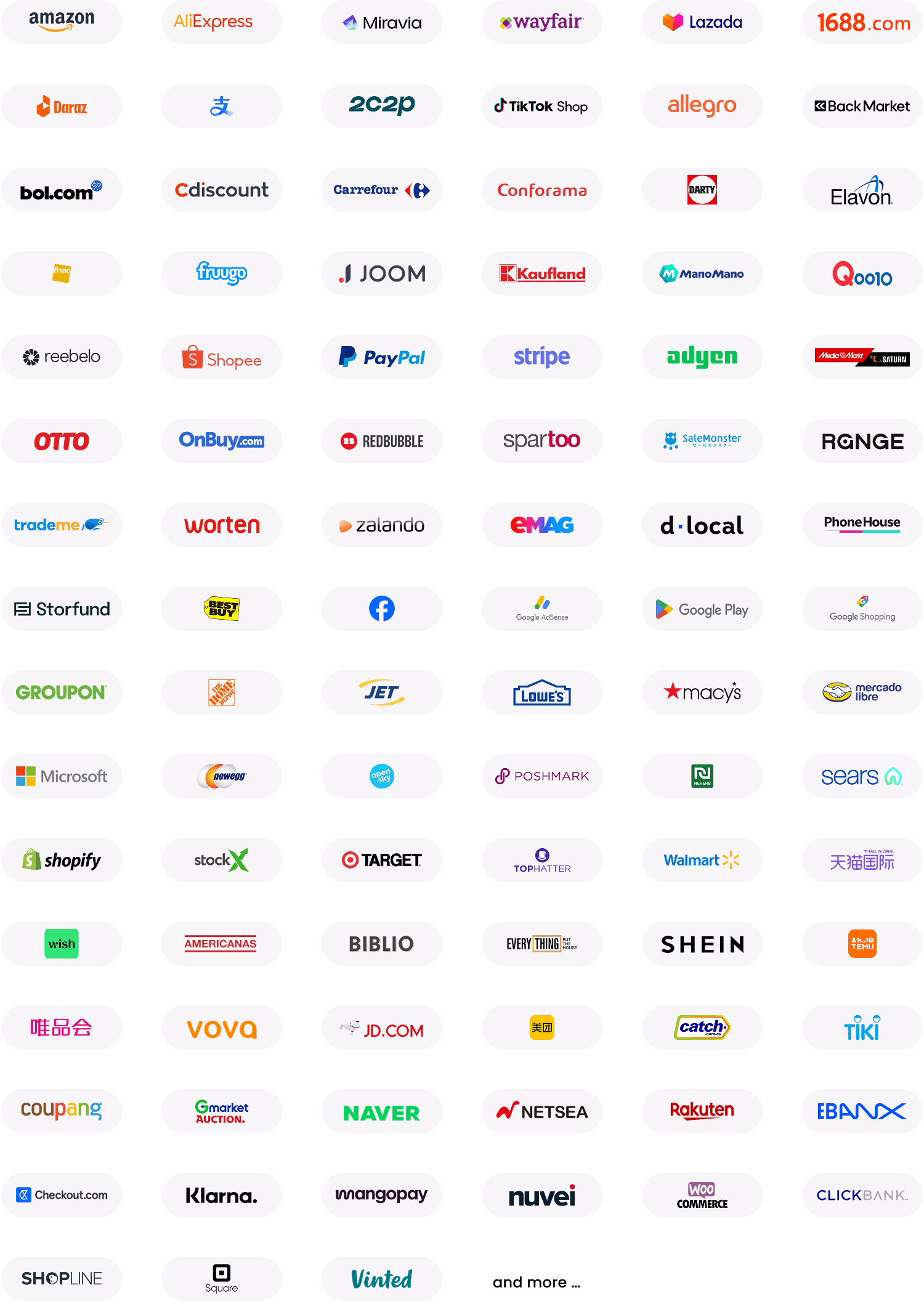
- Integrated workflows: The platform can link to marketplaces and payment gateways. For example, 130+ marketplaces and e-commerce platforms (including Amazon, eBay and Shopify) can pay directly into your World Account. This automates foreign-currency receivables for e-commerce sellers. On the payment side, you can send payroll, supplier payments and other expenses from a single dashboard
- Business-friendly features: Cash flow management tools include the ability to set fixed exchange instructions, track payment status and access priority support for high-volume customers. For instance, WorldFirst case studies highlight businesses saving significantly: one Singapore textile exporter (“Tantex”) cut its cross-border costs by ~70% using the World Account. These savings come from avoiding bank fees and reducing hidden spreads
- World Card: WorldFirst offers a virtual corporate card (the World Card, currently in beta and for online payments only) for spend like ads, SaaS and supplier payments. Hold balance in any of the 15 supported currencies and pay from it with no FX fees; other currencies convert automatically. Eligible online business transactions earn up to 1.2% cashback on foreign spend.
Regulatory requirements reinforce these constraints: WorldFirst isn’t a bank. It’s a regulated payments provider and WorldFirst entities in Singapore hold MAS licenses for services including account issuance, domestic and cross-border money transfers and e-money issuance.
Use cases for Singapore businesses:
- Importers: A Singapore importer paying a Malaysian supplier can send MYR directly from a MYR balance. This avoids double conversions (SGD→USD→MYR, etc.) and hidden bank fees. Holding MYR also means the importer can convert from SGD (or another currency) when rates are in their favour, and hold the funds until the payment is due
- Exporters: An exporter who receives payment in USD from overseas customers can retain those USD and wait for a better rate before converting them to SGD
- E-commerce sellers: Sellers on global platforms can link marketplaces (Amazon, Etsy, Shopee, etc.) so payouts in USD/EUR/GBP land straight in the corresponding World Account currency account. They can then use these funds to pay suppliers
- SMEs paying expenses: A small company sending payroll to overseas contractors can do so in local currency at a fraction of traditional bank costs, in less time, through the World Account and local rails
Physical money changers vs WorldFirst
Given the above, how does a traditional money changer stack up against a multi-currency World Account? The table below summarises the key differences:
| Feature | Physical money changer | WorldFirst World Account |
| Rate transparency | Rates include hidden markup with no mid-market reference | Uses mid-market rates with a clearly stated margin |
| Fees and spreads | Fees embedded in the spread, often higher on small amounts | Low, transparent fees. Many routes have zero wire fees |
| Currency support | Limited to currencies stocked at the counter | 20+ currencies with the ability to hold balances |
| How it works | In-person, cash-based exchange at a counter | Fully online. Receive, hold, convert and send digitally |
| Holding foreign currency | Not supported. Conversion happens immediately | Supported. Convert only when timing suits you |
| Availability | Limited by opening hours and location | 24/7 access online |
| Records and reconciliation | Paper receipt only. Manual tracking required | Digital statements, downloadable records, API/CSV support |
| Business suitability | Best for one-off, retail exchanges | Built for ongoing business use and cross-border activity |
Are you still relying on a money changer in Singapore for repeat business transactions?
Open a World Account for free and simplify how your business receives, holds and sends foreign currency.
Sources:
- https://www.exiap.com/guides/currency-exchanges-best-in-singapore
- https://www.creditmaster.sg/best-money-changers-to-exchange-currency-in-singapore/
- https://www.reddit.com/r/askSingapore/comments/1o18heh/best_money_changer_in_singapore/
- https://www.mas.gov.sg/news/media-releases/2025/singapore-strengthens-position-as-third-largest-global-fx-centre


![Revolut Business Card review Singapore [2027]: Features, fees & more](https://mdn.marmot-cloud.com/worldfirst/sites/9/2026/09/20261001002258848-300x200.webp)