





























Singapore and Malaysia are one of the busiest money corridors in the region, with remittances between the two reaching RM4.2 billion in 2020, according to Bank Negara Malaysia. Whether you are paying a supplier in Kuala Lumpur, sending money to family, or settling an invoice, there are now more ways than ever to move money across the causeway, and they differ a lot on cost, speed and limits.
This guide walks through the main options in 2026, from the real-time PayNow-DuitNow link to remittance apps and business payments, so you can pick the right one. For businesses that pay Malaysia regularly, we also show how a World Account from WorldFirst keeps costs low. WorldFirst is not a bank. It is a payments provider licensed by the Monetary Authority of Singapore.
Want to start saving money on international payments? Open a World Account for free today.
A quick note on personal and business transfers
The best method depends on who you are and how much you send.
- For a small, one-off personal transfer, PayNow-DuitNow or a remittance app is usually quickest and cheapest
- For regular or larger business payments, such as paying Malaysian suppliers or staff, a multi-currency account like WorldFirst gives you better control, higher limits and the ability to hold and convert on your terms
WorldFirst is built for businesses, so if you are sending a personal transfer to family, a remittance app or your banking app is the simpler route.
Why WorldFirst is the most affordable way to send money to Malaysia
If you’re serious about cutting the cost of sending money from Singapore to Malaysia, you need more than a transfer service. You need better control over exchange rates, timing and how you hold and spend foreign currency.
That’s where WorldFirst stands out.
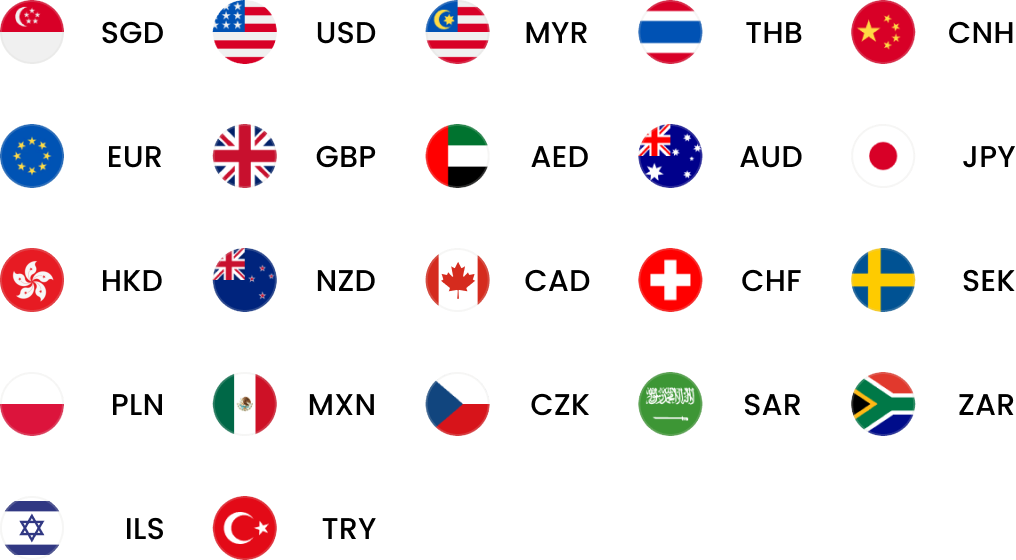
1. A multi-currency account that lets you hold MYR (and 20+ other currencies) with local account details
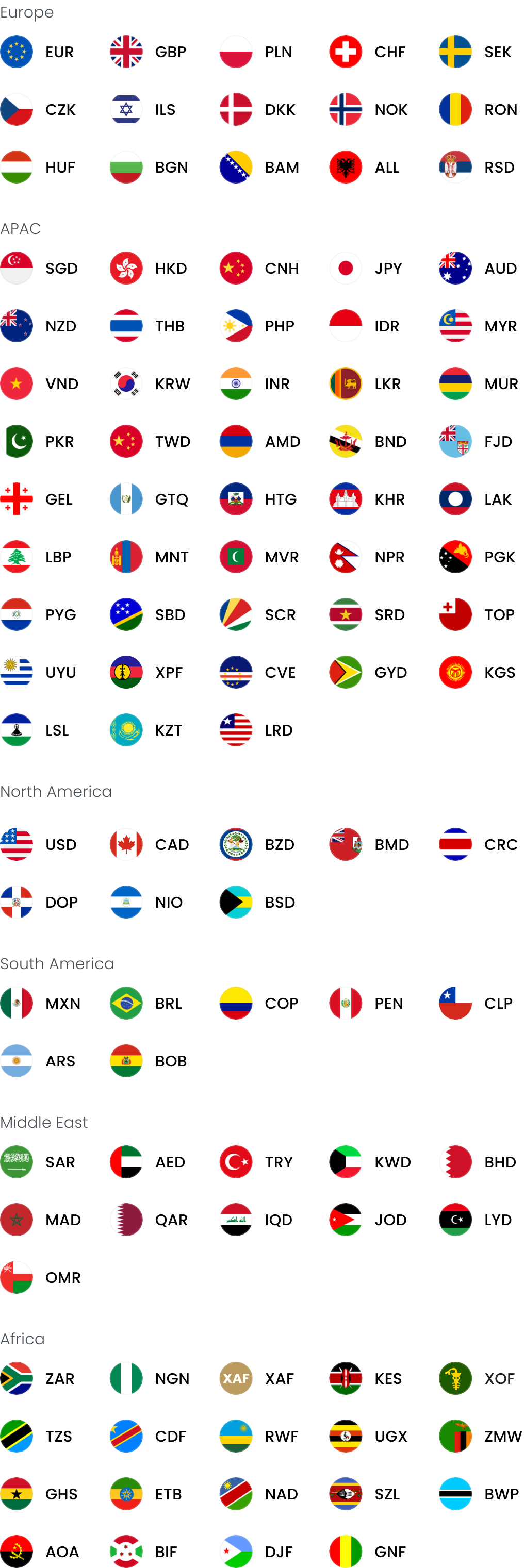
Instead of converting SGD to MYR every single time you make a payment, WorldFirst lets you hold multiple currencies in one account. You can hold Singapore dollars, Malaysian ringgit and 20+ other currencies all in one place.
This enables you to separate when you convert from when you pay. That means, if you regularly pay Malaysian suppliers or contractors, you’re not forced to convert at the last minute when rates might be unfavourable. Instead, you can convert strategically, hold MYR and send when needed.
That flexibility alone can reduce FX costs over time – especially if you send money frequently.
What’s more, with a World Account, you also get local account details in supported currencies to make and receive payments like a local. It means you can avoid SWIFT payments, which can cost tens of dollars per transaction and take up to a week to settle.
Read more: How to open a business bank account in Malaysia from Singapore
2. Low FX fees for major currencies, with no holding fees or account opening fees
As we mentioned above, the biggest cost in international transfers usually isn’t the transfer fee – it’s the exchange rate markup.
That’s why WorldFirst focuses on keeping FX pricing competitive for major currencies, including SGD to MYR. When you want to make payments overseas, you’ll get:
- Competitive FX rates on major currency pairs
- Clear visibility of the rate before you convert
- No surprise admin charges just for having the account
- No account opening fees, no monthly maintenance fees and no holding fees for keeping balances
For businesses used to traditional bank remittance pricing, these reduced costs can be significant – especially on larger or repeated transfers.
Read more: What’s the cheapest international money transfer method?
3. Lock in exchange rates for up to two years
If you send money only occasionally, you might not think much about exchange rate timing.
But if you pay Malaysian suppliers monthly, manage recurring cross-border expenses or run a business with MYR costs, then exchange rate volatility becomes a real cost risk.
WorldFirst allows you to lock in an exchange rate for up to two years (via forward contracts and similar tools). That means:
- You fix today’s rate for future payments
- You protect yourself from SGD/MYR swings
- You gain predictable budgeting
This way, instead of hoping the rate is favourable when your invoice is due, you already know your cost in advance. For businesses, this can be the difference between protecting your margin and watching it shrink because of currency movement.
Read more: FX international payments: How to affordably send money abroad
4. Pay directly with the World Card
If you want an affordable way to make international card payments, the World Card can help.
The World Card connects directly to your WorldFirst multi-currency account and lets you spend from your balances – without having to transfer funds back to a bank first.
Here’s how that helps:
- Spend directly from your SGD, MYR, USD and other supported balances
- Pay global suppliers and online platforms wherever Mastercard is accepted
- Avoid unnecessary FX conversion if you already hold the payment currency
- Issue multiple cards to team members and control spending limits
Read more: How to choose a virtual debit card for international payments
3 cheap methods of sending money (besides WorldFirst)
If WorldFirst doesn’t feel like a good fit for you, here are some alternative ways to affordably send money abroad.
1. Low-fee bank transfer
Some banks offer “low-fee” international remittance services, and you may also find cheaper options if both parties have accounts within the same banking group.
These are often familiar, trusted channels and can be particularly convenient if you already use a given bank’s services. In this case, international payments will integrate directly with your existing banking workflow.
However:
- They often offer less competitive FX rates than specialist providers
- Fees can be layered (outward fee + FX spread + possible receiving charges)
- Faster options can cost more
When it can be cheapest:
- If your bank offers a promotional remittance package
- If you have preferential banking tiers that reduce FX spread and fees
Read more: How to open a business bank account online in Singapore (4 options)
2. Fee-free debit card / credit card payments
If you’re not transferring cash but paying for goods or services in Malaysia, sometimes the cheapest option is simply paying directly by card, especially if you have:
- A fee-free foreign spending card, or
- A card that offers strong FX rates and no foreign transaction fees, such as the World Card
These can be fast and convenient for purchases and can be competitive on FX if the card is designed for overseas spending.
However:
- Payment cards are used for purchases, not money transfers per se
- Some merchants charge card fees
- Cash advances are usually expensive, so avoid using credit cards for cash withdrawals unless you’re sure of the fees
When it can be cheapest:
- When you’re paying a Malaysian merchant directly and your card has no FX fee and a strong rate.
Read more: Best multi-currency card: Top 5 options compared (+ how to choose)
3. Specialised money transfer service
Dedicated remittance providers (such as digital transfer apps and FX specialists) can often offer transparent fees, competitive FX and fast settlement times.
They’re often cheaper than traditional banks for small-to-medium transfers, they typically offer quick onboarding and fast transfers – and they’re very transparent about how much is actually going to be delivered to payees.
However:
- Rates and fees can vary by amount and payout method
- Some “zero fee” claims come with higher exchange rate markups
- Promotions may apply only to first transfers
When it can be cheapest:
- For smaller personal transfers where speed matters,
- When the provider’s delivered MYR is strong versus competitors.
Read more: What’s the best way to do an international money transfer?
Other factors to consider beyond cost when sending money abroad
While cost will be a big factor in determining which payment option to choose, “cheapest” isn’t always best if it introduces risk, delays or admin headaches – especially for business payments.
As such, it’s important to consider non-price factors too:
- Transparency. A good provider should make it easy for you to see what exchange rate you’re getting, what fees you’re paying and how much MYR the payee will receive. In reality, the best way to compare between providers is not “fee vs fee,” but by the actual amount delivered.
- Speed and reliability. For urgent payments, such as supplier deadlines, speed matters. But reliability matters more than raw speed. So, check whether there’s payment tracking, and find out what happens if a transfer fails.
- FX risk management. This is particularly important for businesses regularly sending money abroad. Tools that allow you to hold MYR, convert funds in advance and lock in rates for future payments can reduce volatility and protect your margins. This is where platforms designed around multi-currency workflows often outperform basic remittance apps.
- Limits, compliance and documentation. Sometimes, when sending money abroad, you may need to provide documentation, such as ID or purpose-of-payment details. Similarly, you may want to establish how easy it is to retrieve receipts for accounting or audit.
- Recipient experience. Your recipient may want to know whether funds arrive as MYR into a Malaysian bank account, how long transactions take and how much they cost them. Establish this before you settle on a provider.
- Security and support. What are the safeguards against misdirected transfers? And what happens if there are handling disputes? Security can’t be overlooked when your money is at stake.
Read more: How to send money abroad (+ how to avoid hidden costs)
What’s the cheapest way to send money to Malaysia?
In practice, the “cheapest” way to send money from Singapore to Malaysia is the method that minimises total cost, especially the FX markup, while giving you enough flexibility to manage timing and payment frequency.
If you’re sending regularly – or sending larger amounts – WorldFirst stands out because it’s built around:
- holding and paying in multiple currencies (including MYR),
- low FX fees for major currencies with no account opening/holding fees,
- and the ability to lock exchange rates for up to two years to reduce FX risk
Want to start saving money on international payments? Open a World Account for free today.
FAQs
What is the cheapest way to transfer money from Singapore to Malaysia?
For small personal transfers, PayNow-DuitNow is very low-cost and instant. For larger amounts, a remittance app at the mid-market rate, or a multi-currency account like WorldFirst for business, usually beats a bank once you account for the FX margin, which is where most of the cost sits.
What is the fastest way to send money to Malaysia?
PayNow-DuitNow is near-instant for small transfers, and several remittance apps deliver to DuitNow within minutes. Business payments through WorldFirst over local rails typically arrive the same day.
What is the PayNow-DuitNow transfer limit?
There is a daily cap of around S$1,000 on the bank PayNow-DuitNow link, which is designed for everyday payments. For larger amounts, use a remittance app or a multi-currency account.
How do I transfer money to a Malaysian bank account?
You will need the recipient’s full name, their Malaysian bank name and account number, exactly as they appear on the account. For a DuitNow transfer, their DuitNow-registered ID, such as a mobile number, is enough.
What is the best way to pay a supplier in Malaysia?
For business payments, a multi-currency account like WorldFirst, which lets you hold SGD and MYR, convert at transparent rates, lock in rates with forward contracts, and pay over local rails without per-transfer bank fees.
Sources:
- https://www.mas.gov.sg/
- https://www.bnm.gov.my/
- https://www.worldfirst.com/sg/
- https://www.worldbank.org/ext/en/development-topics
- https://www.zigram.tech/article/mas-notice-626-for-aml-practitioners/
- https://www.worldfirst.com/sg/help-center/making-payments/how-long-will-my-payments-take/
- https://ctmfile.com/story/malaysia-and-singapore-connect-real-time-payment-systems-industry-roundup-20-november


![Revolut Business Card review Singapore [2027]: Features, fees & more](https://mdn.marmot-cloud.com/worldfirst/sites/9/2026/09/20261001002258848-300x200.webp)