



























IBAN stands for International Bank Account Number. It’s a standardised code used to identify a specific bank account for many cross-border payments.
For UK services exporters, IBANs often matter when an overseas client needs to pay an invoice by bank transfer. A client may approve your invoice, but still delay payment if their payment system doesn’t accept the account details you’ve shared.
That matters as UK services exports grow. GOV.UK reported that UK services exports reached £556.4 billion in the 12 months ending April 2026, up 6.7% on the previous 12 months.
The correct IBAN and matching payment details can reduce delays, returned transfers and back-and-forth during client payment setup.
This guide explains what an IBAN is, how it differs from a SWIFT/BIC and what UK services exporters should check before sharing payment details with overseas clients. It also covers IBAN formats for Germany, France, Spain, the Netherlands and Italy.
Key takeaways:
- An IBAN helps overseas clients identify the right receiving account for many cross-border payments
- IBAN and SWIFT/BIC serve different roles; one identifies the account, and the other helps route the payment to the right bank or financial institution
- European clients may need more than an IBAN, including the currency, beneficiary name and payment reference, before they can complete a bank transfer
- Small payment detail errors can delay approved invoices, especially when formatting, old templates or currency details don’t match the client’s payment system
- WorldFirst can support international client payments by helping you receive, hold and manage payments across multiple currencies from a single platform.
What is an IBAN code?
An IBAN code is the full string of letters and numbers that identifies an account. For UK services exporters, it’s a detail an overseas client may need before their payment system can process your invoice by bank transfer.
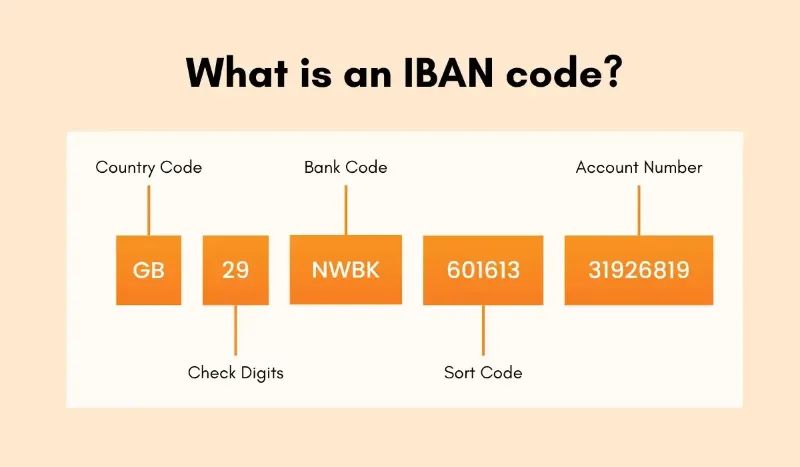
| IBAN part | What it means | Example |
| Country code | Shows the country linked to the account format | GB, DE, FR |
| Check digits | Help validate the IBAN structure | Two numbers |
| Bank identifier | Points to the bank or financial institution | Varies by country |
| Branch or routing details | Identifies branch or local routing details where the country format uses them | Sort code, branch code or equivalent |
| Account number | Identifies the individual account | Varies by country |
IBANs can appear in two formats:
| Format | Example |
| Print format | GB00 XXXX XXXX XXXX XXXX XX |
| Electronic format | GB00XXXXXXXXXXXXXXXXXX |
Use the electronic format when a client adds your account details to a payment form. Some systems reject spaces, even when the IBAN follows the correct structure.
What is an IBAN number?
People often use the term ‘IBAN number‘ when referring to ‘IBAN‘ or ‘IBAN code‘. The wording can sound confusing because an IBAN can include both letters and numbers, not numbers only.
If an overseas client asks for your IBAN number, share the full IBAN exactly as your bank or account provider displays it.
How does an IBAN work?
An IBAN combines several account details into a single standard format for international payments. Banks and payment providers use it to confirm the account structure and route payments to the correct destination. Most IBANs include three core parts:
- Country code: Two letters that show the country linked to the account format, such as GB, DE or FR
- Check digits: Two numbers that help validate the IBAN structure before a payment moves
- Domestic account details: Local bank, branch and account information, often called the BBAN
The SWIFT IBAN Registry defines national IBAN structures under ISO 13616. An IBAN can contain up to 34 letters and numbers, but many European IBANs are shorter.
IBAN vs SWIFT/BIC: what’s the difference?
When an overseas client sets you up as a payee, their bank may ask for an IBAN, a SWIFT/BIC or both. The difference is that an IBAN identifies the account, while a SWIFT/BIC identifies the bank or financial institution linked to the payment.
A German client paying a EUR invoice may ask for your IBAN. Their bank may also need a SWIFT/BIC to route the transfer to the right financial institution. Some payment systems ask for the IBAN, SWIFT/BIC and beneficiary name before the transfer can proceed.
The safest approach is to share the details exactly as your bank or account provider displays them.
When do UK services exporters need an IBAN?
You’re most likely to need an IBAN when an overseas client pays you by bank transfer from a country that uses IBANs, especially for EUR payments. The request usually appears in the client’s supplier portal, payment form or new vendor setup process.
An IBAN may be required when:
- You invoice a European client: Clients in countries such as Germany, France, Spain, the Netherlands and Italy often expect IBAN details for bank transfers
- You invoice in EUR: EUR payments across Europe commonly use IBAN details, and some payment forms may also ask for a SWIFT/BIC
- Your client adds you to a supplier portal: Many accounts teams need the full beneficiary name, IBAN and currency before they approve a new payee
- You receive deposits or milestone payments: If you bill a deposit and balance payment, use consistent IBAN, currency and invoice reference details so each transfer matches the right invoice stage
- You want the payment to arrive in the invoice currency: If you invoice in EUR, EUR receiving details make it easier to match the amount received against the invoice before any FX conversion
What payment details should you share with an overseas client?
| Detail | What to share | Why it matters |
| Beneficiary name | Business or trading name on the account | Helps the client match the account to the invoice |
| IBAN | Full IBAN for the receiving account | Identifies the account for IBAN-based payments |
| SWIFT/BIC | SWIFT/BIC from your bank or provider | Helps route the international payment |
| Currency | Invoice and receiving currency | Reduces payment and reconciliation confusion |
| Bank or provider details | Name and address, where required | Helps the client complete payment forms |
| Payment reference | Invoice or contract reference | Helps you match the payment to the invoice |
| Payment detail | Example |
| Beneficiary name | [Your business name] |
| Currency | EUR |
| IBAN | [Your EUR IBAN] |
| SWIFT/BIC | [Your SWIFT/BIC, if required] |
| Reference | Invoice 1048 |
Before you send the invoice, check the details against the account you want the client to pay. A common mistake is mixing the right invoice with the wrong receiving details, such as sending a EUR invoice but adding GBP account details from an old template.
Keep the instructions clear and complete. The client shouldn’t have to guess the currency, beneficiary name or reference.
Read more: What info is required for bank transfers?
IBAN formats by country
Germany IBAN format
- Country code: DE
- Format: 22 characters: DE + 2 check digits + 8-digit bank identifier + 10-digit account number
- Sample: DE89 3704 0044 XXXX XXXX XX
- Common banks: Deutsche Bank, Commerzbank, DZ Bank, Sparkassen
- Format quirks: German IBANs use an 8-digit bank identifier followed by a 10-digit account number. Shorter domestic account numbers may include leading zeros when converted into IBAN format
France IBAN format
- Country code: FR
- Format: 27 characters: FR + 2 check digits + 5-digit bank identifier + 5-digit branch or counter code + 11-character account number + 2-digit national check key
- Sample: FR14 2004 1010 XXXX XXXX XXXX XXX
- Common banks: BNP Paribas, Crédit Agricole, Société Générale, BPCE
- Format quirks: French IBANs are longer than UK or German IBANs. The domestic account section can include both letters and numbers, so don’t assume every character after FR will be numeric
Spain IBAN format
- Country code: ES
- Format: 24 characters: ES + 2 check digits + 4-digit bank identifier + 4-digit branch identifier + 2 national check digits + 10-digit account number
- Sample: ES91 2100 0418 XXXX XXXX XXXX
- Common banks: Santander, BBVA, CaixaBank, Banco Sabadell
- Format quirks: Spanish IBANs include bank, branch and national check digit details inside the domestic account section. The full format uses numbers after the ES country code and IBAN check digits
Netherlands IBAN format
- Country code: NL
- Format: 18 characters: NL + 2 check digits + 4-letter bank identifier + 10-digit account number
- Sample: NL91 ABNA XXXX XXXX XX
- Common banks: ING, Rabobank, ABN AMRO, de Volksbank
- Format quirks: Dutch IBANs are shorter than many European formats and include a 4-letter bank identifier, such as ABNA in the SWIFT registry example. The account number section is numeric
Italy IBAN format
- Country code: IT
- Format: 27 characters: IT + 2 check digits + 1-letter CIN check character + 5-digit bank identifier + 5-digit branch identifier + 12-character account number
- Sample: IT60 X054 2811 XXXX XXXX XXXX XXX
- Common banks: Intesa Sanpaolo, UniCredit, Banco BPM, BPER Banca
- Format quirks: Italian IBANs include a one-letter CIN check character after the IBAN check digits. They also include both bank and branch identifiers before the account number
Can you receive overseas payments without an IBAN?
You can receive some overseas payments without an IBAN. It depends on the country, currency and payment route your client uses:
| Client market | Common payment details |
| UK | Sort code and account number |
| Eurozone and SEPA countries | IBAN and sometimes SWIFT/BIC |
| US | Routing number and account number |
| Australia | BSB and account number |
| Canada | Transit number, institution number and account number |
Payment details are only one part of overseas collections. You may also need to understand receiving money from abroad and tax, especially if overseas payments form part of your business income.
How a World Account can support international client payments
IBAN issues often arise just as the payment process is about to start. The client approves your invoice, prepares the transfer, and then the payment system asks for details that your usual GBP account may not provide in the right format.
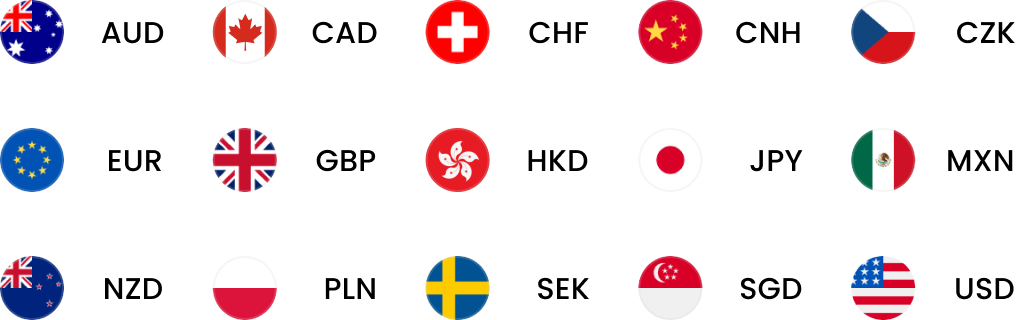
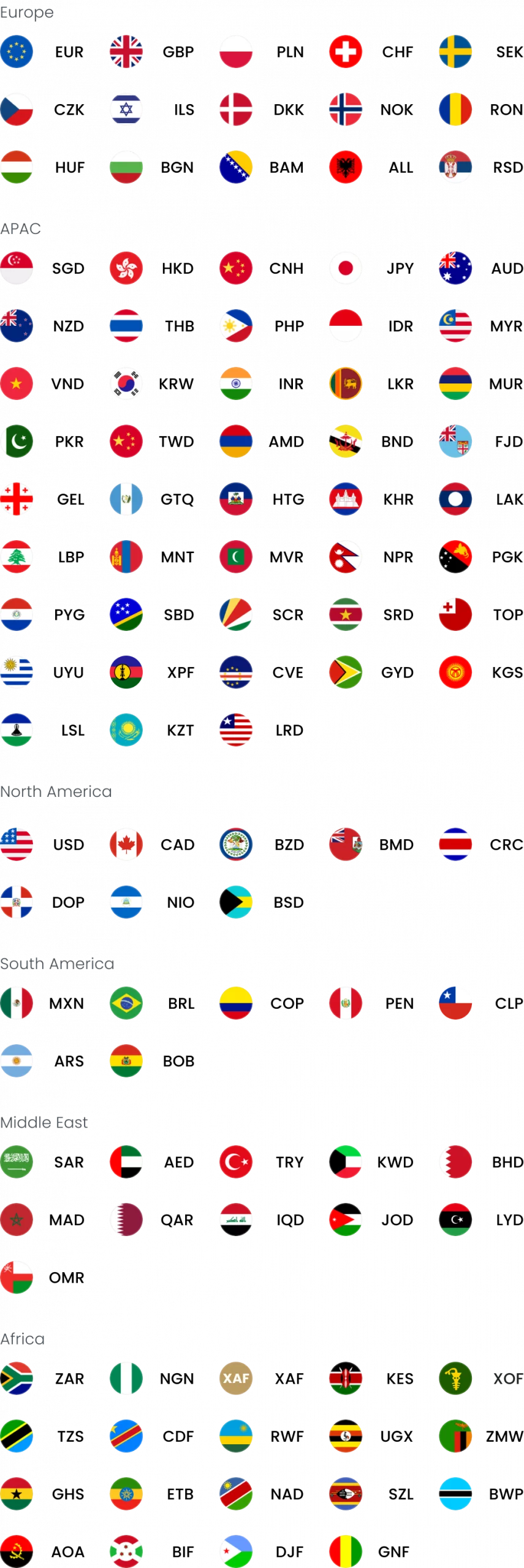
With a multi-currency World Account, you can receive business payments in 20+ currencies from one online account. You can share receiving details for supported currencies, hold funds in the currency your client paid and decide when to convert or withdraw.
You can also use balances in your World Account to pay overseas contractors, suppliers or other business costs in 100+ currencies across 200+ countries. The World Account is free to open, with no ongoing account fees and no fee to collect funds. Payment fees vary by currency.
Example: receiving EUR, USD and GBP in the same month
A UK services exporter might invoice a German client €12,000, bill a US client US$8,000 and receive £6,000 from a UK client in the same month.
The German payment may need EUR account details and an IBAN. The US payment may need USD receiving details. The UK payment needs domestic GBP details. With a single GBP-only setup, you may need to explain which details each client should use or match converted GBP amounts back to invoices issued in EUR or USD.
FX can also change the final value. If the €12,000 German invoice converts into GBP on arrival with a 3.5% margin, the FX cost would be about £364 on a mid-market value of around £10,405. At a 0.50% FX margin, the cost would be about £52. That’s roughly a £312 difference on one incoming payment, before any other fees.
WorldFirst isn’t a bank. World First UK Limited is authorised by the Financial Conduct Authority as an Electronic Money Institution, giving UK businesses a regulated way to manage international payments from one platform.
FAQ
1. Can I use the same IBAN for every currency?
2. What should I do if a client says my IBAN doesn’t work?
3. Can a client pay a EUR invoice into a GBP account?
Sources:
- https://ffnews.com/newsarticle/tradetech/smes-hit-hard-by-53000-loss-from-currency-fluctuations
- https://www.wearepay.uk/the-current-account-switch-service-records-surge-in-sme-switches/
- https://www.grandviewresearch.com/industry-analysis/cross-border-payments-market-report
- https://www.revolut.com/business/