



























The currency in Germany is the euro, but that’s not the only thing you need to know when transacting with a German supplier. GBP/EUR exchange rates, payment fees, conversion timing and supplier bank details can all affect what you pay by the time the funds arrive.
Germany is one of the UK’s biggest trading partners. In 2025, UK imports from Germany totalled £89.8 billion, according to Department for Business and Trade data. Goods made up most of that value, including road vehicles, machinery and pharmaceutical products.
As orders repeat, small FX differences can add up, so payment timing, supplier details and reconciliation need closer attention.
Here’s what UK importers need to know about the currency in Germany, supplier payments in euros and clear EUR reconciliation.
Key takeaways:
- Germany uses the euro, so UK importers usually need to manage GBP/EUR conversion before paying supplier invoices
- FX rates and fees can change the final GBP cost, especially across repeat orders, deposits and balance payments
- Supplier bank details need careful checking, including IBAN, BIC/SWIFT, beneficiary name, payment currency and invoice reference
- Paying in EUR can make reconciliation easier when the supplier invoices in euros and expects the full EUR amount
What currency does Germany use?
The currency in Germany is the euro. The currency code is EUR, the symbol is €, and one euro has 100 cents.
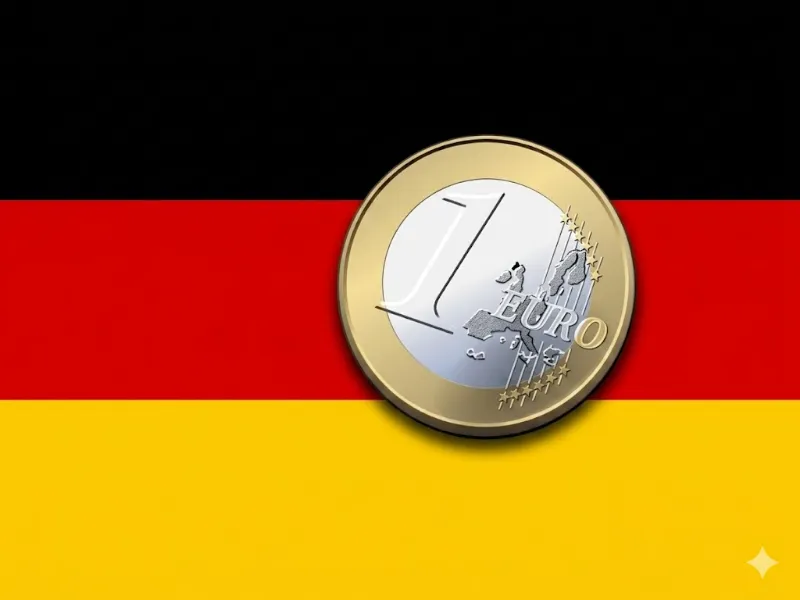
Germany joined the euro area in 1999 and started using euro banknotes and coins on 1 January 2002. Before the euro, Germany used the Deutsche Mark.
When you buy from a German supplier, you’ll usually see EUR on the quote, proforma invoice or final invoice. That means you need to check how much the payment will cost in GBP before you send it, especially since the GBP/EUR rate can change between order confirmation and payment day.
Check the supplier’s IBAN, BIC/SWIFT, beneficiary name and invoice reference before you make the transfer. Small errors can delay the payment, create supplier follow-ups and make reconciliation harder after the goods have shipped.
| Detail | What you need to know |
| Official currency | Euro |
| Currency code | EUR |
| Symbol | € |
| Minor unit | 100 cents |
| Previous currency | Deutsche Mark |
| Typical supplier invoice currency | EUR |
| Common payment details | IBAN, BIC/SWIFT, beneficiary name and invoice reference |
If you visit Germany for a trade fair, supplier meeting or factory visit, you’ll pay in euros. Card payments are widely accepted, but smaller vendors may still prefer cash.
For supplier invoices, you’ll usually deal with EUR payment details, bank transfers and invoice references.
GBP/EUR exchange rate basics
When your German supplier invoices in euros, the GBP/EUR rate helps determine how much you pay in pounds.
There are two ways you may see the rate:
| Rate | What it tells you | Why it matters |
| GBP/EUR | How many euros £1 can buy | Useful when you start with a GBP balance |
| EUR/GBP | How many pounds €1 is worth | Useful when you need to work out the GBP cost of a EUR supplier invoice |
For supplier invoices, EUR/GBP is often the more useful rate. If your German supplier invoices you for €30,000, you need to know the GBP cost of those euros, plus any payment fees.
Online exchange rates can help you benchmark the market, but they may not match the rate that will apply when you pay.
The European Central Bank publishes euro foreign exchange reference rates as market benchmarks, not transaction rates. When you pay a German supplier, focus on the rate your bank or payment provider quotes, as that is the rate that affects your final GBP cost.
Currency risk matters when the GBP/EUR rate moves between order confirmation, deposit and final payment. If you agree to a German supplier price in EUR but pay from a GBP balance later, the sterling cost can change before the invoice settles.
For repeat orders, check the rate before each payment and keep a record of the quoted rate, transfer fee and final GBP cost.
Example: estimating the GBP cost of a German supplier invoice
Use this simple formula before you pay:
EUR invoice amount × GBP cost per EUR + transfer fees = approximate GBP cost
For example, the ECB reference rate on 19 June 2026 showed €1 = £0.86653.
If your German supplier invoices you for €30,000, the cost could look like this:
- Benchmark rate: €1 = £0.86653
- Benchmark GBP cost: €30,000 × £0.86653 = £25,995.90
- Provider rate with a 0.5% higher EUR cost: about €1 = £0.87086
- GBP cost at provider rate: €30,000 × £0.87086 = £26,125.88
- Difference before fees: £129.98
That extra £129.98 comes before any fixed transfer fee, intermediary bank charge or receiving bank charge.
On one invoice, that difference may look manageable. However, across repeat orders, deposits, balance payments and seasonal stock runs, small FX differences can affect your landed cost and margin.
Should UK importers pay German suppliers in EUR or GBP?
The right payment currency depends on what the supplier can receive, how the invoice is priced and how much certainty you need before sending the money:
- GBP can make sense when the supplier gives you a fixed sterling price, accepts GBP into the right account and confirms that no extra conversion or receiving charges will reduce the amount they get
- EUR is usually easier to reconcile for German supplier invoices because the invoice amount, payment currency and payment reference all match, especially across repeat orders, deposits, balance payments, credit notes and refunds
What to check before converting GBP to EUR
Before you pay a German supplier invoice, check:
- The current GBP/EUR benchmark rate
- The rate your bank or payment provider offers
- Any FX margin included in the quote
- Any fixed transfer fee
- Any intermediary or receiving bank charge
- The date your supplier needs cleared funds
- The invoice reference, IBAN, BIC/SWIFT and beneficiary name
Keep in mind that timing matters as much as the price. If your supplier needs cleared EUR funds before dispatch, a cheaper route that arrives too late can delay the shipment, create extra follow-ups and delay tracking the payment record.
How to pay German suppliers from the UK
If the supplier provides you with their bank details and changes them just as you’re about to pay, confirm the change before sending any money. Keep that confirmation with the invoice so you can trace the payment if the supplier asks for proof later.
Bank details to confirm before paying a German supplier include:
- Beneficiary name
- Beneficiary address, if your provider asks for it
- IBAN
- BIC/SWIFT code, if required
- Bank name and address, if required
- Invoice number or payment reference
- Payment currency
- Who pays the transfer or receiving fees, especially if the supplier expects the full EUR amount
German IBANs start with DE and contain 22 characters. For euro payments within SEPA, the IBAN usually gives the main account details.
Some UK banks and payment providers may still ask for a BIC or SWIFT code, so request both from the supplier before payment day.
Main ways to pay a German supplier:
| Payment route | Best for | What to check |
| EUR bank transfer | Repeat supplier invoices | FX margin, transfer fee and settlement time |
| SEPA Credit Transfer, where supported | Euro payments to German accounts | Provider eligibility, correct IBAN and payment limit |
| SWIFT transfer | Payments your provider cannot route through local euro rails | Intermediary fees, receiving bank charges and slower settlement |
| Business card | Samples, trade fair purchases and low-value orders | Card limits, FX fees and supplier acceptance |
SEPA Credit Transfers cover euro payments across participating European countries. The European Payments Council says the scheme supports one-off, recurring, single and bulk payments, so it suits repeat supplier payments when your UK provider offers that route.
Germany participates in SEPA, but your provider still controls the payment route, fee, FX rate, payment limit and settlement time.
Receiving payments from Germany in EUR
EUR payments from Germany can affect your import costs if you also pay German suppliers in euros.
You might receive EUR from:
- Supplier refunds
- Credit notes
- Rebates
- German distributors
- German customers
- Marketplaces or platforms that settle in EUR
If your provider converts every EUR receipt into GBP, you may need to convert back into EUR for the next supplier invoice. That adds another FX step.
Holding EUR can make sense when you have euro money coming in and going out. If you’re comparing ways to hold and pay in different currencies, start by reviewing the best multi-currency business bank accounts for UK businesses.
Keeping the credit in EUR can make the next payment easier to track and reduce unnecessary currency movement.
Manage EUR supplier payments with WorldFirst
WorldFirst supports UK businesses that pay and get paid across borders through international payments, multi-currency accounts and FX. It isn’t a bank. The company operates as a regulated financial services provider for businesses managing money across currencies and markets.
With a multi-currency World Account, you can receive and hold funds in 20+ currencies, including EUR and pay suppliers in 100+ currencies to 210+ countries and regions where supported.
For example, say you run a small UK importing business that buys specialist parts from the same German supplier every month. After one order, the supplier issues a €4,000 credit note for returned stock. Your next €28,000 EUR invoice is due the following month.
If you convert that €4,000 back through a UK high-street bank at an illustrative 2–3% FX margin, the cost could be around £70–£105 before you even deal with the next invoice.
With a World Account, you could hold the €4,000 in EUR, convert the remaining €24,000 from GBP to EUR when you’re ready and pay the German supplier from the same account where supported.
That keeps the credit note, conversion and supplier payment in one clear record across repeat German orders.
Verdict: WorldFirst vs Revolut Business
FAQ
1. How should I handle deposits and balance payments for German supplier orders?
2. What records should I keep for repeat EUR supplier payments?
3. What should I check if a German supplier invoice includes VAT?
Sources:
- https://assets.publishing.service.gov.uk/media/6a01f4cf8cc72d2f863ea74c/germany-trade-and-investment-factsheet-2026-05-14.pdf
- https://economy-finance.ec.europa.eu/euro/eu-countries-and-euro/germany-and-euro_en
- https://www.bundesbank.de/en/tasks/payment-systems/services/iban-rules/iban-rules-626476
- https://www.ecb.europa.eu/paym/retail/sepa/html/index.en.html