



























If you’re paying suppliers or partners in China, chances are you’re doing it in your local currency – like GBP, USD or EUR – via your domestic bank. However, this default approach can create more problems than it solves.
The trouble is, when you’re paying to China, you’ll be facing challenges such as:
- FX volatility: unpredictable rates eat into your margins
- Slow settlement times: payments can take days to land
- Difficult quoting: suppliers add buffers to protect against currency risk
- Hidden costs: you could be overpaying without realising it
Instead, you can simplify the process – and reduce your costs – by paying directly in renminbi (RMB), China’s local currency.
In this guide, we’ll show you how to make payments in RMB the smart way. We cover:
- What is renminbi (RMB) – and should you pay in CNH or CNY?
- Why paying in CNH (rather than GBP or USD) can save you money
- Why it makes sense to use a multi-currency account to pay in RMB
- How WorldFirst can help you send fast, secure RMB payments – without the hassle
- Frequently asked questions about making payment in RMB
Ready to make cheaper, faster payments to China? Open a World Account for free to start paying in RMB today.
What is renminbi (RMB) – and should you pay in CNH or CNY?
Renminbi (RMB) is the official currency of the People’s Republic of China. But if you’re making a payment into China, it’s important to know there are two types of renminbi and only one version is available to foreign businesses:
- CNY currency (onshore RMB): This is the renminbi used within mainland China, and it’s tightly controlled by Chinese financial authorities. Foreign businesses can’t use CNY directly for international payments.
- CNH (offshore RMB): This is the internationally traded version of renminbi, and it’s what you’ll use to make payments from abroad. CNH is freely traded, like USD or EUR, and is accepted by Chinese suppliers for cross-border settlements.
Ultimately, if you’re paying a Chinese supplier from outside China, you’ll need to use CNH, not CNY. Understanding this distinction is key to ensuring your payments arrive smoothly, and that you’re quoting and settling in a currency your supplier can easily accept.
Read more: Why does China have two currencies?
Why paying in CNH (rather than GBP or USD) can save you money
If your supplier is based in mainland China, they’ll often quote you in USD or GBP by default – not because it’s easier for them, but because they assume you can’t pay in RMB.
But here’s the catch: when they quote you in foreign currency, they typically build in an exchange rate buffer to protect themselves from exchange rate movements. Unfortunately, in most cases, that buffer becomes your loss.
Paying in CNH, on the other hand, allows you to:
- Get better pricing from Chinese suppliers: Suppliers often pad USD or GBP quotes by 2-5% to protect against currency risk. Paying in CNH eliminates that buffer, leading to more transparent quotes and potential savings.
- Avoid renegotiations due to currency fluctuations: Foreign exchange rates can shift between quote and payment, creating delays and pricing disputes. Paying in CNH removes the need for mid-order renegotiations, ensures suppliers receive exactly what they quoted, and provides a smoother, more predictable process.
- Access a wider pool of suppliers: Some Chinese manufacturers only accept RMB. By paying in CNH, you open up more sourcing opportunities and can work with partners who may offer better pricing or flexibility.
- Gain more control over FX with hedging options: CNH can be used as a deliverable forward currency. This allows you to hedge your currency exposure using FX forwards, potentially access more favourable forward point gains vs USD, and improve long-term cash flow planning.
Find out more: Foreign exchange risk management: How to make international business more affordable
Why it makes sense to use a multi-currency account to pay in RMB
If you’re paying Chinese suppliers regularly, using a multi-currency business account can save you more than just money. It can reduce admin, speed up settlement, and strengthen supplier relationships too.
A multi-currency account allows your business to:
- Hold and manage balances in different currencies
- Convert funds when it suits you, not at the point of payment
- Send and receive payments in local currencies, without the need for multiple local bank accounts
However, while many multi-currency accounts support major currencies like USD, EUR, or GBP, most don’t allow you to hold or send RMB (renminbi). Finding a solution (such as WorldFirst) that does support RMB, and specifically CNH, is key if you want to pay Chinese suppliers directly in their preferred currency.
With the right multi-currency account, you can:
1. Avoid double conversions
Without a multi-currency account, you typically need to convert from your local currency (e.g. GBP) to USD, then rely on your supplier to convert from USD to RMB. That’s two FX conversions, often with fees or hidden markups on both sides.
But why is this so common?
Most traditional banks and standard FX providers don’t let you convert GBP directly into CNH. Instead, they route payments through USD as an intermediary currency. This default setup results in:
- Additional FX costs
- Delayed settlements
- Less control over your payment value
A true multi-currency account, on the other hand, changes that. It allows you to:
- Hold and convert multiple currencies (like GBP, EUR, USD and even CNH) from a single account
- Convert GBP directly into CNH without needing to go via USD
- Send local CNH payments to your Chinese suppliers, cutting out unnecessary fees, delays and intermediaries
That’s why using a multi-currency account purpose-built for international business can make a real difference to your bottom line as well as your supplier relationships.
2. Faster, smoother payments
Traditional international bank transfers can take several days to reach Chinese suppliers, especially if routing through correspondent banks.
Most high street banks don’t process CNH payments directly. Instead, they use a chain of correspondent banks to move funds from one country to another, with each intermediary adding processing time and potential fees. These banks may also conduct their own compliance checks, creating extra friction and uncertainty for both sender and receiver.
With a modern multi-currency account that supports local CNH payouts, you can:
- Send payments directly to your supplier’s Chinese account in local currency
- Avoid unnecessary intermediaries and cross-border banking bottlenecks
- Settle payments faster, often within one working day
This means smoother transactions, improved cash flow, and more trust between you and your suppliers.
3. Easier reconciliation and reporting
Most traditional bank accounts only support one or two major currencies – usually your home currency and perhaps USD or EUR. If you need to send payments in other currencies like CNH, you’ll often face costly double conversions, delays from manual FX processing, and limited access to local payout rails.
A multi-currency account, by contrast, lets you hold, manage, and send payments in multiple currencies from one place – including RMB and CNH. This means fewer conversions, fewer fees and a faster, more flexible way to pay global suppliers.
4. Pay suppliers in their preferred currency
Suppliers prefer being paid in their own currency – it removes FX risk for them and makes you a more attractive business partner. With a multi-currency account, you can quote, agree, and pay in RMB from the start.
Here’s an illustrative example that shows how paying in CNH instead of USD can lead to meaningful savings on each transaction:
| Quoted in USD | Quoted in CNH | |
| Supplier’s price | ¥100,000 RMB | ¥100,000 RMB |
| Rate used | 6.4 RMB/USD | 1 GBP = 8.9742 CNH |
| Converted quote | $15,625 USD | – |
| GBP equivalent | £11,319.62 (1 GBP = 1.38034 USD incl. 0.3% spread) | £11,143.06 |
| You save | – | £176.56 GBP |
Exchange rates based on March 23, 2022 date from WorldFirst. Illustrative only.
How WorldFirst can help you send fast, secure RMB payments without the hassle
WorldFirst’s World Account is a multi-currency account designed for growing global businesses. Whether you’re paying suppliers in China, managing international cash flow, or expanding into new marketplaces, the World Account gives you everything you need in one place.
And when it comes to RMB (CNH) payments, WorldFirst is one of the few providers that gives you local CNH account details – helping you pay faster, save on fees and unlock better supplier relationships.
Read on to discover why WorldFirst is the best way to make payment in RMB internationally.
Pay Chinese suppliers directly in CNH with local account details
Most payment platforms only offer conversions into USD or a few major currencies, but not CNH. Instead, with a World Account, you can:
- Hold CNH and convert into it when rates are favorable
- Get local CNH account details to share with customers (just like a domestic bank transfer)
- Send payments directly into any Chinese bank account in CNH, without intermediaries, delays, or extra fees
This unlocks better pricing from Chinese suppliers and helps reduce costly conversion steps.
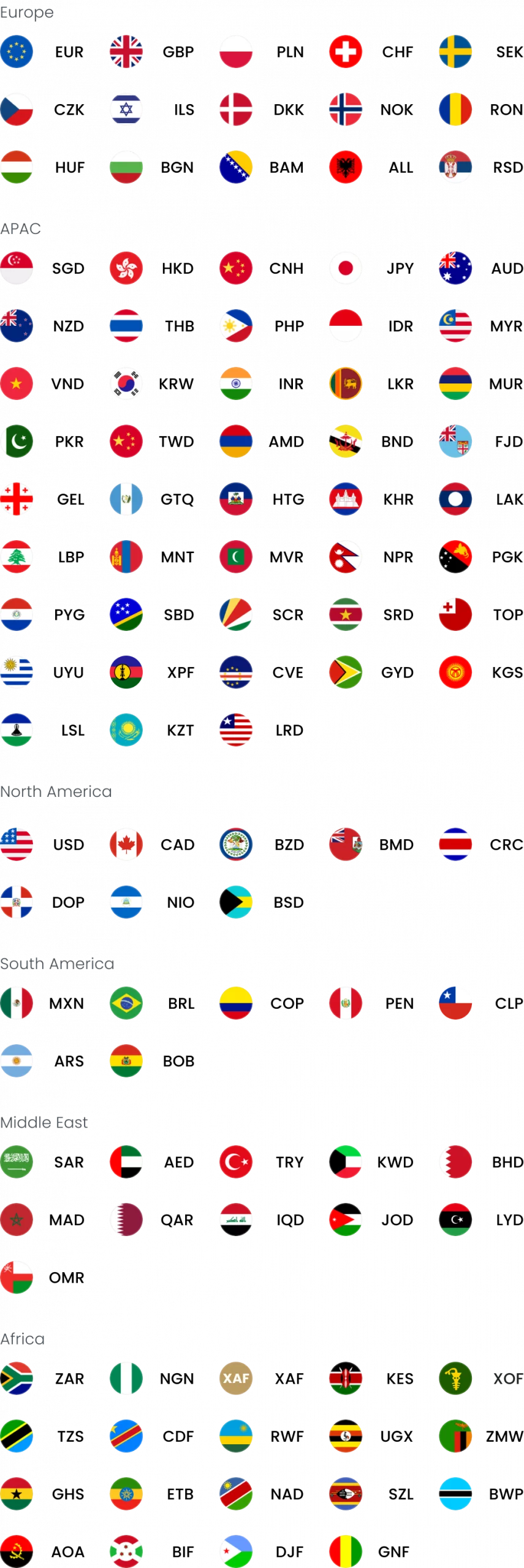
Hold and manage 20+ currencies in one account
No need to open multiple bank accounts for each currency you trade in. With the World Account, you can:
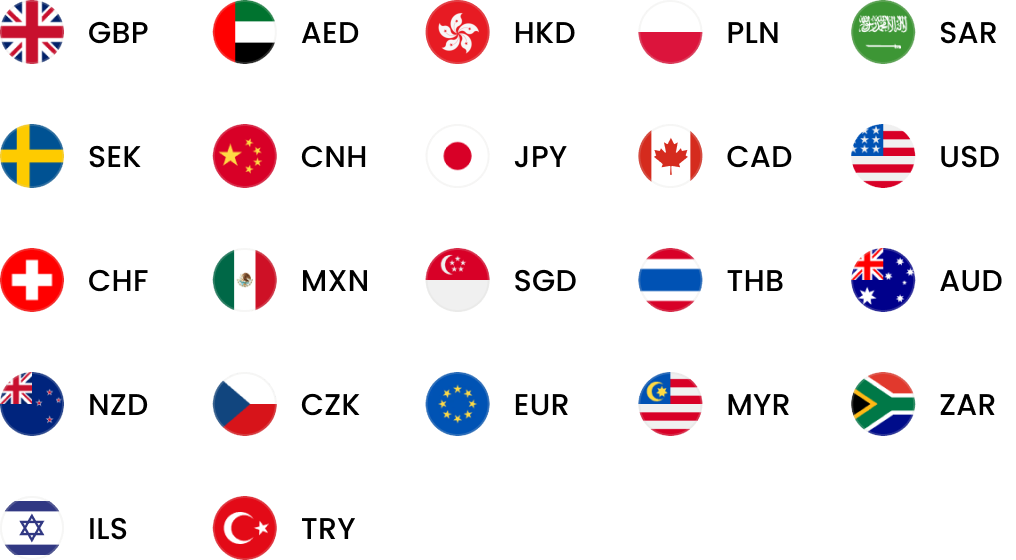
- Open and hold 20+ currency accounts (USD, GBP, EUR, CNH, AUD, JPY, and more)
- Avoid double conversions by sending and receiving payments in the same currency
- Make payments to 100+ countries without juggling bank logins, paperwork, or waiting days for transfers to settle
Open a WorldFirst account for free
- Open 20+ local currency accounts and get paid like a local
- Pay suppliers, partners and staff worldwide in 100+ currencies
- Collect payments for free from 130+ marketplaces and payment gateways, including Amazon, Etsy, PayPal and Shopify
- Save with competitive exchange rates on currency conversions and transfers
- Lock in exchange rates for up to 24 months for cash flow certainty
Integrate with China’s biggest supplier marketplaces, including 1688 and TaoWorld
WorldFirst is the only payment provider directly integrated with 1688.com, one of China’s largest wholesale platforms.
That means:
- You can pay 1688 verified suppliers in CNH instantly through your World Account
- You can avoid third-party transfer steps or manual entry of account info
- You get faster shipping, more favourable supplier terms and less room for error
WorldFirst is also connected to TaoWorld, giving you access to consumer-focused suppliers at scale.
Find out more: How to source wholesale using 1688.com outside China
Use powerful FX tools to protect your margins
Foreign exchange volatility can erode profits quickly – especially when dealing with large supplier payments.
With WorldFirst, you get access to a suite of FX risk management tools, including:
- Forward contracts – lock in today’s exchange rates for up to 24 months, ideal for budgeting and long-term pricing agreements
- Firm orders – set a target rate, and WorldFirst will automatically execute the trade when your rate is reached
- Real-time FX rates – convert currencies on demand at competitive rates, with no hidden fees
These tools give you more control over your FX exposure and help you protect your bottom line.
Leverage virtual cards for flexible global spending
The World Account also comes with multi-currency virtual cards, which you can issue to employees, teams, or departments.
You can use a World Card to:
- Pay for ads, subscription, or digital services in local currencies
- Manage team budgets across regions
- Avoid expensive currency markups on traditional credit cards
With spending in control and FX costs reduced, it’s easier to manage global operations with confidence.
Start paying Chinese suppliers in CNH
The World Account gives you everything you need to pay suppliers in China – and hold, send and receive money in 15+ currencies from a single login. Here’s how it works:
- Hold and convert multiple currencies. Open CNH, GBP, EUR, and other currency accounts instantly, and view real-time FX rates to make conversions when the market’s in your favour.
- Local account details in China – no local entity needed. Get local CNH bank details to pay your suppliers like a domestic buyer, eliminating unnecessary middlemen and routing delays.
- Send payments without hidden fees. Pay suppliers, logistics partners or vendors in CNH directly, with no surprise charges or inflated FX spreads.
- Lock in FX rates and manage risk. Use forward contracts to lock in conversion rates, reducing volatility and protecting your margins.
Frequently asked questions about making payment in RMB
1. What’s the difference between RMB, CNY and CNH?
RMB (Renminbi) is the name of China’s official currency – similar to how “pound sterling” refers to GBP.
- CNY refers to renminbi used inside mainland China (onshore). It’s tightly controlled by Chinese regulators.
- CNH is the offshore version of RMB, traded internationally. It’s the currency used for cross-border payments.
If you’re paying a Chinese supplier from outside China, you’ll need to use CNH, not CNY.
2. Should I pay my Chinese suppliers in CNH or USD?
Paying in CNH is often the smarter choice. It allows your supplier to quote in their local currency, which:
- Reduces the FX buffer they need to add
- Avoids unnecessary conversions
- Helps you get better pricing and fewer disputes
Plus, with the right tools (like the World Account), paying in CNH is just as easy as paying in USD.
3. Can I send RMB from the UK or Europe?
Yes – if you use a multi-currency account like the World Account from WorldFirst. It lets you:
- Hold CNH balances
- Convert from GBP or EUR directly into CNH
- Pay suppliers in China quickly and securely
No Chinese bank account or entity is required.
4. What’s the cheapest way to pay suppliers in China?
Paying directly in CNH is usually the cheapest option, because:
- You skip the USD middle step (and its FX fees)
- Suppliers don’t inflate quotes to protect against exchange rate shifts
Our comparison example showed that you could save £175+ per transaction just by switching from USD to CNH payments.
5. How do I start paying in CNH?
The easiest way to get started is by opening a free World Account:
- It gives you local CNH account details
- Lets you convert from your home currency at competitive rates
- And lets you pay suppliers in their preferred currency – quickly, and without hidden fees
Make payments in RMB more affordably with WorldFirst
Paying Chinese suppliers in RMB – especially CNH – isn’t just a currency decision. It’s a smarter way to do business. By switching from USD or GBP to CNH, you can:
- Save money on every transaction
- Avoid FX-related pricing issues and renegotiations
- Strengthen supplier relationships by paying in their preferred currency
- Simplify your payment process with faster settlement and fewer fees
And with the World Account, it’s never been easier to make international RMB payments with confidence.
Ready to pay in CNH without the hassle? Open your World Account for free today and start sending smarter payments to China.