


























As a cross-border business looking to lock in an exchange rate, you have three main options:
- Forward contracts: This is a contract where you agree to convert a fixed amount of currency at a set foreign exchange rate (FX rate) in the future. You’re legally required to complete the trade once the contract is created.
- Currency options: Where you have the opportunity to convert funds at a fixed exchange rate in the future. You can choose whether or not to exercise the option, so there is no legal obligation to complete the trade, but this option comes at a cost.
- Currency futures: A standardised agreement (traded on an exchange) where you agree to convert currency at a fixed exchange rate on a future date. Like forwards, you’re legally required to complete the trade.
In this article, we’ll share how each of these methods works in detail, and we’ll recommend when it makes sense to use each one.
To help you manage currency risk more effectively, we’ll also introduce you to WorldFirst’s World Account. With our multi-currency account designed for cross-border businesses, you can secure favourable exchange rates for up to 24 months with forward contracts.
We’ll cover:
- 3 ways of locking in an exchange rate long-term
- Currency options, currency futures and forward contracts compared
- How WorldFirst’s forward contracts can help you lock in exchange rates
- Points to consider when using forwards contracts to lock in an exchange rate
Ready to start locking in exchange rates? Sign up for WorldFirst’s World Account today.
3 ways of locking in an exchange rate long-term
There’s more than one method of locking in an exchange rate. The best method for you depends on:
- When you want to exchange your funds: Do you have a specific date in mind or do you need more leniency?
- What sort of flexibility you need: Some contract types (i.e. currency options) allow you to walk away from your agreement, while others will legally require you to make your trade.
- How much risk you’re willing to take on: There’s always the risk that currency prices will move against you before your conversion is scheduled. However, your risk exposure is limited depending on your contract type.
To help you decide, we’ve explained three of the most popular options below in detail:
1. Forward contracts
A forward contract is a legally binding agreement between two parties to buy/sell a currency at a fixed exchange rate on a specified future date. Its biggest advantage is the price certainty it provides, allowing you to forecast costs ahead of time.
For example, imagine you import designer clothing from New York into the United Kingdom. Since the start of the year, the GBP has strengthened by 10% against the USD, and you worry that GBP will start to depreciate again before you can buy next season’s stock.
To secure this favourable rate, you can take out a forward contract where you agree to buy £100,000 worth of dollars in six months, converting at today’s great exchange rate of $1.25 USD per £1 GBP. Then, when six months pass, you’d make the money transfer for £100,000 and receive $125,000, no matter what the future exchange rate is at that time.
By nature, forward contracts don’t always give you the best conversion rates, but they do allow you to accurately plan ahead for future payments without worrying about currency fluctuations. Forwards can be customised to any currency amount or end date.
If the currency market does move against you, you may still be able to take advantage of the better rates with a spot contract. Spot contracts are simple agreements to buy or sell currency at the current market price, and they’re often executed immediately.
When is it best to use forward contracts?
Forward contracts are best for businesses that need cost certainty, especially those with fixed currency amounts and exact timings in mind. Hedging for cost certainty (rather than for the purpose of betting against the market or making a profit) is the primary use case for forward contracts.
They’re also great for businesses that need highly customisable terms, since they’re agreed over-the-counter (OTC) and not through a stock exchange. Since forwards are private agreements, you’ll need to use a reputable provider like WorldFirst to help you set one up.
Find out more: What is a forward contract, and why should you use one?
2. Currency options
Options give you the right (but not the obligation) to buy or sell a currency at a fixed point in the future.
The key point here is that making the purchase is optional. However, for this additional flexibility, you pay a small ‘options premium’. This is similar to one you’d pay on an insurance policy, which is the cost of creating an options contract.
After buying an option, you can choose to use it or simply let it expire. For example, you’ll want to use your contract if exchange rates move unfavourably, since your fixed exchange rate is stronger than the current one. But if rate changes become favourable, then it makes sense to let your option expire and convert your funds at the better market rate using a spot contract.
To use the exchange rate locked into your contract, you should notify your options provider either by phone or through their platform. They’ll then take care of the settlement process for you.
It’s worth noting that American options, where you buy/sell whenever you want before the expiration date, are different to European options, where you can typically buy/sell only on the expiration date.
When is it best to use currency options?
If the exact details of your trade aren’t certain yet, then using currency options is likely best for you. For example, if the amount of currency you want to exchange, or the timing of your payments is likely to change, then you’d benefit from the flexibility of an options contract.
They’re also appealing if you want protection against unfavourable exchange rates without too much commitment or risk. However, options can turn out to be expensive since you’d need to purchase a non-refundable options premium with each contract you take out.
3. Currency futures
Similarly to forward contracts, a currency future is a legally binding contract where you agree to convert currency at a specific exchange rate on a future date. Unlike forwards, you don’t sign a physical contract; instead, you place your order through a public exchange’s trading platform or via a broker.
For example, you could buy a future contract from a futures exchange that allows you to sell £100,000 in three months at a set exchange rate.
Everything about the contract is standardised by the exchange, including the contract’s value and its terms. You can’t choose an expiration date for future contracts, since they’re also set by the exchange and often follow a standard schedule like monthly or quarterly.
This means you might have to buy multiple future contracts to cover the total amount of currency you want to convert. For instance, imagine the EUR/GBP futures contract size is €100,000. If you wanted to convert £300,000, then you’d need to buy multiple future contracts totalling that same value in euros.
When is it best to use currency futures?
Currency futures are best for businesses that deal with high monetary volumes and are comfortable with taking on significant exchange risk.
While you only need to put down a small deposit initially, you’re legally obligated to exchange the whole value of your contract, which means you could end up with a significant loss (or gain).
Futures are less appealing for businesses that need high amounts of customisation, either for currency amounts or for expiration dates. In this situation, using a forward contract will likely be a preferable option.
Currency options, futures and forward contracts compared
| Forward contracts | Options | Futures | |
|---|---|---|---|
| Best for | SMEs and cross-border businesses that need cost certainty and customisable contracts. | SMEs that need flexibility with sell prices and dates. | Large businesses that want low-risk and high liquidity, particularly those looking to trade large amounts of currency. |
| Obligation | You’re obligated to buy/sell currency at the agreed upon price. | You have a choice to buy/sell at the agreed upon price, but you aren’t required to make a trade. | You’re obligated to buy/sell currency at the agreed upon price. |
| Risk profile | Risk of the market moving unfavourably, meaning you’ll have to convert at a worse price then the current FX rate. | If you decide not to complete the trade, then you’ll only lose the value of the premium. | Losses (or gains) can be much higher than your initial deposit, since you’re liable to complete trades for the full value of your contract. |
| Cost | No upfront fees, but you may be required to pay a 5% deposit that’s returned to you after your contract is completed / expires. | You have to purchase a premium upfront. | You only need to put down a deposit in order to open a contract. |
How WorldFirst’s forward contracts can help you secure a favourable exchange rate
With WorldFirst, you can lock in exchange rates for up to 24 months using our forward contracts, so you can plan ahead and accurately budget for future payments.
WorldFirst is a FCA-regulated international payments platform that helps businesses hold, receive and send money overseas. Since 2004, we’ve helped over 1.5 million businesses send US$500 billion across the globe at low, transparent exchange rates.
Our World Account is a multi-currency account designed to help you manage currency risk more effectively. From your World Account, you can set up any number of forward contracts, rate alerts or even firm orders in order to take advantage of favourable exchange rates.
Here’s how it works:
1. Choose the type of forward contract that’s best for you
With WorldFirst, you have a choice between three types of forward contracts:
- Fixed forwards: These are standard forward contracts, where you agree to buy or sell a set amount of currency on a set date in the future.
For example, you could agree to buy £500,000 worth of USD at today’s exchange rate, with the conversion happening in eight months’ time. Once that time passes, your £500,000 will be converted at the exchange rate you agreed upon eight months ago, regardless of what the current exchange rate is.
- Window forwards: With these contracts, you can exchange your currency on any day within a range of dates.
For example, if you book a conversion window between the 1st and 30th of June, then you could pay on any day within that period. This is good if you aren’t sure of the exact payment date but know roughly when it will need to happen.
- Flexible forwards: These contracts allow you to make multiple payments over the course of your contract, rather than having to make a single currency exchange all in one go.
For example, you might want to book a forward contract without having all of your funds secured yet. By booking a flexible forward, you can make the trade in smaller increments once the funds arrive in your account.
Due to time differences and local payment cut-off times, we recommend that you have sufficient funds in your World Account on the day before the funds are due.
2. We’ll calculate your fixed exchange rate
The method we use to calculate your fixed exchange rate might sound complicated, but the idea is simple:
- We take the current spot rate (the current conversion rate) and adjust it based on the interest rate difference between the both currencies in your currency pair
- For example, if you wanted to convert between GBP and USD, then the spot rate would be adjusted based on the GBP interest rate and the USD one
- So if one currency has a 5% interest rate while the other’s is 3%, then your fixed exchange rate would reflect that 2% difference
While our standard fixed forward contracts can be booked online, our forward contracts are customisable, and we encourage you to speak with your relationship manager if you’d like to negotiate different rates.
3. Sign the contract and lock in your rate
It’s as simple as that. Once you sign, your contract will become active and you can start securing your rate.
Unlike some providers that will outright cancel your contract if the market shifts too much, WorldFirst will never cancel your agreements unless you breach our terms and conditions.
Please note: Once your contract is active, you’ll be legally obliged to fulfil it, otherwise you might be liable to pay ‘close out’ or cancellation costs.
Interested in taking out a forward contract with WorldFirst? Sign up for a World Account today.
What other ways can the World Account help you benefit from low FX costs?
Besides letting you create forward contracts, WorldFirst offers plenty more ways for you to benefit from low conversion costs.
With a World Account, you can also:
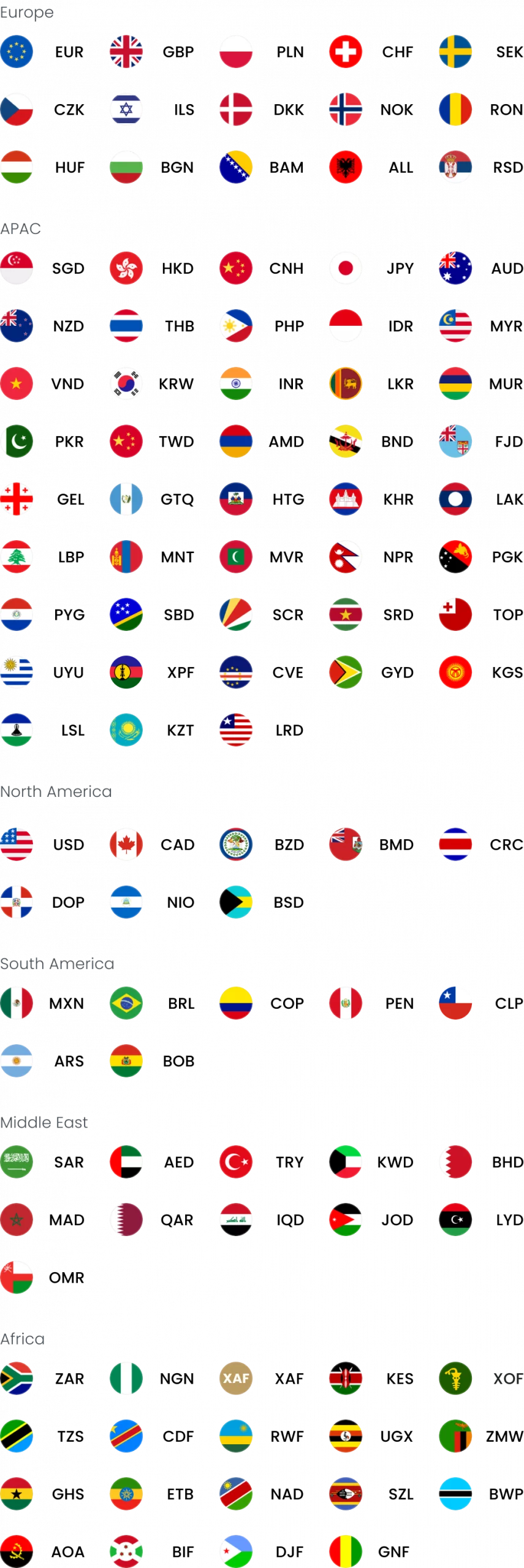
Hold 20+ currencies in your World Account and avoid unnecessary conversion fees
With a World Account, you can hold and receive funds in 20+ currencies, to help you avoid unnecessary conversion costs.
For example, you could receive funds in USD, hold them, then when you need to pay for a SaaS subscription in USD, you can make a payment from your existing currency balance. In this instance, you’ll pay zero conversion fees since you don’t need to convert any funds.
When you do go to exchange currency, the costs are minimal. Our interbank rate markup is limited to 0.5% for major currencies, and for all other currencies our rates will never exceed 0.75%.
Alongside our transparent FX rates, our pricing is also clear and competitive: we don’t charge account opening fees, monthly maintenance fees, hidden fees or fees for receiving payments.
Read more: How to choose a multi-currency business account (+ 6 options)
Set rate alerts and firm orders to get notified immediately once the rate hits your target
WorldFirst offers real-time rate alerts that notify you once your target exchange rate has been reached. This keeps you informed about price spikes without you needing to constantly monitor the market.
Rate alerts allow you to track multiple currencies at once so that you can quickly convert your funds when rates are advantageous.
Another option is to set up a firm order and have WorldFirst automatically complete your conversion for you.
With firm orders, we’ll monitor the market 24/7 and will automatically execute your currency conversion once your desired rate is reached. Firm orders are active for one month after being created, giving you a clear window of time to secure the best rates.
Pay no FX fees when you spend with a virtual World Card
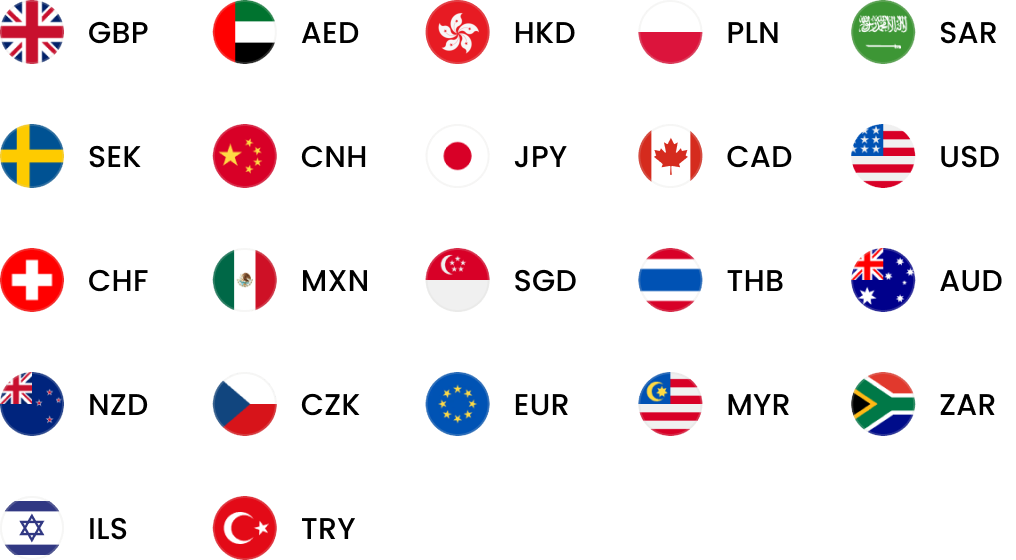
With a virtual World Card, you can make payments in a total of 150+ different currencies. And what’s more, you’ll pay zero FX fees when you spend in 15 major currencies, including AUD, CAD, CHF, CNH, CZK, EUR, GBP, HKD, JPY, MXN, NZD, PLN, SEK, SGD and USD.
You can create up to 20 virtual World Cards and link each one to your World Account. Each card can be assigned to a different expense, including vendors, teams, budgets, or even individual currencies, helping you keep track of your funds without having to switch between accounts.
You can also earn unlimited 1.2% cashback when you spend with your World Card on a wide range of eligible business expenses, including business travel, subscriptions and digital advertising (among others). You can spend anywhere that Mastercard is accepted.
Read more: Multi-currency virtual cards: 5 top options for global businesses
What to consider when using forward contracts to lock in exchange rates
When used strategically, forward contracts can provide cost certainty for upcoming payments, and they might even save you large amounts of money. But depending on your situation, they might not always be the right choice.
Here’s what to consider before deciding to use a forward contract:
- Cancellation penalties: What penalties are there for missing your agreed upon currency transfer date, or for cancelling your contract?
Some providers will charge a flat fee, whereas others might just charge you for any reasonable expenses incurred as a result of closing out your contract. For example, you might be charged for exchange rate losses (between the locked rate and the actual rate), or administrative fees for managing the cancellation.
- Your obligations to complete your contract: With forwards, you have to complete your contract no matter what. Even if the market moves favourably, you aren’t able to take advantage of the better rate since you’re required to complete the forward trade and take any losses.
- How much flexibility you need: Fixed, flexible and window forwards all offer varying levels of flexibility. For example, window contracts are great if you have a general date range for when you need to exchange your funds, whereas fixed contracts might be better (and cheaper) if you require zero flexibility.
- Margin calls / deposit top-ups: If the actual exchange rate shifts more than 5% away from your locked rate, then you may receive a margin call from your provider. It’s essentially a top-up on your deposit, though the amount you’ll pay is never more than you agreed in the first place.
For example, if you took out a forward contract to lock today’s exchange rate to sell €500,000 in three months, you’d put down a 5% deposit of €25,000. But if the euro’s value rises significantly, then your €25,000 might no longer cover 5% of your total transaction value. In this situation you’d receive a margin call to make sure your deposit covers the required percentage.
- Your reason for locking in an exchange rate: If your main goal is to profit from fluctuations in currency exchange rates, then some providers (including WorldFirst) won’t be able to offer you a forward contract. Instead of using a forward contract from a private provider, consider using currency options, or other hedging tools which are traded over stock exchanges to bet against volatility.
For more information, read sections eight, nine and ten of our terms and conditions.
Use WorldFirst’s forward contracts to lock in exchange rates for up to two years
In this article, we’ve shared how you can use forward contracts, currency futures and currency options to manage conversion risk. For cross-border businesses that require long-term cost certainty, forward contracts stand out as the best option.
When you choose to create a forward contract with WorldFirst, you can lock in an exchange rate for up to 24 months. Our forwards are fully customisable, and you can choose between fixed, window and flexible contracts, depending on how much flexibility you need.
We also allow you to set rate alerts and book limit orders so that you can benefit from favourable FX rates without being bound to a contract.
Ready to get started with WorldFirst? Sign up for a World Account for free today.
FAQs
What is a forward contract?
Forward contracts, like those offered by WorldFirst, are formal agreements that allow you to lock in today’s exchange rate for a currency trade you plan to make in the future. You must specify:
- How much currency you plan to exchange
- Which currency pairs will be involved
- And when the trade will take place
For example, imagine today’s GBP to CNY exchange rate was really favourable. If you had an upcoming payment to a Chinese supplier in six months, you could take out a forward contract with WorldFirst and lock in today’s exchange rate for up to 24 months. It protects your planned exchange from unfavourable market fluctuations, and it gives you cost certainty to plan future payments ahead of time.
How long can I lock in exchange rates with WorldFirst?
WorldFirst allows you to lock in an exchange rate for up to 24 months, though the exact timeframe depends on the currency pair you’re trading. For major currencies like USD, the exchange rate can be secured for two whole years, but for particularly unstable currencies, the lock-in period may be shorter.
How many forward contracts can I set up at once?
While you can set up multiple contracts with WorldFirst, it’s best to create them only if you actually intend on completing the trade.
WorldFirst assesses your eligibility and requirements on an individual basis. Your business profile, transaction history and the total value of outstanding contracts will all be taken into consideration. This means the number of forwards available to you will depend on your individual situation, including your ability to cover the initial deposit and potential margin calls.
Will WorldFirst ever cancel my forward contract?
WorldFirst will not cancel your contract unless you breach the terms and conditions. For example, if you fail to send the required funds on (or before) the agreed settlement date, then WorldFirst may close the contract and charge you any necessary fees or losses resulting from the cancellation.
What kind of transactions can I use FX forwards for?
You can use FX forwards for any business transaction that involves future currency exchange (except for personal or speculative trading).
For example, you could use forward contracts to:
- Pay overseas suppliers
- Settle invoices issued in foreign currency
- Manage recurring expenses
- Secure favourable exchange rates for upcoming international purchases
- Make a direct investment (making a capital investment in an enterprise to obtain a lasting interest in it)