



























Payment processing delays a shipment. And delayed shipments mean a delay in revenue. This often happens when a supplier follows up because the amount received does not match the invoice. And that’s because currency conversion costs quietly shrink margins.
If your business pays suppliers abroad, you have likely experienced one or more of these issues.
The way you pay suppliers abroad determines how much control you have over exchange rates, how quickly funds arrive and how predictable your costs are. Over time, those factors affect cash flow planning, supplier trust and your ability to scale internationally without unnecessary complexity.
This guide explains the best way to pay overseas suppliers, compares fees and transfer speed in practical terms and outlines what to prioritise if you want faster payments, clearer costs and fewer surprises.
Key takeaways:
- Total cost matters more than the headline fee: Transfer fees only tell part of the story. FX mark-ups, intermediary bank deductions and forced currency conversions often account for most of the cost when paying overseas suppliers, especially on higher-value payments
- Predictable delivery times protect supplier relationships: Choosing a method with clear, reliable settlement times reduces delays, follow-ups and operational friction for both sides
- Paying suppliers in their local currency reduces disputes and can lower prices: Local-currency payments help suppliers receive the exact invoiced amount and avoid unexpected FX losses
- FX timing directly affects cash flow and margins: Holding and converting funds in advance gives businesses more flexibility and makes international costs easier to plan
- Multi-currency payment accounts offer the most balanced solution for regular payments: For UK businesses that frequently pay overseas suppliers, they provide clearer costs, faster delivery and greater FX control than banks, cards or wallets
Open a World Account and manage overseas supplier payments in multiple currencies.
What UK businesses need when paying overseas suppliers
Before comparing payment methods, it helps to be clear about what actually matters in day-to-day operations.
Cross-border payments can cost up to 10 times as much as domestic payments. However, the cheapest option on paper is rarely the most affordable in practice and speed alone means little if costs and timing remain unpredictable.
1. Low and transparent fees
The headline fee on an international payment rarely reflects the actual cost.
Additional charges often appear elsewhere in the process. Exchange rate mark-ups, intermediary bank deductions and forced currency conversions can all increase the final cost of paying a supplier.
UK SMEs lost £2.8 billion to hidden FX mark-ups and unclear fees. In many cases, these costs only become visible after the payment reaches the recipient.
For businesses making regular overseas payments, this lack of transparency makes accurate cost forecasting difficult. Over time, even small FX margins can quietly reduce profitability and make month-to-month results harder to explain.
When paying overseas suppliers, UK businesses should account for:
- Exchange rate margins, not just advertised transfer fees
- Intermediary or correspondent bank charges
- Forced currency conversions
- Differences between the amount sent and the amount received
2. Fast and predictable delivery times
Suppliers plan production, shipping and fulfilment around when they expect funds to arrive. Delays caused by cut-off times, correspondent banks or manual checks can disrupt those plans and strain commercial relationships.
90% of UK businesses experience payment delays, with 44% reporting worsening delays.
Unclear delivery times also create extra work for finance teams. Chasing payments, reconciling delays and responding to supplier queries all take time and attention away from core operations.
International supplier payments can arrive on the same day or take several working days, depending on the payment method, the currencies involved and the number of banks involved.
What matters most is knowing when funds will arrive and being able to rely on that timing.
3. Paying suppliers in their local currency
Most overseas suppliers prefer to receive payments in their own currency.
Local-currency payments reduce confusion, protect supplier margins and minimise disputes emerging from unexpected currency conversions on receipt. When suppliers receive the exact invoiced amount, reconciliation becomes simpler for both parties.
Paying in a supplier’s local currency reflects a more considered payment setup. It simplifies the relationship and avoids shifting currency risk onto the supplier without agreement.
In China, for example, paying suppliers in renminbi (RMB) can confer advantages. Chinese vendors often build a buffer into their quotes when they expect to be paid in USD or GBP to cover FX risk and conversion fees. By offering to pay in RMB, UK importers may negotiate better pricing from Chinese suppliers.
4. Cash flow and foreign exchange control
Foreign exchange timing affects margins.
Being forced to convert currency at the point of payment removes control over exchange rates and exposes businesses to short-term market movements. For importers and high-volume payers, this can materially affect costs.
Holding and converting currency on your own terms separates payment timing from conversion timing. That flexibility improves cash flow visibility, reduces pressure to transact at unfavourable rates and makes international costs easier to plan.
The main ways UK businesses pay overseas suppliers
UK businesses generally rely on four payment routes when paying suppliers abroad. Each works very differently once you look beyond the surface, especially in terms of total cost, delivery time and control over foreign exchange.
1. International bank transfers (SWIFT)
Traditional international bank transfers depend on the SWIFT network. While SWIFT provides the messaging layer, the funds themselves move through a chain of correspondent and intermediary banks before reaching the supplier.
In practice, this introduces cost and uncertainty.
What typically affects cost:
- Transfer fees charged by the sending bank
- Deductions applied by intermediary or correspondent banks
- Exchange rate mark-ups built into the currency conversion
On higher-value payments, FX costs usually dominate. Even a slight percentage difference on a £10,000 supplier invoice can add hundreds of pounds to the final cost before banks apply fixed fees and deductions.
Delivery times:
- One to three business days on major currency corridors
- Longer settlement times when multiple correspondent banks are involved
- Payments to markets such as China or parts of Southeast Asia often take several working days
- Additional delays can occur if compliance checks are triggered
International bank transfers can work, but they offer limited visibility over final cost and timing.
When international bank transfers make sense
SWIFT transfers are generally suitable when:
- Payments are occasional rather than frequent
- Speed is not critical
- Cost predictability and FX control are lower priorities
For regular supplier payments, the layered fees and variable delivery times make this one of the least predictable options.
2. Card payments for overseas suppliers
Some overseas suppliers accept debit or credit card payments, particularly for smaller invoices or ad hoc purchases.
Cards are fast at the point of authorisation, but they are expensive for business-to-business payments.
What typically affects cost
- Card processing fees charged to the supplier, often 2.5%–6% of the transaction value
- Additional FX conversion margins applied by card issuers on foreign-currency payments
Because these fees are percentage-based, costs rise quickly as payment values increase. On a £5,000 invoice, card and FX charges combined can easily reach several hundred pounds.
Settlement considerations:
- Authorisation is instant
- Funds typically reach the supplier’s bank account one to three business days later
- Suppliers may face further costs when withdrawing funds
For suppliers managing tight cash flow, the settlement delay and high fees can be an issue.
When card payments make sense
Paying overseas suppliers by card usually works best when:
- Payment amounts are small
- Payments are one-off or infrequent
- Convenience matters more than total cost
Cards are rarely suitable for regular or high-value payments to overseas suppliers.
3. Online payment platforms and digital wallets
Online payment platforms and digital wallets offer an alternative to traditional bank transfers by routing payments through their networks rather than through correspondent banks.
For many businesses, this means quicker setup and fewer manual steps, especially for cross-border online payments.
What to expect:
- Fees are usually charged as a percentage of the payment value and often include currency conversion
- Some fintech providers offer narrower FX pricing, with tighter spreads combined with flat or corridor-based fees, which can reduce costs compared to traditional bank transfers
- Pricing structures vary significantly by platform, currency and destination, making it important to review the full cost rather than just headline fees
Speed and delivery:
- Transfers between users on the same platform are often instant or near-instant
- Payments sent to a supplier’s local bank account typically arrive within one to two business days
- Platforms may delay or temporarily hold funds for risk, compliance or verification checks, particularly on larger or unfamiliar transactions
Practical limitations:
- Not all overseas suppliers accept wallet payments, especially established B2B vendors
- Transaction size limits may apply
- Recipient-side fees or withdrawal charges can reduce the amount the supplier ultimately receives
When digital wallets make sense
Digital wallets tend to work best when:
- Payment amounts are relatively small
- Both parties already use the same platform
- The supplier accepts wallet payments without adding extra charges
For larger or repeat supplier payments, percentage-based fees and acceptance constraints often make digital wallets less practical than other options.
4. Multi-currency business accounts
Businesses that pay suppliers across multiple markets use multi-currency accounts to manage international payments more effectively.
Instead of converting currency each time a business makes a payment, these accounts let companies hold balances in multiple currencies and pay suppliers directly from those balances.
Payments are typically sent through local banking systems in the destination country, rather than routed through the SWIFT correspondent network.
This setup changes how both cost and timing work in practice.
Cost structure:
- Foreign exchange margins are usually closer to the mid-market rate, reducing the cost of each conversion
- Transfer fees are generally low or fixed, with some payments carrying no transfer fee
- Local payment routing avoids intermediaries’ deductions, so payments arrive in full
As a result, suppliers receive the exact invoiced amount, which simplifies reconciliation and reduces payment disputes.
Speed and predictability:
- Payments to suppliers in Europe often arrive the next working day through SEPA
- UK-to-US payments sent via domestic US rails are commonly clear within one business day
- Payments into Asian markets are materially faster when sent locally, rather than passing through multiple correspondent banks
Separating currency conversion from payment execution also gives businesses more control over timing. Businesses can convert funds when rates make sense and hold them until payment is due, improving cash flow visibility and planning.
When multi-currency accounts make sense
Multi-currency business accounts work best for businesses that:
- Pay overseas suppliers regularly
- Need clearer, more predictable international payment costs
- Want greater control over when and how they convert currency
For many UK businesses trading internationally, this approach provides the most consistent balance of cost efficiency, delivery speed and operational control.
Comparison table: fees, speed and FX control
To make these options easier to compare, the table below sets out the key differences between the main payment methods:
| Payment method | Typical fees | Speed | FX control | Best for |
| International bank transfer | Transfer fees plus FX mark-ups and intermediary deductions | 2–5 business days | Low | Occasional payments |
| Card payments | Card FX fees and supplier surcharges | Same day to 2 days | Very low | Small, ad-hoc payments |
| Online wallets | Platform fees and FX spreads | 1–3 business days | Limited | Low-value digital payments |
| Multi-currency business account | Transparent FX pricing, fewer hidden fees | Same day or next day in many corridors | High | Ongoing overseas supplier payments |
Common mistakes UK businesses make when paying overseas suppliers
Even experienced UK businesses run into avoidable issues when paying overseas suppliers:
- Focusing only on transfer fees: Many businesses compare payment methods based on headline transfer fees alone. In practice, foreign exchange mark-ups often account for a much larger share of the total cost, especially on higher-value payments
- Overlooking intermediary bank deductions: When payments pass through intermediary banks, deductions can reduce the amount a supplier receives. This often leads to follow-up emails, payment delays and invoice mismatches that take time to resolve and can disrupt production or shipping schedules
- Using the same payment method for every supplier: Not all suppliers, currencies or payment corridors behave the same way. A method that works well for a European supplier may be slow or expensive for payments into Asia or North America
Waiting to review payment setup until problems arise: Many businesses only revisit their international payment setup after delays, disputes or margin pressure appear. By that point, the impact has already affected cash flow and supplier relationships
How WorldFirst helps UK businesses pay overseas suppliers
For most UK businesses making regular international supplier payments, multi-currency business accounts offer the most reliable balance of cost control, speed and predictability. They reduce reliance on correspondent banks, limit unnecessary FX conversions and give businesses more control over payment timing.
WorldFirst takes this approach as the foundation of its international payment services. Through the WorldFirst World Account, UK businesses can hold, convert and pay multiple currencies from a single platform.
The World Account is not a bank account. It’s a multi-currency payment account designed specifically for international trade, using local payment routes wherever possible instead of defaulting to the SWIFT network.
With WorldFirst, UK businesses can:
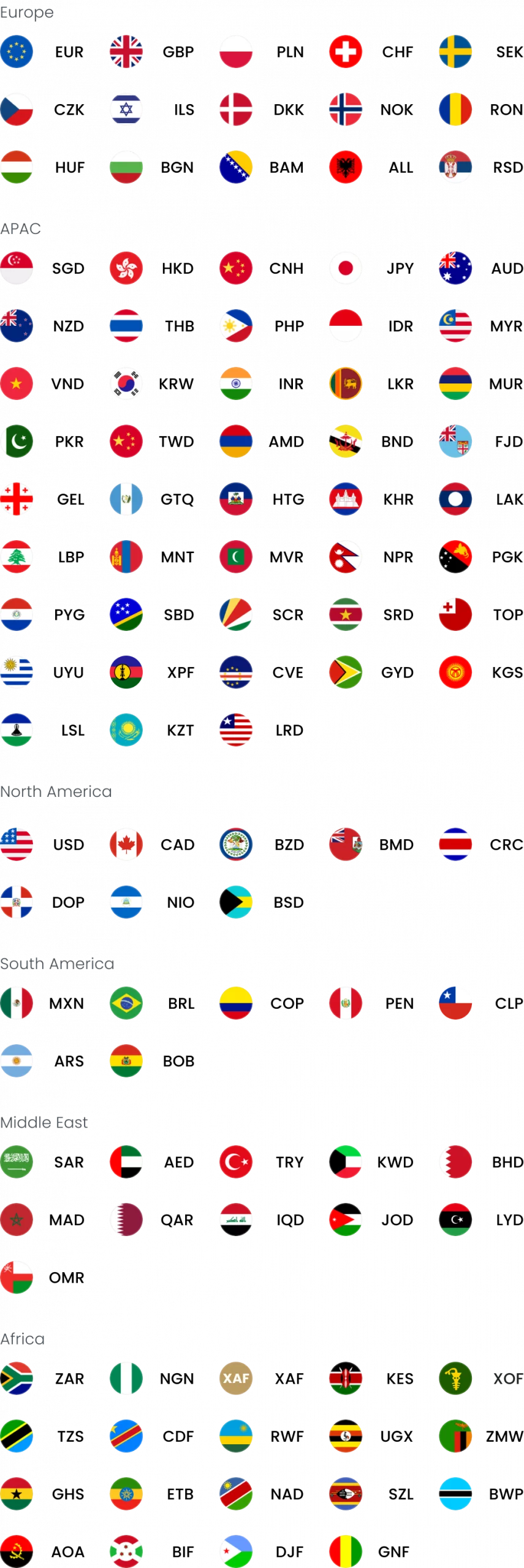
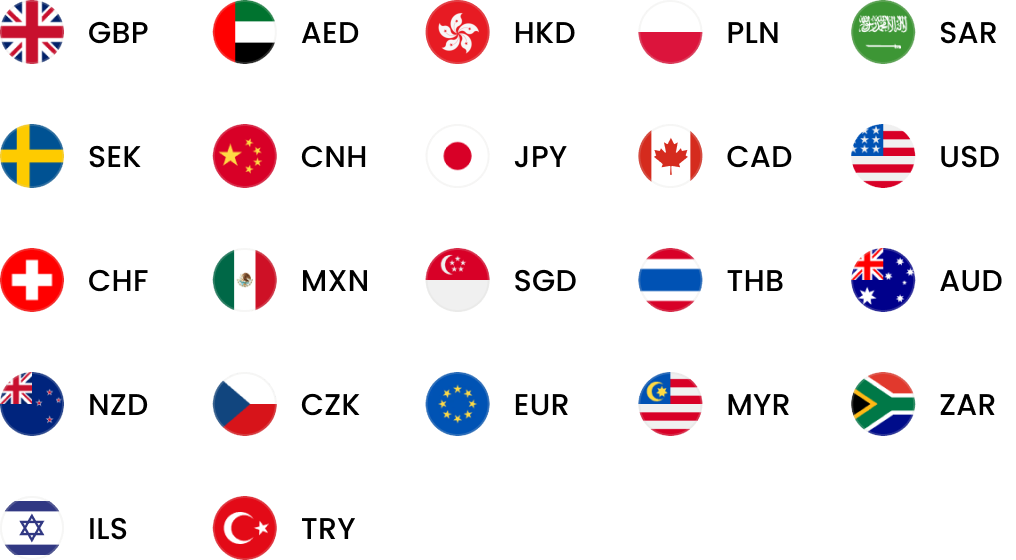
- Hold and manage funds in 20+ currencies from one World Account
- Send payments to suppliers in 130+ countries, using local rails where available
- Make international payments that arrive the same day or the next working day on major corridors
- Convert currency before payment, rather than at the point of settlement
- Pay suppliers the exact invoiced amount, avoiding shortfalls caused by intermediary deductions
By combining multi-currency capability, local payment routing and transparent FX pricing, WorldFirst helps UK businesses move away from slow international payments and towards a more controlled, predictable way of paying overseas suppliers.
If your business is reviewing the best way to pay overseas suppliers, WorldFirst provides the tools to reduce costs, improve payment reliability and maintain control over foreign exchange as you trade internationally.
Open a World Account to pay overseas suppliers with clearer costs and faster delivery.
Sources:
- https://www.bankofengland.co.uk/payments-and-infrastructure/cross-border-payments
- https://www.finextra.com/newsarticle/43743/british-smes-lost-28-billion-in-2023-to-rip-off-bank-fx-fees-says-wise
- https://www.coface.com/news-economy-and-insights/2025-uk-payment-survey-companies-face-rising-payment-delays-amid-buyer-cash-flow-concerns
- https://www.worldbank.org/en/topic/financialmarketintegrity/brief/cross-border-payments
- https://www.bis.org/cpmi/publ/d200.htm
- https://www.worldfirst.com/uk/product/
- https://www.worldfirst.com/uk/help-center/making-payments/how-long-will-my-payments-take/