



























Transferring large sums of money across borders using traditional methods can be very slow and expensive. Traditional banks use the SWIFT network for international payments, which typically takes up to five days for funds to settle.
Alternative methods like online money transfer services may be faster. Yet these methods are usually designed for individual users, not businesses. For instance, they can have low transfer limits and lack features to manage risk. Plus, they may also charge more for larger transaction amounts, or they may not be very transparent about their pricing.
Below, we’ll share why WorldFirst is the best way for businesses to transfer large sums of money internationally. Our business-first approach lets you make large, secure transfers much faster and more affordably than traditional methods.
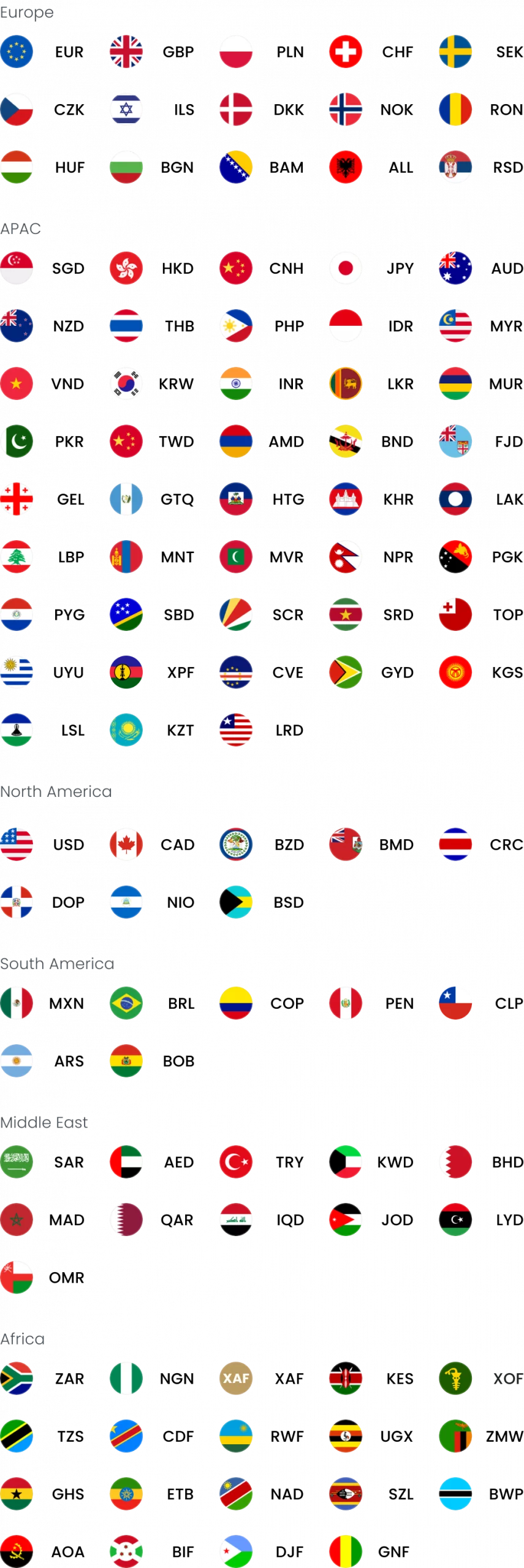
With a multi-currency World Account, you can make payments in 100+ currencies to 210+ destinations with 80% of payments landing on the same day. Plus, our transparent pricing makes it easier for you to manage costs and forecast revenue with more accuracy.
We’ll also compare other methods for sending large sums of money overseas.
In this article:
- How WorldFirst enables large business transfers across borders
- How to open a World Account
- Six other methods to transfer large sums of money internationally
- What qualifies as a “large sum” for international transfers?
- Five key considerations when choosing a transfer method
For fast, affordable international transfers, open your multi-currency World Account for free and start making same-day payments in 100+ currencies.
How WorldFirst enables large business transfers across borders
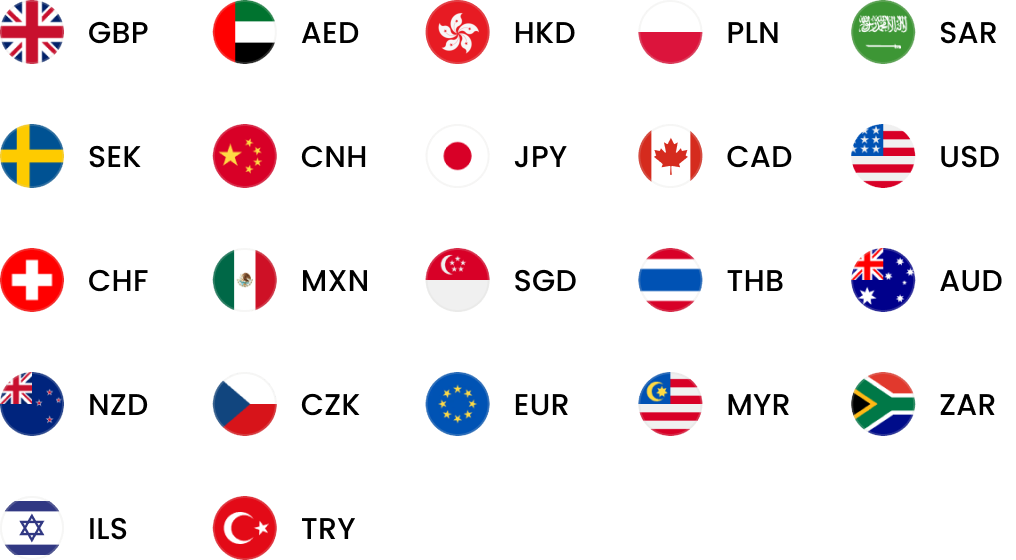
With a multi-currency World Account, you can collect and hold 20+ currencies, and receive local account details for each currency account. You can also pay in 100+ currencies to 210+ destinations directly from your World Account, or use the free virtual World Card wherever Mastercard is accepted.
Unlike traditional banking solutions or consumer-focused transfer services, WorldFirst is built to handle the volume, speed and security requirements of global businesses. We partner with a network of global banks, to enable faster and larger transfers than many online platforms. Plus, we give you multiple ways to secure great rates and protect your funds when you send large sums overseas.
Here’s how WorldFirst transforms large international transfers for businesses:
Settle 80% of large payments on the same day or even instantly
With WorldFirst, 80% of all payments land on the same day and 90% land the following day. That means you can pay suppliers, vendors, partners and other payees much faster than by using traditional bank write transfers.
Payments to other World Account holders are instant, letting you pay even faster if your payee has their own World Account.
For businesses that need to pay suppliers and partners in China, WorldFirst is one of the only providers enabling same-day direct USD payments to mainland China and Hong Kong.
While SWIFT transfers to China can take up to 10 days, WorldFirst lets you pay in a few hours, via our direct partnerships with a network of local Chinese banks.
What’s more, unlike many online transfer services that aren’t meant for business, WorldFirst doesn’t limit how much you can send. We have no transfer limits when you send funds from your multi-currency account balance, except where local laws or other restrictions apply.
Make large payments, bulk payments and currency conversions affordably
Large international transfers can cost £50 or more using traditional wire transfer methods. And some alternative transfer methods use a percentage-based fee structure where you pay even higher fees the more you send.
WorldFirst charges a low rate for large international payments in major currencies. Plus, with free instant transfers to other World Account holders, it’s even more affordable to make large payments at scale.
We use the mid-market rate (MMR) plus a small markup to calculate currency conversions. This markup is capped at 0.50% for major currencies including USD, EUR, GBP, AUD, CAD and JPY.
You can also use your World Account to make up to 200 payments at once. And you can open local currency accounts to hold funds in 20+ currencies – all with no setup fees or ongoing fees and no hidden charges. See our pricing page for more info.
Read more: How to pick the best online business bank account (12 options)
Send large amounts securely with real-time tracking and payment protection
WorldFirst is regulated by the Financial Conduct Authority (FCA) in the UK.
With real-time payment confirmation and tracking, you don’t have to wonder where your payments are or whether they’ve arrived.
For an extra layer of protection, use WorldTrade to protect large payments when you source from Chinese suppliers. With WorldTrade, your funds aren’t released to suppliers until we verify that your order has shipped according to the terms of your contract.
This process, known as escrow, adds an extra layer of security and peace of mind, especially when paying new suppliers.
Protect your margins and reduce currency risk with firm orders and forward contracts
Unlike other providers who focus mainly on individual payments, WorldFirst helps businesses reduce costs with favourable exchange rates.
In addition to providing a transparent exchange rate, we give you a number of ways to manage your foreign exchange costs:
- With firm orders, you let us know how much you want to trade, the desired rate you want to trade at and an expiry date. Then, let us watch the market for you and execute the trade on your behalf when the market hits the rate you want.
- Alternatively, use forward contracts to hedge against currency risk by locking in your preferred exchange rate for up to 24 months. Forward contracts protect you against major currency fluctuations, so you can budget more effectively in case the market shifts.
Find out more: What is a forward contract and why should you use one?
Your World Account also lets you hold funds in 20+ currencies and only exchange when you’re ready, so you can choose the best time to make the exchange and get better rates.
It’s free to collect and hold funds in your currency accounts, so there’s no charge while you wait to trade. Your currency accounts can also help you save by letting you hold funds in your target currency and avoid repeat conversion costs.
Use World Cards to pay large amounts with no FX fees
When you open a World Account, you get up to 20 free World Cards – free virtual payment cards that you can use anywhere Mastercard is accepted. Pay zero FX fees when you pay from your World Account balance in 15 currencies, or pay in 150+ other available currencies.
Each of your 20 cards has a default monthly limit of £750,000, a default daily limit of £200,000 and a transaction limit of £100,000. Use different cards for different teams, employees, expense types, suppliers or currencies.
For extra security and protection against fraud, theft and accidental overspending, you can set lower custom limits for each card. You can also instantly freeze, unfreeze or cancel any of your cards directly from your World Account dashboard.
View all your payments, along with all of your account info and expenses in one convenient central dashboard. And, sync your World Account with Xero and NetSuite for simplified expense tracking.
Read more: How a multi-currency virtual card helps your business grow
How to open a World Account
To open a World Account:
- Head to our Sign up page
- Enter your personal and business details
- Upload the necessary verification documents
- Set up your account requirements
- Start making large transfers
Need extra help opening an account? See our official Help Centre guide.
5 other methods to transfer large sums of money internationally
| Transfer Method | Speed | Cost | Transfer Limits | Best For |
|---|---|---|---|---|
| WorldFirst | Same day (80% of payments) or next day | Low flat fees + up to 0.5% FX margin on major currencies | No set limit from account balance | Regular large business transfers and supplier payments |
| Traditional bank wires | 3–5 working days (up to 10 with delays) | £30–£50 + 2–4% FX margin | Usually high or none | One-off high-value transfers via existing bank |
| Online money transfer services | 1–3 days | 0.5–1% (some up to 5%) | Often capped (£10k–£50k) | Individuals or smaller business transfers |
| Foreign exchange brokers | 1–2 days | Negotiated, often <1% | High (£25k–£100k+) | Very large sums like employee payments or property purchases |
| Cryptocurrency transfers | Minutes to hours | Very low (network fees only) | High, but volatile value | Niche tech businesses with crypto expertise |
| International money orders / bank drafts | 1–4 weeks | High, poor FX rates | Very low (≤£5k) | Areas with limited digital banking access |
| Cash pickup services | Minutes to hours | Very high (flat + % fees) | Low (£5k–£10k) | Emergency or remittance transfers |
1. Traditional bank wires

You can send funds using the SWIFT network, a system that securely communicates transaction information from one bank to another. Sending funds via SWIFT usually involves multiple intermediary banks.
Pros:
- Most business are familiar and comfortable with this well-established transfer method
- Wire transfers meet strong regulatory compliance standards and are backed by insurance protection through established financial institutions
Cons:
- Fees for wire transfers typically range from £30–£50 plus a 2–4% exchange rate markup
- Transfers typically take 3–5 business days due to correspondent banking changes and manual processing requirement
- Errors, inconsistencies and risk prevention measures can cause transfers to take up to 10 days
- Hidden intermediary bank fees can add as much as £20–£50 per transfer
Best for: Large one-off transfers where you have existing banking relationships and security benefits outweigh the higher costs.
2. Online money transfer services

Digital-first platforms like Wise and Remitly may offer better rates than banks for certain types of transfers. But they may lack additional protections and business functionality, and may limit transaction amounts.
Pros:
- Online money transfer services can be much more affordable than wire transfers, with transparent fees typically 0.5–1% of the transfer amount
- Transfers may settle within 1–3 days, but are often still slower than business-focused platforms for large transfer amounts
Cons:
- Low transfer limits may mean that users need to send multiple transactions when transferring very large sums, which can increase complexity and costs
- Certain providers may charge high percentage-based fees (up to 5%) that eat into margins and penalise larger transfers
- Online services may have limited customer support for large transfers compared to dedicated business services
- Many providers don’t offer advanced features like forward contracts or dedicated account management for ongoing large transfer needs
- Many services have limited transparency (i.e. no real-time tracking)
- Some services may hold funds for long periods of time due to risk prevention measures
Best for: Individuals who need to make relatively large transfers that would be considered small by most business standards.
3. Foreign exchange brokers

For very large transfers, like paying overseas staff, some businesses prefer to work with specialist providers known as forex brokers. These providers can offer conversions and transfers at better rates for especially large amounts.
Pros:
- Developing a strong professional relationship with a forex broker can lead to better deals, like customised rates and preferential timing for substantial transfers
- Forex brokers may offer hedging tools to mitigate currency risk, or share valuable market insights relevant to very large transfers
Cons:
- Forex brokers often require higher minimum transfer amounts (e.g. a minimum of £25,000 to £100,000 per transfer), making them unsuitable for some business models
- Don’t usually offer additional account services, compared with full-service business platforms like WorldFirst
- Regulatory protections may be less comprehensive than those of established banks or licensed electronic money institutions (EMIs)
Best for: Very large supplier payments, paying overseas staff, making large investments abroad (e.g. buying office or warehouse property in another country where you do business).
4. Cryptocurrency transfers
For tech-savvy companies in niche markets, crypto can be a compelling option for faster transfers and lower rates than many other transfer methods. However, the risks usually outweigh the benefits and the learning curve is generally very high.
Pros:
- Transfers can settle very fast – usually in minutes to hours, or instantly
- Funds can’t be frozen by providers, intermediaries or governments, as with other transfer methods
- Transaction fees – known in the crypto world as network fees or “gas fees” – are typically lower than other transfer methods: only a few dollars per transaction, and you only get charged once since there are no intermediaries. However, these fees can fluctuate widely and increase substantially when networks are busy
Cons:
- Crypto transactions require both the sender and the recipient to have crypto exchange accounts (“crypto wallets”) and handle tax implications
- Crypto is extremely volatile, and dramatic price swings can lead to significant value loss during a transfer. For example, a £100,000 transfer could become worth thousands less in a matter of hours
- Compared to regulated financial services, there is limited recourse if anything goes wrong during a transfer. For example, if you inadvertently send your funds to the wrong crypto wallet address, you may have no way to get them back
- Most businesses can’t justify the operational and compliance risks of crypto for routine large transfers
Best for: A small handful of niche, tech-forward businesses that have the technical and financial expertise to understand the risks.
5. International money orders and bank drafts

These dated transfer methods typically involve a good amount of paperwork and a physical presence at a bank location. In most cases, they’re not a good option for large business transfers.
Pros
- Secure, with strong protections, as funds are either prepaid (money orders) or guaranteed by the issuing bank (bank drafts)
Cons
- Extremely slow. These methods can take as long as four weeks, making them impractical for most business operations
- Mailing money orders can post a significant security risk, and there’s no tracking or recourse if funds are lost in transit
- These methods usually come with poor exchange rates and high fees from both issuing and receiving institutions
- A “large” transfer for a money order may be capped at as little as £5,000
Best for: Businesses that don’t have access to any other options.
6. Cash pickup services

Remittance services like MoneyGram and Western Union allow near-instant funds transfers virtually anywhere in the world, and recipients don’t need an account in order to pick up cash. Some of these companies also now offer digital remittance services.
Pros
- Global reach, even for recipients in underbanked regions
- Transfers are fast and don’t require a bank account
Cons
- Primarily designed for remittances to individuals, not commercial transactions
- Very high fees and poor exchange rates make these types of transfers extremely expensive for large amounts
- Transfer limits are typically too low to meet business needs for large transfers, with maximums around £5,000 to £10,000
- Transfers require the recipient to physically collect cash, which is impractical for large business-to-business transfers
These methods carry a high risk for potential frauds and scams, and may even be a strong scam indicator. If a recipient suggests one of these services as their preferred or only transfer method, the possibility of a scam should be considered.
What qualifies as a “large sum” for international transfers?
Most traditional financial institutions consider transfers over US$10,000, £10,000 or €10,000 as “large.” These transfers are therefore typically reported and subject to increased regulatory scrutiny, though different countries may have different thresholds.
Transfers over £1,000,000 may require additional documentation and regulatory measures, and the use of specialist providers.
However, some providers and certain transfer methods refer to transfers as small as £1,000 to £5,000 as “large transfers.” It’s important to consider what a given provider actually means when they claim to offer reduced fees or faster transfer times on “larger” transfers.
Note that, in many jurisdictions, making frequent smaller transfers just under the regulatory limit can be considered a red flag, and trigger higher levels of scrutiny. Rather than making repeat transfers, work with a provider with a high enough transfer limit (or no limit) to meet your business needs.
5 key considerations when choosing a transfer method
Before you choose a transfer method, make sure you’ve done the following:
- Calculate how much you’ll really be spending. When you calculate the cost of a transfer, don’t just consider the advertised transfer fees. Make sure you’re factoring in the exchange rate margins, and any additional transaction, subscription or setup fees. Remember, a difference of just 1% can cost an extra £1,000 on a £100,000 transfer.
- Know when you need to prioritise speed versus cost. Some payments may be more urgent than others. For instance, you may need to prioritise and pay extra for on-time or same-day supplier payments. For other transfers, you may be able to take your time in order to save on fees or hedge for better currency conversion rates.
- Understand any applicable compliance requirements. It’s important to know the compliance requirements in your country and receiving countries. Certain countries may limit how much you can send, or require additional documentation, pre-approval or registration for large transfers. Understand your tax requirements and work with regulated providers (like WorldFirst) to make sure you meet requirements without incurring personal liability. Know also that requirements can vary significantly depending on the amount and destination country.
- Consider ongoing needs, not just immediate priorities. Choosing the right transfer method might not be particularly impactful when you’re making a one time transfer. However, businesses that make regular large transfers can benefit significantly from dedicated business platforms. Understand how much you could be saving on fees or how your supplier relationships could benefit from more reliable payments.
- Look for additional ways to manage risk. Businesses that make regular large transfers can typically benefit from risk management tools like future exchange rate protection and trade assurance (escrow). These businesses should prioritise transfer methods that offer ways to protect large transfers to partners and suppliers.
Simplify large international transfers with WorldFirst
Moving large sums across borders doesn’t need to be slow or costly, and with WorldFirst, you don’t have to sacrifice security for speed. With a multi-currency World Account, you can make large transfers in 100+ currencies faster than traditional methods, with low, transparent fees and strong protections.
Open a World Account for free and start making large overseas transfers as soon as you’re approved.
Frequently asked questions (FAQ)
What is the best and cheapest way to transfer large amounts of money internationally?
The cheapest way depends on the payment method you choose. High street banks often charge a bank transfer fee plus a large markup on the currency exchange, which can make moving money costly.
Business-first providers like WorldFirst use the mid-market rate with capped margins, meaning you get a more favourable exchange rate and transparent upfront pricing. For companies transferring large amounts of money regularly, this can be significantly more cost-effective.
How much money can I send internationally before I need to provide documents like bank statements or payslips?
Most countries and regulators (including HMRC in the UK and EU regulators at the €10,000 threshold) require proof of source of funds for large transfers. Depending on how much money you send, you may need to provide bank statements, payslips, invoices or contracts.
This is standard compliance and anti-money laundering procedure designed to protect both the sender and the receiving bank.
Which payment method is most reliable for transferring large amounts: wire transfer, bank transfer or alternatives?
Wire transfers via SWIFT remain common, but they’re slow and expensive for business needs. Each bank in the chain can add a bank transfer fee, and settlement can take 3–5 working days or longer.
Alternatives like online money transfer services may be faster, but they often set low limits for large amounts of money. For businesses, a dedicated multi-currency account with no maximum transfer amount provides greater visibility, faster settlement and the ability to double-check recipient details (such as account number and phone number) before sending.
How can I double-check I’m getting a fair deal on exchange rates and fees?
Always compare the total cost, not just the advertised transfer fee. A step-by-step approach is to:
- Check if the provider uses the mid-market rate or adds hidden markups
- Double-check whether there are any upfront fees in addition to the exchange rate
- Compare the rate with a cost-effective provider or aggregator before confirming
- Remember that even a 1% difference can cost £1,000 on a £100,000 transfer
What regulations should I be aware of when sending large amounts, and how do I avoid money laundering concerns?
International transfers are closely monitored to prevent money laundering and fraud. HMRC and other regulators require businesses to provide documentation that proves the source of funds for large amounts of money.
To avoid delays, make sure you have recipient details, contracts or invoices ready. Using a regulated provider that offers real-time tracking and compliance support means your transfer is less likely to be flagged. If you’re unsure, double check with your finance team before sending.