



























Shopify dropshipping is a retail fulfillment business model in which you sell products online using the Shopify platform without managing inventory. Here, you build an online store on Shopify and work with a third-party supplier who holds the products.
Shopify is a software-as-a-service (SaaS) e-commerce platform launched in 2006 that lets you build an online store, process payments, and sell across multiple channels without hosting anything yourself. You rent the software, Shopify runs the infrastructure, and you focus on products, pricing, and marketing.
When a customer places an order on your online retail store and completes the checkout process, you provide the necessary order details to the supplier, who then ships the product directly to the customer.
In a conventional ecommerce retail business, you own the stock before selling it. But in a Shopify dropshipping model, you take care of the business while your supplier handles packaging and shipment.
Thus, dropshipping is a relatively less costly business model to start than a traditional ecommerce business or even a normal brick-and-mortar retail business.
Key Takeaways
- Through Shopify dropshipping, you can sell products online without holding stock. A supplier ships directly to your customer once your customer places an order at checkout on your ecommerce portal.
- Starting a Shopify store in the UK is easy, but you must ensure that all compliance-related requirements are met.
- Profit margins are usually thin, especially after you add the supplier price, shipping, payment fees, ad spend, and currency conversion charges to your calculations. Therefore, your displayed offer price on the site should factor in all these charges.
- Picking the right supplier matters more than picking the cheapest one. UK suppliers ship faster and are easier to communicate with, while overseas suppliers often offer lower prices and a wider product range.
- If you are paying overseas suppliers, currency conversion fees can quietly eat into your margins. A multi-currency business account can help in such cases.
Running a dropshipping business still requires careful planning. You need to find reliable suppliers, set realistic delivery expectations, handle customer service, understand the UK requirements that apply to your business, and keep track of the money coming in and going out.
In this guide, we will walk through the main steps involved in starting a Shopify dropshipping business in the UK. From choosing products and finding suppliers to setting up your store, managing customer orders, and paying overseas suppliers, you will learn what to consider before and after launching your business.
How Does Shopify Dropshipping Work?
A Shopify dropshipping store runs with a predefined process, which makes it distinct from other retail fulfillment modes. Here, you sell the product without holding inventory but are still responsible for the product and the customer’s overall experience on your online Shopify store.
At present, Shopify powers millions of merchants across more than 175 countries worldwide. If you want to launch a new Shopify dropshipping store in the UK or scale an existing one, understanding the process can help you avoid expensive surprises later.
A Shopify dropshipping store operates through the following steps
Customer visits your Shopify store: A shopper visits your Shopify website, browses your products, chooses an item, moves on to the checkout process, and makes a payment.
Payment is processed: The customer’s payment is processed through the payment method available at your checkout, such as credit/debit cards, bank transfer, PayPal, etc. Soon, the checkout window will also show the expected delivery time within which the customer is likely to get the product delivered to the address they have provided.
You send the order details to the supplier: Soon, you have to send the order details to the supplier. The process can be managed either manually or automatically. You need to integrate apps like DSers, Spocket, Zendrop, AutoDS, etc., which automatically send the booked order details to suppliers as soon as your customer makes a payment and the order is successfully placed.
The supplier ships the product: The supplier picks, packs, and dispatches the product directly to the customer. If a tracking facility is available, the tracking details can be shared with the customer through the store’s fulfillment process.
However, the supplier will not initiate any conversation with the customer on their part, though the invoice will mention the supplier’s details alongside the ecommerce portal’s name.
Customer receives the order: This brings an end to the dropshipping process. Starting from the customer’s order booking to actual delivery, it proceeds without the dropshipping store owner having to own any product or maintain any warehouse or premises. However, in the event of any dispute or customer grievances, you must personally look into the matter and resolve the issue.
The basic dropshipping process in a nutshell:
Customer places an order → payment is processed → order is sent to supplier → supplier fulfills the order → product is delivered → the Shopify store owner manages any post-purchase issues.
Key Stakeholders in a Shopify Dropshipping Business
| Party | Main role |
| Shopify store owner | Runs the store, chooses products, sets prices, markets the business, manages customer communications, and coordinates orders with suppliers. |
| Dropshipping supplier | Holds or sources the products, prepares orders, and ships them to customers according to the agreed fulfillment arrangement. |
| Payment provider | Processes customer payments and handles the payment and payout process according to its terms. |
| Customer | Places the order, provides the required delivery information, and pays for the purchase. |
Is Shopify Dropshipping Worth It in the UK?
Shopify dropshipping can lower some of the barriers associated with starting an online retail business, but you still need to dedicate enough time, money, and effort to scale or make it successful.
Your primary responsibility starts with identifying products that you wish to sell online. Then you have to create the store, find dependable suppliers, attract customers, and manage orders and customer grievances.
Advantages of Shopify Dropshipping
Lower inventory commitment: You can start your Shopify dropshipping store with just a few hundred pounds. You do not need to hold any inventory; instead, your supplier will do that and also fulfill orders on your behalf.
Your main expenses will be toward online store creation, advertising, making payments to suppliers, FX markups, and currency conversion charges (especially if you are sourcing your products outside the UK).
Easier product testing: Dropshipping makes it easier to test different products without purchasing large quantities of stock in advance. If a product does not perform as expected, you may be able to replace it with another product.
Flexible store management: Shopify provides the infrastructure for running an online store, allowing you to manage products, orders, and other store functions online. Your location does not determine where your customers or suppliers have to be based. You can also source your products from both the UK and outside the UK.
Disadvantages of Shopify Dropshipping
Competition: The relatively accessible nature of Shopify dropshipping means that multiple retailers may offer similar products online. An online store therefore needs more than a product listing. You have to run promotional ad campaigns from time to time to attract customers.
Also, your product range needs to feature a few useful and highly demanded products that are not available in other stores. Another key challenge will be the customer experience; the better the customer experience on your store, the longer the customer’s time on your site, the lower the bounce rate, and the greater the sales.
Supplier dependency: You rely on your suppliers for the customer experience, packaging, shipment, fulfillment, and dispatch. If your customer places an order for a product that is not available from your supplier, it may create problems.
Therefore, as soon as a product goes out of stock, you have to mark it accordingly without fail, otherwise, it can create trust issues later. All these facts make supplier research and ongoing supplier monitoring indispensable to successfully running a dropshipping store.
Product quality: As a dropshipping business owner, you do not have direct control over the quality of the product that you sell since you do not hold inventory and lack on-site product analysts or QC experts. In this case, you can order samples from your supplier before listing products on your store. This helps you assess the product, packaging, and fulfillment experience.
Delivery expectations: Be careful about the delivery timelines that you mention on your site with each product. They can vary considerably between suppliers and fulfillment locations.
Especially if you are sourcing products from overseas countries, you should always add 1 to 2 extra days as a buffer for shipment delivery to the customer so that your expected delivery date closely matches the actual days the product takes to arrive.
Always check the supplier’s expected dispatch and delivery times and make sure the information shown to customers is accurate.
Before working with a supplier, check how returns, damaged products, incorrect orders, and refunds are handled. Also, do not forget that relying exclusively on a single vendor leaves your entire business vulnerable the moment they run out of stock or close their shop.
Who Is Shopify Dropshipping Suitable For?
Shopify dropshipping is suitable for entrepreneurs who are serious about running an ecommerce store. It cannot be a casual side hustle, especially if you want to scale your business or take it to new heights.
Setting up a dropshipping store is easy and you do not even need large amounts of inventory upfront, but for all business-related decisions, you still have to carefully evaluate each option.
Testing an ecommerce idea: Dropshipping allows you to test a product category or individual products before committing significant amounts of money to inventory. If a product does not perform as expected, you may be able to replace it without being left with a large amount of unsold stock.
Ready to manage suppliers and customers: Although the supplier handles physical fulfillment, the store owner still manages customer support services. This can include resolving customer grievances, monitoring orders, dealing with delivery problems, and coordinating returns or refunds.
You are willing to research products: Dropshipping requires more than finding products and adding them to a Shopify store. You need to assess demand, competition, supplier costs, delivery charges, payment costs, and marketing expenditure to understand whether a product makes commercial sense.
How Much Does It Cost to Start Shopify Dropshipping in the UK?
Setting up your Shopify dropshipping store requires covering the Shopify platform fee, domain charges, product samples, marketing, payment processing, supplier charges, and other business expenses.
The exact amount will vary depending on the products you sell, the suppliers you use, and how you choose to market your store.
Shopify Subscription
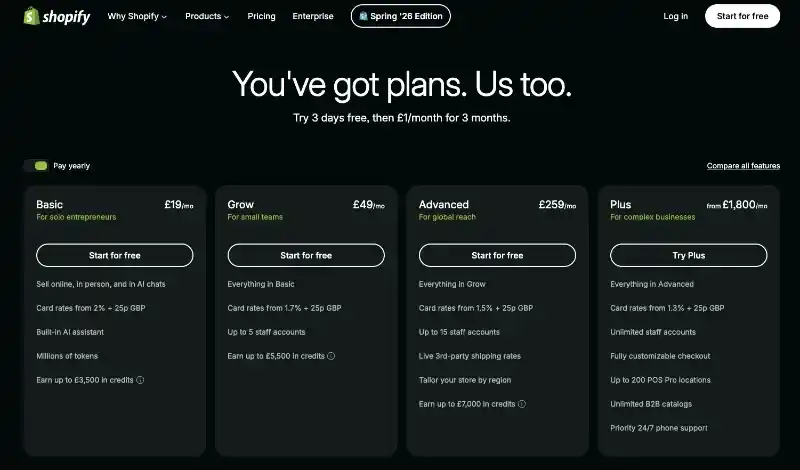
Shopify’s UK pricing currently lists the Basic plan at £19 per month when billed yearly or £25 per month when billed monthly. Pricing can change, so check Shopify’s current UK pricing page before publication.
Before subscribing to any Shopify subscription plan, check this out:
| Feature | Basic | Grow | Advanced | Plus |
| Price (Billed Yearly) | £19 / mo | £49 / mo | £259 / mo | From £1,800 / mo |
| Price (Billed Monthly) | £25 / mo | £65 / mo | £344 / mo | From £1,800 / mo |
| Staff Accounts | 0 (Owner only) | 5 | 15 | Unlimited |
| Online Card Rates (via Shopify Payments) | 2.0% + 25p | 1.7% + 25p | 1.5% + 25p | 1.3% + 25p |
| Third-Party Fees (if not using Shopify Payments) | 2.0% | 1.0% | 0.6% | 0.2% |
Source: Shopify UK Pricing, accessed 25 Aug 2026. Shopify’s pricing page is live and subject to change. Please check the latest Shopify UK pricing page and review the applicable terms before subscribing to a plan.
Domain
A custom domain gives your store its own web address. The cost varies according to the domain extension and registrar you choose.
You need a work email address for all essential communication with customers, suppliers, and others. Using a free Gmail or Outlook account may not look very professional for a dropshipping business owner.
Store Design and Setup
Shopify provides themes and tools for building an online store. You can begin with a free theme or choose paid design tools and services depending on your requirements. You may use its advanced AI features to write product descriptions or even create AI images for products.
Product Samples
Before you start selling products online, a careful scrutiny of samples from your suppliers can help assess product quality, packaging, and the delivery experience. Based on initial testing and your own experience, you may start shortlisting products and sell them on your store.
Ongoing Operating Costs
Once your store is live, you will have costs associated with fulfilling orders and running the business. For example, when a customer places an order, you need to pay the supplier according to your agreed pricing and payment terms.
You may also need to factor in shipping costs, which are likely to vary depending upon your supplier, destination, product, and fulfillment arrangement. You should check whether shipping is included in the supplier’s product price or charged separately.
Payment Processing
Another crucial component is payment processing fees. They apply when customers pay for orders. According to Shopify’s UK pricing page, online standard card rates through Shopify Payments vary by plan:
- Basic: 2% + 25p GBP
- Grow: 1.7% + 25p GBP
- Advanced: 1.5% + 25p GBP
- Plus: 1.3% + 25p GBP
Rates drop as you move up the plans, so higher-volume sellers can offset a bigger monthly subscription with lower per-transaction fees. Check Shopify’s pricing page for the full breakdown before deciding which plan and payment setup fits your store.
Advertising and Marketing
You should include advertising costs when calculating the amount you actually retain from each sale. In addition to running promotional campaigns and incurring necessary expenses on them, you may need to pay for additional apps or services for functions such as email marketing, reviews, product sourcing, inventory management, or order automation.
Therefore, any dropshipper who wants to get started shouldn’t overlook these expenses while launching their business.
Currency Conversion and International Payments
If you work with overseas suppliers, you may need to convert pounds into another currency before paying for products or services. Currency conversion and international payment costs should therefore be included when calculating your real cost per order.
Other business-related costs can include accounting software, professional services, customer support tools, and other expenses associated with operating your business.
Money Management Is Essential for Running a Shopify Dropshipping Store
Expected sales turnover: If you’ve recently scaled up your business, you can expect new orders, payments, and customer reviews. At the same time, you have to ensure that you have an idea of how much total money will be generated in a particular month.
Don’t forget your entire dropshipping store will be primarily managed through sales turnover, so whenever you receive money, spend it judiciously.
Supplier payments due: As soon as payment is realized from customers, you have to earmark a certain amount out of it specifically for making payments to suppliers.
To ensure an uninterrupted supply of goods and products, make sure you know the supplier’s due date and the adjustment of any credit or debit notes. This helps you enjoy credibility among your suppliers and maintain an uninterrupted supply of goods from them.
Payment and currency costs
Shopify charges a currency conversion fee when converting a customer’s payment currency into the merchant’s payout currency for UK ecommerce stores. The formula is: customer price equals your base price multiplied by the exchange rate, multiplied again by one plus the conversion fee.
How to Choose a Shopify Dropshipping Niche and Validate Product Demand
Starting small and selective can go a long way in helping you successfully scale your dropshipping business. Trying to sell too many products in too short a time can backfire. You should go with a niche that gives your store a clearer customer focus.
However, whichever niche you choose, make sure there is enough demand for it.
When assessing a potential product niche, consider:
- Market demand: Look for evidence that people are actively searching for and buying products in the category. You may use Google Trends and keyword research tools to assess customer interest in that particular product.
- Competition: Assess how many established retailers already serve the market and whether you can differentiate your store.
- Costs and margins: Consider the supplier price, shipping costs, payment costs, marketing expenditure, FX markups, currency conversion charges, and other expenses that will affect your margin.
- Fragility: Fragile products can create additional fulfillment and returns challenges.
- Product size and weight: Smaller and lighter products may be easier and less expensive to fulfill, depending on the supplier and destination.
- Repeat purchases: Products that customers may purchase again, or that can be paired with related products, can create additional sales opportunities.
- Supplier reliability: Check whether suitable suppliers can consistently provide the products and fulfill orders for your target customers.
How to Find Reliable Dropshipping Suppliers for Your Shopify Store
You may go for UK- or EU-based suppliers. They often offer shorter delivery routes to UK customers and simpler communication. But before shortlisting your suppliers, make sure you do a thorough comparison of pricing.
Overseas suppliers can provide access to a wider range of products and manufacturers, but you need to assess delivery, customs, returns, and international payment requirements. Also, make sure the supplier you shortlist is well-versed with the Shopify system and knows the ins and outs of how it works.
UK-Based vs. Overseas Suppliers: A Comparison for UK Shopify Dropshippers
| Factor | UK-Based Supplier | Overseas Supplier | Impact on Your Business |
| Delivery & Logistics | Fast delivery from domestic stock. | Longer transit times; shipping varies by carrier/size. | Directly affects customer satisfaction and “returns” rates. |
| Product Strategy | Focused, curated range. | Massive range, access to global trends. | Affects your ability to scale/niche down. |
| Cost & Currency | Higher wholesale; GBP transactions. | Lower unit cost; often requires USD/EUR payments. | Affects your profit margin and FX risk. |
| Regulatory & Customs | No cross-border complications. | Import VAT/Duty/Customs clearance required. | Affects your administrative workload and legal compliance. |
| Returns Process | Simple, domestic returns. | Costly/Complex international logistics. | Impacts customer trust and net profitability. |
| Communication | Same time zone, easy alignment. | Time zone/Language differences. | Affects the speed of problem-solving. |
| Best Suited For | Prioritizing speed, trust, and simplicity. | Prioritizing variety and lower unit costs. | Defines your brand’s value proposition. |
Questions to Ask Your Shopify Dropshipping Supplier
- Where are products dispatched from?
- How long does fulfillment normally take?
- How is stock availability communicated?
- What happens when an item is out of stock?
- Does the supplier know about Shopify?
- Is a tracking number provided to customers as soon as they book the order?
This comparison should help you assess the actual cost and operational suitability of each supplier, rather than choosing one based only on the lowest product price.
How to Make Your Shopify Store Attractive and Useful to Users
- Make categories and products easy to find with a smooth navigation panel.
- Check that your store works properly across all mobile devices. It should be AMP compliant, as most online shoppers prefer buying products using their mobile devices over PCs.
- Use clear images, readable text (in simple language), and consistent layouts on all your website pages.
- Write original descriptions that accurately explain the product and answer a customer’s likely questions. For example, if you’re selling a pen, you should mention the color of the ink and whether it is toxic or not. It’s important to mention all essential details in your product descriptions.
- Use clear images that accurately represent the product. Try to be as accurate as possible and capture the product image from all angles. Show what is actually in the product. Also, your product image must match the actual product and not a variant. For example, if the pen you are selling has a blue body, then you must show the blue-colored body of the pen only.
- Your offer price or display price must reflect costs after considering supplier expenses, shipping, payment processing, marketing, and all other relevant charges.
Grow Your Shopify Business with WorldFirst
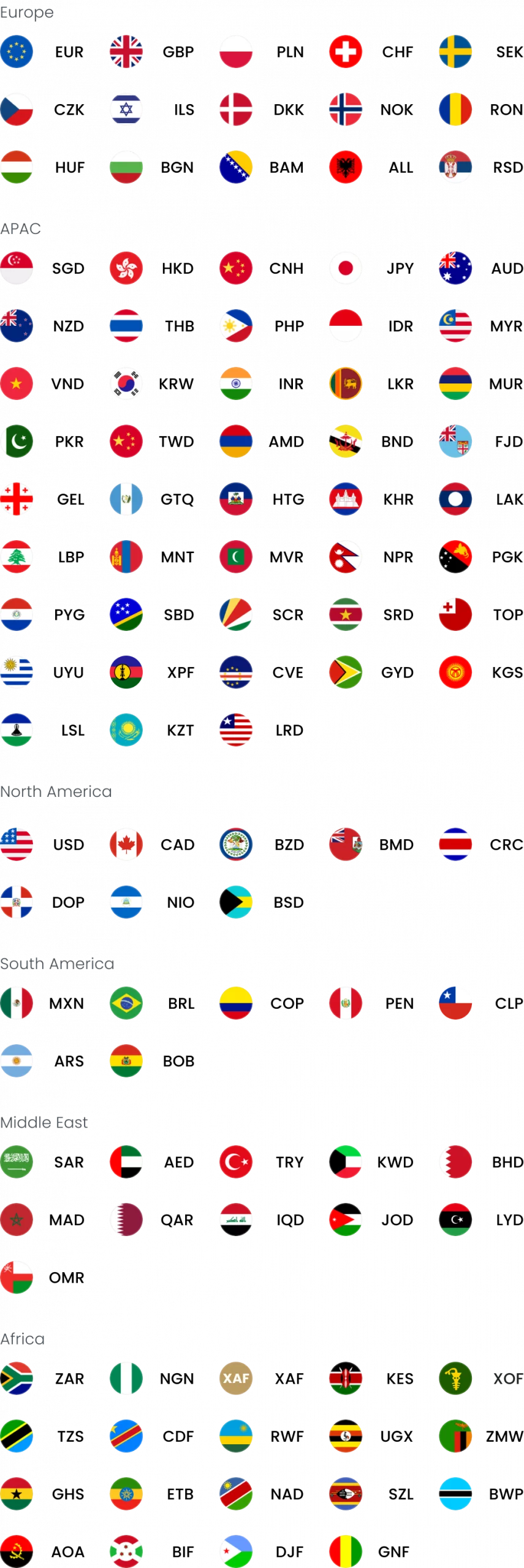
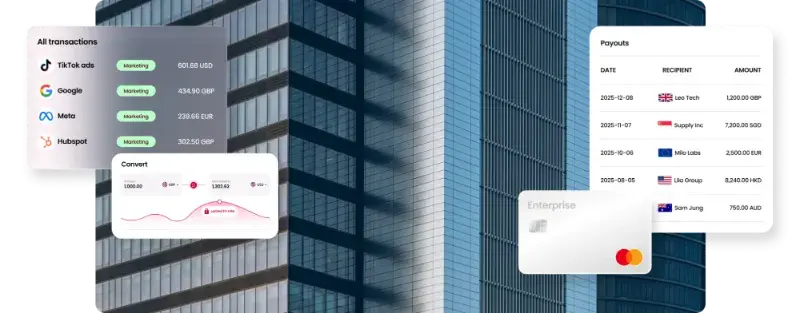
The World Account is a multi-currency account that lets you collect payments in 20+ currencies without forced conversion and pay out in 100+ currencies to 200+ countries.
Connecting it to Shopify is a two-step process:
- In your WorldFirst dashboard, go to the Collection tab, select Manage Accounts, then Add a New Receiving Account, and choose your currency.
- Go to Shopify admin, and navigate to Settings, then Payments, then Shopify Payments, then Manage, then Payout details, and enter your WorldFirst account details as the payout bank account.
What Happens When Customers and Suppliers Use Different Currencies?
Your customers may pay in GBP while an overseas supplier invoices you in another currency, such as USD, EUR, or CNY.
For example, a UK customer could pay £50 for an order while your supplier requests payment in USD. You then need to account for the exchange rate and any costs associated with converting GBP into USD.
When calculating your product margin, consider:
- The supplier’s wholesale price
- The supplier’s required payment currency
- The exchange rate used for the conversion
- Any transaction or conversion charges
- Shipping and fulfillment costs
- Payment processing costs
- Your final selling price
A product that appears profitable when you compare its GBP selling price with a supplier’s advertised price can produce a much smaller margin once all of these costs are included.
Take, for instance, a customer in Washington buys from your Shopify store and pays in USD. What happens next depends on your Shopify payout setup.
If USD isn’t configured as an eligible payout currency, Shopify converts the payment into the applicable payout currency before settlement. If you’re on an eligible plan and have USD configured through Multi-Currency Payouts, the payout can instead be sent to a matching USD receiving account, such as a WorldFirst receiving account. However, Shopify’s Multi-Currency Payout fees may still apply.
Once the USD reaches your World Account, you can hold it, convert it later, or use available balances toward supported business payments:
- Wait until the USD/GBP rate moves in your favor.
- WorldFirst supports payments to Chinese suppliers, including fast transfers to suppliers already using WorldFirst, and provides payment functionality for purchases through 1688.com via World Pay.
For day-to-day spending—whether that’s ad spend to drive traffic to your Shopify store, software subscriptions, or product sourcing costs—the World Card offers zero FX fees across 15 currencies along with cashback, which keeps small recurring costs from quietly leaking margin the same way one-off supplier payments can.
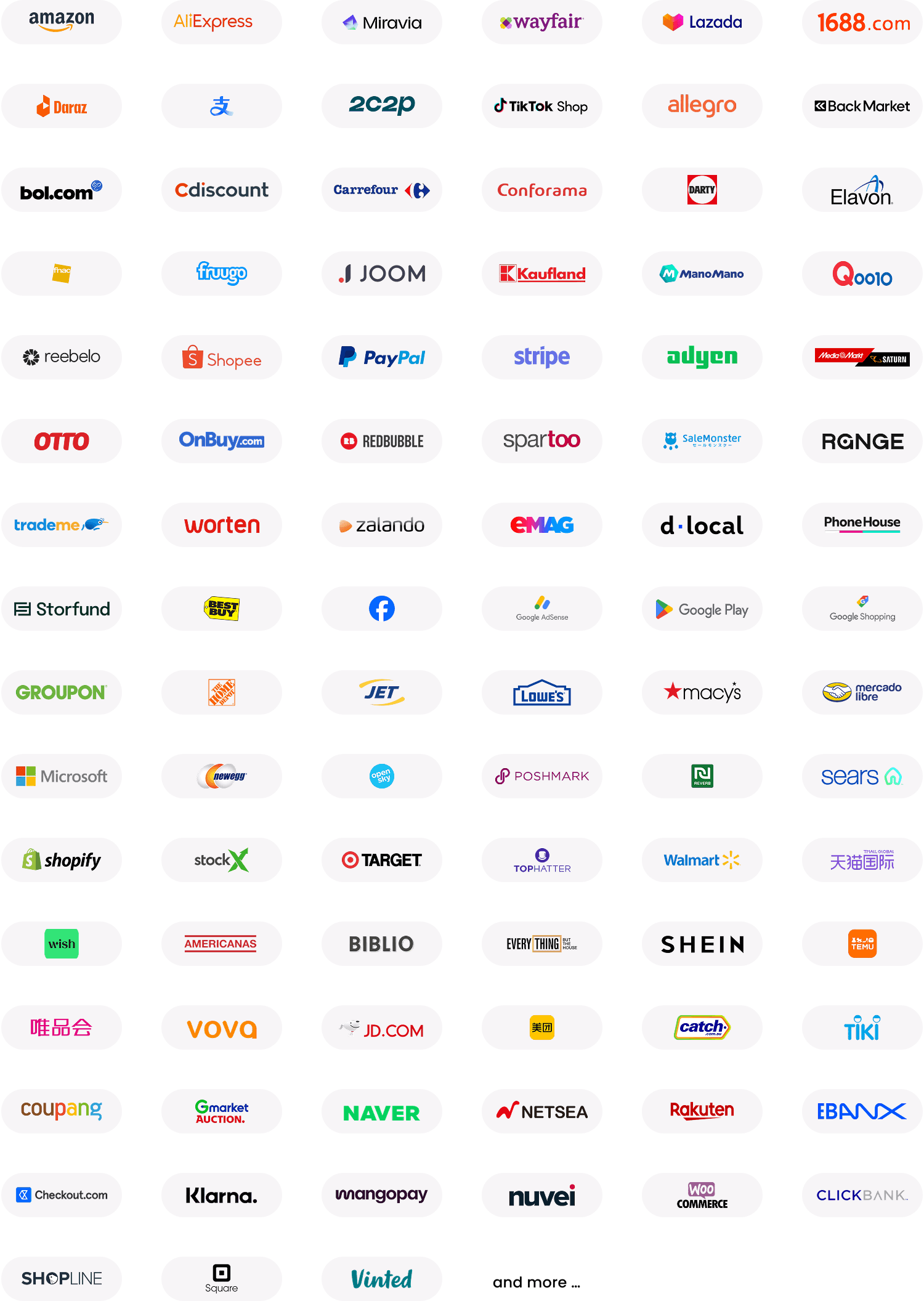
With 500+ partners across marketplace, tax, compliance, logistics, and marketing, WorldFirst connects you to services that can streamline your business operations. Integrate with 130+ marketplaces for multi-currency collection, or launch stores across 30+ global marketplaces in one click.
WorldFirst uses local payment rails where available, which can reduce reliance on traditional SWIFT routing for eligible transfers.
If you’re setting up a new Shopify store to sell internationally while sourcing from overseas suppliers, it’s worth separating the platform decision from the payments decision entirely.
WorldFirst is not a bank; it is a regulated payments provider authorized by the FCA as an electronic money institution (World First UK Limited, company number 05022388, FCA Firm Reference 900508) under the Electronic Money Regulations 2011. Client funds are held in segregated safeguarded accounts, which is a different protection model from FSCS-protected bank deposits. It is worth understanding that distinction before you move volume through any EMI.
Open a World Account to connect it to Shopify Payments and start controlling FX costs on both sides of your business: sales in and supplier payments out.
FAQs
1. Is dropshipping on Shopify legal in the UK?
Yes, it is completely legal, provided you comply with UK consumer protection laws, register your business properly, and pay your taxes.
2. Should I use UK-based or overseas suppliers?
UK suppliers offer faster delivery and easier returns, while overseas suppliers provide lower unit costs and wider product varieties at the expense of longer shipping times.
3. How do I handle returns and customer complaints?
Even though your supplier fulfills orders, you manage customer service, so you must establish clear return policies with your vendor and handle customer issues directly.
4. Why are my profit margins thin?
Margins are often squeezed by hidden expenses like ad spend, payment processing fees, shipping costs, and currency conversion markups.
5. Do I need coding experience to build a Shopify store?
No, Shopify is a user-friendly platform featuring drag-and-drop themes and automated apps that require zero coding knowledge.
Sources
- https://www.shopify.com/in/blog/what-is-shopify
- https://storeleads.app/reports/shopify/GB/top-stores
- https://www.demandsage.com/shopify-statistics/
- https://dashvue.co.uk/blog/shopify-fees-uk-guide
- https://www.shopify.com/uk/pricing
- https://www.worldfirst.com/uk/
- https://www.shopify.com/uk/blog/dropshipping-guide
- 1688.com
- https://www.worldfirst.com/uk/product/pay/world-card/
- https://www.worldfirst.com/uk/product/