


























It’s a frustrating fact that supplier payments to China tend to be slower, more expensive and a little more complex than international payments to other destinations.
Dual currencies, limited visibility into your transaction status and strict regulatory requirements all add layers of complexity that your business must manage carefully. For instance, you may need to factor multiple currency conversions into your budget forecasting, or avoid exceeding annual transfer limits.
But it doesn’t have to be like this.
Below, we share the best way to pay Chinese suppliers – one which avoids many of these problems. That’s the World Account, WorldFirst’s multi-currency account that enables instant and same-day payments to China with lower fees than traditional methods.
In this article:
- Key considerations in choosing a supplier payment method
- How WorldFirst helps you simplify supplier payments to China
- How to open a World Account
- How to use Alibaba.com and 1688.com to securely find suppliers in China
- Other common methods for paying Chinese suppliers
- How to get the best exchange rates when paying Chinese suppliers
- Frequently asked questions (FAQ)
To simplify your supplier payments to China, open your World Account for free today.
Key considerations when choosing the right supplier payment method for you
There are many different ways to make payments to China. But they won’t all be right for your business.
When looking at ways to pay Chinese suppliers, consider the following factors:
- Speed of transfer: Traditional methods of making payments to China can take up to five days, or as many as 10 if there are delays (which aren’t uncommon). Regulations and fraud checks, plus the way that payments travel through intermediary banks can significantly slow your payments.
It’s an important consideration. Slow transfers can delay your time to market and hinder your ability to react quickly to demand and trends. So you may prefer a faster method to improve cash flow, maintain adequate inventory levels and build supplier trust.
- High fees and exchange rates: You may need to dig a little to find the most favourable exchange rates and avoid high fees. With SWIFT fees, intermediary bank fees and hidden fees charged by payment providers, it’s often hard to work out how much a transaction is going to cost you. Plus, you also need to mitigate risk against currency fluctuations, which can erode your margins – causing problems ahead of large orders and peak sales periods.
- Currency rules and regulatory requirements: Some traditional banks or transfer services only let you pay in CNH, but you need a way to pay the many suppliers in China who only accept CNY. Some banks and transfer services have limits on how much you can send or who you can send it to, and you’ll likely have to meet compliance and KYC requirements. Only a few providers, such as WorldFirst, actually let you make payments to Mainland China in USD.
- Safety and security: It can take time to build relationships with trustworthy suppliers, and determine which transfer methods are the most secure. In the same way, it’s important to properly vet suppliers, sourcing agents and payment channels, to prevent fraud and scams.
New to doing business in China? Read more: Five key strategies and expert insights
How WorldFirst simplifies supplier payments to China
At WorldFirst, we understand that paying suppliers in China can create both logistical and financial challenges for growing businesses.
As a subsidiary of Ant Group, a leading global technology provider and parent company of Alipay, we’re specialists in managing cross-border payments to China. Since 2004, our unique connections in the region have enabled us to make it simpler for companies to move money to China and around the world.
To pay suppliers in China, all you need is a World Account, our multi-currency account for businesses.
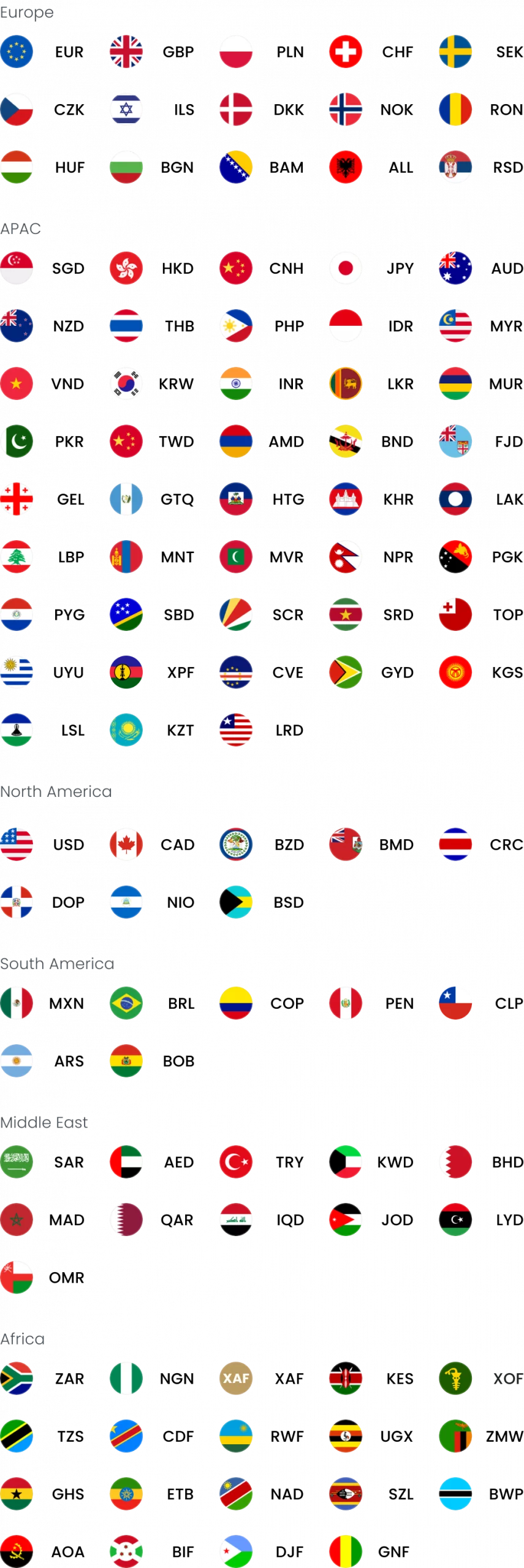
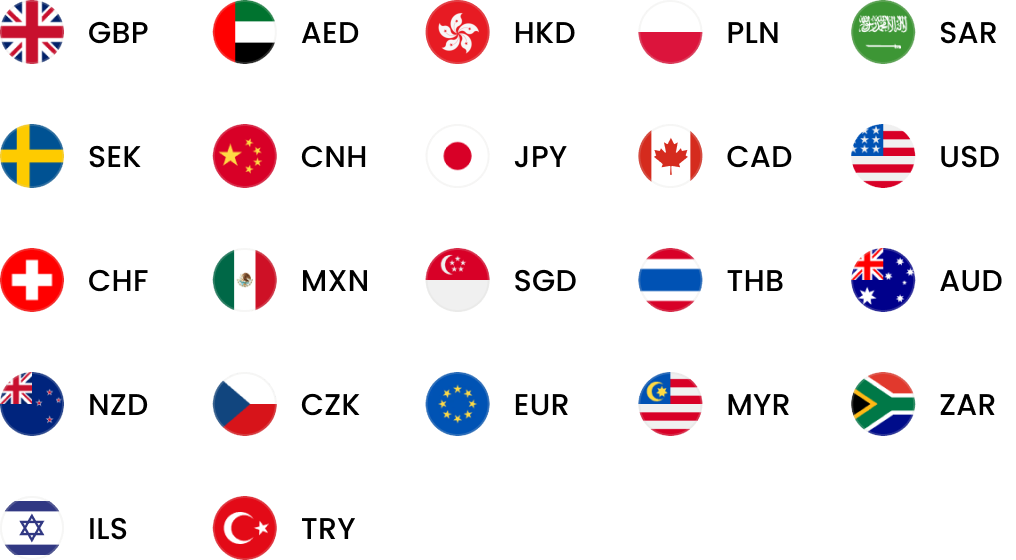
Your World Account makes it free to hold funds in 20+ local currencies, and convert only when you need to, to reduce FX costs. That means you can receive funds in RMB, USD, GBP, HKD, EUR or other currencies, then make payments directly in those currencies, or exchange them when rates are favourable.
Here are some of the ways we make supplier payments to China faster, safer and more affordable than with other payment methods:
Make same-day payments to suppliers in their preferred currencies
With WorldFirst, 80% of payments land on the same day, and 90% land by the following day.
WorldFirst is also one of the only cross-border payments providers that allows same-day USD payments to major Chinese banks. With our banking partnerships in Mainland China and Hong Kong, you can pay suppliers within hours.
We also give you a number of other ways to pay Chinese suppliers – which are also often much faster than traditional providers. With a World Account, you can:
- Use your World Account to make free instant payments to other World Account holders, including the 150,000+ Chinese suppliers who already use WorldFirst
- Pay other suppliers in just 1–2 days in 100+ currencies including RMB, USD and HKD
- Use free virtual World Cards to pay instantly online, anywhere Mastercard is accepted, including major wholesale platforms like Alibaba.com
- Make instant payments to suppliers through 1688.com, a leading wholesale platform in China (more info below)
Read more: Making supplier payments in RMB: What cross-border businesses need to know
Reduce your costs with transparent fees, low markups and currency protections
While other providers may charge a 3% FX margin and in some cases a flat fee of £25 or more on payments to China, WorldFirst makes it more affordable to make direct payments to Chinese banks.
We charge only a flat 0.5% FX margin on China payments, on top of the favourable mid-market currency exchange rate. And, you pay zero fees when you make direct payments to Chinese banks in USD.
There are no monthly fees, annual fees or setup fees – opening and holding a World Account is completely free. Everything else we do charge for is clearly spelled out on our pricing page.
We also give you ways to protect your margins when you pay. For instance, with forward contracts, you can hedge against currency risk on future payments to Chinese suppliers. Use forward contracts to lock in the exchange rate you want on payments up to 24 months in advance.
A secure way to make compliant payments
Cross-border payments can feel risky, especially when working with new or unfamiliar suppliers.
WorldFirst partners with leading global banks like Barclay’s, HSBC and J.P. Morgan to ensure your transactions meet the highest standards of security and compliance. We automatically handle all KYC requirements, trade limits and other regulatory requirements.
When you’re working with new suppliers, reducing risk is important. That’s why WorldFirst offers another layer of security to protect your funds when you pay suppliers in China: WorldTrade.
With WorldTrade, your funds aren’t released to your suppliers immediately upon payment. They’re held securely until we verify that your order has been shipped according to agreed terms. Only then do we pass your payment along to the supplier. This process (known as escrow) adds an extra layer of protection for your business.
With WorldTrade, you can pay up to US$10,000 with a credit or debit card at just 2.9% (digital wallets coming soon), or pay for free from your USD balance in your World Account. Once you pay, we provide real-time, instant payment confirmation and order tracking to give you even more peace of mind.
Safe, simple ways to find and pay for wholesale products online
WorldFirst makes it easy to find and pay Chinese suppliers through major wholesale platforms like Alibaba.com and 1688.com. With WorldFirst, you can pay suppliers on these platforms in their preferred currencies, instead of overpaying for conversions. In fact, with World Pay, you can source from 1688.com directly and pay from your World Account balance at checkout.
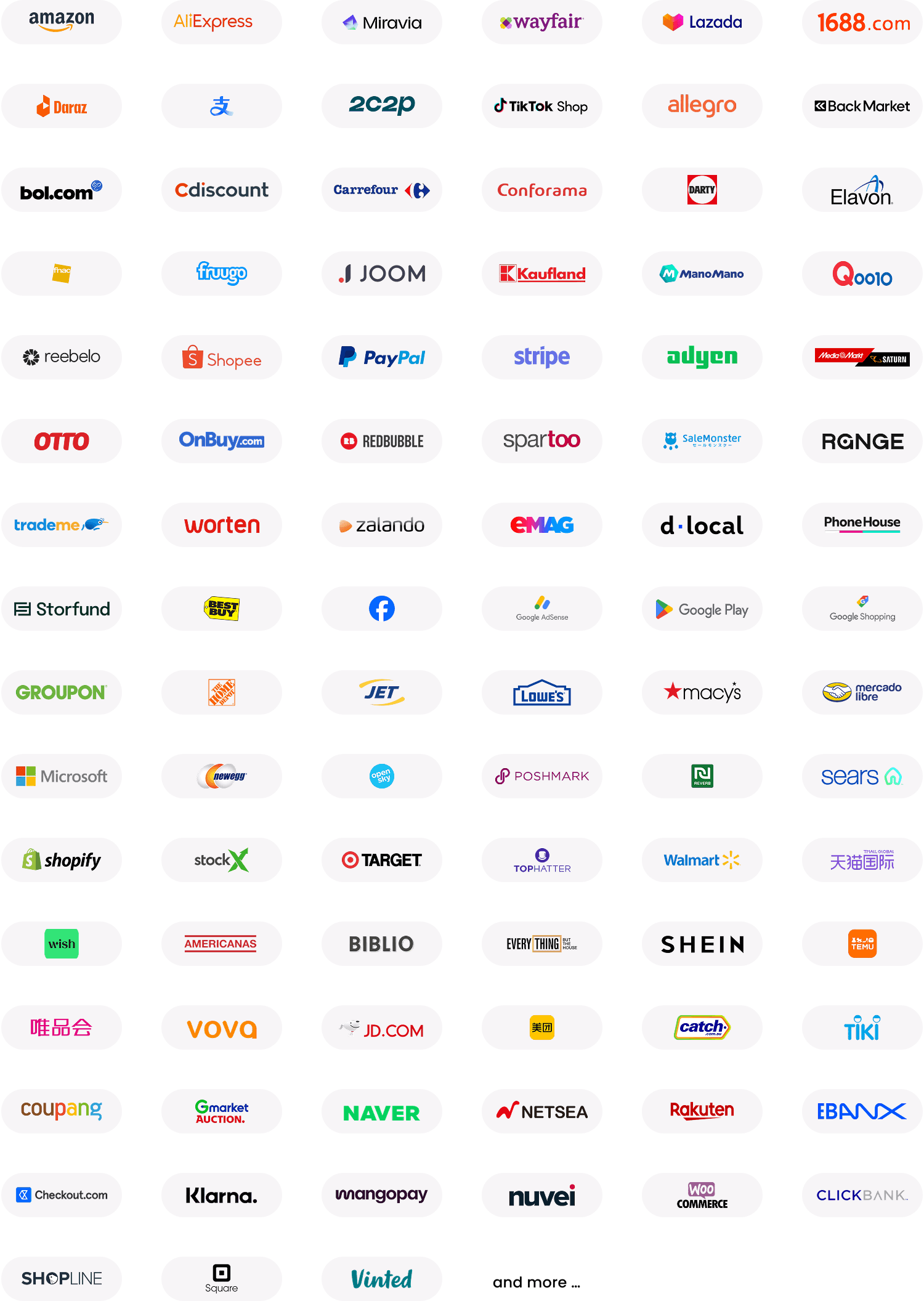
To further save on currency conversion costs, take advantage of WorldFirst’s integrations with 130+ global marketplaces and payment gateways. You can collect payouts from marketplaces like Amazon, Etsy and TikTok Shop in the local marketplace currency, then use those funds to pay Chinese suppliers without first converting to GBP.
Read more: How to source products for e-commerce: A practical guide for scaling brands
How to open a World Account
To open your account and start paying Chinese suppliers, head to our online registration portal, with your IDs and qualifying documents ready. Then:
- Click Sign up and select your region
- Click on Create account
- Add your business and personal information, including estimated monthly turnover and industry
- Upload your documents
- Wait for us to approve your application, which usually takes less than 48 hours
As soon as you’re approved, you can start transacting.
Need extra assistance? Visit our Account Opening Help page.
How to use Alibaba and 1688.com to securely find suppliers in China
Find suppliers on Alibaba – and then pay them via WorldFirst
Alibaba.com is one of the world’s largest B2B marketplaces, with over 200 million products across all categories. Alibaba.com makes it easy to find and vet trustworthy suppliers, with three tiers of verification badges to help you spot them:
- Gold Suppliers have shared their verified business credentials with Alibaba
- Verified Sellers have undergone a third-party inspection of facilities and processes
- Trade Assurance Suppliers accept payments protected by Alibaba Trade Assurance, which can help protect against fraud and scams
To find suppliers on Alibaba, you can search for products using the search bar or by exploring themed pavilions (category pages). If you have a particular product in mind, you can also post a Request for Quotation (RFQ) to attract bids from suppliers. Or, attend category-specific digital tradeshows, which let you network with other sellers and suppliers.
When you’re ready, connect with specific sellers by sending detailed messages via the website or mobile app, which includes real-time translation and video chat features.
To pay for your Alibaba orders with WorldFirst:
- Select “wire transfer” as your payment method on Alibaba.com
- Complete your transfer via the WorldFirst online portal
Protect your transactions with WorldTrade for an extra layer of security, so your funds won’t be disbursed to suppliers until your orders ship.
Access thousands of suppliers with WorldFirst and 1688.com
When you join WorldFirst, you get exclusive access to our direct integration with 1688.com, one of China’s largest local wholesale platforms. With over 10 million products across 1,700 categories, you can pay up to 40% less than on other platforms.
Without this direct integration, paying 1688.com suppliers is challenging for most buyers outside of mainland China. But with WorldFirst, you can connect your World Account to pay at checkout on the 1688.com platform.
To find trusted suppliers on 1688.com, look for the following labels and badges:
- “诚” (Integrity) badge
- “超级工厂” (Super Factory)
- “实力商家” (Verified Merchant)
Then, you can securely message suppliers to request samples or small MOQ orders via the 1688.com platform. Unlike other wholesale platforms, 1688.com suppliers will often allow small sample orders of just one or two individual units to test quality.
To pay on 1688.com using WorldFirst:
- Connect your World Account using these instructions
- Make sure your CNH currency account has enough funds for the transaction
- Choose “World Pay” as your payment method at checkout on 1688.com
With WorldFirst, your 1688.com payments are instant, and all payments have real-time tracking to give you full transparency.
Read more: How to source wholesale using 1688.com outside China
Other common methods for paying Chinese suppliers
| Method | Advantages | Limitations | Best For |
|---|---|---|---|
| Bank wires | Widely accepted, supports large amounts, direct bank-to-bank | Can involve higher fees and take several days to settle | Established businesses with regular, larger orders |
| Letters of credit | Provides strong buyer protection, adds supplier confidence | More costly and requires paperwork, usually more time-consuming to arrange | Large enterprises or high-value/first-time transactions |
| Online transfer services (Wise, PayPal, etc.) | Easy to use, quick setup, convenient digital platforms | May have higher fees and lower transaction limits; not all suppliers accept | Small businesses, samples or lower-volume orders |
| Remittance services (Western Union, MoneyGram, etc.) | Very fast transfers, broad global access | Typically lower transaction limits and fewer protections | Small or time-sensitive payments, situations needing speed |
Here are some of the other common methods used for paying Chinese suppliers:
1. International bank wires
An international bank wire (also known as a telegraphic transfer) sends money from the buyer’s bank to the supplier’s bank account in China through the SWIFT network, passing it through multiple intermediary banks along the way.
- Pros: SWIFT is universally accepted, works for large transfer amounts and moves funds directly from bank to bank
- Cons: Fees can be high and exchange rates unfavourable, intermediary banks sometimes deduct additional fees, and settlement can take 3–10 business days
Best for: Established businesses making large or repeat orders on a predictable schedule, especially those who already have established business banking relationships
2. Letters of credit
A letter of credit is a financial guarantee issued by the buyer’s bank, promising payment to the supplier once shipment is made or other criteria are met. They’re still quite common in enterprise payments to Chinese suppliers.
- Pros: Safer for buyers, and trustworthy for suppliers since reputable banks guarantee the deal
- Cons: Expensive, involves a lot of paperwork and therefore generally only appropriate for very large transactions
Best for: Large enterprises, very high-value transactions or first-time deals where buyers need strong protection
3. Online money transfer services
PayPal and other online money transfer services allows the buyer to send money digitally via their online accounts or apps
- Pros: These platforms are typically very easy to sign up for and simple to use, and offer some buyer protections
- Cons: Transaction fees can be high (3–5% plus foreign exchange costs), transaction limits can be quite low (usually less than $10,000 per day on the high end) and many suppliers do not accept these methods for large B2B payments. Some platforms also have restrictions on who can send or receive funds in China. Not usually considered appropriate for regular business use.
Best for: Small businesses ordering samples from new suppliers, or low MOQ orders
4. Remittance services
Remittance services like Western Union and MoneyGram are cash transfer services that allow money to be sent directly to a supplier in minutes from one physical location to another. Some of these companies now also offer online payment options.
- Pros: Nearly instant. Locations can be found almost anywhere in the world, especially in areas with minimal banking infrastructure
- Cons: Little to no buyer protection, carry a high fraud risk, are generally considered inappropriate for professional business or serious trade. Transaction limits are generally fairly low, but may be higher for verified accounts with certain companies.
Best for: Very small or urgent payments, or informal transactions where speed is more important than cost, security or other factors
5 tips to remember when paying Chinese suppliers
- Always protect your funds in case of fraud or illegitimate suppliers: Use a feature like WorldTrade, which ensures your funds are held securely in escrow until orders are shipped. Pay with WorldTrade directly through the WorldFirst platform, or using a debit or credit card at 2.9%. WorldTrade payments are confirmed instantly, and you get real-time order tracking for extra confidence in your transaction.
- Pay in your suppliers’ preferred currency whenever possible: Paying Chinese suppliers in RMB can make it easier to negotiate for the best pricing. Receiving international payments in local currency simplifies their payment experience, and can boost your reputation as a reliable and trustworthy buyer. WorldFirst gives you multiple ways to make payments in RMB, USD and other currencies.
- Make same-day payments to further enhance supplier relationships: Making same-day payments can further increase your negotiation leverage, keeping payments on time and strengthening your suppliers’ cash flow. With WorldFirst, you can make same-day payments to Chinese banks in USD, or take advantage of free instant payments between World Accounts.
- Vet new products for quality before committing to large orders: Even trustworthy, reliable suppliers may sometimes offer products that aren’t up to your standards of quality or performance. That’s why it’s crucial to get your own hands on the products before putting your brand name on them by placing small sample orders first.
- Use payment card rewards to earn cashback: Not all suppliers take credit cards, but when they do, you may be able to earn cashback or rewards (and pay instantly). Use your World Card wherever suppliers accept Mastercard, for zero FX fees in CNH and get up to 1.2% cashback to reinvest in your business.
How can I get the best exchange rates when paying Chinese suppliers?
Managing exchange rates well is critical for protecting your margins and negotiating the best pricing with Chinese suppliers. Here are four ways to take control of how you convert and send funds:
1. Use a multi-currency account to control conversions: One of the simplest ways to secure better exchange rates is to use a multi-currency account or business foreign currency account. Instead of being forced to convert funds at the rate your bank offers on the day of payment, you can hold balances in multiple currencies and choose when to make conversions.
This flexibility allows you to take advantage of favourable market conditions and avoid unnecessary conversion costs. It also gives you greater control over cash flow, since you aren’t tied to rigid banking processes or slow overseas transfers.
2. Pay in RMB to avoid supplier markups: Many Chinese suppliers quote prices in USD or GBP but build in an additional 2–5% to cover their own currency risk. That means you may be paying more than the true cost of the goods.
By requesting quotes and settling invoices in RMB, you can avoid these markups and benefit from more transparent pricing. Paying in your supplier’s preferred currency also reduces the risk of mid-order adjustments, helps maintain smoother negotiations and strengthens your reputation as a reliable buyer.
3. Plan ahead with forward contracts and careful comparisons: Exchange rates fluctuate, and sudden changes can erode your margins – especially when you’re preparing for large seasonal orders. Forward contracts help you mitigate currency volatility by letting you lock in a specific exchange rate for up to 24 months, giving you cost certainty and the ability to accurately forecast your budget.
4. Read the fine print: Whichever of the above methods you use to get the best exchange rates, it’s essential to compare payment providers directly. Look at both the exchange rate and the fee structure, and check the fine print for hidden costs such as account maintenance fees, inflated FX margins or sign-up charges.
Learn more: Foreign exchange risk management: How to make international business more affordable
Fast, reliable payments your Chinese suppliers can count on
Making supplier payments to China can come with many unknowns and unexpected charges. But WorldFirst gives you fast, safe ways to pay, while reducing costs and building strong supplier relationships.
Joining is free and the application process takes as little as 48 hours. Open your World Account now to start making instant and same-day payments to suppliers.
Frequently asked questions (FAQs)
What’s the difference between CNH and CNY?
There are two different versions of Chinese yuan: CNY and CNH, also known respectively as onshore and offshore renminbi:
- CNY (onshore renminbi) is the currency used inside mainland China, and is tightly regulated by the Chinese government and the People’s Bank of China. Chinese residents and businesses rely on it for everyday purchases and domestic transactions.
Foreign businesses can use CNY too, but only for transactions that take place within mainland China. CNY can’t be used for international payments, and most global banks don’t support direct CNY transactions, making it difficult for international business to access.
- CNH (offshore renminbi), on the other hand, is the version of the yuan that can be traded internationally. It’s not subject to the same regulatory restrictions as CNY, so international businesses can hold it in foreign bank accounts and use it to pay for cross-border purchases.
Read more: Why does China have two currencies?
Do businesses still use cheques or cash to pay Chinese suppliers?
Very rarely; most suppliers prefer electronic transfers for speed, security and easier record-keeping
What documents or proof of payment do I need when paying Chinese suppliers?
Most suppliers will ask for a payment confirmation slip or bank transfer receipt. If you use platforms like WorldFirst, you’ll also get transaction IDs and downloadable receipts that make it easier to track payments for both compliance and bookkeeping. For larger orders, some suppliers may also require a letter of credit or an escrow service for added security.
Can I negotiate payment terms with Chinese suppliers?
Yes, many suppliers are open to negotiation, especially if you’re placing regular or high-volume orders. Common terms include paying a 30% deposit upfront and the balance on shipment, though you may be able to negotiate better terms (like partial payments after delivery) as trust builds. Using secure payment methods like escrow or trade assurance can also make suppliers more willing to agree to flexible terms.