



























UK businesses increasingly trade across borders, from selling to customers overseas to paying international suppliers. A multi-currency account can make these transactions easier by allowing businesses to receive, hold, convert and send funds in multiple currencies from one account.
The right account can also help businesses manage FX costs, receive international payments and move money through local or global payment networks.
In this guide, we compare the 10 best multi-currency accounts in the UK for 2026, looking at supported currencies, fees, payment options, FX rates, integrations and other features that matter to international businesses.
Key Takeaways
- Multi-currency accounts simplify international business payments. They allow businesses to receive, hold, convert and send multiple currencies from one account.
- They can benefit businesses trading internationally. Importers, exporters, marketplace sellers and businesses paying overseas suppliers can use them to manage international revenue and expenses.
- The right provider depends on what your business needs. Compare supported currencies, FX rates and fees, payment options, integrations and local receiving capabilities.
- FX costs can affect international profit margins. Differences in exchange rates, conversion fees and transfer charges can add up, particularly for businesses making frequent cross-border payments.
- Different providers offer different strengths. Some focus on marketplace collections and supplier payments, while others offer FX tools, business banking, spending features or automated payment solutions.
What is a multi-currency account and who needs one?
A multi-currency account allows businesses to operate across borders without opening separate bank accounts in every country. It lets you receive, hold, convert and send money in multiple currencies from one central account, often with local account details.
Who can benefit from a multi-currency account:
- Importers and exporters: Can pay and receive in foreign currencies directly, avoiding unnecessary conversions and thereby protecting profit margins
- E-commerce sellers and marketplace merchants: Can collect international revenue from platforms like Amazon, Shopify or Etsy and make payments without losing money to conversion fees
- Service providers and freelancers: Can invoice global clients in their preferred currency, hold funds until the rate is right and reduce the cost of cross-border transfers
- Companies with international teams or vendors: Can manage payroll, expenses and remittances in local currencies, improving cash-flow control and payment speed across markets
How to choose the right multi-currency account
These are the key factors to compare when choosing a multi-currency business account in the UK:
- Supported currencies and collection accounts: Check that your key trading currencies, such as USD, EUR, CNH and AUD, are supported.
- FX rates and conversion fees: Choose providers that publish clear, low markups on the mid-market rate. Even slight differences in exchange margins can affect your bottom line. Avoid those that hide costs within inflated FX margins.
- Payment speed and transfer networks: Look for access to both local and global payment rails. Networks such as SEPA, ACH and Faster Payments can be faster and cheaper than traditional SWIFT transfers, helping you move money efficiently between markets.
- Platform integrations: If you rely on accounting or e-commerce tools, ensure they’re compatible with systems such as Xero, QuickBooks or NetSuite.
- Safety, licensing and safeguarding: The provider should be regulated by the Financial Conduct Authority (FCA). While e-money institutions don’t offer FSCS protection, they must safeguard client funds in segregated accounts.
- Fees beyond FX: Review all charges, not just exchange rates. Look for details on monthly fees, withdrawal costs and any currency-use limits to get a complete picture of your total costs.
Top 10 multi-currency business accounts in the UK to use in 2026
The table below compares the best multi-currency accounts available to UK companies in 2026, helping you identify which one best suits your trading volume, supported currencies and international payment needs:
| Provider | Best for | Currencies you can hold | Currencies you can pay | Intl. transfer fees | FX markup/rate policy | Notable digital tools |
| WorldFirst | Scaling e-commerce sellers, importers and exporters needing local rails | 20+ currencies | 100+ currencies to 200+ countries | Transparent fees shown up front | Exchange rates capped at 0.50% | Integrations with Amazon, Shopify, Xero, NetSuite; forward contracts; World Card with cashback |
| Wise Business | Freelancers and SMEs prioritising transparency and low-cost global transfers | 40+ currencies | Multiple currencies to 160+ countries | Transparent per-transfer fee shown upfront | Real mid-market rate; conversion fees from 0.24% | Batch payments, Xero/QuickBooks integration, open API, debit cards |
| Revolut Business | Small teams and digital agencies combining spend and FX | 25+ currencies | 130+ currencies | Varies by plan and transfer type | Interbank in market hours; 0.6% above allowance; ~1.0% at weekends | Expense management, API automation, multi-user access, accounting integrations |
| Airwallex | Tech-driven SMEs and global e-commerce brands | 20+ currencies | 100+ currencies | Low, transparent transfer fees | 0.5% above interbank rates for major currencies; 1% for other currencies | Shopify, WooCommerce and Xero integrations; API for payments and automation |
| Payoneer | Freelancers and online sellers on global marketplaces | 10+ major currencies | 70 currencies supported across the platform | Free for Payoneer-to-Payoneer; small withdrawal fees | FX margin 0.5–2% above mid-market | Marketplace integrations (Amazon, eBay, Fiverr, Upwork), invoicing tools |
| Starling Bank | UK SMEs wanting a bank account with optional FX add-ons | GBP, EUR and USD | 17 currencies to 34 countries | SWIFT payments £5.50 + 0.4% FX fee | Real rate + 0.4% conversion fee | App-based banking, FSCS protection, instant GBP/EUR/USD transfers |
| Barclays Business | Firms already banking with Barclays and needing currency accounts | 17 currencies | 90+ countries | £4–£12 depending on route | Bank FX margin varies | Online banking, same-day settlement in major currencies |
| Ebury | Importers and exporters seeking FX strategy and hedging | 29+ currencies | 140+ currencies | Transparent, volume-based pricing | Competitive FX rates; hedging available for 60+ currencies | Forward contracts, FX hedging, dedicated support, NetSuite/Xero integrations |
| Moneycorp | Businesses trading in multiple or niche currencies | 120+ currencies | 130+ currencies | Competitive pricing by volume | Market-based margin; negotiable on volume | Online trading platform, hedging tools, FX dealers |
| HSBC Global Wallet | Established firms wanting integrated banking and trade finance | Multiple currencies | Multiple currencies | Flat £5 transaction fee | FX Prompt shows live mid-market and margin | HSBCnet tools, treasury and trade finance integration |
Correct as of 30th September 2026
1. WorldFirst World Account
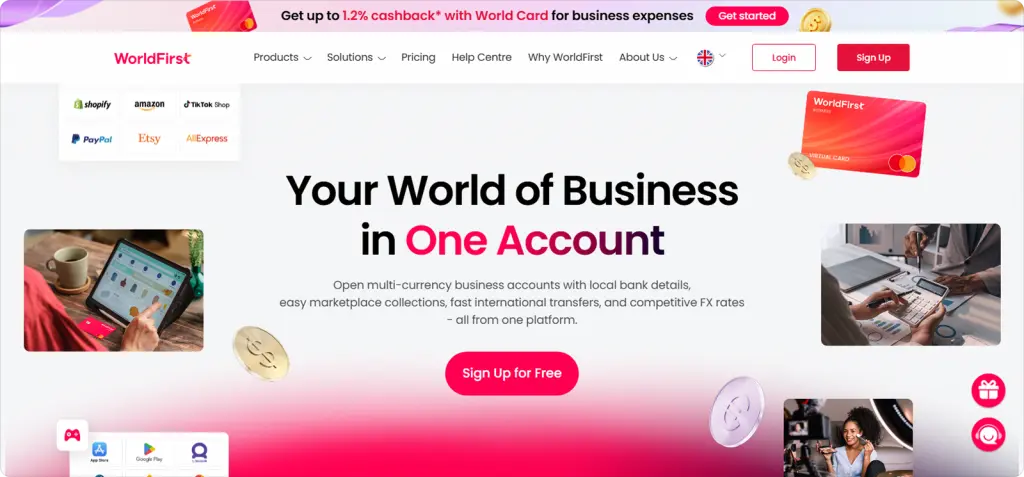
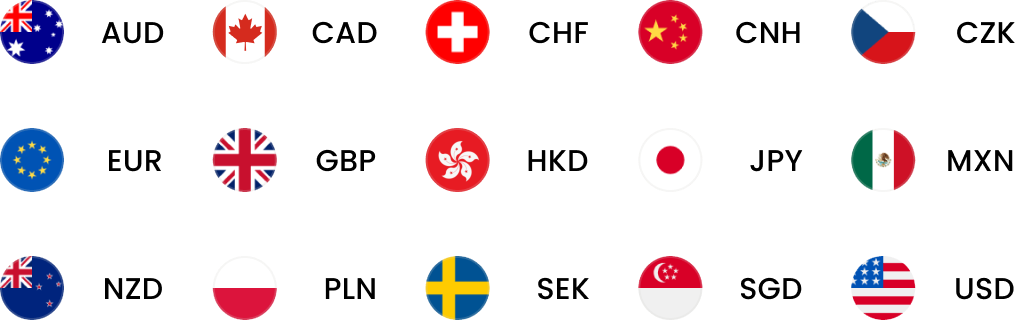
The World Account stands out as a dedicated platform for cross-border businesses. You can hold, receive and send funds in over 20 currencies, including GBP, EUR, USD, CNH and AUD. Local receiving account details in major markets allow you to get paid like a local in each region.
Same-day transfers are available when funds arrive before cut-off times, with routing over local rails where available. FX margins are capped at 0.5% for major pairs. The World Account also integrates with marketplaces and e-commerce stores such as Amazon and Shopify, as well as accounting platforms like Xero and NetSuite.
Key advantages:
- Hold, receive and send 20+ currencies
- Local accounts in major regions (UK, EU, US, Australia, China)
- Transparent FX rates with capped margins
- Same-day transfers using local payment rails
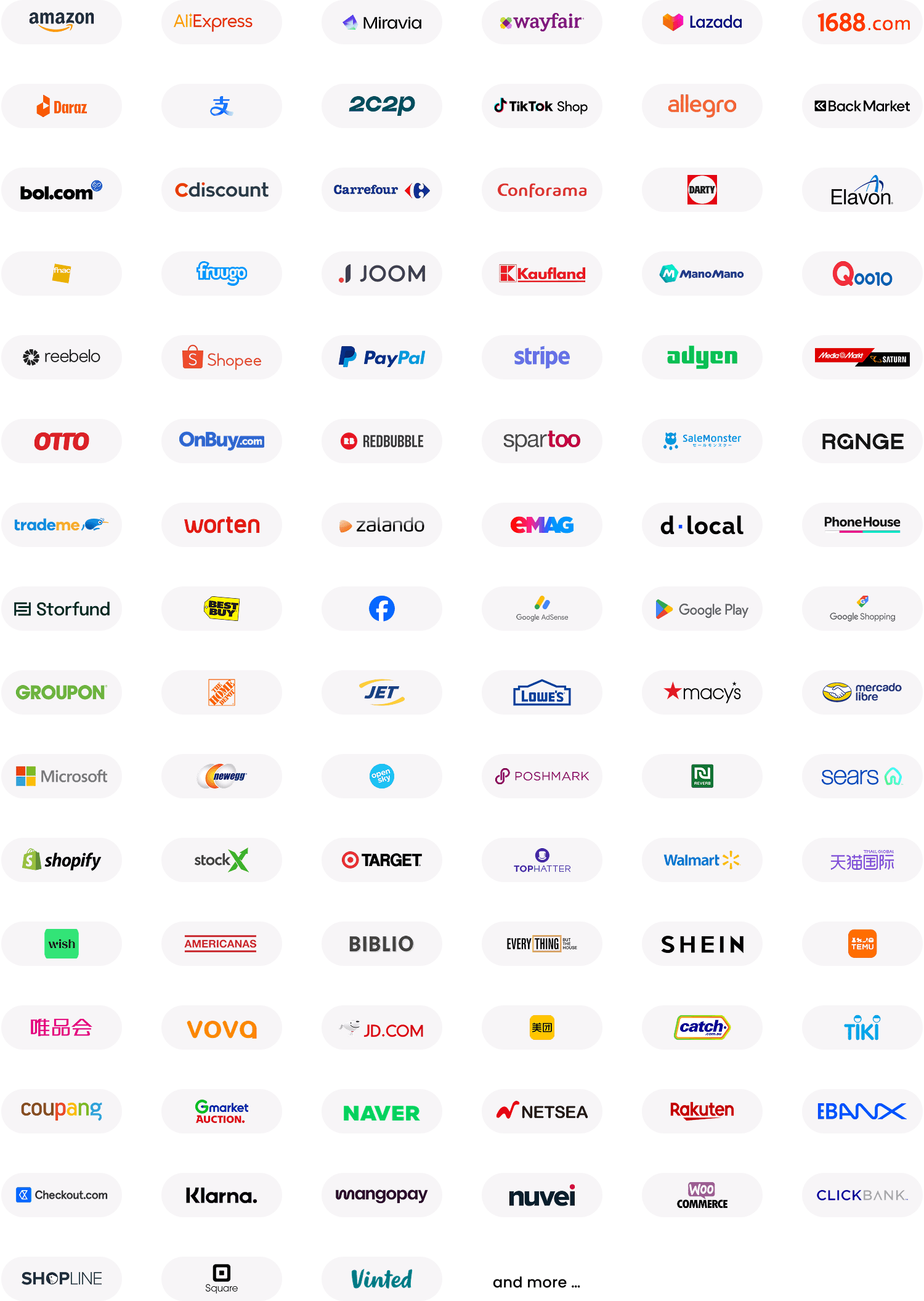
- Integrated with 130+ marketplaces and accounting platforms
- Advanced FX tools: forward contracts, firm orders
- World Card with no FX fees on 15 major currencies and up to 1.2% uncapped cashback on eligible spend.
Drawbacks:
- No overdrafts, lending or cheque/cash services
Ideal for:
UK importers, exporters and e-commerce businesses that want a single platform to manage global payments, currencies and FX.
Experience easy, fast international payments. Open a World Account for free today.
2. Wise Business

Wise Business (formerly TransferWise) allows you to hold and exchange more than 40 currencies at the real mid-market rate, with a small, upfront conversion fee.
You can receive local bank details for GBP, EUR, USD, AUD, CAD and several other major currencies. Transfers are quick, typically same-day in key corridors, and the account integrates with accounting tools like Xero and QuickBooks.
Key advantages:
- Uses the real mid-market exchange rate with low conversion fees, typically starting at around 0.24% on major currency routes (depending on the currency and transfer method)
- Local account details in 9+ currencies
- Batch payments and invoicing tools
- Integration with Xero and QuickBooks
Drawbacks:
- Limited FX risk management tools (no forwards or hedging)
- Funds safeguarded, not FSCS protected
Ideal for:
Freelancers, small businesses and startups that prioritise transparent pricing and low fees for international transfers.
3. Revolut Business
Revolut Business combines multi-currency banking with modern expense management. You can hold over 25 currencies, access the interbank exchange rate up to your plan limit, and issue team cards for global spending.
Paid tiers offer higher FX allowances and additional features, such as priority support and API automation.
Key advantages:
- Multi-user access with virtual and physical corporate cards
- Real-time spend tracking and approvals
- Interbank FX rates up to plan limits
- Integrations with Xero, QuickBooks and FreeAgent
- API for payment automation
Drawbacks:
- FX markups (0.4%–0.6%) after plan limits, plus 1% on weekends
- Larger businesses may need higher-tier plans
Ideal for:
Small teams, agencies and growing SMEs that combine international payments with card-based expense management.
4. Airwallex

Airwallex targets high-growth businesses that need automation and global reach. Businesses can collect and hold funds in 20+ currencies, with local transfers available to 120+ countries. FX is priced at 0.5% above interbank rates for major currencies and 1% for other currencies.
Key advantages:
- Local accounts in USD, EUR, GBP, AUD and more
- Transparent FX pricing (0.5%)
- Same-day payments via local rails
- Full API access for automation
- Multi-currency corporate cards
- Integrations with Shopify, WooCommerce and Xero
Drawbacks:
- FX pricing is higher for currencies outside its major-currency pricing tier
- SWIFT transfers cost £10–£20 per transfer
- Some advanced accounting and workflow features are limited to higher-tier plans
Ideal for:
Tech-driven companies, SaaS businesses and e-commerce brands managing high-volume global transactions.
5. Payoneer
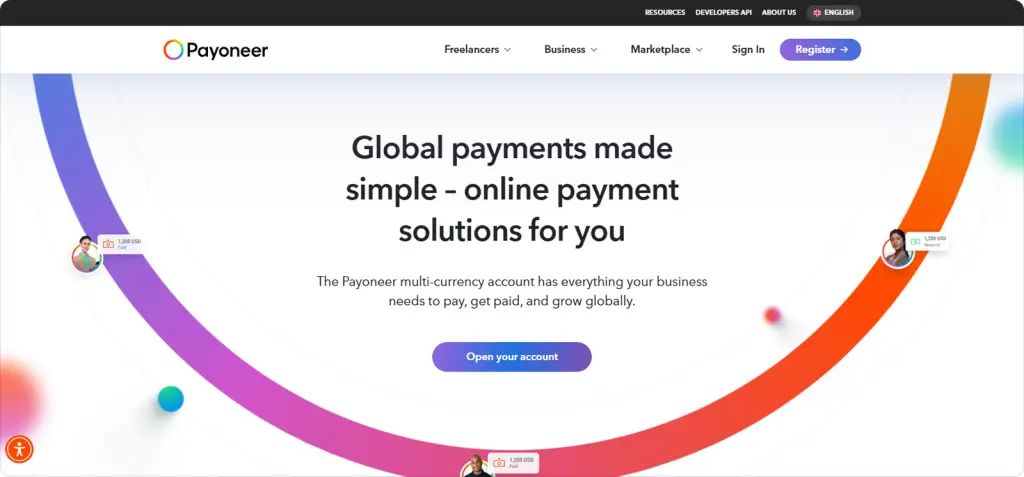
Payoneer focuses on global freelancers and online sellers. You can receive funds from major marketplaces like Amazon, eBay, Fiverr and Upwork into local bank accounts in USD, EUR, GBP and AUD.
It supports holding and converting balances, paying suppliers and withdrawing to UK accounts.
Key advantages:
- Compatible with top global marketplaces
- Local receiving accounts in up to 10 currencies
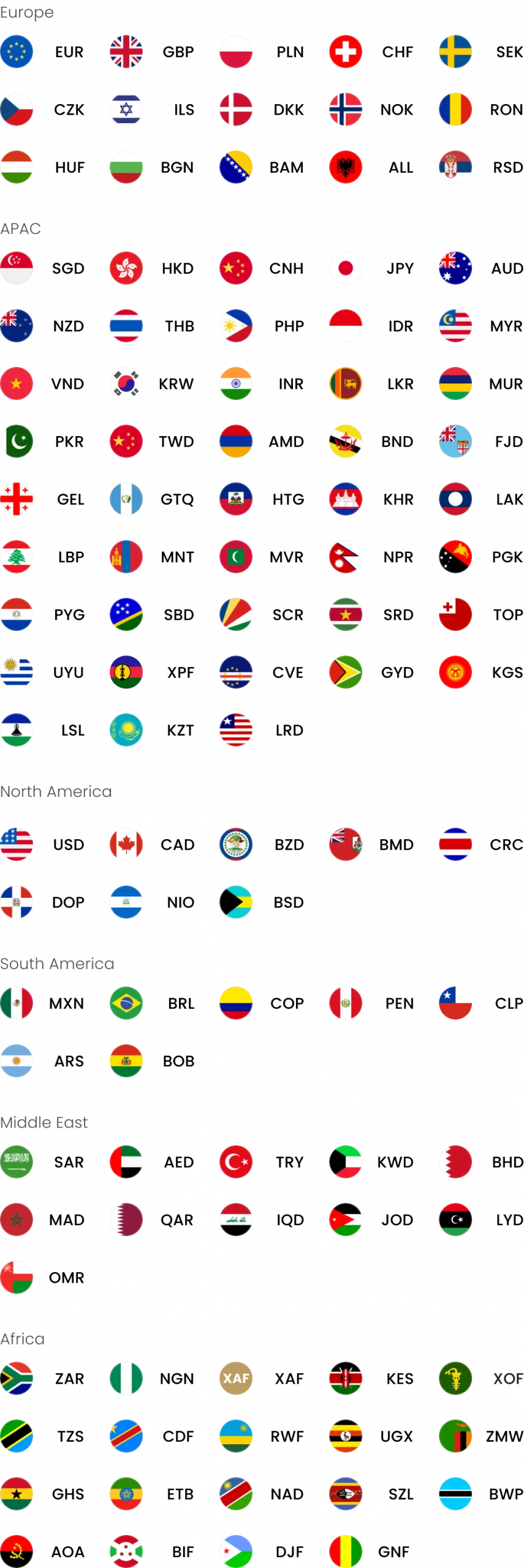
- 70 currencies supported across the platform
- Integrations with 2,000+ marketplaces, networks and platforms
- Ability to pay suppliers directly from your balance
- Dedicated tools for invoicing and payouts
Drawbacks:
- FX margins (0.5%–2%) are higher than fintech competitors
- Withdrawal or card fees can apply
- Limited integration with accounting platforms
Ideal for:
E-commerce sellers, marketplace businesses, freelancers and service providers that need to receive international payments and manage multiple currencies from one account.
6. Starling Bank
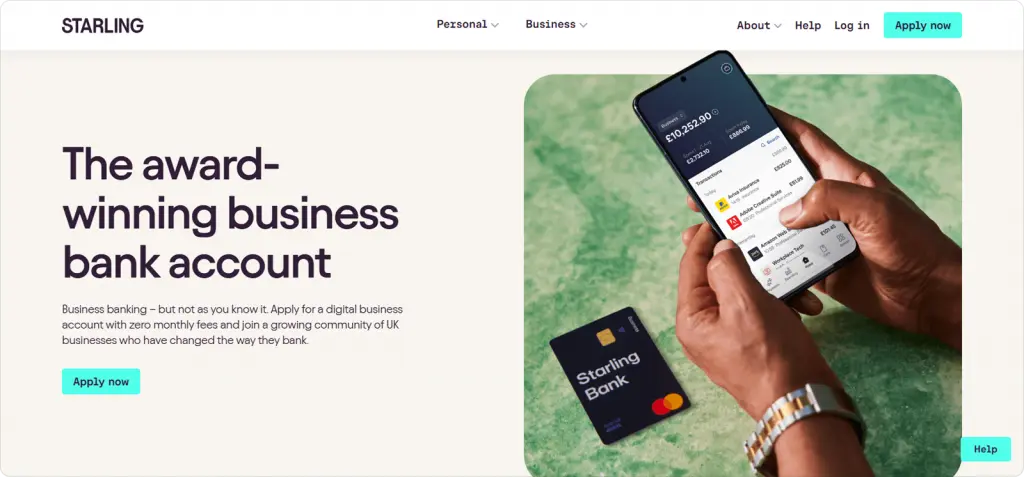
Starling offers a UK business bank account with optional multi-currency add-ons. Businesses can open EUR accounts (£2/month) and USD accounts (£5/month) alongside their GBP account.
Conversions cost 0.4%, plus delivery fees for international payments. Starling supports payments to 34 countries in 17 currencies, including EUR, USD, ZAR and PLN.
Key advantages:
- UK business banking with a dedicated euro account
- International payments to 34 countries in 17 currencies
- 0.4% transfer fee for international payments
- SWIFT delivery available for £5.50
- Local payment options from 30p for eligible routes
- Exchange rate and fees shown before sending
- No additional FX fee or margin during open market hours
Drawbacks:
- Only supports GBP, EUR and USD
- Limited tools for FX strategy or automation
Ideal for:
SMEs seeking a single reliable banking partner for domestic and international payments in major currencies.
7. Barclays
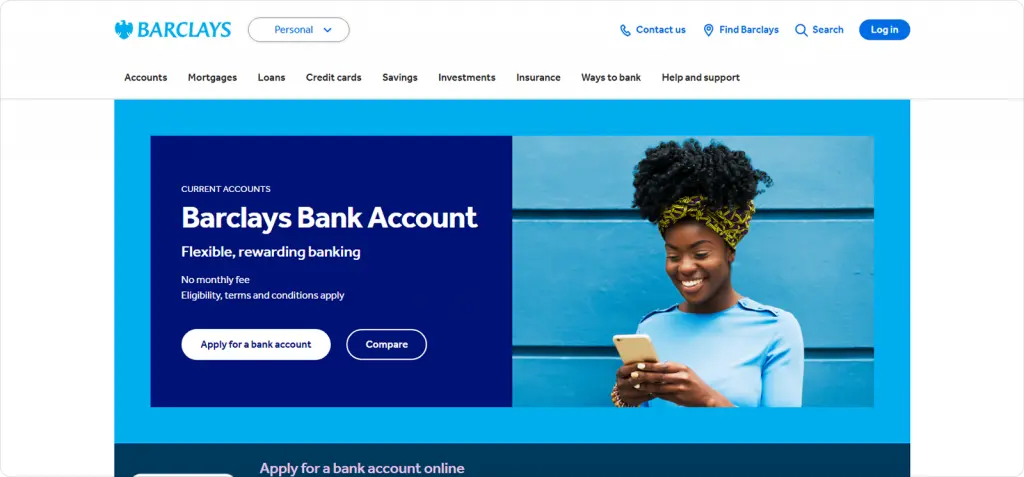
Barclays provides foreign currency accounts and international business services under its traditional banking umbrella. Businesses can hold 17 currencies, including USD and EUR, and make international payments to 90+ countries.
Barclays includes FX spreads in its quoted rates and charges between £4 and £12 for transfers.
Key advantages:
- Well-established UK bank with global reach
- Trusted brand and robust support
- Seamless integration with Barclays business services
- Multiple foreign currency accounts under one login
Drawbacks:
- FX margins are higher than those of fintech providers
- Transfers are slower, often via SWIFT
- Higher fees for international transactions
Ideal for:
Established businesses that already bank with Barclays and prefer traditional stability over fintech speed.
8. Ebury
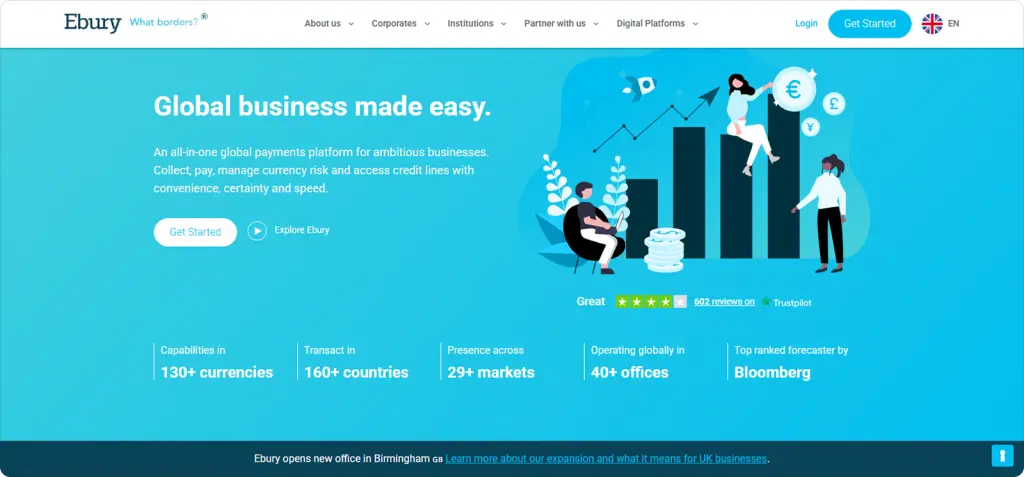
Ebury is a specialist in global payments, FX and risk management. You can hold, manage and convert 29+ currencies and send payments in 140+ currencies.
Ebury offers forward contracts, rate alerts and personalised FX strategy support through dedicated account managers.
Key advantages:
- Hold, manage and convert 29+ currencies
- FX hedging and risk management tools
- Dedicated customer support and trade finance options
- Send payments in 140+ currencies
Drawbacks:
- Onboarding can be longer for small businesses
- Less focus on self-service; more relationship-managed
Ideal for:
Importers, exporters and growing companies that handle large cross-border volumes or want professional FX management.
9. Moneycorp
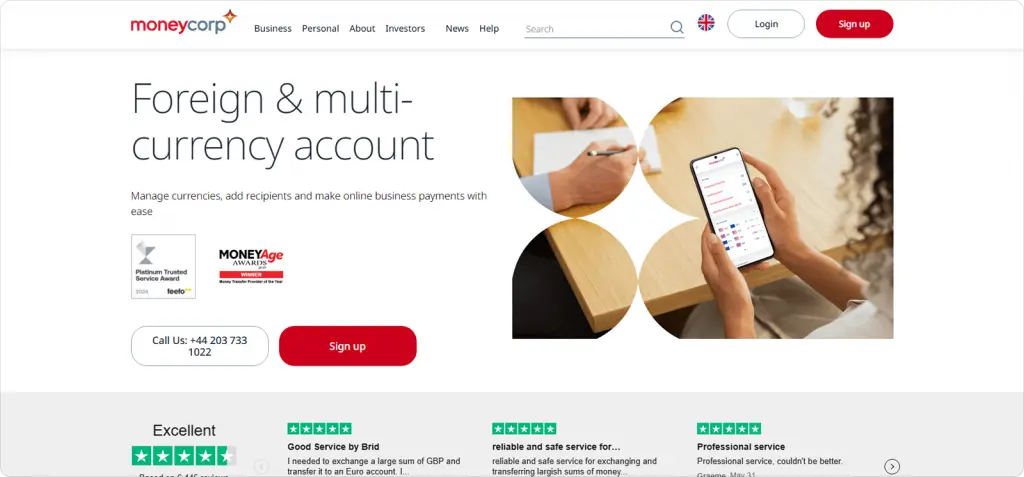
Moneycorp has a wide currency network, with its multi-currency business account allowing businesses to hold over 120 currencies. Businesses can also access 130+ currencies for international payments, making it useful for companies dealing in less common currencies such as ZAR, TRY and INR.
Clients can use online trading tools and access dedicated FX specialists for international payments and currency management.
Key advantages:
- Hold 120+ currencies
- Send payments in 130+ currencies
- Access to experienced FX dealers
- Hedging and forward contract tools
- Competitive spreads for large volumes
Drawbacks:
- Limited local collection accounts in some regions
- Interface feels dated compared to fintechs
- Mainly suited to larger transactions
Ideal for:
Companies trading in multiple or less common currencies that need expert FX guidance.
10. HSBC Global Wallet
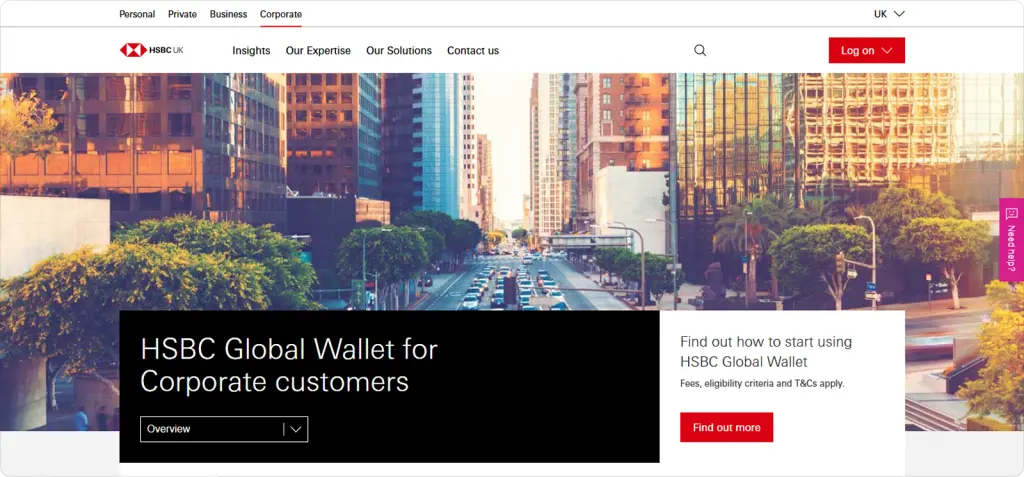
HSBC’s Global Wallet allows corporate clients to hold, transfer, receive and manage funds in multiple currencies through HSBCnet, including USD, SGD, AUD, EUR, CHF and more. You can make and receive payments in key currencies while viewing the FX rate before you transact.
Key advantages:
- Integrated within HSBC corporate banking
- Global reach and local clearing capabilities
- HSBC shows the FX rate before you transact; a flat £5 transaction fee applies
- Trade finance and credit access
Drawbacks:
- Not cost-effective for small businesses
- Requires a corporate banking relationship
- The setup and documentation process can be lengthy
Ideal for:
Larger or established businesses that already use HSBC and want international payments and FX within the same banking network.
Why WorldFirst sets the standard for multi-currency accounts in the UK
From this comparison, it’s clear that UK businesses now have more options than ever when choosing a multi-currency account. Each platform offers something valuable, from transparent pricing to automated payments and global reach.
But for SMEs, importers, exporters and e-commerce sellers seeking a solution built specifically for cross-border trade, WorldFirst leads the field.
What sets WorldFirst apart:
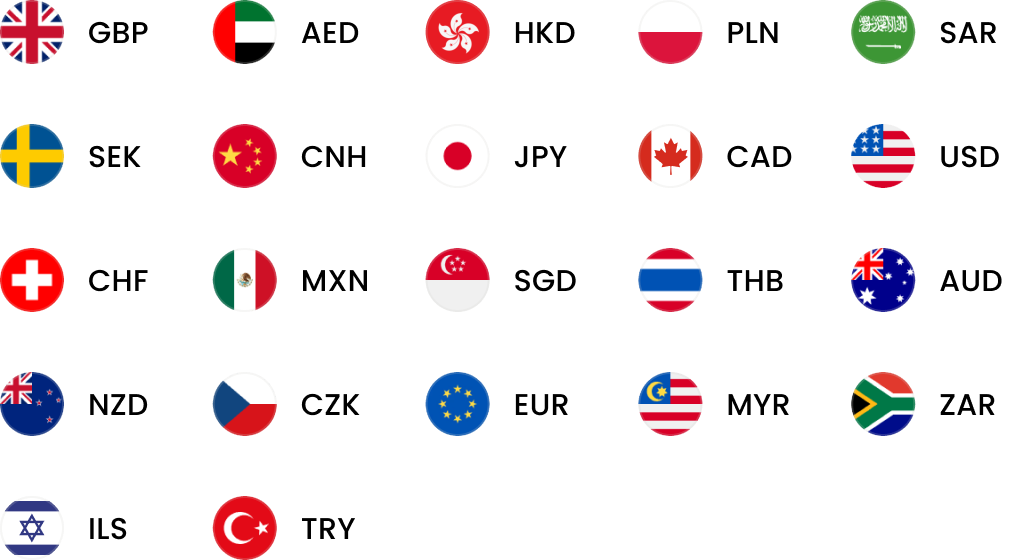
- Purpose-built for global business: Hold, receive and send 20+ currencies and make payments to 200+ countries from one account.
- Regulated and trusted: WorldFirst is an Electronic Money Institution (EMI) authorised by the UK Financial Conduct Authority (FCA) and safeguards customer funds in accordance with applicable requirements.
- Transparent FX pricing: Competitive exchange rates with markups capped at 0.50% for major currencies.
- Built for international commerce: Receive marketplace payouts from 130+ marketplaces and payment gateways, then use your funds to pay suppliers and other business expenses.
- Tools for modern businesses: Use forward contracts, firm orders and other FX tools, while the World Card offers no FX fees on 15 major currencies and up to 1.2% uncapped cashback on eligible spend.
- Real-world performance: Over one million businesses worldwide have processed more than US$300 billion through WorldFirst.
Open a World Account for free today and see why thousands of UK businesses choose WorldFirst as their trusted multi-currency account for faster, simpler global payments.
FAQs
1. What is the best multi-currency account in the UK?
The best option depends on your currencies, payment needs and fees. WorldFirst, Wise, Revolut and Airwallex are popular choices for businesses managing international payments, while traditional banks such as HSBC and Barclays also offer foreign currency services.
2. Which banks allow multi-currency accounts?
UK banks such as HSBC and Barclays offer multi-currency or foreign currency accounts for businesses. Digital providers such as WorldFirst, Wise, Revolut and Airwallex also offer multi-currency account services, allowing businesses to manage funds across multiple currencies.
3. What should I consider before opening a multi-currency account?
Compare the currencies supported, FX rates and fees, payment options, transfer speeds, local receiving details and safeguarding arrangements. Also check whether the account supports the countries, suppliers, marketplaces or platforms your business works with.
4. Can UK businesses hold euros in a multi-currency account?
Yes. UK businesses can hold euros through traditional banks and specialist multi-currency providers. Depending on the provider, you can receive, hold, send and convert euros without automatically converting them to GBP. This can help businesses manage regular euro payments or supplier costs.
Sources:
- https://eastandpartners.com/news/worldfirst-introduces-multi-currency-account-for-uk-corporates
- https://www.businesswire.com/news/home/20250415065369/en/Ant-Internationals-WorldFirst-Launches-World-Card-to-Simplify-Payment-for-Global-Commerce
- https://www.wise.com/gb/business
- https://wise.com/help/articles
- https://www.revolut.com/en-GB/business
- https://www.revolut.com/business/currency-exchange/
- https://www.revolut.com/legal/business-fees
- https://help.revolut.com/business
- https://www.airwallex.com/uk/business-account
- https://www.airwallex.com/uk/blog/compare-international-business-bank-account
- https://www.airwallex.com/en-uk/pricing
- https://www.payoneer.com/business-account/
- https://www.starlingbank.com/send-money-abroad/
- https://www.barclays.co.uk/business/international/international-payments
- https://ebury.com/
- https://www.moneycorp.com/en-gb/business
- https://www.business.hsbc.uk/en-gb/products/hsbc-global-wallet
- https://topmoneycompare.co.uk/best-multi-currency-accounts-uk