
























Key Takeaways
- Dropshipping means selling products online without holding any inventory. Your supplier handles storage, packing and shipping, while you focus on marketing and customer support.
- Real profit from dropshipping depends on marketplace fees, marketing spend, payment processing and currency conversion.
- There are three main dropshipping UK models: traditional, print-on-demand and private label, each with different startup costs, branding control and profit potential.
- The upside is low startup cost and flexibility. The downside is thin margins, heavy competition and less control over the customer experience.
- Getting paid by international marketplaces and paying overseas suppliers is often the trickiest part of running a global dropshipping store, and many beginners underestimate it, but it ends up affecting how much profit they actually keep.
According to the Office for National Statistics (ONS), internet sales accounted for around 28% of total retail sales in Great Britain in early 2026. The UK e-commerce market also extends beyond domestic customers. For a dropshipping business, this creates opportunities to sell to customers in the UK and overseas without maintaining your own inventory.
It also means you may need to deal with suppliers, marketplaces and customers in different countries, making efficient international payments and currency management an important part of running the business.
Want to simplify how you pay suppliers and get paid by marketplaces? Open a free World Account today to manage multiple currencies in one place.
What Is Dropshipping?
Dropshipping is a retail fulfilment method where you sell products through your online store without holding the inventory yourself.
You can run a UK-focused dropshipping business and sell to customers within the country, or operate internationally and sell products to customers outside the UK as well.
For beginners, starting with the UK market can make it easier to understand the business, manage deliveries and returns, and gradually scale the business.
How Does the Dropshipping Process Work?
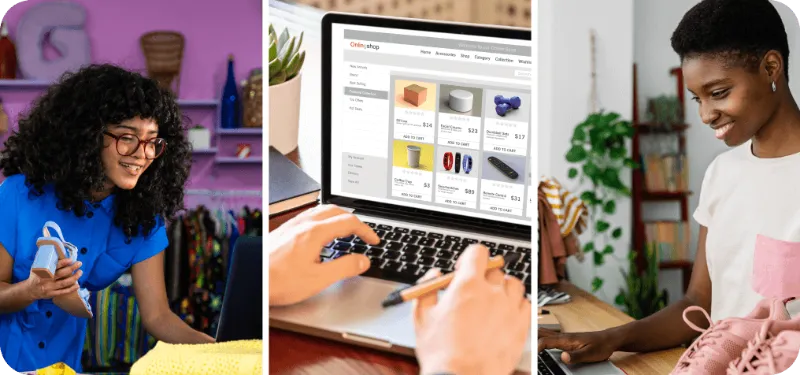
In dropshipping, your ecommerce site acts as the platform through which customers find and buy your products. When someone places an order through your online store, you forward the order details to a third-party supplier, who packs and ships the product directly to your customer.
You handle the marketing, website, customer enquiries and returns, while your supplier takes care of storing, packing and shipping the products.
The typical order flow, from start to finish:
- A customer places an order on your ecommerce site, moves to checkout and makes the payment.
- You forward the order details to your supplier, including the customer’s shipping address.
- You pay the supplier the agreed wholesale price. The difference between what the customer paid and what you pay the supplier contributes to your gross profit, before other business costs such as advertising, platform fees, payment processing fees, taxes and returns.
- The supplier packs and ships the product directly to the customer, often using your branding on the packaging and paperwork.
How Do Dropshippers Make Money?
The profit on any dropshipping sale comes down to one simple sum, but it has more moving parts than most beginners expect:
Selling price − supplier cost − marketplace fees − marketing costs − payment processing − currency conversion = profit
| Example cost breakdown | Amount |
| Selling price | £20.00 |
| Supplier cost | −£8.00 |
| Marketplace fee (10–15%) | -£2.40 |
| Marketing/ advertising costs | −£4.00 |
| Payment processing fee (1–3%) | −£0.40 |
| Currency conversion costs (if applicable) | Varies |
| Estimated profit (before other business expenses) | £5.20 |
Your profit is the amount left after paying your supplier and covering operating costs such as marketplace fees, advertising, payment processing, and, where applicable, foreign exchange costs. Typical net margins in dropshipping sit somewhere between 10% and 30%, depending on the niche and how tightly you manage your business finances.
The Main Types of Dropshipping
If you’re searching for “what is dropshipping”, you should know that there isn’t a one-size-fits-all model.
There are three common dropshipping models worth knowing if you’re planning to launch your own dropshipping store.
1. Traditional dropshipping
This is the classic model: general consumer products sourced from a supplier and sold under your store’s branding. It’s the easiest to get into, with low startup costs and access to thousands of product categories.
2. Print-on-demand dropshipping
Here, the supplier only makes the product once an order comes in — think t-shirts, mugs or books with your own designs. It’s ideal for personalised or branded items and tends to offer better margins.
3. Private label dropshipping
In this setup, a supplier manufactures products for your brand, with your own packaging and labelling. It’s harder for competitors to copy, which means you can charge more and build customer loyalty over time.
Dropshipping Models Compared: Costs, Branding, Profit and Competition
| Model | Startup cost | Branding | Profit | Competition | Best for |
| Traditional | Low | Limited, as you’re reselling generic products | Lower | High | First-time sellers testing the model |
| Print-on-demand | Low to medium | Strong, with your own designs on standard products | Medium | Medium | Creators and niche or personalised brands |
| Private label | Medium to high | Full, with your own branding and packaging | Higher | Lower | Sellers ready to build a lasting brand |
Advantages and Disadvantages of Dropshipping in the UK
Advantages
- Low startup costs: No inventory to buy upfront. Your main costs are your website management and marketing.
- No inventory to manage: No stock to store, count or write off if it doesn’t sell. You don’t bear that risk, but your supplier will.
- Work from anywhere: No physical products means no need for storage space, staff to manage stock, or a fixed location. You can run your online store from a laptop, like most dropshippers do.
- Easy to test new products: You can list new items without committing to bulk orders, so it’s cheap to see what sells and drop what doesn’t.
- Flexible to run alongside other work: Plenty of sellers start this as a side project, since it doesn’t demand fixed hours or a physical presence anywhere.
Disadvantages
- Thin margins: Low barriers to entry mean plenty of competitors selling the same products, often at competitive prices.
- Limited control: You’re relying on a supplier for product quality, packaging and shipping speed. If something goes wrong, the customer blames you.
- Supplier dependency: Stock issues, shipping delays or quality problems on the supplier’s end become your problem to fix, and if you work with multiple suppliers, a single order might arrive in several separate parcels.
- Payment complexity when you go global: Selling and sourcing across borders usually means dealing with multiple currencies, transfer fees and exchange rate swings that can quietly cut into your margin.
Read more: How to ship from China to UK: A guide for online sellers
Is Dropshipping Legal? What UK Sellers Need to Know
Yes. Dropshipping is fully legal in the UK. But you’ll need to make sure your business is compliant with the following:
HMRC Registration (Sole Trader vs. Limited Company): Most people start as a sole trader or set up a limited company while launching their dropshipping business. In either case, you’ll need to register with HMRC for tax purposes.
The £90,000 VAT Threshold: If your turnover goes above £90,000 a year, you’ll need to register for VAT within 30 days of the month you crossed the threshold. If you’re an overseas seller shipping to UK customers, you must register from your very first sale, no matter your turnover. Once registered, most goods get charged at the standard 20% rate, though a few categories carry a lower or zero rate.
Import VAT on Overseas Goods: If you source products from overseas suppliers for UK customers, the tax handling depends on order value. For consignments valued at £135 or less, you generally must collect UK supply VAT at checkout. For orders above £135, VAT is not charged at checkout; instead, it is collected as an import charge at the border by customs or the handling courier.
Consumer Rights Act & Seller-of-Record Responsibility: Under the Consumer Rights Act 2015, you’re responsible to the customer even though a third party is fulfilling the order. Products need to match their description, be of satisfactory quality, and do what they’re supposed to. UK customers get a 14-day cooling-off period on most online purchases, so you’ll need a clear returns policy and a plan for coordinating refunds with your supplier.
How to Start a Dropshipping Business
Step 1: Pick your niche carefully
You should know what you want to sell from day one. Then identify suppliers who can ship products directly to your customers as orders come in.
Step 2: Search for dependable suppliers
The more suppliers you can connect with and the more information you gather about them, the better your supplier shortlist will be. Make sure you’re choosing a reliable supplier with good reviews and a strong reputation. Pick a supplier who manages inventory accurately and responds quickly to your enquiries.
Step 3: Create your ecommerce store
Which platform you choose is entirely up to you. For example, you could use Shopify, WooCommerce or BigCommerce, or you could start by selling products on Amazon, eBay or Etsy.
Step 4: Register with HMRC
Develop a business plan. Register your business with HMRC, understand the taxes that apply to you, and consider whether you need to register for VAT before you get started.
Step 5: Set Your Pricing
Calculate your wholesale costs, fees, and expenses to set your selling prices. Ensure your margins are wide enough to cover all operational costs and protect your profits.
Step 6: Launch and market your store
Publish your online storefront and add your first product listings. Turn on your marketing campaigns to drive traffic and start taking customer orders.
Read more: How to receive international payments: 3 top methods for businesses
Dropshipping vs Other Ecommerce Models
| Feature | Dropshipping | Holding Your Own Stock | Third-Party Fulfilment (Amazon FBA / 3PL) |
| Upfront cost | Minimal | High (buy bulk stock early) | Medium (stock purchase + 3PL fees) |
| Margins | Lower (wholesale margins) | Higher (direct buying power) | Medium (offset by storage/fulfilment fees) |
| Control | Limited | Full control over packaging and branding | High (customised depending on provider) |
| Effort | High marketing and customer support focus | High operational and warehousing effort | Low logistics effort; higher upfront planning |
| Risk | Low financial risk; high competition | High financial risk if stock doesn’t sell | Medium (tied up capital in inventory) |
Why Do Most Dropshipping Businesses Fail?
Unrealistic expectations: Plenty of sellers expect fast income within weeks. Building a store that actually converts and retains customers usually takes months, sometimes years, of testing.
Poor marketing: A great product with no traffic strategy behind it just sits there. Paid ads without a plan can burn through cash fast with nothing to show for it.
Thin margins, no buffer: When your margin is already 15-20%, one bad month of returns, ad costs or currency swings can wipe out the profit entirely.
Slow delivery can erode trust: Customers used to next-day delivery elsewhere don’t have much patience for a three-week wait, and one bad review spreads fast.
Unreliable suppliers: Stock running out without notice, or quality dropping after the first few orders, damages a brand’s reputation faster than almost anything else.
Cash-flow problems: Money moving between customer payments, supplier payments and marketplace payouts across different currencies and timelines can leave a store short on cash even while it’s technically profitable on paper.
Foreign exchange costs: For sellers earning in one currency and paying suppliers in another, unmanaged FX exposure is one of the ways a business bleeds money unchecked.
A product with an estimated 30% to 40% margin on paper can shrink fast once you factor in an approximately 3% card fee here, a 2% FX conversion markup there, and a slow international transfer that ties up cash for days. Getting your payment setup right from day one protects the margin you worked hard to build.
WorldFirst World Account vs General Payment Platforms for UK Dropshipping
| Feature | General payments platforms | WorldFirst World Account |
| Built for | Accepting checkout payments | Collecting marketplace sales and paying suppliers globally |
| FX markup | Often 1-3% above the mid-market rate | Fees capped at 0.50% on major currencies |
| Paying suppliers abroad | Usually routed as a standard international transfer | Local payment rails in 200+ countries, with around 80% of payments arriving the same day |
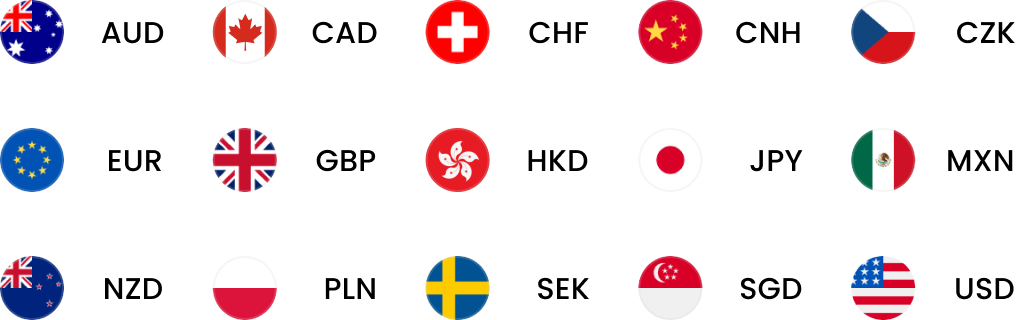
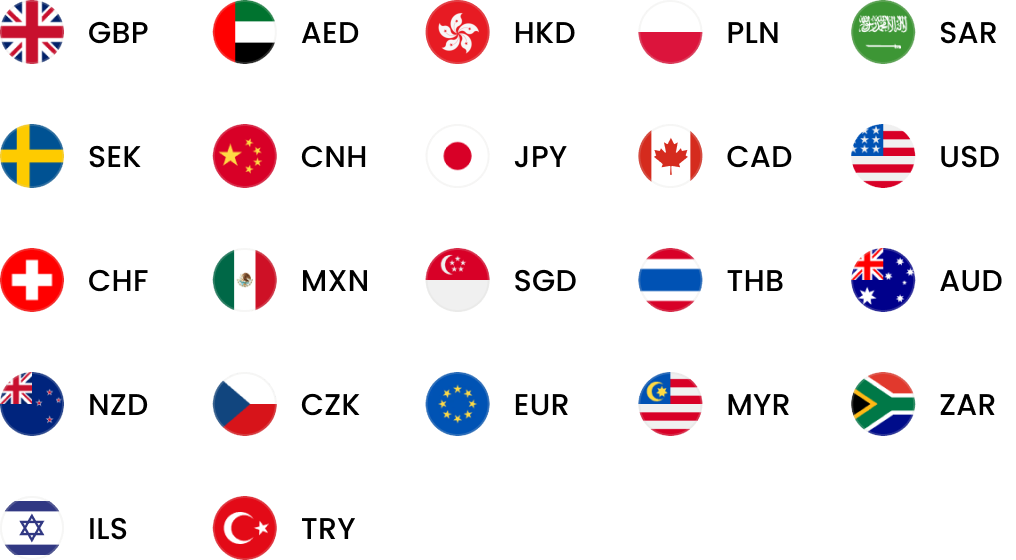
| Multi-currency holding | Limited or focused on a single currency | Hold and convert funds across 20+ currencies on your own schedule |
| Marketplace payouts | Often requires a separate tool or workaround | Direct integrations with 100+ marketplaces and 30+ payment gateways |
If your business is mostly about accepting card payments from your own website, a general payments platform does the job fine. But once you’re sourcing from suppliers abroad and getting paid out by international marketplaces, a fraction of a percent on FX and a day or two of delay, multiplied across every single order, adds up to real money by the end of the year.
How WorldFirst Supports Dropshipping Businesses
When your margins are tight, international currency conversion costs and supplier payments can eat into your profits. WorldFirst helps dropshipping businesses manage cross-border payments by allowing you to hold multiple currencies, access competitive exchange rates and pay overseas suppliers in their local currency. This includes direct payments to Chinese suppliers on 1688.com.
With a World Account, you can collect sales revenue from marketplaces worldwide, hold funds in multiple currencies and use those funds to pay suppliers. This can help you manage your international cash flow from a single platform and reduce the need to convert currencies every time you make a cross-border payment.
FAQs
1. What is dropshipping in simple terms?
Dropshipping is a way to run an online shop without holding any physical stock. When a customer buys a product from your website, you purchase it from a third-party supplier, and they ship it directly to your customer’s door.
2. Is dropshipping legal in the UK?
Yes, dropshipping is completely legal in the UK. It is simply a standard retail model.
3. Is dropshipping worth it in the UK?
Yes, dropshipping can still be profitable, but it is harder than it used to be. Because it is easy to start, competition is very high.
4. How much money do I need to start dropshipping in the UK?
Most dropshipping beginners need several hundred pounds to cover essentials like your website builder (e.g., Shopify), a custom domain name, basic tools, and your first round of online advertising.
5. Can I start dropshipping with £100?
You would need to use free tools or low-cost plugins, skip paid advertising entirely, and rely purely on free social media marketing (like TikTok or Instagram organic content) to get your first visitors.
6. How do dropshippers get paid?
When a customer buys something from your online store, they pay you directly through your website checkout (using payment providers like Shopify Payments, Stripe, or PayPal). That money goes into your business account. Only after you get paid do you use a portion of that money to pay your supplier for the item, keeping the rest as your profit.
7. Do I need to register a business / pay tax on dropshipping?
Not necessarily. If you make money from dropshipping in the UK, HMRC views you as a business owner. You must register either as a sole trader or a limited company. When your total trading income exceeds £1,000 in a tax year, you should register for Self Assessment with HMRC and must correctly report your income. But when your gross trading income is £1,000 or less, you do not need to tell HMRC about this income under the trading allowance.
8. Can I dropship internationally?
Yes. In a dropshipping business, you can source products from suppliers in one country and sell them to customers in others. The main factors to consider are longer shipping times, customs and import regulations, and how you will accept and convert payments in different currencies without losing too much to fees.
9. Is dropshipping allowed on Amazon and eBay?
Yes, both Amazon and eBay allow dropshipping, but they have very strict rules. On Amazon, you must be listed as the official seller of record, and you cannot buy items from another online retailer (like AliExpress) to ship directly to a customer. On eBay, you must guarantee that the items are shipped directly from a wholesale supplier, not another marketplace.
Ready to simplify how you get paid and pay suppliers? Open a free Open a World Account today.
Sources:
- https://www.gov.uk/guidance/charging-vat-when-using-an-online-marketplace-to-sell-goods-to-customers-in-the-uk
- https://www.gov.uk/guidance/vat-and-overseas-goods-sold-directly-to-customers-in-the-uk
- https://www.legislation.gov.uk/ukpga/2015/15/contents
- https://sell.amazon.co.uk/learn/what-is-dropshipping
- https://www.shopify.com/uk/blog/what-is-dropshipping
- https://www.bigcommerce.com/articles/ecommerce/dropshipping/
- https://www.worldfirst.com/uk/blog/foreign-currency-exchange/fx-payments-for-business/
- https://www.worldfirst.com/uk/blog/international-transactions/international-payments-processing/
- https://www.legislation.gov.uk/ukpga/2015/15/section/9
- https://www.gov.uk/register-for-vat
- https://www.ons.gov.uk/businessindustryandtrade/retailindustry/timeseries/j4mc/drsi