



























The UK’s startup sector is large and influential. At the start of 2025, the UK had 5.64 million small businesses, representing 99.18% of the private-sector business population.
At the same time, challenger and specialist banks have overtaken the high-street giants: in 2025, they accounted for 60% of the £68 billion in gross bank lending to smaller businesses.
For new founders, that shift makes choosing a business account more important than ever. The right account can simplify day-to-day finances, cut international costs, and grow with your company as it scales.
In this guide, we break down the best business bank and Electronic Money Institutions (EMI) accounts for startups in the UK and what really sets them apart in terms of fees, flexibility, and global potential.
Key Takeaways
- Choosing the best business bank accounts for startups in the UK starts with how your business operates, including where you sell, who you pay, and which currencies you need to receive or hold.
- International trading changes the cost equation, with FX rates, transfer fees and multi-currency support affecting your margins.
- Check the capabilities you’ll actually use, including international payments, marketplace collections, accounting integrations, and expense tools.
- Think ahead, with team cards, spending controls, funding and other business tools that can support your startup as it grows.
- WorldFirst brings multi-currency account management, international payments, marketplace collections, FX tools and business spending together in one platform.
What to look for in a business bank account before you compare
Before you start comparing options, think about what really matters for a startup in 2026. The best account is one that supports your daily operations now and keeps pace as your business grows. Here are the key factors to consider:
- Cost transparency: Early-stage businesses watch every expense closely. Review the monthly fee to see precisely what it covers and what it leaves out, including FX markups and payment charges. A free account might look appealing, but hidden costs can build up once you start trading internationally.
- Simple setup: Time is everything for new founders. The best accounts let you apply online, verify documents quickly, and get started within hours. Smooth onboarding saves you from the usual delays and paperwork that slow down early growth.
- Payment capabilities: Your account should make both UK and international payments easy. Look for full access to Faster Payments, Bacs and CHAPS for local transfers and reliable international rails for cross-border trade.
- Accounting and platform integrations: Modern startups run on automation. Accounts that connect with tools like Xero, QuickBooks or your e-commerce platform can save hours on reconciliation and help you see your real-time cash position.
- FX and currency management: If your business trades internationally, holding multiple currencies can help you avoid unnecessary conversions and manage exchange rate risk. The right account gives you more control over timing and costs when trading internationally.
- Scalability and support: Your banking needs will change as you grow. Choose a provider that offers features like team cards, spending controls and access to credit when needed.
10 best business accounts for UK startups
The table below highlights the best business accounts for startups in the UK, comparing key features such as multi-currency support, international payment options and suitability for different trading volumes:
| Provider | Best For | Currencies you can hold | Currencies you can pay | FX markup/rate policy | Business capabilities |
| WorldFirst | Startups sourcing abroad, selling internationally or managing suppliers and clients in multiple currencies | 20+ currencies | 100+ currencies to 200+ countries | Up to 0.50% on major currencies + a payment fee from £0.27 to £23 depending on currency (£0.31 for GBP) | Payouts from Amazon and Shopify; Xero and NetSuite integrations; forward contracts; World Card; rate alerts |
| Starling Bank | UK-based startups and small businesses wanting a mobile-first account | GBP + EUR (add-on £2 / month) + USD (add-on £5 / month) | 17 currencies to 34 countries | Real exchange rate + 0.4% conversion fee + delivery fee | FreeAgent, Xero and QuickBooks integrations; real-time analytics; instant notifications |
| Tide | Freelancers and UK startups needing fast setup and expense control | GBP (receive EUR via SEPA) | EUR (36 SEPA countries) + other currencies via SWIFT | Plan-dependent, from 0.50% to 1.50% for EUR SEPA payments | EUR SEPA payments, SWIFT international payments, IBAN and BIC, invoicing, expense tracking, virtual cards and accounting integrations |
| Revolut | Global startups and distributed teams using multi-currency cards | 25+ currencies | 35+ currencies to 150+ destinations | 0.6% markup above plan allowance; 1% on weekends | Rate alerts, FX forwards, limit & stop orders, team cards, API automation and accounting integrations |
| Monzo | Early-stage UK startups focused on simple domestic banking | GBP | 30+ Currencies | 1% conversion fee on incoming foreign-currency payments, capped at £1,000 | Invoicing, receipt capture, expense management, accounting integrations and business loans (eligible customers) |
| HSBC Kinetic (no longer available to new customers; closed for new applications) | Scaling startups needing lending, FX and global banking support | GBP + multi-currency via HSBC network | 90+ countries (via HSBC global rails) | HSBC FX rates (competitive by volume) | Kinetic app with cash flow insights, overdrafts and loans |
| Lloyds Bank | Startups wanting traditional support and branch access | GBP + foreign currency accounts | International payments available | International payments from £15; exchange rates vary | Foreign currency accounts, online and mobile banking, branch access |
| NatWest | New UK businesses trading under 12 months with turnover under £1 million | GBP | 35 foreign currencies (45 with Bankline) | £15 per international payment (50p for SEPA); NatWest exchange rates apply | Business Builder and mentoring resources; digital onboarding |
| Wise | Startups managing frequent international payments and FX costs | 40+ currencies | 40+ currencies to 140+ countries | From 0.24% | Local account details, Wise Business debit card, batch payments, Xero & QuickBooks integrations |
| Barclays | Startups needing a traditional bank with financing and global reach | GBP + optional foreign currency accounts | 90+ countries | Bank FX margin applies | Foreign currency accounts, international payments and exchange rate risk management |
Disclaimer: Information, features and pricing were checked in October 2026 and may change over time.
1. WorldFirst
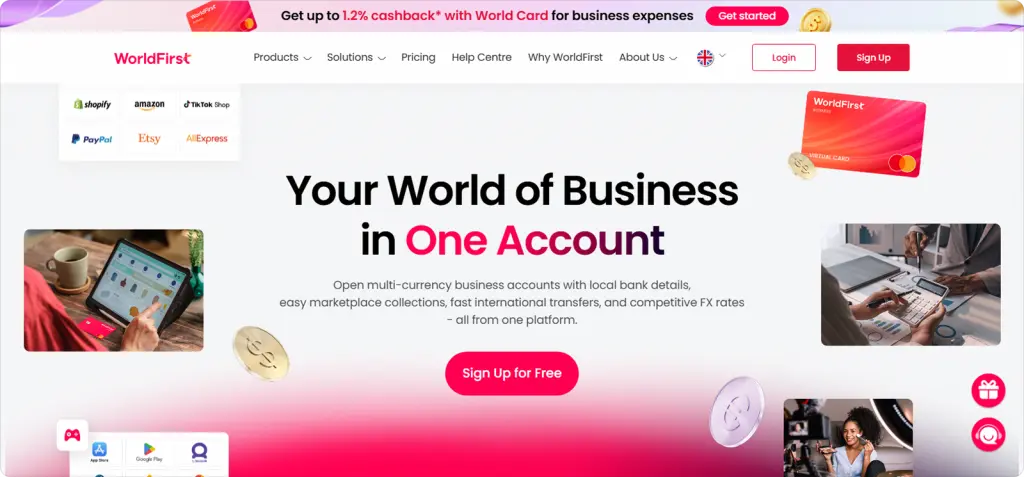
WorldFirst’s World Account is designed for companies with global ambitions. Its multi-currency infrastructure lets you collect revenue in key markets, hold multiple currencies, and make payments to suppliers or partners around the world from a single platform.
For importing startups and e-commerce sellers, this can simplify cross-border finances by bringing international collections, currency management and supplier payments together in one place.
WorldFirst isn’t a bank. World First UK Limited is authorised by the FCA as an Electronic Money Institution, so funds held in a World Account aren’t covered by the FSCS. Instead, they’re safeguarded: kept separate from our own operating funds with banking partners, and never used for lending or investing.
Key features:
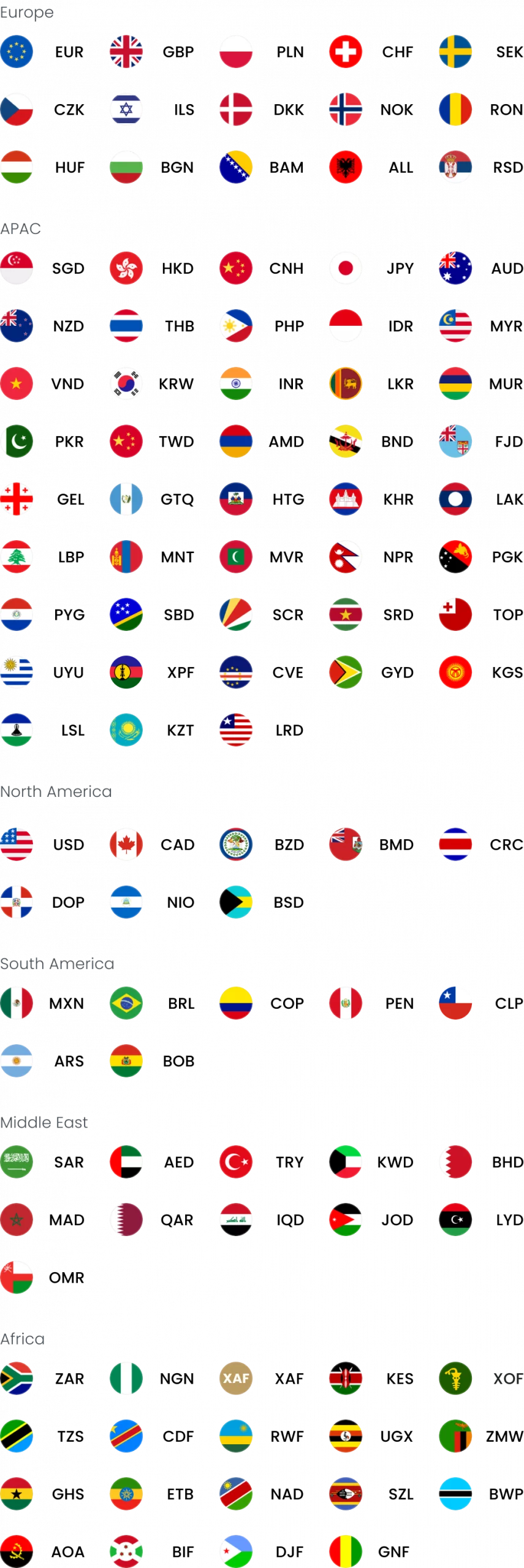
- Receive funds in 20+ currencies through local account details in major markets, including USD, EUR, AUD and HKD, so that you can avoid international transfer fees
- Hold and convert multiple currency balances inside the same platform, giving you the flexibility to exchange funds only when rates are favourable
- Live FX rates, spot transactions, forward contracts, firm orders, rate alerts and international transfers.
- Make payments in 100+ currencies to 200+ countries with same-day or next-day delivery, depending on the destination, improving supplier relationships and efficiency
- World Card with up to 1.2% uncapped cashback and 0% FX fees on 15 major currencies when paying from your World Account balance.
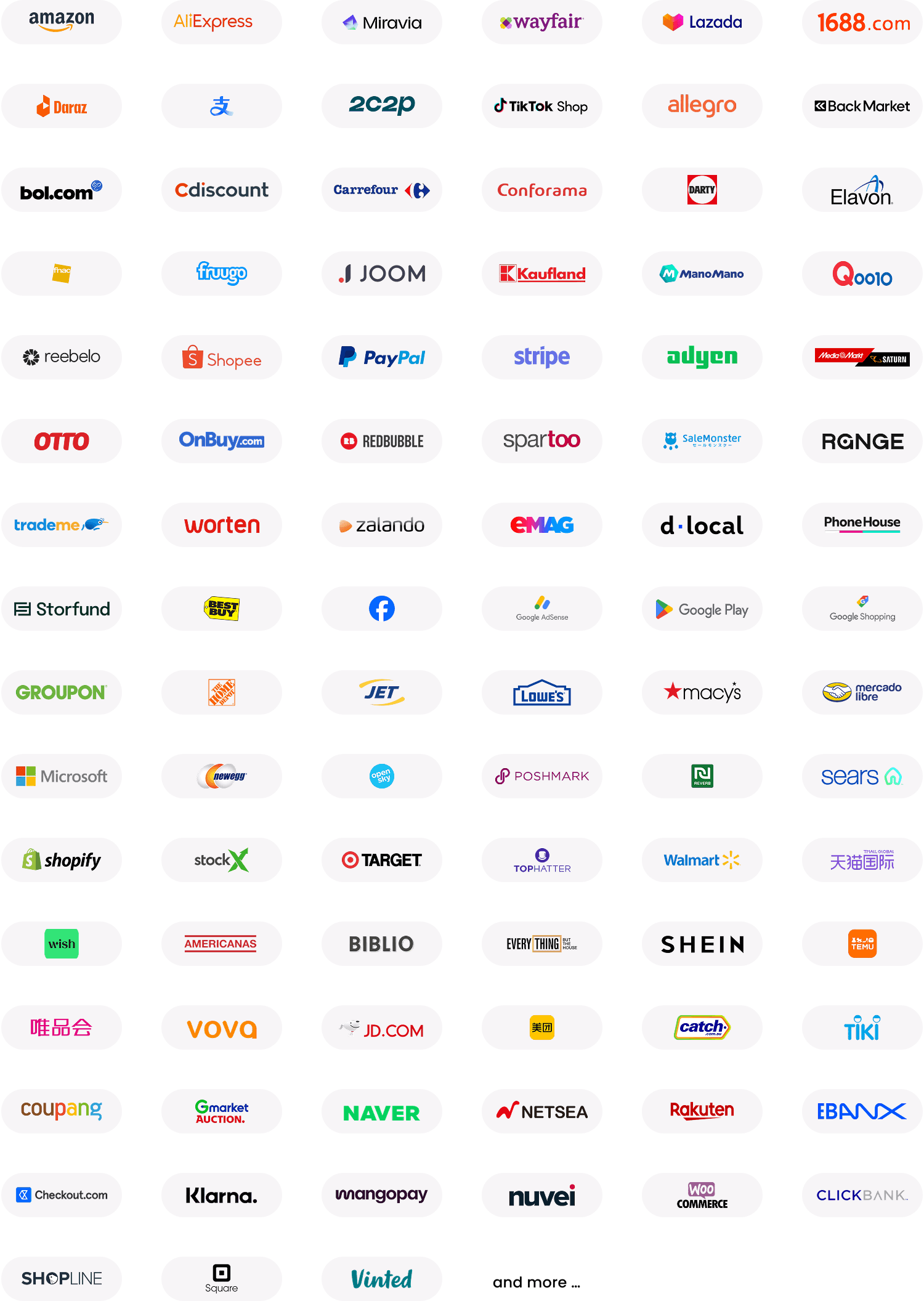
- Marketplace collections from 130+ marketplaces and payment platforms, including Amazon, and accounting platforms such as Xero and NetSuite
Pros:
- Excellent international and multi-currency capabilities for startups trading beyond the UK
- Transparent FX pricing with tools like forward contracts to manage risk
- Centralised platform reduces administrative complexity across markets
Cons:
- Primarily focused on international users, so UK-only startups may not need its advanced features
Best for:
Startups that source products abroad, sell internationally or operate with suppliers and clients across multiple currencies.
Pricing highlights:
- No monthly account fees, with up to 25 virtual cards at no extra cost.
- FX margins are capped at 0.5% on major currencies.
Open your WorldFirst account for free today and simplify how you send, receive, and hold money across borders with local details in 20+ currencies.
2. Starling Bank
Starling Bank offers a fully regulated UK business current account with a modern, app-based experience.
The account targets founders who want a fast digital setup, simple daily management and strong customer support. You can open it online in minutes, access real-time notifications, track categorised spending and send free domestic transfers.
Key features:
- No monthly fee for the standard GBP business account, including free UK transfers for day-to-day transactions
- Real-time mobile app features such as instant notifications, spending analytics and the ability to manage physical and virtual cards
- Optional EUR (£2/month) and USD (£5/month) accounts available as paid add-ons for businesses trading internationally.
- Integrations with accounting platforms like FreeAgent, plus smart budgeting tools within the app
Pros:
- Intuitive and fast mobile experience for small business owners
- Free UK payments with zero maintenance cost for the main account
- FSCS-protected eligible deposits up to £120,000
Cons:
- International account options are limited to EUR and USD, with additional monthly fees.
- No physical branch service for in-person banking
Best for:
Startups and small companies that operate mainly within the UK want a simple, mobile-first business account with minimal fees.
Pricing highlights:
- £0 monthly fee for the GBP account
- EUR add-on £2 per month and USD add-on £5 per month
- Free domestic transfers and low international payment fees
3. Tide
Tide is an app-based business account built for founders who value speed and simplicity. Opening an account takes only a few minutes, and users gain access to virtual cards, expense categorisation, integrated invoicing, and receipt tracking.
While Tide is primarily designed for UK businesses, it also supports international payments through SEPA and SWIFT, making it suitable for startups with occasional cross-border payment needs.
Key features:
- Fully online onboarding process that allows you to open an account quickly without branch visits or paperwork
- Send EUR payments across 36 SEPA countries and receive payments in 30+ currencies via SWIFT.
- Virtual cards and real-time expense tracking tools for managing daily spending and recording receipts
- Built-in invoicing and accounting integrations to simplify reconciliation and monitor cash flow
- Flexible upgrade options, enabling you to scale features such as multiple cards and higher payment limits as your business grows
Pros:
- Fast setup, ideal for new startups or freelancers
- Integrated tools for expenses, invoicing, and budgeting
- Competitive entry price with a free basic tier
Cons:
- Limited international payment options and multi-currency features
- Advanced capabilities are available only on higher-priced plans
Best for:
UK startups and freelancers who want a quick, low-cost account with built-in expense tools for early growth.
Pricing highlights:
- Free basic plan.
- Paid plans currently start at £12.49 per month, with Pro at £27.49 and Max at £69.99.
4. Revolut Business
Revolut Business caters to startups that operate globally or have distributed teams.
With advanced tools for team management, spending approvals, and accounting integration, Revolut is particularly useful for startups handling international payments or digital-first businesses that operate without physical offices.
Key features:
- Manage funds in 25+ currencies and make payments in 35+ currencies across 150+ destinations.
- Issue both virtual and physical team cards with customizable spending controls and real-time monitoring
- Connect with accounting software such as Xero and QuickBooks and automate workflows through the Revolut API
- Send and receive global payments quickly, supporting international suppliers and contractors
Pros:
- Strong support for multi-currency spending and team-based expense control
- Advanced automation and software integrations
- Excellent for digital or international startups
Cons:
- 0.6% markup applies above the plan FX allowance; 1% weekend fee applies to some currencies
Best for:
Startups with global teams or clients that need flexible multi-currency cards and automated payment tools.
Pricing highlights:
- Plans from £10 / £30 / £90 per month (Basic, Grow, Scale)
Learn more: Revolut Business Review
5. Monzo Business
Monzo Business provides straightforward banking for startups and small businesses that primarily trade within the UK. With a simple app interface, instant notifications and built-in bookkeeping tools, Monzo removes friction from daily financial management.
It’s best for founders who want to manage their business banking from their smartphones, with simple international payments but without the complexity of multi-currency accounts.
Key features:
- Free Lite plan or paid Pro plan for advanced functionality
- Instant notifications for payments and expenses with smart categorisation
- Send and receive payments in 30+ supported currencies, with funds converted to your GBP account.
- Receipt capture, invoice creation, and integration with bookkeeping tools
- Access to overdrafts and business loans for eligible companies
Pros:
- Simple, intuitive, and low-cost for early-stage companies
- Fast setup with easy-to-use mobile banking
- Transparent pricing and a clean interface
Cons:
- No support for multi-currency accounts
- Limited advanced business tools beyond basic features
Best for:
Startups focused on the UK market that value simplicity, low fees, and an easy app-based experience.
Pricing highlights:
- Monzo Pro is now available for £9 per month, and the Team plan starts at £25 per month
- Free UK transfers with small fees for additional services
Learn more: Monzo Business Review
6. HSBC Kinetic
HSBC Kinetic Current Account is no longer available to new customers and is closed for new applications.
The account previously combined digital banking with access to HSBC’s wider banking infrastructure, including business lending and international banking services.
Key features:
- Previously managed entirely through the HSBC Kinetic mobile app
- Access to overdrafts and lending facilities, subject to eligibility
- International payments and FX services through HSBC
- Business insights and cash flow management tools within the app
Pros:
- Backed by HSBC’s established banking infrastructure
- Digital account management through the mobile app
- Access to HSBC’s wider business banking services
Cons:
- No longer available to new customers
- Closed for new applications
Best for:
Existing HSBC Kinetic customers who continue to use the account.
Pricing highlights:
- Previously offered with no monthly account fee
- No longer available to new customers; new applications are closed
7. Lloyds Bank
Lloyds Bank offers traditional business banking supported by a vast UK branch network and experienced relationship managers.
While it doesn’t offer the same digital-first experience as challenger banks, Lloyds remains an attractive choice for startups that value branch access and long-term banking relationships.
Key features:
- Access to physical branches and dedicated relationship managers
- Online and mobile banking with complete transaction visibility
- Business loans, overdrafts, and merchant services are available as add-ons
- Foreign currency accounts available for businesses that trade internationally.
Pros:
- Established UK bank with a trusted reputation
- Full suite of business banking services
Cons:
- Higher fees and slower processes than fintech competitors
- Limited innovation or digital agility compared to challenger banks
Best for:
Startups that value traditional branch banking, personal service and long-term financial relationships.
Pricing highlights:
- No account fee for 12 months if your business is new to Lloyds, then £10 a month.
- International payments from £15 online, plus any correspondent bank charges
8. NatWest Startup Business Account
NatWest’s Startup Business Account helps newly registered companies establish professional banking at minimal cost. Designed for small UK businesses trading for less than a year, it emphasises simplicity and education.
While primarily designed for UK businesses, it also supports international payments in multiple currencies, alongside practical tools and guidance to help startups grow.
Key features:
- Free banking on everyday transactions for the first two years for eligible startups.
- Fast digital onboarding and online management through mobile and web platforms
- Access to business resources, including webinars, mentoring, and NatWest Business Builder
- International payments in 35 foreign currencies (45 with Bankline), alongside UK payments and debit card access.
Pros:
- Free banking on everyday transactions for the first two years for eligible startups.
- Excellent support network and learning resources.
- Trusted UK banking brand.
Cons:
- Limited multi-currency account features compared with digital-first international providers.
- Fees apply after the introductory period.
Best for:
Early-stage UK startups trading for less than 12 months and looking for free, reliable domestic banking.
Pricing highlights:
- Free for two years for eligible startups
Learn more: NatWest Review
9. Wise Business
Wise Business specialises in affordable international money management. Unlike full-service banks, Wise focuses solely on currency efficiency and transparency. It’s ideal for UK startups that work with overseas clients or suppliers and need to keep FX costs under control.
Key features:
- Hold and manage 40+ currencies with local account details for receiving payments in supported currencies.
- Send and receive international payments using the live exchange rate with low, fixed fees
- Integrate with Xero and QuickBooks for automated bookkeeping
- Batch payments and business debit cards streamline operations and team spending
Pros:
- Transparent, low-cost FX and transfer fees
- Quick setup and straightforward international transfers
- Ideal companion to a primary UK account
Cons:
- Not a complete UK bank account with lending or FSCS protection
- Limited domestic banking features
Best for:
Startups that manage frequent international payments and want low-cost, transparent FX without opening multiple accounts abroad.
Pricing highlights:
- Free to open with no monthly fee
- Mid-market exchange rate with transparent conversion fees, plus a £50 one-time fee for Advanced features
10. Barclays Business
Barclays Business Banking offers a comprehensive service backed by one of the UK’s oldest financial institutions. The account supports startups expecting strong growth or needing access to complex financial products such as loans, trade finance or international payments.
Although more traditional in structure, Barclays provides depth, stability and a wide range of professional support unavailable from many digital-only providers.
Key features:
- Free banking for 12 months for new business customers, helping startups save during the launch phase
- Foreign currency accounts, international payments and tools to help manage exchange rate risk.
- Access to Barclays Eagle Labs, offering mentorship and networking opportunities
- A broad range of additional services, including merchant accounts, business loans and overdrafts
Pros:
- Trusted legacy bank with broad infrastructure and global reach
- Extensive product range and adviser access
- Ideal for startups planning rapid expansion or complex financing
Cons:
- Higher cost structure after the free period
- Less agile onboarding compared with digital-first providers
Best for:
Startups planning to grow quickly that need business financing, international banking and traditional relationship support.
Pricing highlights:
- Free banking for 12 months for eligible startups
- Standard account fees apply after the introductory period
- Barclays exchange rates and international payment charges apply
Learn more: Barclays Business Account Review
How WorldFirst supports UK startups expanding internationally
Startups have more ways to manage their finances than ever, from digital banking providers and traditional banks to platforms built for international payments. The right choice depends on how your business operates, where you trade and what you need as you grow.
For businesses expanding internationally, WorldFirst provides the infrastructure to manage cross-border finances in one place. You can hold multiple currencies, make international payments, collect marketplace payouts, and access FX tools designed for global trade. What makes WorldFirst stand out:
- Built for global business: Receive funds with local account details in 20+ currencies and send payments in 100+ currencies to 200+ countries and regions.
- Marketplace collections: Collect payouts from 130+ marketplaces and payment platforms, including Amazon, Shopify, eBay, and TikTok Shop.
- Supplier payments: Pay overseas suppliers and manufacturers with competitive FX pricing and flexible payment options.
- Smarter FX management: Access live FX rates, spot transactions, forward contracts, firm orders, and rate alerts, with FX margins capped at 0.5% on major currencies.
- World Card: Earn up to 1.2% uncapped cashback on eligible purchases and pay 0% FX fees on 15 major currencies when spending from your World Account balance.
- Business integrations: Connect with Xero and NetSuite to streamline reconciliation and financial management.
- Global reach: Trusted by more than 1.5 million businesses since 2004.
For UK startups expanding internationally, WorldFirst provides multi-currency account management, international payments, and marketplace collection tools.
Open your World Account for free today and start managing your startup’s money worldwide with clarity and ease.
FAQs
1. What is the best business bank account for a startup in the UK?
The right account depends on your business needs. Consider factors such as fees, international payments, multi-currency support, accounting integrations, and business tools before choosing an account.
2. Can startups open a business bank account in the UK?
Yes. Most UK banks and fintech providers offer business accounts for eligible startups. You’ll typically need details about your business, directors, and business activities during the application process.
3. What should startups look for in a business bank account?
Look at monthly fees, payment options, FX costs, multi-currency support, integrations, spending controls, and scalability. If you trade internationally, also check how the provider handles overseas payments and currency conversion.
4. Which is the best business bank account for startups trading internationally?
Startups trading internationally should compare multi-currency support, international payment coverage, FX pricing, marketplace collections and supplier payment options. Providers such as WorldFirst, Wise and Revolut Business offer features designed for businesses managing international transactions. WorldFirst and Wise are e-money institutions rather than banks, so check how your funds are protected before you choose.
Sources:
- https://www.british-business-bank.co.uk/news-and-events/news/smaller-business-lending-markets-showing-signs-improvement-finds-latest-british-business-bank
- https://www.gov.uk/government/statistics/business-population-estimates-2025/business-population-estimates-for-the-uk-and-regions-2025-statistical-release
- https://www.worldfirst.com/uk/product/pay/world-card/
- https://www.revolut.com/business/business-account-plans/
- https://wise.com/gb/pricing/business
- https://monzo.com/business-banking/plans-pricing
- https://www.worldfirst.com/uk/
- https://www.worldfirst.com/uk/pricing/
- https://www.starlingbank.com/business-account
- https://www.starlingbank.com/business-account/multi-currency/
- https://www.tide.co/business-account
- https://www.tide.co/features/international-payments/
- https://www.tide.co/help-centre/how-to-receive-international-payments/
- https://www.revolut.com/business/business-account
- https://monzo.com/business
- https://www.hsbc.co.uk/business-accounts/products/kinetic
- https://www.lloydsbank.com/business/business-accounts.html
- https://www.lloydsbank.com/business/retail-business/rates-and-charges/international-services-rates-and-charges.html
- https://www.natwest.com/business/support-centre/making-and-accepting-payments/electronic-payments/international-transfers.html
- https://www.natwest.com/business/bank-accounts/startup-bank-account.html?intcam=HP-B-P3-DEF-Default
- https://wise.com/gb/business
- https://wise.com/gb/account/
- https://www.barclays.co.uk/business-banking/accounts/start-up-business-account
Disclaimer: The information contained is general only and largely our views. Before acting on the information you should consider whether it is appropriate for you, in light of your objectives, financial situation or needs. Although information has been obtained from and is based upon multiple sources we believe to be reliable, we do not guarantee its accuracy and it may be incomplete or condensed. All opinions, estimates, mentioned products/services and referenced material constitute our own judgement as of the date of publish and are subject to change without notice. WorldFirst shall not be responsible for any losses or damages arising from your reliance of such information. World First UK Limited is a UK registered limited company with company number 05022388 and is authorised by the Financial Conduct Authority (“FCA”) as an Electronic Money Institution under the Electronic Money Regulations 2011 with FCA Firm Reference number 900508. The registered address for World First UK Limited is 2nd Floor, International House, 1 St Katharine’s Way, London, E1W 1UN.