



























It can be pretty frustrating to pay money into a Chinese bank account via wire transfer, both as a business and as an individual.
China has quite strict rules controlling the money that comes into the country. That means payments often get frozen or rejected – for instance, if even a single payment detail doesn’t align with your payee’s official Chinese details.
Another challenge that’s worth bearing in mind is that it can be really slow to send payments to China through the international SWIFT network. In some cases, transfers can take up to 10 business days to settle in your supplier’s Chinese account.
Luckily, there’s a better option: you can use WorldFirst’s World Account to reliably send payments to Chinese bank accounts instead.
As a subsidiary of Ant Group, a leading global technology provider and parent company of Alipay, we’re specialists in managing cross-border payments to China. We support sending payments to both personal and business recipients, and since 2004 we’ve helped over 1.5 million businesses send US$500 billion across the globe.
With a World Account, you can:
- Make same-day and next-day transfers directly to Chinese accounts
- Benefit from low and transparent FX rates when converting from GBP to CNH/CNY
- Avoid expensive SWIFT fees and intermediary bank charges
In this guide, we’ll show you how WorldFirst makes it easy to send payments to China and beyond. We’ll also show you four other ways that businesses and expats can send money to a Chinese bank account.
We’ll cover:
- Why paying China is different from paying other countries
- How WorldFirst makes it easier to pay Chinese bank accounts
- How to pay a Chinese bank account from your World Account
- 4 other methods of sending international business transfers into Chinese bank accounts
Want to start sending CNH and CNY payments to China? Sign up for a World Account today.
Why paying China is different from paying other countries
Payments into China are governed by a very strict set of banking rules and controls that don’t apply to most other markets. These differences directly affect how quickly your payment settles, whether it’s accepted or rejected and how much your transfer ultimately costs.
Here’s what you should be aware of when making payments to China:
- China’s strict name matching rules: Chinese banks require payment details to match your recipient’s registered name exactly (including order and spacing) otherwise they’ll delay or reject the payment. Even small spelling differences or missing words can cause a manual review and add up to seven business days (or more) to your settlement time.
- China has two official currencies: CNY is the onshore currency used inside Mainland China, while CNH is the offshore currency that’s mainly used in Hong Kong, Macau and internationally. Which one you’ll pay with depends on your supplier’s preferences, though it’s worth noting that paying in CNY is much harder for international businesses as it comes with strict capital controls – and that many Chinese suppliers also prefer payment in USD.
Read more: Why does China have two currencies?
- Time zone considerations: The UK and China have a seven to eight hour time difference, so your “afternoon” payment may reach the Chinese bank after their cut-off times and roll into the next business day. To avoid this, it’s best to send out UK payments very early in the morning – around 6:00am to 8:00am for the best chance of making a same-day transfer.
Because of these complications, it can be frustrating and unreliable to send payments via SWIFT, particularly for businesses that need to make timely supplier payments.
That’s why businesses increasingly turn to China payment specialists like WorldFirst, where you can make same-day payments for a fraction of what a SWIFT transfer costs.
How WorldFirst makes it easier to pay Chinese bank accounts
WorldFirst is a digital payments platform that allows you to send, hold and receive funds from China and 200+ other countries.
With our multi-currency World Account, you can open a local CNH account entirely for free. We charge no maintenance fees, hidden fees or fall-below fees, and we also have no minimum balance requirements.
Plus, it’s completely free to make payments to other World Account holders, including the 150,000+ Chinese suppliers that already use WorldFirst.
Here’s what you get when you open a World Account:
Make same-day payments in CNH or CNY to Chinese bank accounts
With a World Account, you can pay Chinese suppliers quickly and reliably, whether they’re based in Mainland China (such as Shanghai or Beijing) or in offshore areas like Hong Kong and Taiwan.
You can send payments in both CNY and CNH, or even USD if your supplier prefers it. You can pay up to 1.5 million CNY per supplier each day.
We always send payments through the fastest route possible. In the case of transfers to China, we typically use domestic payment rails like Mainland China’s CNAPS, which helps speed up settlement time.
Because of this, 80% of payments sent via Worldfirst settle the same day, and 90% settle next-day.
Read more: The best way to pay Chinese suppliers: A guide for cross-border businesses
Benefit from low FX fees and lock in exchange rates for up to two years
With WorldFirst, you always know exactly what you’re paying when you exchange currencies. Our FX markup is capped at 0.5% above the mid-market exchange rate for major currencies (like CNH, HKD and GBP), and for non-major currencies, our markup will never exceed 0.75%.
If you want more certainty, you can take out a forward contract to lock in an exchange rate for up to 24 months. This protects your margins from currency volatility and makes it easier to forecast your exact costs for large or recurring supplier payments.
You can also set up rate alerts to get notified when an exchange rate reaches your target level. Or, if you’d prefer to automate the process, you can place a firm order and allow us to exchange your funds on your behalf once your target rate is hit. This saves you from having to constantly watch the market, and it ensures you receive your desired exchange price exactly.
Add secure, trusted contacts to your World Account to keep your funds safe
Your recipient’s Chinese bank details must match exactly, since even a small typo or character mismatch can lead to payment delays, transfer rejections and additional verification requests.
To help you avoid this, you can save a recipient’s details in your World Account after you’ve paid them once. This ensures you don’t need to re-enter their bank details every time you make a payment and saves you from accidentally making an input error.
We also do KYC checks when we onboard all of our users, which is why you can make free instant transfers to all World Account holders – everyone has already been vetted.
And for extra peace of mind, we’re authorised and regulated by the Financial Conduct Authority (FCA) in the UK, and we offer advanced security features like two-factor authentication and 256-bit encryption to protect our users.
How to pay a Chinese bank account from your World Account
Before you can make or receive any payments, you’ll first need to set up a World Account. It’s free to apply online, and you’ll pay no monthly maintenance fees, fall-below fees or fees for receiving payments.
Here’s how to sign up, step-by-step:
- Head to our World Account signup portal and enter your personal details
- Fill in your account information and verify your identity with a passport or drivers licence
- Upload your business documents, including your certificate of incorporation, proof of address and director/shareholder ID for KYC verification
- Once you click ‘Submit’, you’ll receive an acceptance email, usually within 48 hours
How to make a CNY payment from your World Account
- Sign in to your World Account, and from your dashboard select ‘Send payment’
- Next, choose Chinese Yuan (CNY) as the currency you want to pay in
- Add your recipient’s bank details including account holder name, bank account number, bank name, city and address (if required)
- Select which of your existing currency balances you’d like to use for the transaction – as a UK business, this is most likely GBP. WorldFirst will show the live conversion rate before you confirm your payment.
- Select ‘Confirm payment’
After you approve the transfer, your payment will be converted into CNY and sent directly to your supplier’s Mainland Chinese bank.
How to make a CNH payment from your World Account
CNH is one of our major currencies, which means you can open a local CNH currency account from within your World Account. This allows you to hold CNH for as long as you’d like without converting it, entirely for free.
Here’s how open a local CNH currency account:
- From your World Account dashboard, click on ‘Manage accounts’ under ‘Shortcuts’
- Click on the white ‘Add a new receiving account’ button on the top right of your screen
- Choose ‘Chinese Yuan (CNH)’ from the currency list, then give the account a nickname (optional)
- Finally, select ‘Create account’
Your account will be created instantly, and you’ll be able to hold, receive and send funds in CNH to Mainland Chinese bank accounts.
Here’s how to make a payment using your CNH balance:
- Go to ‘Accounts’ in your left-hand navigation, select your CNH account, and then click ‘Send payment’
- Add your supplier’s bank details, including account holder name, bank account number, bank name, city and address (if required)
- Next, choose the purpose of payment from the dropdown (e.g., goods purchase, services, inventory)
- Review the payment summary, then select ‘Confirm payment’
You might need to top up your account if you don’t have enough available funds. If you do already have a CNH balance, then your payment will be sent directly from your CNH currency account, and you’ll pay no conversion fees.
4 other methods of sending international money transfers to Chinese bank accounts
If WorldFirst’s business account isn’t right payment method for you, here are some other ways of paying into a Chinese bank account:
1. Bank wire transfer / SWIFT payments
SWIFT is an international payment network made up of over 11,000 financial institutions across 200+ countries. It’s a secure and reliable way to send money overseas, though it can take up to seven business days for your funds to arrive in your supplier’s bank account.
SWIFT transfers can also get costly. For example, the Bank of China (BOC) charges a transfer fee of £15 to £35 per transfer, depending on how much you send.1 And in addition to BOC’s own fee, intermediary banks and the receiving bank can deduct extra charges, so your recipient in China may receive less than you initially sent.
Making a wire transfer is typically straightforward, though, and you can usually organise one directly with your bank or through an online banking / mobile banking app.
2. Credit or debit card payments
While it’s an expensive option, you can use a credit card or debit card to fund an international payment, and it’s commonly done via intermediaries like online payment processors or marketplaces.
Card transfers are quick to initiate, and you can often pay 24/7 with an existing personal or business card. Plus, you may also earn rewards, points, cashback, or mileage on your spending, and some cards might even give you chargeback protection, which is invaluable if you’re sourcing from new suppliers.
On the downside, you could be charged additional card processing fees or high FX markups for your transfer.
For example, Natwest has a 2.75% non-sterling transaction fee for current account holders.2 Your card might also have transaction limits, which makes it unsuitable for large transfers unless you pay in multiple installments.
Unfortunately, some Chinese suppliers might not accept card payments directly due to their own bank restrictions, or simply because they prefer bank-to-bank settlements.
3. Chinese payment apps
Another way to send payments to China is to use popular Chinese payment apps like WeChat and Alipay. Often all you need to do is scan your supplier’s QR code and then complete the transfer online. Chinese banks are extremely familiar with these apps, and they’re widely used by both businesses and individuals in the Mainland.
That said, there are some drawbacks. For example, WeChat charges a 3% transaction fee for single transactions above 200 RMB, which can get costly if you’re making large transfers.3 Also, not every Chinese corporation is willing to receive payments via these apps, especially enterprise-level businesses that prefer direct bank transfers.
If your payee does accept them, then making a payment through WeChat or Alipay is as simple as downloading the international versions of each app and signing up.
4. Embedded payments on marketplace platforms
If you source from suppliers on platforms like Alibaba, 1688, or similar marketplaces, the simplest option is to pay directly through the platform. The marketplace (or its payment partner) then transfers the funds to the supplier on your behalf.
This way, everything happens within the same system that you already use to manage orders, quotes, and seller communication. Fees and exchange rates are usually shown upfront, and invoices can typically be downloaded straight from the platform, making reconciliation easier for you.
The main downside is that you’re tied into the platform’s fee structure, FX rates and dispute rules, which could leave your funds tied up for a long time if there’s an issue. Disputes are generally out of your control and can only be resolved by the platform’s dispute resolution team.
Open a World Account and start paying Chinese suppliers within minutes
In this article, we’ve walked through five of the best methods to transfer funds into a Chinese bank account, with WorldFirst’s multi-currency business account standing out as the best option.
It’s the cheapest and the most convenient option for cross-border businesses that want to make reliable same-day transfers to China. For example, with a World Account, you can:
- Make same-day international transfers to China in both CNH and CNY
- Add trusted contacts to speed up the payment process
- Benefit from low FX fees with transparent caps on the exchange rate markup
- Receive local account details in 20+ currencies and access local CNAPS payment rails
- Lock in favourable exchange rates for up to 24 months with forward contracts
Ready to start making low cost, same-day payments to a Chinese bank account? Sign up for a World Account today.
FAQs:
How long do international transfers take to settle?
The settlement speed of your international transfer depends on the networks that the payment travels through.
For example, SWIFT payments can take between one and seven days to arrive – most likely the latter if you’re sending payments to China. On the other hand, payments sent via platforms like WorldFirst often have much faster settlement times.
WorldFirst sends payments through the fastest route available – often local networks – which is why 80% of payments sent using WorldFirst arrive on the same day and 90% arrive on the next day. Additionally, payments are instant when sent between two World Accounts.
How much does it cost to send money to a Chinese bank account?
The cost of sending money to a Chinese bank account depends on the payment method, transfer size and currency that you’re exchanging.
UK banks typically charge a flat international transfer fee (often £10–£40). When combined with intermediary bank fees and an exchange rate markup, your total costs can significantly increase. Or if you use a payments app like Alipay, you’ll pay a 3% fee on payments larger than 200 RMB.
However, you can use a cross-border payments app like WorldFirst to make cheaper transfers. It’s free to make payments to other World Account holders, including the 150,000+ Chinese suppliers that already use WorldFirst.
Can I send money to China in CNY and CNH?
Making payments in CNH is widely supported by most UK banks since it’s freely traded on international markets and it’s easy to get a hold of.
On the other hand, CNY is subject to strict onshore currency controls, which means non-Chinese banks often can’t hold or transfer CNY directly without special arrangements.
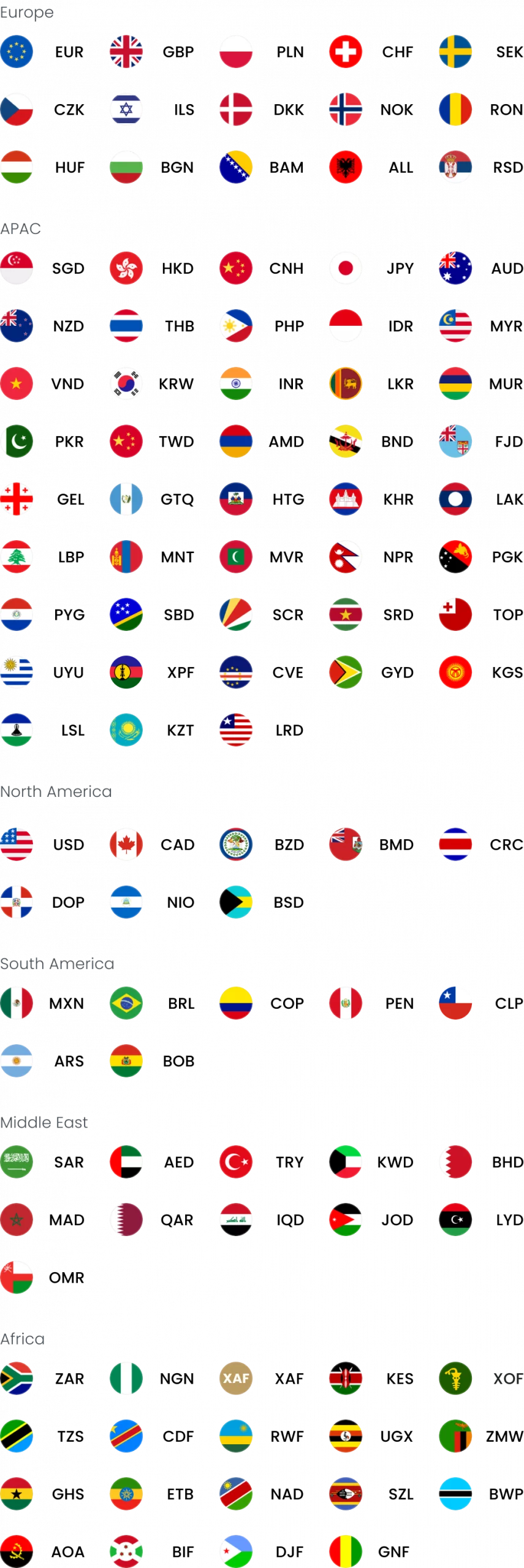
If you want to make a transfer in either CNH or CNY, then consider using WorldFirst’s World Account. It allows you to hold and receive funds in CNH, as well as send payments in CNH, CNY and 200+ other currencies.
WorldFirst is able to do this because we’re a subsidiary of Ant Group (the same parent company as Alipay), which means they have strong connections with Mainland Chinese banks.