



























Switching a business bank account can help you reduce unnecessary fees, improve payment control, speed up finance admin, and choose an account that fits the way your business works now.
A basic account may work when you first start trading. As your business grows, small limitations can start costing time and money. You may need better cash flow visibility, faster supplier payments, smoother accounting integrations, clearer card controls, or more cost-effective international transfers.
That matters when cash flow is already under pressure. In QuickBooks’ 2025 UK report, 62% of small businesses surveyed said they were owed money from unpaid invoices, with affected businesses averaging £21.4K in unpaid invoices.
In this guide, we’ll explain why to switch a business bank account, what to compare before you move, and what to expect when switching a business bank account in the UK.
Key takeaways:
- Switch when your account no longer fits: If fees are rising, payments feel slow, support is poor, or admin takes too long, it may be time to compare other providers
- Look beyond the monthly fee: Transaction charges, FX margins, card fees, and international transfer costs can matter more than the headline account price
- Check international payment and FX costs carefully: If you pay suppliers abroad or receive money in other currencies, compare speed, tracking, exchange rates, and the final amount your recipient gets
- Plan the switch around key payment dates: A full switch usually takes seven working days, so avoid payroll, tax deadlines, and major supplier payments
- Use World Account for global payments: World Account can support your main business current account by helping you receive, hold, convert, and send money across currencies from one place
What does it mean to switch a business bank account?
Switching your business bank account means opening a new account with a different provider and transferring your banking activities from the old account.
That can include:
- Your balance
- Incoming payments
- Outgoing payments
- Direct Debits
- Standing orders
- Payroll
- Supplier payments
- Cards
- Accounting connections
In the UK, the Current Account Switch Service (CASS) helps most eligible account holders move from one provider to another. Your new provider handles the main admin, so you don’t have to move every regular payment manually.
Once you apply, your new provider moves your regular incoming and outgoing payments, including Direct Debits and standing orders, from your old account to your new one. It also transfers your remaining balance. On your agreed switch date, your old account closes, and your new account takes over.
Many UK current account holders already use CASS. The service recorded 1.054 million switches in the 12 months to Q4 2025, with a 99.2% seven-day switch completion rate and 93% satisfaction among recent switchers.
Why switch a business bank account?
You should switch a business bank account when your current provider makes it harder, slower, or more expensive to manage money.
Here are the main signs it may be time to switch:
1. Your fees are eating into your margin
Business account fees can look manageable at first, but regular use often tells a different story. Payment charges, card fees, FX margins, and extra services can all push up the total cost.
You might pay for:
- Monthly account charges
- Faster Payments
- CHAPS payments
- Cash deposits
- Foreign currency payments
- International transfers
- Card use abroad
- Extra users or cards
- Bounced payments
- Overdraft use
A low monthly fee can still lead to higher overall costs if your business makes regular supplier payments, receives funds from overseas, or converts currencies often. For many SMEs, transaction costs and FX margins matter more than the headline account fee.
Compare providers based on real usage:
- How many payments do you send?
- Which currencies do you use?
- How often do you convert money?
- Which features does your team need?
2. International payments are too slow or unpredictable
Slow international payments can strain supplier relationships, delay stock, disrupt projects, and leave your team chasing updates. If your business relies on overseas suppliers, payment speed and reliability matter.
BIS reported that, as of 2025, payment systems credited only 35% of global cross-border retail payments and 55% of wholesale and remittance payments within one hour, compared with the G20 target of 75%.
If overseas payments now form part of your normal operations, compare providers on payment speed, destination coverage, currency support, transfer fees, FX margins, and tracking.
3. Your FX rates aren’t clear enough
The foreign exchange rate can have a bigger impact on the final amount your business pays than the transfer fee.
Some providers promote low or no transfer fees while adding their margin to the FX rate. That makes the true cost harder to calculate. For importers, exporters, e-commerce sellers, and agencies with overseas clients, small FX differences can add up across repeat transfers.
FX pressure can also create a real cost for internationally active SMEs. A 2025 Bibby Financial Services survey of UK SMEs trading internationally found that 54% said volatile exchange rates affected them in the past year, with affected businesses losing an average of over £53,000.
Before you switch, compare:
- The live exchange rate
- The provider’s FX margin
- Any transfer fee
- Any recipient or intermediary deductions
- The total amount your recipient gets
- The total GBP cost to your business
4. You have to convert currencies too soon
Automatic currency conversion can reduce flexibility and add cost.
For example, your business may receive USD from a marketplace, automatically convert it to GBP, then later convert GBP back to USD or CNH to pay a supplier. That creates two conversion points and gives you less control over timing.
A multi-currency account can help if your business sells in one currency and pays suppliers in another. Instead of converting everything into GBP straight away, you can hold funds in the currencies you use and convert when the timing works better.
5. Your business has outgrown a single-currency account
Many UK businesses start with a simple GBP account, then begin selling online, sourcing stock overseas, working with international contractors, or expanding into new markets.
Once money starts moving across borders more frequently, a single-currency setup can make daily finance more difficult to manage.
You might now:
- Sell through Amazon, Etsy, Shopify, Stripe, WooCommerce, or PayPal
- Source stock from China, the US, or Europe
- Pay overseas suppliers or contractors
- Invoice customers in different currencies
- Manage marketplace payouts from several regions
Expand into new markets
6. You need better visibility over cash flow
Cash flow becomes harder to manage when money moves across different accounts, currencies, platforms, and payment providers.
The more routes your funds take, the harder it becomes to see what has arrived, what has gone out, and what still needs reconciling.
You may need clearer answers to questions like:
- What payments do we expect this week?
- Which supplier payments have gone out?
- Which marketplace payouts have landed?
- Which balances do we hold in each currency?
- How much have we paid in FX costs?
- Which transactions still need reconciling?
7. Your account lacks the right finance integrations
Manual finance admin slows everything down. If your account doesn’t integrate well with your accounting, ERP, or e-commerce tools, your team can spend too much time exporting statements, matching transactions, and manually checking payments.
Before you switch, check which tools and workflows the new provider supports. That might include:
- Xero
- NetSuite
- QuickBooks
- E-commerce platforms
- Payment gateways
- Marketplace workflows
8. You need stronger card controls
As your team grows, card spending can become harder to manage across subscriptions, supplier payments, travel, advertising, online tools, and daily expenses.
Without the right controls, finance teams may struggle to track who spent what, which costs need approval, and how much the business pays in overseas card fees.
You may need:
- Employee cards
- Virtual cards
- Spending limits
- Category controls
- Approval rules
- Clear transaction visibility
- Better control over overseas card payments
9. Your support no longer matches your needs
Support matters when a payment delay, blocked transaction, or account issue affects suppliers, payroll, customers, or cash flow.
If your provider takes too long to respond or gives generic answers, account issues can waste valuable time.
International businesses often need support teams that understand currencies, payment routes, account details, cut-off times, and recipient requirements. Clear, informed support helps your team resolve issues faster and spend less time chasing updates.
10. Your business model has changed
A business account that worked two years ago may no longer match how your business operates today.
Growth often changes what you need from your provider, especially when you add employees, sales channels, suppliers, currencies, or new markets.
Common triggers include:
- Moving from sole trader to limited company
- Hiring employees
- Selling internationally
- Working with overseas suppliers
- Launching on marketplaces
- Adding new sales channels
- Increasing payment volume
- Needing better user permissions
- Managing more currencies
- Expanding into new regions
Advantages and disadvantages of switching
Advantages:
- Better features: A new account may offer tools your current provider lacks, such as stronger online banking, mobile access, accounting integrations, card controls, invoicing tools, or payroll support
- Lower costs: You may reduce monthly fees, payment charges, or FX costs. Some providers also offer introductory free banking periods, clearer exchange rates, or lower international payment fees
- Improved support: A new provider may offer faster response times, better digital support, or more relevant help for small businesses and international payments
- Cleaner admin: Switching gives you a chance to review your account setup, remove unused services, update old processes, and simplify how your team manages payments
Disadvantages and considerations:
- Possible disruption: If your new provider doesn’t use the Current Account Switch Service, you may need to move payments manually and notify customers, suppliers, and payees yourself
- Short overlap period: You’ll need to keep your old account open until the switch date. During that period, avoid setting up new payments from the old account to prevent confusion
- Loss of existing perks: You may lose benefits linked to your old account, such as free cash handling, favourable overdraft terms, savings interest, or negotiated fees
- Credit and overdraft limits: If your old account includes an overdraft or credit line you still need, check the new provider’s terms before you switch fully. A partial switch may work better in some cases
- Team adjustment: Your team or accountant may need time to learn the new platform, connect finance tools, and update internal processes
How to switch a business bank account in the UK
If your new provider supports the Current Account Switch Service (CASS), the process usually works like this:
- Choose your new account: Compare fees, payment limits, FX costs, integrations, card controls, support, overdraft options, and CASS availability
- Prepare your documents: You may need proof of ID, proof of business address, company details, VAT or PAYE details, recent statements, and account user details
- Open the new account: Apply online or in branch, then request a full switch through CASS
- Choose your switch date: Pick a date at least seven working days after your application. Avoid payroll dates, tax deadlines, and major supplier payments
- Use your old account until the switch: Keep using it as normal, but avoid setting up new Direct Debits or standing orders close to the switch date
- Check everything after the switch: Review your balance, Direct Debits, standing orders, incoming payments, supplier payments, saved payees, and accounting connections
- Clean up old account extras: CASS closes your old current account, but check linked products separately, such as savings accounts, cards, loans, overdrafts, or foreign currency accounts
Should you switch or open an additional account?
You don’t always need to replace your current business account. In some cases, a full switch gives you a cleaner setup. In others, opening an additional account gives you the extra tools you need without disrupting your main account.
Keep your current account if:
- Handles UK customer payments reliably
- Supports payroll without issues
- Covers tax payments
- Manages Direct Debits and standing orders
- Works for day-to-day card spending
- Gives you enough cash flow visibility
- Keeps basic accounting records clear
- Includes credit or overdraft arrangements you still need
Switch your business bank account if:
- Charges too much for the way you use it
- Slows down supplier or customer payments
- Has unclear FX costs or international transfer fees
- Lacks the integrations your finance team needs
- Makes reconciliation too manual
- Offers weak card controls or user permissions
- Gives slow or generic support
- No longer fits your payment volume, team size, or business model
How WorldFirst supports international growth
If your current account works well for UK banking but struggles with cross-border payments, you may not need to replace it completely. You may need a multi-currency payment account that works alongside your main business current account.
World First offers a World Account, which supports international business finance. It can help you receive overseas revenue, hold foreign currencies, pay suppliers abroad, manage FX, and keep more of your global payments in one place.
WorldFirst isn’t a bank. The FCA authorises it as an Electronic Money Institution and provides international payment and currency services for businesses.
With World Account, you can:
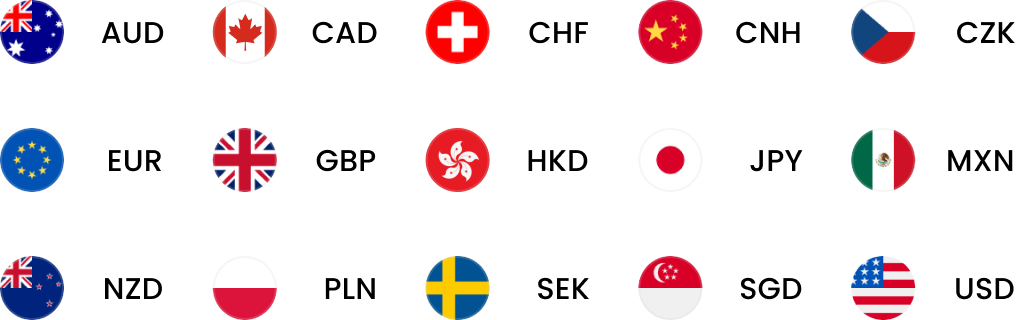
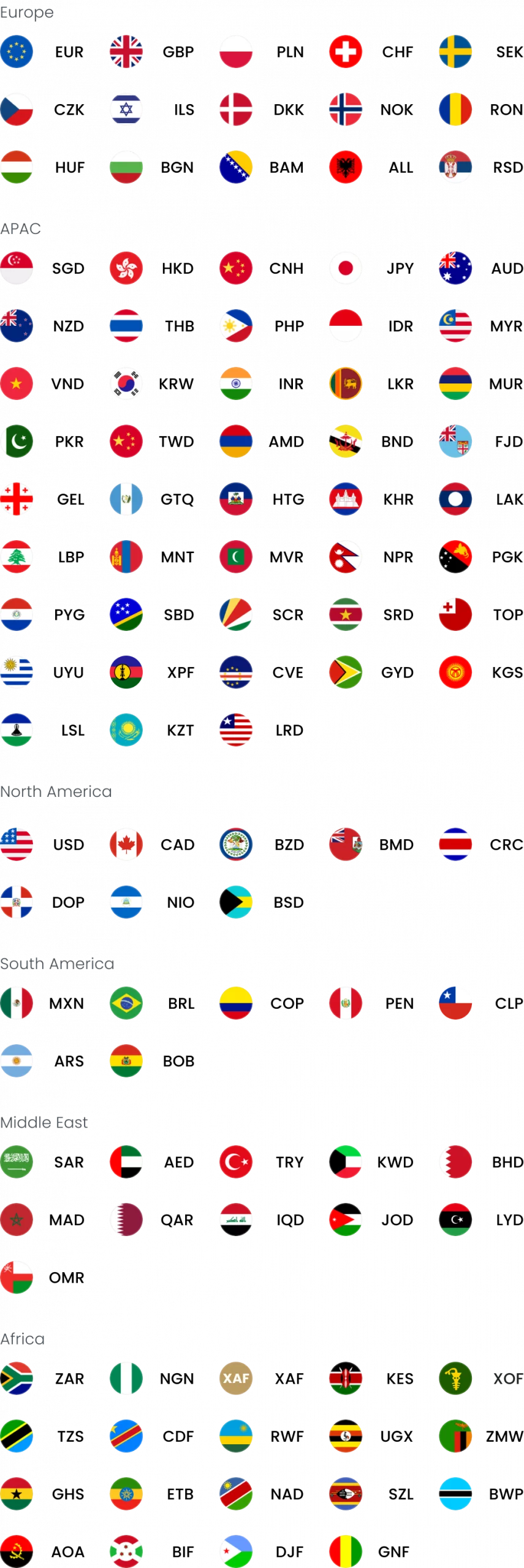
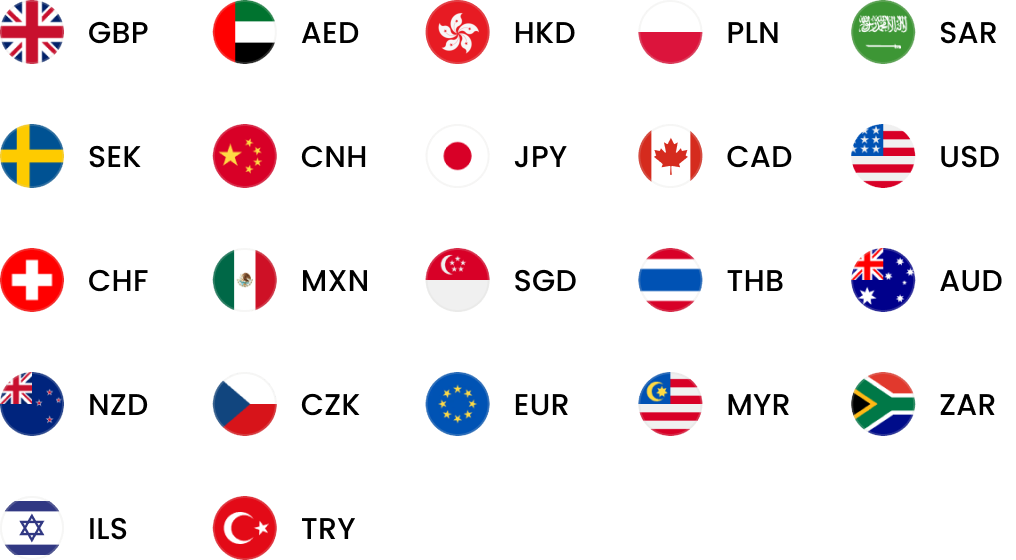
- Receive payments in multiple currencies: Use local account details to receive payments in 20+ currencies with zero receiving fees
- Hold funds without immediate conversion: Keep balances in 20+ currencies and convert when it suits your business, instead of moving everything back to GBP straight away
- Pay suppliers overseas: Send funds in 100+ currencies to 200+ countries and regions, which can help if you source from China, the US, Europe, or other international hubs
- Manage marketplace revenue: Collect payments from 130+ marketplaces and payment services, including platforms used by global e-commerce sellers
- Use World Card for international spend: Pay in 150+ currencies across 210+ countries and territories, with up to 1.2% cashback on eligible spend
World Account works best for businesses that trade internationally and need more control over payment timing, currency conversion, and supplier payouts.
For many growing SMEs, the strongest setup may involve both a business current account for UK banking and a World Account for international payments, currencies, and marketplace revenue.
Ready to simplify global payments?
FAQ
1. How long does switching a business bank account take?
2. Is switching guaranteed?
3. Can I keep my old account open and use two accounts?
Sources:
- https://quickbooks.intuit.com/uk/blog/small-business-late-payments-report-2025/
- https://www.currentaccountswitch.co.uk/
- https://www.currentaccountswitch.co.uk/news-insights/switching-data/current-account-switch-service-records-over-one-million-switches-in-2025/
- https://www.bis.org/publ/bisbull119.pdf
- https://ffnews.com/newsarticle/tradetech/smes-hit-hard-by-53000-loss-from-currency-fluctuations
- https://www.worldfirst.com/uk/