





























WorldFirst Home > blog > Global Business Tips > VAT in China: a UK importer’s guide to supplier costs and payments
VAT in China: a UK importer’s guide to supplier costs and payments
- Last update:


If you already import from China, you have probably seen VAT, rebate or tax wording appear across supplier quotes, commercial invoices or export paperwork. It may not be the first cost you check, but it can still shape the price your supplier gives you before UK import VAT, duty and freight are added.
Understanding the supplier-side VAT treatment helps you see what is already included in the quote and what still needs to be added to your landed-cost calculation.
China’s export VAT rebate rules are one part of that cost picture. From 1 December 2024, China reduced export VAT rebates from 13% to 9% for certain products and removed rebates for others, including for some aluminium and copper products.
If your goods fall into one of those categories, the supplier may have already reflected that treatment in the quote. However, if you change your order, new items with different rebates may affect the price more than you expect.
This article explains how VAT in China can affect supplier pricing, how it differs from UK import VAT and what to check before paying Chinese suppliers.
Key takeaways:
- Export VAT rebates are part of the cost picture: A 0% export VAT rate does not always mean the exporter receives a full refund, so rebate treatment can influence how the supplier prices qualifying goods
- China VAT and UK import VAT are separate: China VAT can affect supplier-side pricing, while UK import VAT applies when goods enter the UK and affects cash flow, VAT records and landed cost
- Check the VAT detail behind the quote: Ask your supplier to confirm the product category, HS code, VAT or rebate treatment, commercial invoice value and export documents where relevant
- Landed cost goes beyond the supplier price: Add freight, insurance, duty, UK import VAT, FX costs and payment fees before judging the true GBP cost of a supply batch
- WorldFirst can help keep China supplier payments easier to track: With a World Account, you can hold supported currencies, convert GBP when ready and pay Chinese suppliers in supported currencies, while keeping payment references easier to match to invoices and import records
What is VAT in China?
VAT in China is a value-added tax that applies to many goods and services as they move through the supply chain.
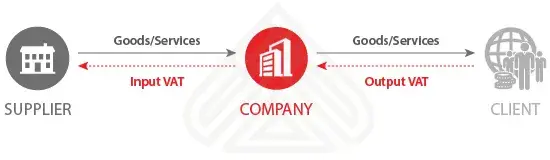
UK importers usually see China VAT through the documents they already use every week, including supplier quotes, unit prices, commercial invoices and export paperwork.
China’s VAT Law took effect on 1 January 2026, formalising earlier VAT rules. For importers, that matters less as a sudden price-change trigger and more as a reminder to check how your supplier treats VAT, export rebates and invoice records.
How export VAT refunds can affect supplier pricing
Export VAT refunds can affect costs for Chinese suppliers on certain goods. If a supplier expects a specific refund when quoting, they may use it to offer a lower unit price. If the order changes and includes components, accessories and finished goods with different rebate treatments, you may see a price adjustment to reflect the difference.
If your supplier references VAT rebates in the quote, ask how the rebate treatment affects the unit price and commercial invoice value.
Include any VAT-linked supplier cost in your landed-cost estimate before freight, insurance, duty, UK import VAT, FX and payment fees.
Why VAT in China matters when you import goods
China VAT can be one of the cost assumptions behind the supplier quote, not a separate UK import charge you add later. For an established importer, the main question is what the quote already includes before you build the rest of the landed-cost calculation.
Check VAT treatment alongside supplier checks, shipping terms, duty, FX and payment records.
This matters across full-container shipments, seasonal stock and high-volume components because a small VAT-linked cost inside the supplier price can affect margin at batch level.
It also helps your finance team match the quote, payment record, invoice and import documents more clearly.
China VAT rates
China applies different VAT rates based on the type of sale, service or export transaction.
Your supplier, accountant or tax adviser should confirm the treatment of your goods, but this table can help you with import cost planning:
|
VAT rate |
Common use |
What it means for UK importers |
|
13% |
Standard-rated goods, processing, repair and leasing |
It is common for manufactured goods, so it can affect supplier pricing or rebate treatment |
|
9% |
Agriculture, utilities, transport, postal, construction and real estate services |
Product category can change the supplier’s VAT position |
|
6% |
Financial, modern, telecoms, lifestyle and intangible asset services |
Service charges may have different VAT treatment from the goods |
|
0% |
Exported goods and qualifying export-related services |
0% VAT doesn’t always mean the exporter receives a full refund |
|
3%, temporarily reduced to 1% |
Small-scale VAT taxpayers using the simplified method |
Supplier status can affect invoice detail, pricing and records |
China VAT vs UK import VAT
China VAT and UK import VAT affect different parts of the same order. Supplier-side VAT treatment shapes the invoice value you start with, while UK import charges are calculated when the goods enter the UK.
UK import VAT can affect the cash required when the goods arrive or the amount your business declares under postponed VAT accounting.
Use the table below to separate the supplier-side VAT issue from the UK import VAT cost you may need to plan for.
Area | China VAT | UK import VAT |
Where it applies | In China, through the supplier’s domestic or export-side tax position | In the UK, when goods enter the country |
Who usually handles it | Chinese supplier, exporter or trading company | UK importer, courier, freight forwarder or customs agent |
What it can affect | Supplier pricing, VAT invoice, export rebate position and export paperwork | Landed cost, cash flow, VAT return and import records |
Key documents | Chinese VAT invoice, commercial invoice and export documents | Import declaration, C79 certificate or postponed import VAT statement |
Main cost risk | The supplier quote includes VAT-related cost changes you haven’t priced in | Import VAT and duty are higher than your cash flow forecast allowed for |
Read more:
How to estimate the full cost before paying a Chinese supplier
Before you pay the balance, build a cost view that starts with the supplier invoice and ends with the GBP amount your business expects to cover.
| Cost line | What to include | Why it matters |
| Supplier invoice value | Unit price, quantity, tooling, packaging and any rebate-linked increase | Sets the base amount for the order |
| Freight and insurance | Shipping, handling and insurance linked to the shipment | Can increase the customs value used for UK import VAT |
| Customs duty | Duty based on the commodity code, origin and customs value | Can increase the VAT base if duty applies |
| UK import VAT | VAT calculated from the customs value and any duty owed | Affects cash flow at the border or the amount recorded through postponed VAT accounting |
| FX and payment fees | Exchange rate margin, transfer fees and intermediary charges | Shows the real GBP cost of paying the supplier |
| Deposit and balance timing | Rates used on each payment date | Helps explain why the final GBP cost may differ from the first estimate |
In the video below, we follow one product from a factory in Yiwu, China, to a UK warehouse and break down the costs beyond the quoted unit price, including shipping, import charges and payment-related costs:
Manage China supplier payments with WorldFirst
VAT checks can make the payment trail harder to follow when the quote, invoice, FX conversion and import record all carry different numbers. The quote, payment record and final invoice should all connect to the same import record.
Changes to the supplier’s pricing can create inconsistencies and mismatched records if not properly documented.
Say your Chinese supplier first quotes CNH 400,000 for a supply batch of components. You pay a 30% deposit of CNH 120,000, then the supplier revises the invoice because you ordered different or additional goods that are subject to lower or unavailable export VAT rebates. The final invoice increases to CNH 408,000, leaving a balance of CNH 288,000 due before shipment.
With a World Account, you can hold funds in multiple currencies, convert GBP when you’re ready and pay Chinese suppliers in supported currencies, including CNH or USD where available.
WorldFirst also supports same-day payments to Chinese suppliers and instant transfers to suppliers that already use WorldFirst, where supported.
Your accountant or customs broker still needs to review the VAT treatment, import documents and landed-cost estimate. WorldFirst can support the payment side by helping your finance team match deposit payments, balance payments, FX conversions and supplier references to the right invoice and import record.
WorldFirst isn’t a bank. It operates as a regulated financial services provider for businesses managing money across currencies and markets.
FAQ
1. What records should I keep when importing goods from China?
2. What VAT mistakes can increase import costs from China?
3. Can I reclaim UK import VAT on goods from China?
VAT-registered UK businesses may be able to reclaim UK import VAT or use postponed VAT accounting, depending on their records and circumstances. Keep the import declaration, C79 certificate or postponed VAT statement, supplier invoice and payment records, then check the treatment with your accountant or customs broker.
Compliance note:
This article explains VAT and import-cost concepts for general information only. Tax content should be reviewed before publication.
Sources:
- https://www.reuters.com/world/china/china-approves-value-added-tax-law-taking-effect-2026-2024-12-25/
- https://www.roedl.com/en/insights/the-chinese-value-added-tax-law-officially-takes-effect/
- https://taxsummaries.pwc.com/peoples-republic-of-china/corporate/other-taxes
- https://www.gov.uk/goods-sent-from-abroad/tax-and-duty
Lawrence Bennett is UK Country Manager at WorldFirst. He brings 15+ years of experience across fintech, ventures and e-commerce.

Lawrence Bennett
Author
Continue reading


Choose a product or service to find out more







The simpler way to pay and get paid
Save money, time, and have peace of mind when expanding your global business.