



























FX international payments are cross-border business payments that involve sending, receiving, holding or converting money in different currencies.
UK businesses use them to pay overseas suppliers, collect marketplace revenue, manage international sales and hold currencies ahead of future costs.
Cross-border trade is a major part of UK business activity, with UK exports reaching £937.3 billion in the 12 months to February 2026, up 3.4% on the previous 12 months, according to GOV.UK trade data.
The practical challenge is getting the right amount to the right recipient, in the right currency, by the right date. FX costs, transfer fees, cut-off times, conversion rates and payment routes can all affect the final result.
In this guide, we’ll explain how FX international payments in UK work, what impacts cost and timing and how UK businesses can manage overseas payments with more control.
Key takeaways
- FX payments affect your real business costs: Exchange rates, fees, payment timing and recipient amounts can all influence supplier costs, margins and cash flow
- The exchange rate matters as much as the transfer fee: A low headline fee can still cost more if the FX margin, bank deductions or final recipient amount are weaker
- Payment timing depends on the route: Some FX international payments arrive the same day, while others take one to five business days due to checks, cut-off times, holidays or intermediary banks
- Holding foreign currency can reduce unnecessary conversions: Businesses that receive and pay in the same currency can avoid converting money back and forth
- WorldFirst helps manage FX international payments in one place: The World Account lets UK businesses collect, hold, convert and pay across currencies with clearer control over payments and FX
Open a World Account to make FX international payments easier to manage from one platform.
What are FX international payments?
FX international payments are business payments where the currency used to invoice, pay, receive or settle funds affects the final cost of the transaction.
They matter most when income and costs are in different currencies.
Not every overseas payment creates an FX decision. If both sides pay and receive in the same currency, the transfer may be international without involving a currency conversion.
FX becomes important when the invoice currency, account balance, payment route or conversion timing changes how much the business pays or receives.
Common examples include:
- Paying an overseas supplier in their preferred currency
- Receiving international sales revenue in EUR, USD or another currency
- Converting GBP before a supplier invoice is due
- Holding foreign currency to reduce last-minute conversion pressure
- Paying contractors, manufacturers or partners across different markets
- Converting overseas revenue back into GBP for local costs
Why FX international payments matter for UK businesses
FX international payments matter for UK businesses because exchange rates, fees and payment timing can affect supplier costs, cash flow and margins.
A business does not need overseas offices to face FX decisions. It might buy packaging from China, sell through Amazon Europe, pay a SaaS provider in USD, collect customer payments through Stripe or work with contractors in another country. In each case, the exchange rate, payment fee, route and conversion timing can affect the transaction’s real cost.
Supplier payments are a major part of that picture, with UK imports reaching £967.1 billion in the 12 months to February 2026, up 3.8% on the previous 12 months, according to GOV.UK trade data.
Each payment can change the amount paid, the amount received and the time needed to match the transaction against an invoice. That makes FX payments important for:
- Supplier relationships
- Gross margin
- Cash flow planning
- Payment timing
- Cost visibility
- Month-end reconciliation
- Pricing decisions
- International growth plans
Cross-border payments still need improvement globally. In its 2025 G20 Roadmap for Cross-border Payments progress report, the Financial Stability Board said that the public and private sectors need to implement agreed policy recommendations to achieve faster, cheaper, more transparent and more accessible cross-border payments.
How FX international payments work
FX international payments work by verifying payment details, converting currency when needed and routing funds through the available payment route to the recipient.
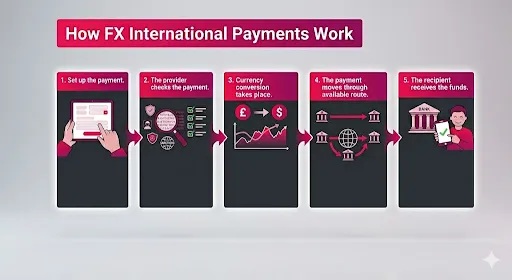
The process is easier to follow in five steps:
1. Set up the payment
You start by entering the payment amount, currency, recipient name, bank details, payment reference and reason for payment.
The currency choice matters. If a supplier invoices in USD but receives GBP, their bank may convert the payment before crediting the account.
That can lead to extra costs, delayed reconciliation or a shortfall if the final amount does not match the invoice.
2. The provider checks the payment
Before money moves, the payment provider checks the transaction.
These checks can include:
- Payee details
- Account information
- Fraud controls
- Sanctions screening
- Compliance review
Routine payments often move quickly. New recipients, unusual amounts, missing details or higher-risk destinations may need extra review before the payment can continue.
3. Currency conversion takes place
Currency conversion happens when the account currency and payment currency differ. A UK business might convert GBP to USD for a supplier invoice, EUR to GBP after receiving sales revenue or GBP to CNH before paying a manufacturer.
The rate matters as much as the transfer fee. Most providers include an FX margin in the rate they offer, so the final cost depends on both the visible fee and the exchange rate applied to the payment.
4. The payment moves through the available route
After checks and any currency conversion, the payment moves through the route available for that currency and destination.
Some payments use local payment networks. Others move through SWIFT or correspondent banking routes.
Local routes can be faster and clearer in supported countries and currencies. SWIFT can offer broad reach, but some payments may involve intermediary banks, additional processing steps and fees along the way.
5. The recipient receives the funds
The final stage is crediting. The recipient’s bank or account provider checks the incoming payment, processes it and makes the money available.
That’s why a payment can show as sent before the supplier can use the funds. The instruction may have reached the next bank, but the recipient still needs the final amount credited to their account.
Common types of FX international payments
Different businesses use different payment methods depending on their size, currencies and trading patterns:
1. Bank wire or SWIFT transfer
Bank wires and SWIFT transfers remain common for international business payments, especially for high-value transfers, less common currencies and destinations where local payment routes may not be available.
They offer broad reach, but a payment may pass through intermediary banks before it reaches the recipient. Each bank can affect delivery time, deduct fees and reduce the final amount received.
Best for:
High-value payments, one-off supplier transfers and routes where local payment networks are unavailable.
2. Local payment rails
Local payment rails move money through domestic-style payment networks in supported markets. Instead of sending a traditional international bank transfer, a UK business may be able to pay a supplier through a local account route in the recipient’s country.
That may make payments faster, cheaper and easier to track on supported routes, depending on the currency, destination and provider.
Best for:
Recurring supplier payments, marketplace-related costs and payments to countries where local routes are supported.
3. Multi-currency business accounts
A multi-currency business account lets companies receive, hold, convert and pay in several currencies from one place.
The main value is timing control. That can reduce unnecessary conversions and make FX planning easier.
Best for:
Importers, exporters, online sellers and businesses with both income and costs in foreign currencies.
4. Marketplace and payment gateway payouts
E-commerce businesses often collect payments from marketplaces, online stores and payment gateways in different currencies.
Sales may come in EUR, USD or another currency, while sellers may need to pay for stock, ads, platform fees and local costs from a different balance.
Best for:
Amazon sellers, Shopify merchants, marketplace sellers and businesses collecting revenue through Stripe, PayPal or other gateways.
5. International business card spend
International card spend can create FX costs when teams pay for ads, software, travel, subscriptions or services in foreign currency.
As card use grows across a team, businesses need more than a payment card. They need clear FX fees, spend limits, approval controls, transaction data and reconciliation tools. Without that, small overseas card payments can be hard to track and even harder to connect to the right project, team or invoice.
Best for:
Online ads, SaaS subscriptions, travel, team expenses and recurring foreign-currency card payments.
What affects the cost of FX international payments?
These factors can change the final cost of an FX international payment:
1. Exchange rate margin
The exchange rate margin often has the biggest impact on total cost.
Providers may charge a visible transfer fee, but the rate can carry its own cost. The margin is the difference between the market reference rate and the rate your business receives.
For regular supplier payments, stock orders or marketplace payouts, even a small rate difference can erode margins over time.
2. Transfer fees
Transfer fees add a direct cost to an FX international payment. Providers may charge them in different ways, so two payments with the same exchange rate can still have different total costs.
Common transfer fee types include:
- Flat fee: A fixed charge for each payment, which can feel small on a large invoice but expensive on smaller transfers
- Percentage-based fee: A charge based on the payment amount, so the cost rises as the transfer value increases
- Currency-based fee: A fee that changes by currency, often because some currencies cost more to process
- Destination-based fee: A fee linked to the recipient’s country, local banking network or payment route
- Payment-method fee: A fee that changes by transfer type, such as local payment, international transfer, SWIFT-style payment or cross-currency payment
3. Intermediary and receiving bank fees
Some payments pass through intermediary or receiving banks before the recipient gets the funds. Each bank involved can deduct a fee from the payment.
That creates a common supplier issue: your business sends the invoice amount, but the supplier receives less than that. The shortfall can lead to payment disputes, extra admin and top-up transfers.
4. The double conversion trap
The double conversion trap happens when the same money changes currency twice before the business needs it.
For example:
- A UK seller receives USD marketplace revenue
- The platform or provider converts the USD into GBP
- The business later converts GBP back into USD to pay a supplier
Each conversion can add an FX margin. That round trip can add cost, especially when a business earns and spends in the same foreign currency.
5. Timing risk
Timing risk comes from exchange-rate movement between the invoice date, conversion date and payment date.
A supplier may issue a USD invoice today, but a UK business may pay it in three weeks. If GBP weakens against USD during that period, the same invoice costs more in sterling. However, if GBP strengthens, the payment may cost less.
The final cost depends not only on the rate, but also on when the conversion happens.
How long do FX international payments take?
FX international payments can arrive the same day on supported routes, but some take one to five business days. Timing depends on the currency, destination, payment route and any required checks.
SWIFT data shows that 75% of cross-border payments reach beneficiary banks within 10 minutes, but the recipient may still wait longer while local banks complete final processing and credit the funds.
Common reasons for slower FX payments include:
- Incorrect recipient details: Wrong account numbers, names or bank codes can delay or reject payments
- New beneficiary checks: First-time recipients may need extra verification before the payment moves
- Missed cut-off times: Payments sent after the provider’s daily cut-off may start processing the next business day
- Public holidays: Bank holidays in the sending country, receiving country or currency market can slow processing
- Compliance reviews: Higher-value payments, unusual activity or certain destinations may need extra checks
- Intermediary bank processing: Payments that pass through several banks can take longer and may include deductions
- FX conversion during the transfer: Currency exchange can add processing time, especially when the conversion happens during the payment flow
- Recipient bank crediting rules: The recipient’s bank may complete final checks before it releases the money
How to reduce FX international payment costs
Cost control starts before you send the payment. Focus on the full cost, not just the headline fee:
- Compare the full cost: Check the exchange rate, FX margin, transfer fee, bank deductions, delivery estimate and final recipient amount
- Hold currencies you use often: If you receive and pay in the same currency, keep that balance for future costs instead of converting back and forth
- Avoid forced conversions: Automatic GBP conversion can reduce control if you need the same foreign currency later. Holding currency lets you choose when to convert or pay
- Use local routes where available: Local payment routes can reduce intermediary bank involvement on supported currencies and destinations
- Plan future payments with FX tools: Rate alerts, spot contracts, forward contracts and firm orders can help with supplier invoices, stock orders and production deposits
How WorldFirst helps UK businesses manage FX international payments
FX international payments become easier to manage when your team can collect, hold, convert and pay in different currencies from one account.
That matters when you pay overseas suppliers, receive marketplace revenue, manage stock costs or handle regular payments in USD, EUR, CNH or other currencies.
WorldFirst helps UK businesses keep more of that work together through the World Account, a multi-currency business account built for international payments, collections, FX and supplier payments.
WorldFirst isn’t a bank, but the FCA regulates WorldFirst UK Limited as an Electronic Money Institution.
Key features include:
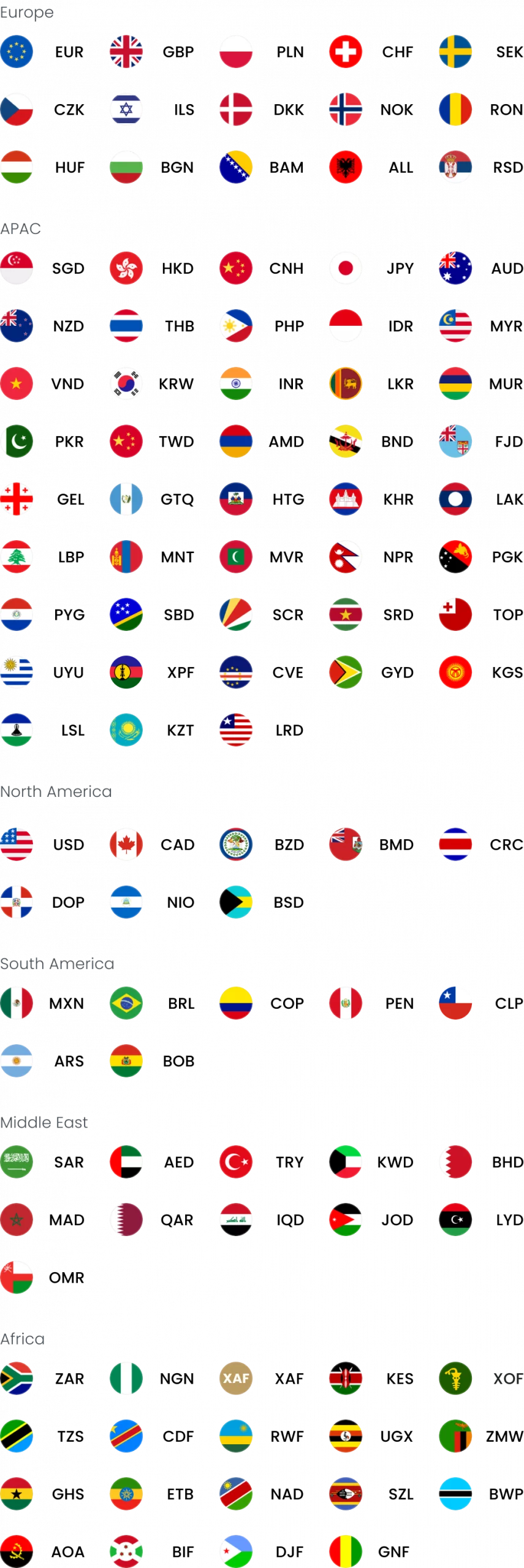
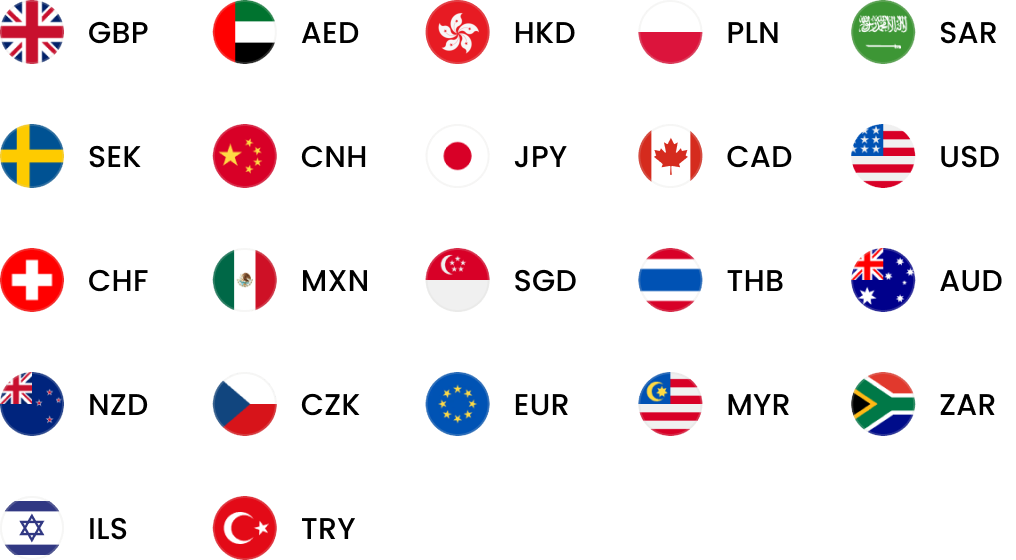
- Multi-currency balances: Hold funds in 20+ currencies until your business needs to withdraw, convert or pay a supplier
- Local receiving accounts: Open local receiving accounts in 15+ currencies, including USD, GBP, EUR, CAD, AUD and JPY
- International payments: Send payments in 100+ currencies to 200+ regions, with local payment networks available in key markets including the US, UK, EU and Singapore
- Clearer pricing: Open an account for free, pay no ongoing account fees, send local GBP, EUR or USD payments for £0.30, make international payments for £4.00 and convert major currencies with fees of up to 0.50%
- FX tools: Use live rate alerts, current-rate exchange and rate-locking tools to manage currency timing for planned payments
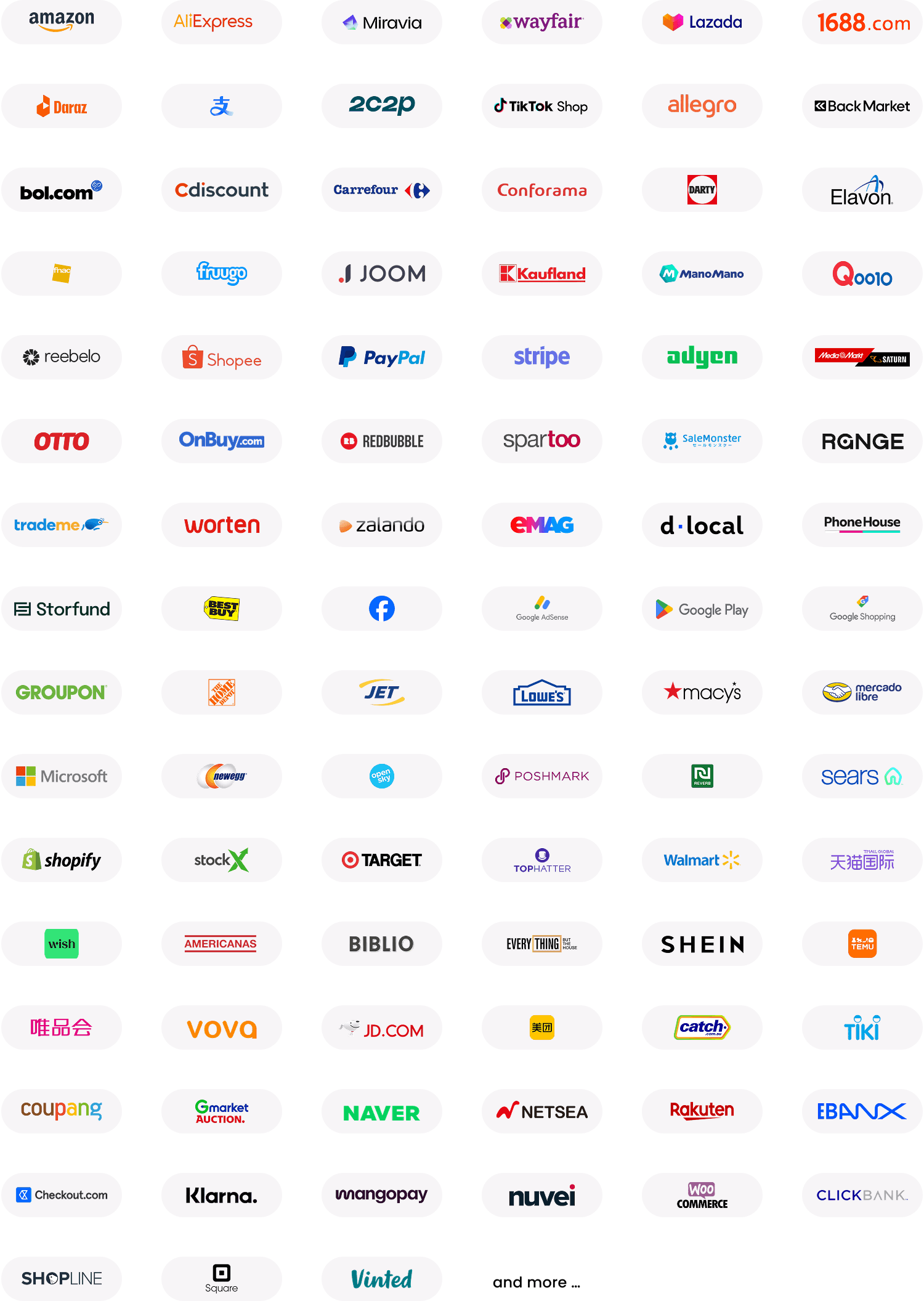
- Marketplace collections: Collect payments in 20+ currencies and receive funds from over 100 marketplaces and businesses around the world
- Accounting integrations: Connect the World Account to accounting tools such as Xero and NetSuite to reduce manual work and support cleaner reconciliation
- World Card: Pay business expenses with a virtual card linked to the World Account, with zero FX fees in 15 major currencies when spending from existing balances and up to 1.2% cashback on eligible business transactions
For UK businesses that pay overseas suppliers or receive foreign-currency revenue, these features help bring the moving parts of FX international payments into one operating setup.
Open a World Account for free to manage global payments and FX from one business account.
FAQ
1. What should I look for in an FX international payments provider?
Look for clear exchange rates, transparent fees, supported currencies, payment speed, local routes, tracking, security controls and accounting integrations.
2. What are the most common FX international payment mistakes?
Common FX international payment mistakes include checking only the transfer fee, ignoring the FX margin, using the wrong payment currency, missing cut-off times, entering incorrect recipient details and allowing automatic conversions when the business needs that currency later.
3. Do I need a foreign bank account to receive and hold foreign currency?
No, not always. Many multi-currency business accounts let UK businesses receive and hold foreign currency without opening a separate bank account in another country.
Sources:
- https://www.gov.uk/government/statistics/trade-and-investment-core-statistics-book/trade-and-investment-core-statistics-book
- https://www.gov.uk/government/statistics/uk-trade-in-numbers/uk-trade-in-numbers-web-version
- https://www.fsb.org/2025/10/g20-roadmap-for-cross-border-payments-consolidated-progress-report-for-2025/
- https://www.swift.com/payments/g20-goals-enhancing-cross-border-payments
- https://www.bankofengland.co.uk/speech/2025/june/andrew-bailey-keynote-speech-at-the-british-chambers-of-commerce-global-annual-conference
- https://www.worldfirst.com/uk/