



























You’ve found an overseas supplier, agreed the price and received your first invoice. Until now, your personal current account may have been enough, but paying for stock in another currency can be the point when a self-employed business bank account starts to make more sense.
For a new importer, the answer depends partly on your business structure and partly on the rules your account provider sets for business use.
This article explains if you need a business bank account when you’re self-employed and compares seven options for managing UK costs and overseas supplier payments.
Key takeaways
- A self-employed business account can make managing your finances easier. Whether you need a separate account depends on your business structure and your bank’s terms.
- A business account can make things simpler when you’re self-employed. Keeping your business income and expenses separate can make bookkeeping, tax records and everyday money management easier.
- If you’re self-employed and importing, look beyond everyday banking. FX rates, transfer fees, supported currencies and payment routes can all affect the cost of paying overseas suppliers.
- The best account depends on your business needs. Starling, Mettle, Monzo, Tide and HSBC offer UK banking features, while WorldFirst and Wise offer multi-currency account services for international payments.
- You can use more than one account for different parts of your business. If you’re self-employed, you could use one account for everyday UK expenses and another for international payments, subject to each provider’s eligibility rules.
- WorldFirst can complement your UK business banking. The World Account can help you hold supported currencies and manage international payments when your self-employed business deals across borders.
Open a World Account to hold supported currencies and make overseas supplier payments as your importing business grows.
Do you need a business bank account if you’re self-employed?
Not necessarily. If you’re self-employed, you may be able to use a personal account for your business, depending on your business structure and your bank’s terms. For a sole trader, there is generally no legal requirement to have a separate business account.
A separate account can still make managing your business easier. It can help you:
- Keep clearer records for HMRC: Separating business income and expenses makes bookkeeping and tax records easier to manage.
- Stay organised for Making Tax Digital: From 6 April 2026, qualifying sole traders and landlords with more than £50,000 of qualifying income must keep digital records and send quarterly updates using compatible software.
- Manage business spending: Keeping business transactions apart from personal spending gives you a clearer view of your business finances.
- Handle international payments: If you import goods or work with overseas customers, foreign currency support, FX rates, and international payment options may become important.
Making Tax Digital itself does not require you to open a dedicated business bank account. The requirement is to keep digital records and submit the required updates.
Your bank’s terms still matter. Some personal accounts restrict business use, so check the conditions before using one for your self-employed work. If you run a limited company, you also need to keep its finances separate because the company is a separate legal entity.
How to choose a business account if you’re self-employed
If you’re self-employed, the right business account should support everyday business banking while making it easy to manage income, expenses and payments. When comparing business accounts, consider these six factors:
- International payment costs: FX pricing or markups, transfer fees, and any intermediary charges that may apply.
- Currency and payment coverage: Supported currencies, payment destinations and access to local or international payment routes.
- UK banking features: UK transfers, Direct Debits, standing orders, cards and cash deposits.
- Accounting and tax tools: Accounting integrations, transaction categorisation, invoicing and digital record-keeping features.
- Account opening and eligibility: Supported business structures, application requirements and documentation needed to open an account.
- Trust and protection: The provider’s regulatory status and the applicable Financial Services Compensation Scheme (FSCS) protection or safeguarding arrangements.
These factors can help you compare the costs, features and flexibility of different business accounts and find an option that suits the way you work.
Read more:
- 10 best business bank accounts for startups in the UK
- How to find reliable China wholesale suppliers
7 self-employed business accounts in the UK
The comparison table highlights the main differences between these UK business account options for self-employed people before looking at each provider in more detail:
| Provider | Account type | International payment fit | Main limitation |
| WorldFirst World Account | Multi-currency business account | Receive and hold 20+ currencies; pay suppliers in 100+ currencies to 200+ countries and regions | No full UK business current account |
| Starling Sole Trader Account | UK business current account | Send 17 currencies to bank accounts in 34 countries using local or SWIFT routes | More limited foreign currency holding |
| Mettle | UK business bank account | Receive payments in 30 currencies, converted into GBP | No outbound international payments |
| Monzo Business | UK business current account | Pay international suppliers in 40 over currencies; receive international payments via IBAN; see exchange rates and fees before sending | Incoming currencies converted into GBP |
| Tide Business Account | UK business current account | Send and receive EUR through SEPA; receive GBP via SWIFT; international bank transfers and SWIFT payments available | Incoming currencies converted into GBP |
| Wise Business | Multi-currency business account | Hold 40+ currencies; access receiving details in 22 currencies with the required setup | No full UK business current account |
| HSBC Business Banking Account | UK business current account | International payments in most currencies; additional International Business Accounts available for holding foreign currencies | Separate account required for foreign currency holding |
1. WorldFirst World Account
Best for: Self-employed businesses that regularly trade internationally
The World Account is a multi-currency business account for receiving, holding, converting, and sending money across borders. It can support your self-employed business if you regularly pay overseas suppliers or receive money from international customers and marketplaces.
Key features include:
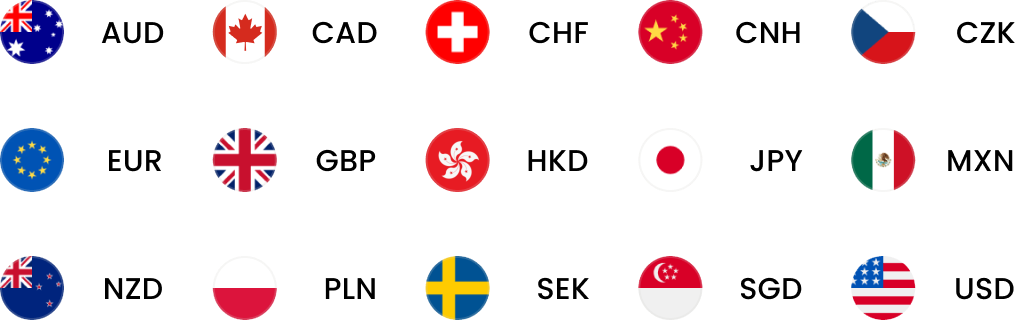
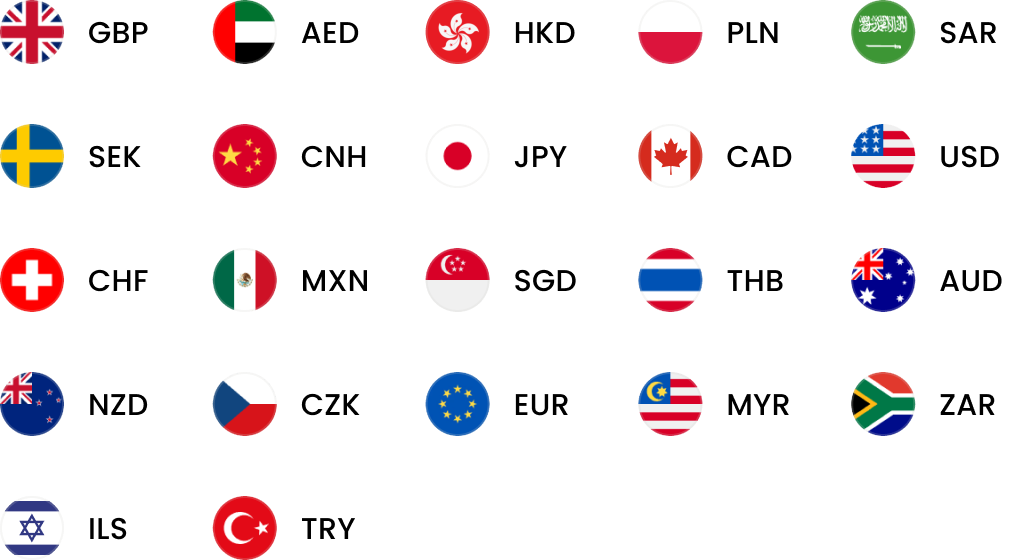
- Currency balances: Receive and hold funds in 20+ currencies, so you can keep money in the currency you need instead of converting it to GBP straight away.
- International payments: Send payments in 100+ currencies to 200+ countries and regions, making it easier to pay overseas suppliers, contractors, or other business partners.
- Currency conversion: Convert money between supported currencies when you need it, giving you more control over when you exchange your funds.
- Payment management: Track incoming and outgoing payments from the World Account.
- World Card: Spend directly from eligible currency balances with the World Card and earn up to 1.2% cashback on eligible purchases.
- 1688 World Pay: Connect your World Account to 1688.com, fund or convert your balance to CNH and pay eligible suppliers directly at checkout without opening a Chinese bank account.
- FX tools: Set a target exchange rate with a Firm Order or lock in a rate for a future payment with a Forward Contract, helping you manage the impact of currency fluctuations.
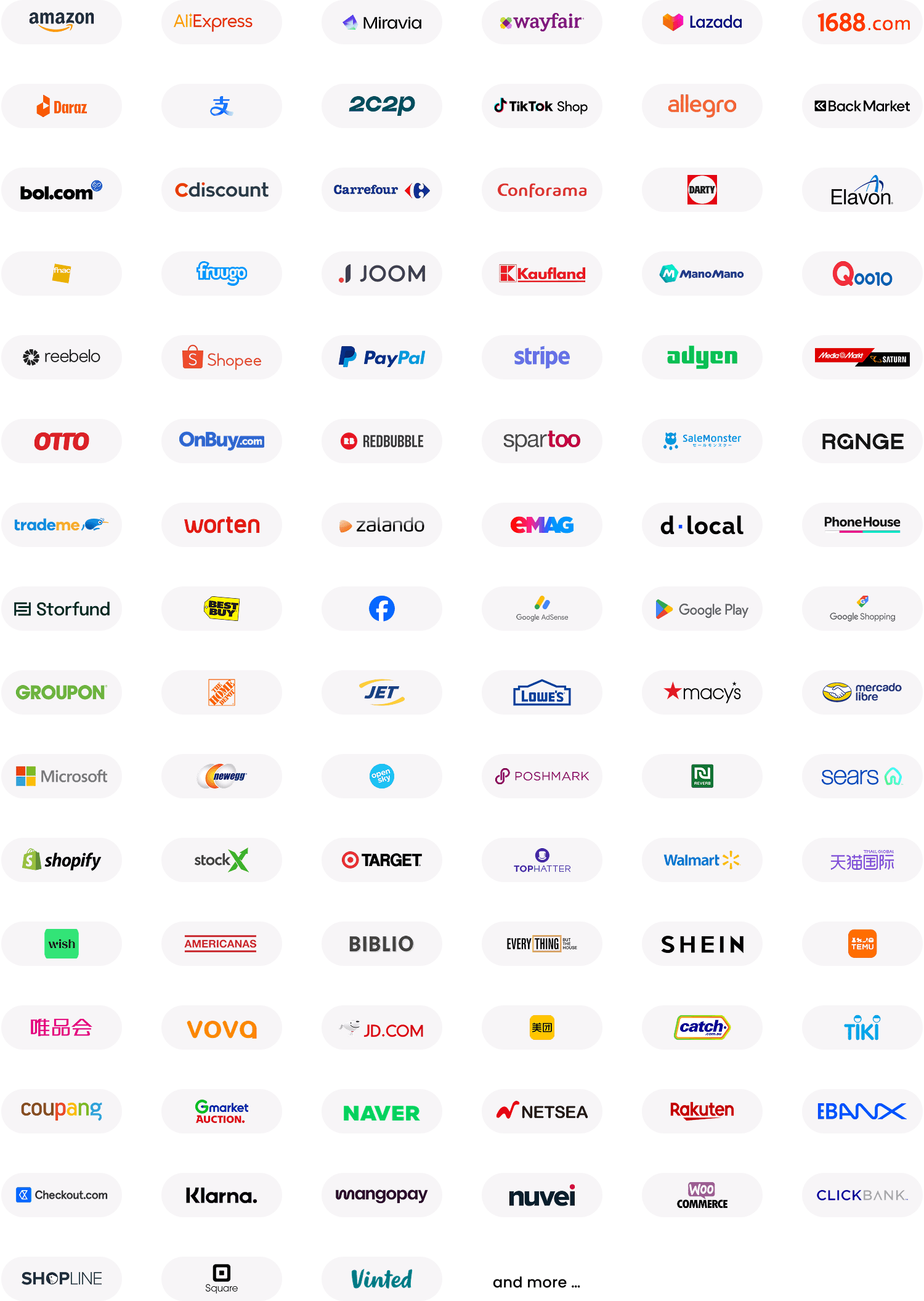
- Marketplace and accounting support: Receive payouts from 130+ marketplaces and payment gateways, including Amazon, TikTok Shop and AliExpress, while connecting your World Account with supported accounting software to keep transactions organised and simplify reconciliation.
Pricing:
The World Account is free to open with no ongoing account fees. Current UK pricing includes:
- Currency conversion: Up to 0.50% for major currencies
- Local payments: Fees vary by currency and destination. For example, GBP payments within the UK cost £0.31, while EUR payments via SEPA cost £0.27.
- International payments: Fees vary by currency and destination, from £0.27 to £23.00.
- Payments between World Accounts: Free
- Holding supported currencies: Free
- Receiving funds: Free
Drawbacks:
WorldFirst isn’t a bank, and the World Account isn’t a traditional UK business bank account. Businesses that need services such as branch banking or traditional bank lending may need a separate banking relationship.
2. Starling Sole Trader Account
Best for: Self-employed people wanting mobile-first banking
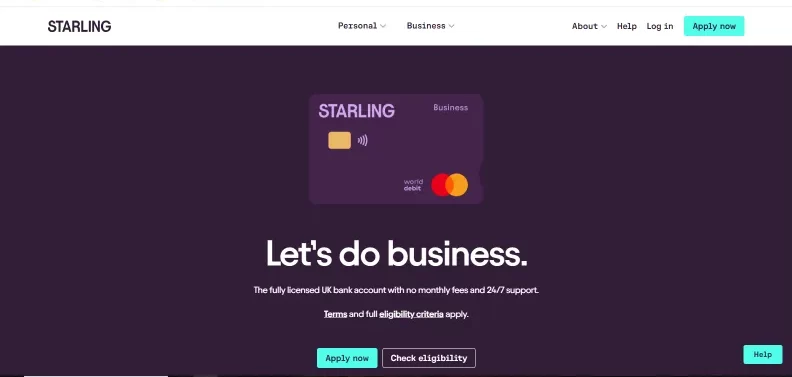
Starling offers a self-employed bank account through its Sole Trader Account, with mobile account management, bookkeeping tools and international payments. Its Business Account is designed for eligible limited companies and LLPs.
Its UK and international banking features include:
- UK payments: Make bank transfers and manage Direct Debits and standing orders
- International transfers: Send 17 currencies to bank accounts in 34 countries
- Payment routes: Use SWIFT or lower-cost local payment networks where available
- Accounting integrations: Connect Xero, QuickBooks and FreeAgent, with Making Tax Digital tools available on eligible accounts.
- Cash deposits: Pay business cash into the account through the Post Office, subject to applicable limits and charges
Pricing:
The account has no monthly account fee. Current international payment costs include:
- 0.4% currency conversion fee
- Local-network delivery fees starting from £0.30
- £5.50 SWIFT delivery fee
Starling also offers a separate euro business account for £2 a month.
Drawbacks:
Starling’s currency-holding options are more limited than those of specialist multi-currency providers. Its separate USD business account is limited to eligible limited companies rather than sole traders. As of 8 August 2026, Starling isn’t accepting new applications for that account.
3. Mettle
Best for: Self-employed people prioritising bookkeeping and tax records
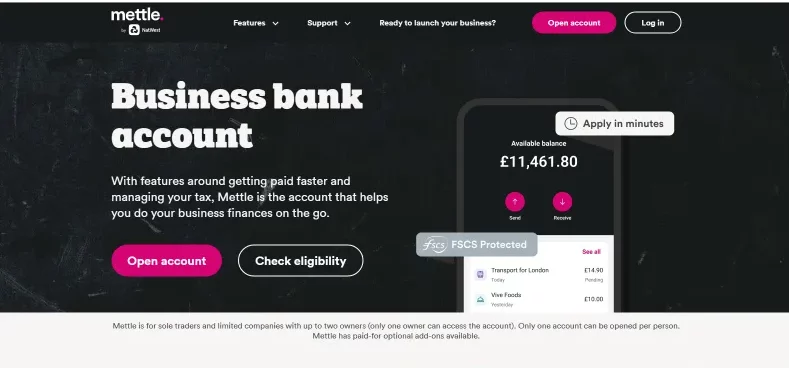
Mettle, provided by NatWest, is designed for eligible businesses and combines everyday banking with bookkeeping and tax tools. For those looking for a self-employed bank account, it’s particularly useful for managing finances and keeping business records organised.
Its main features include:
- FreeAgent: Get FreeAgent included when you make at least one transaction from your Mettle account each month, subject to its terms.
- Accounting connections: Connect Mettle with Xero or QuickBooks to keep your banking and accounting records in sync.
- Invoices: Create invoices, send them to customers, and match incoming payments to the relevant invoice.
- Transaction records: Categorise transactions and attach receipts to keep your business spending organised.
- Tax management: Move a percentage of incoming payments into a tax pot to set money aside for your tax bill.
- Cash deposits: Deposit cash at participating Post Office branches, subject to applicable limits and fees.
Pricing:
Mettle has no account-maintenance fee. Current charges include:
- £4 for inbound international payments above £10
- 1.50% when an incoming foreign currency payment needs converting into GBP
- £2.75 per Post Office cash deposit
- £1 per cash withdrawal
- £4 a month for the optional Mettle+ add-on
FreeAgent remains included when at least one transaction is made from the Mettle account each month, subject to its terms.
Drawbacks:
Mettle doesn’t support outbound international payments, which prevents an importer from using the account to pay an overseas supplier directly. Only one owner can access the account, including when an eligible limited company has two owners.
4. Monzo Business

Best for: Self-employed people who prefer digital-first banking
For self-employed people, Monzo Business offers a UK business current account that combines mobile banking with tools for managing payments, tax and accounting.
Its main features include:
- International supplier payments: Pay suppliers in 30+ currencies
- Payment visibility: See the exchange rate, applicable fees, and estimated arrival before confirming a transfer
- Making Tax Digital: Use the Lite plan to file qualifying records directly with HMRC
- Tax management: Automate Tax Pots through the Pro and Team plans
- Accounting integrations: Connect supported accounting software through paid plans
- Team controls: Add access levels, expense cards and payment controls through eligible plans
Pricing:
Monzo currently offers three business plans:
- Lite: Free
- Pro: £9 a month
- Team: From £25 a month
Pro adds features such as invoicing, automated Tax Pots, and accounting integrations. Monzo displays applicable international payment costs before an outbound transfer is confirmed.
Drawbacks:
Monzo doesn’t provide a broad range of foreign currency balances. Incoming payments in accepted foreign currencies are converted into GBP, so you can’t retain the original currency for a later payment.
Read more:
5. Tide Business Account
Best for: Self-employed people looking for flexible UK business banking
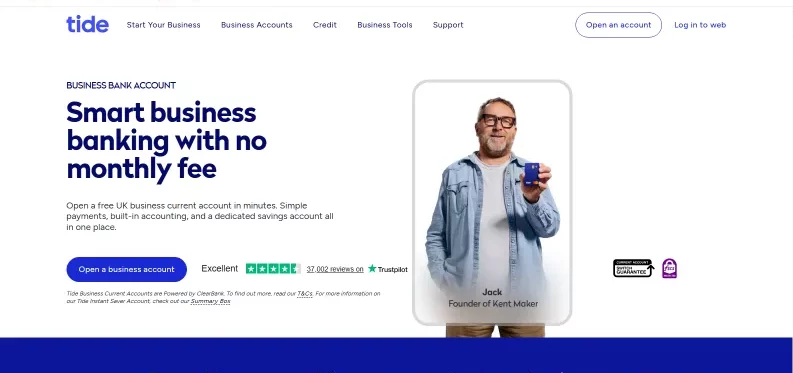
Tide provides a UK business current account powered by ClearBank, making it a practical self-employed business account for managing invoicing, cash deposits and everyday business needs. It also supports selected international payment routes.
Its domestic and international functions include:
- UK banking: Make bank transfers and manage Direct Debits
- Cash deposits: Deposit cash through the Post Office or PayPoint
- Invoicing: Create invoices and use payment links
- Tax tools: Access free Making Tax Digital features
- EUR payments: Send and receive euros through SEPA
- USD payments: Send US dollars through the Automated Clearing House (ACH)
- SWIFT receipts: Receive 30+ supported currencies through SWIFT, with funds converted into GBP
Pricing:
- Monthly plans: Free £0, Smart £12.49, Pro £27.49 and Max £69.99.
- EUR and outbound USD payments: FX markups range from 0.50% to 1.50%, depending on the plan. Separate transaction fees also apply to Free and Smart plans.
Drawbacks:
Tide doesn’t provide the same foreign currency holding structure as a specialist multi-currency account. Incoming foreign currency payments are converted into GBP rather than remaining available in their original currency, so you can’t retain those funds in their original currency for a later payment.
6. Wise Business
Best for: Self-employed people who work internationally
Wise Business is a multi-currency business account for holding, converting, receiving, and sending money internationally. It can suit self-employed people who regularly manage payments in different currencies.
Its international functionality includes:
- Currency balances: Hold and convert 40+ currencies
- International payments: Pay suppliers, contractors and other recipients in supported currencies
- Receiving details: Access account details for receiving payments in 22 currencies with the required setup
- Batch payments: Send multiple international payments together
- Accounting connections: Connect with software including Xero and QuickBooks
Pricing:
Registering for Wise Business is free. Current UK pricing includes:
- A £50 one-off fee to access account details for receiving in 22 currencies
- Currency conversion fees from 0.24%, depending on the currency and route
- Free holding of supported currency balances
- Free domestic receiving for specified currencies after receiving details are enabled
- Separate fixed charges for some SWIFT and wire payments
Drawbacks:
Wise isn’t a bank, so money held as e-money doesn’t receive FSCS deposit protection. Wise instead safeguards relevant customer funds under the regulatory rules that apply to its payment services.
Businesses that need branch cash deposits or traditional bank lending would need those services elsewhere.
Read more:
7. HSBC Business Banking Account
Best for: Self-employed people in the UK who value branch banking
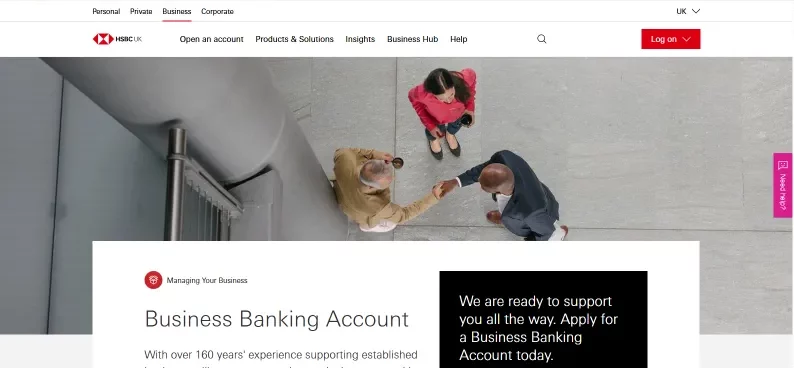
The HSBC Business Banking Account is a UK business current account that combines everyday banking with branch access, relationship support and international payment options. It can be a suitable self-employed bank account for those who value traditional banking alongside digital services.
Its features include:
- UK banking: Manage transfers, Direct Debits, standing orders and debit card payments
- Branch access: Use HSBC branches and Post Office locations for supported services
- Relationship support: Access a dedicated Relationship Manager and specialist support teams
- International payments: Send payments in most currencies
- Foreign currency accounts: Access separate International Business Accounts in USD, EUR and most freely tradable currencies
Pricing:
Eligible new Business Banking Account customers currently receive 12 months with no monthly account fee and free standard transactions on the primary account.
After the introductory period:
- The monthly account fee is £10
- Standard domestic digital transactions remain free
- Separate charges can apply to international, cash and other non-standard transactions
Drawbacks:
HSBC’s Business Banking Account is designed for businesses that need broader banking and relationship support, which may make it less suitable for those looking for a simpler business banking option.
Manage overseas payments with WorldFirst as a self-employed importer
A self-employed business account can cover everyday UK costs such as Direct Debits, card spending and tax payments. If your business also deals with customers, marketplaces or suppliers overseas, you may need additional support for managing foreign currencies and international payments.
For those international needs, WorldFirst can complement your existing UK banking setup. The World Account lets you manage multiple currencies and international payments, while 1688 World Pay supports eligible payments through 1688.com.
You can also receive eligible marketplace payouts and manage funds in supported currencies through your World Account, helping you handle more of your international business finances in one place.
Open a World Account to manage foreign currencies and international payments for your importing business.
WorldFirst isn’t a bank. World First UK Limited is authorised by the FCA as an Electronic Money Institution under firm reference number 900508. Electronic money isn’t covered by the FSCS, and customer funds are safeguarded in accordance with regulatory requirements.
FAQs
1. Do I need a business account if I’m self-employed?
Not necessarily. You may not be legally required to have a self-employed business account, but your bank may have its own rules about using a personal account for business. A separate account can also make it easier to keep track of your business income and expenses.
2. Can I use my personal bank account if I’m self-employed?
You may be able to, but you should check your bank’s terms first. Some personal accounts don’t allow business transactions, so a dedicated business account may be a better option if you’re regularly receiving income or making business payments.
3. What is the best bank account for self-employed people in the UK?
There isn’t one best option for everyone. Starling suits those who want everyday UK banking, while the WorldFirst World Account and Wise Business are useful for managing multiple currencies and international payments. The right self-employed business account depends on how you receive, spend, and manage your business money.
4. Can I have more than one business account when I’m self-employed?
Yes, you can have more than one account, subject to each provider’s eligibility rules and account limits. For example, you could use a UK business bank account for everyday expenses and a WorldFirst World Account to manage foreign currencies and international payments.
Sources:
- https://www.gov.uk/self-employed-records/what-records-to-keep
- https://www.gov.uk/government/news/act-now-864000-sole-traders-and-landlords-face-new-tax-rules-in-two-months
- https://www.worldfirst.com/uk/
- https://www.worldfirst.com/uk/pricing/
- https://www.starlingbank.com/business-account/
- https://www.starlingbank.com/send-money-abroad/
- https://www.mettle.co.uk/business-bank-account/
- https://monzo.com/business-banking/features/international-payments
- https://www.tide.co/features/international-payments/
- https://wise.com/gb/pricing/business
- https://www.business.hsbc.uk/en-gb/products/business-banking-account