

























If you’re growing a successful e-commerce brand in the UK, chances are you use a high street bank or a domestic challenger for your business current account. But selling across borders comes with a set of challenges that these traditional accounts don’t always solve: hidden FX fees, long transfer times and the hassle of opening business accounts in foreign countries.
These costs add up. Independent research on UK transfer providers found that some high street banks build a markup of over 3% into their exchange rate while describing the transfer itself as “free,” and the global cross-border payments market moved an estimated $208 trillion in 2025, which shows just how much value is flowing through accounts that were never designed for international trade.

So what’s the best way to simplify international payments while keeping control of your cash flow?
In this article, we’ll walk through what an international digital bank account actually is, weigh up the pros and cons, and explain what to look for in a global payment solution. Then we’ll show how WorldFirst helps online sellers scale internationally, without the usual banking friction.
We cover:
- What is an international digital bank account?
- Should you open a foreign account or use a multi-currency business account instead?
- Pros and cons of international digital accounts
- What to look for in a multi-currency account
- Is it safe to hold funds with a digital account provider?
- How WorldFirst helps you simplify your international transactions
- Frequently asked questions about international digital bank accounts
Looking for a faster way to pay and get paid across borders? Open a World Account for free today.
Key takeaways
- International digital bank accounts cover a broad range of products, but a multi-currency business account built for holding and converting several currencies is usually the better fit for cross-border sellers.
- Many “digital bank” providers, including WorldFirst, are actually FCA-regulated Electronic Money Institutions rather than licensed banks, so customer funds are safeguarded rather than FSCS-protected.
- Hidden FX markups are one of the biggest hidden costs of international trade, with some traditional providers building markups of 2% to 4%, or more, into their exchange rate.
- The strongest multi-currency accounts combine local receiving details, transparent FX, marketplace integrations and clear regulatory safeguarding.
- WorldFirst offers local receiving accounts in 20+ currencies, payments in 100+ currencies to 200+ countries and territories, and integrations with 130+ marketplaces and payment platforms.
What is an international digital bank account?
An international digital bank account is an online account that lets a business send, receive and often hold money in currencies other than its home currency, without needing to visit a branch or hold a local banking relationship in every market it sells or buys in. The term covers a broad range of products, from foreign currency accounts offered by traditional banks to fully digital multi-currency accounts run by fintechs and electronic money institutions (EMIs).
That last distinction matters. Many of the providers behind “international digital bank accounts” are not banks at all. They’re EMIs or payment institutions, authorised by regulators such as the Financial Conduct Authority (FCA) to issue electronic money and provide payment services, but without a full banking licence. WorldFirst is one of them: World First UK Limited is authorised by the FCA as an Electronic Money Institution under the Electronic Money Regulations 2011. In practice, this means you get many of the same day-to-day features as a bank account, but the underlying protections work differently, which we cover in more detail below.
Should you open a foreign account or use a multi-currency business account instead?
When people talk about “international digital bank accounts,” they’re often referring to a broad category of financial products designed to help you manage money across borders, whether that’s sending international transfers, getting paid from abroad or holding multiple currencies.
Multi-currency business accounts are one of the most useful types of international accounts for global businesses. They offer all the essential features of an international account, like cross-border access and online banking, but are specifically built to let you hold, convert and manage multiple currencies in one place.
In short, all multi-currency accounts are international accounts, but not all international accounts offer true multi-currency functionality. If you’re doing business in more than one market, choosing a solution built specifically for holding and managing multiple currencies is usually the smarter option. If you want to see how different providers stack up on this, our roundup of the best multi-currency business bank accounts compares features side by side.
Rather than opening separate accounts in each country, a multi-currency account gives you a centralised way to:
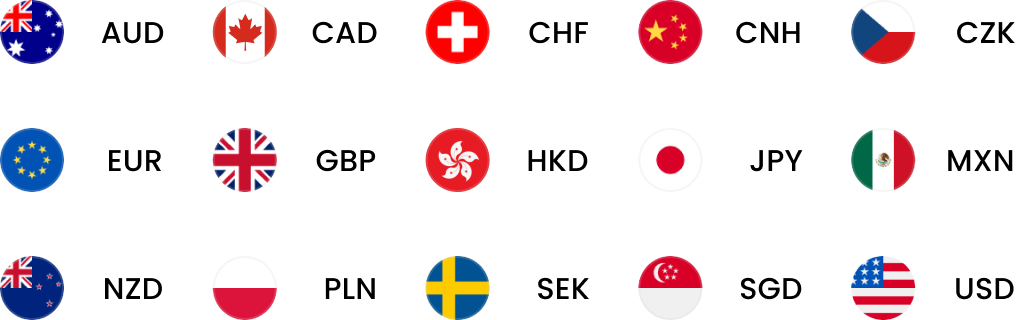
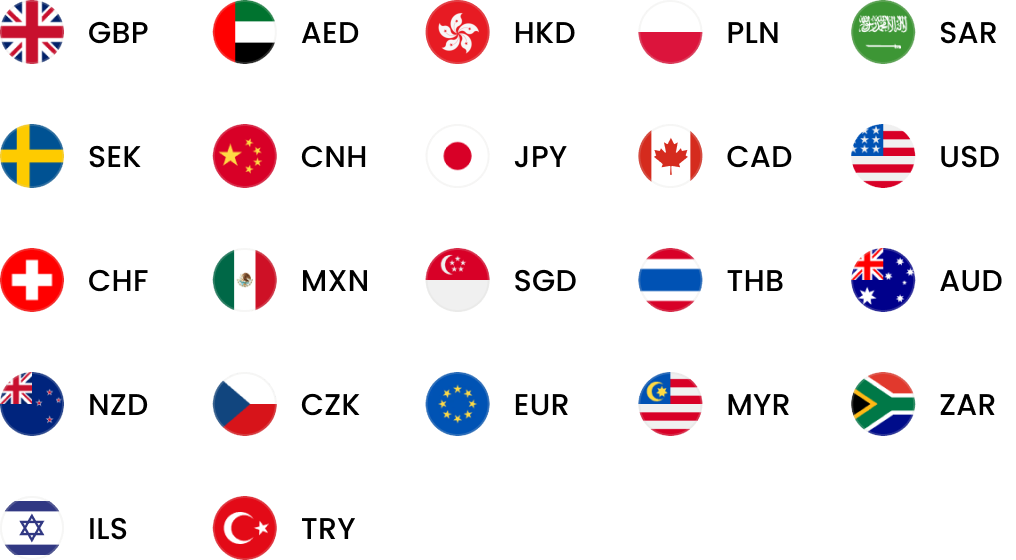
- Receive local payments in USD, EUR, GBP, AUD, CNH and more
- Hold these funds without auto-converting them
- Convert currencies when rates are favourable
- Pay suppliers, platforms, or tax authorities in local currency
This makes multi-currency accounts especially powerful for e-commerce sellers, exporters, importers and service-based businesses operating globally.
| Feature | International account | Multi-currency account |
|---|---|---|
| Account setup | May require local residency | Usually no local entity required |
| Currencies supported | 1 to 3 major currencies | Often 10+ major currencies |
| FX rates | Bank-standard rates | More competitive, with control |
| Local account details | Often limited | Typically available (e.g. US, EU) |
| Supplier payments | Often via third-party transfer | Direct in local currency |
| Use case | Expats, freelancers, travellers | Global sellers, import and export businesses |
| Best for | Businesses with foreign branches | Sellers operating globally from one base |
Pros and cons of international digital accounts
Before choosing a provider, it helps to weigh up what digital accounts do well and where they fall short compared with a traditional business bank account.
Advantages:
- Faster setup. Most digital providers let you apply online and start trading within days, without needing to prove local residency or visit a branch.
- Lower, more transparent costs. Specialist providers typically publish their FX margin upfront, rather than folding it into an unclear exchange rate.
- Built-in multi-currency functionality. You can hold and convert balances in 10 or more currencies from a single login, instead of juggling separate accounts.
- Marketplace and platform connectivity. Many digital accounts integrate directly with Amazon, TikTok Shop, Shopify and other platforms, which speeds up reconciliation.
Trade-offs to weigh up:
- No FSCS deposit protection. As most digital account providers are EMIs rather than banks, customer funds are safeguarded rather than covered by the Financial Services Compensation Scheme. We explain what this means in practice below.
- Limited cash and lending services. Digital accounts are generally built for payments and FX, not overdrafts, business loans or physical cash deposits.
- Variable currency coverage. Not every provider supports every currency or market, so it’s worth checking coverage against where you actually trade before switching.
What to look for in a multi-currency account
The right multi-currency account should give you more control, better rates, and faster access to global markets. Here’s what to look for:
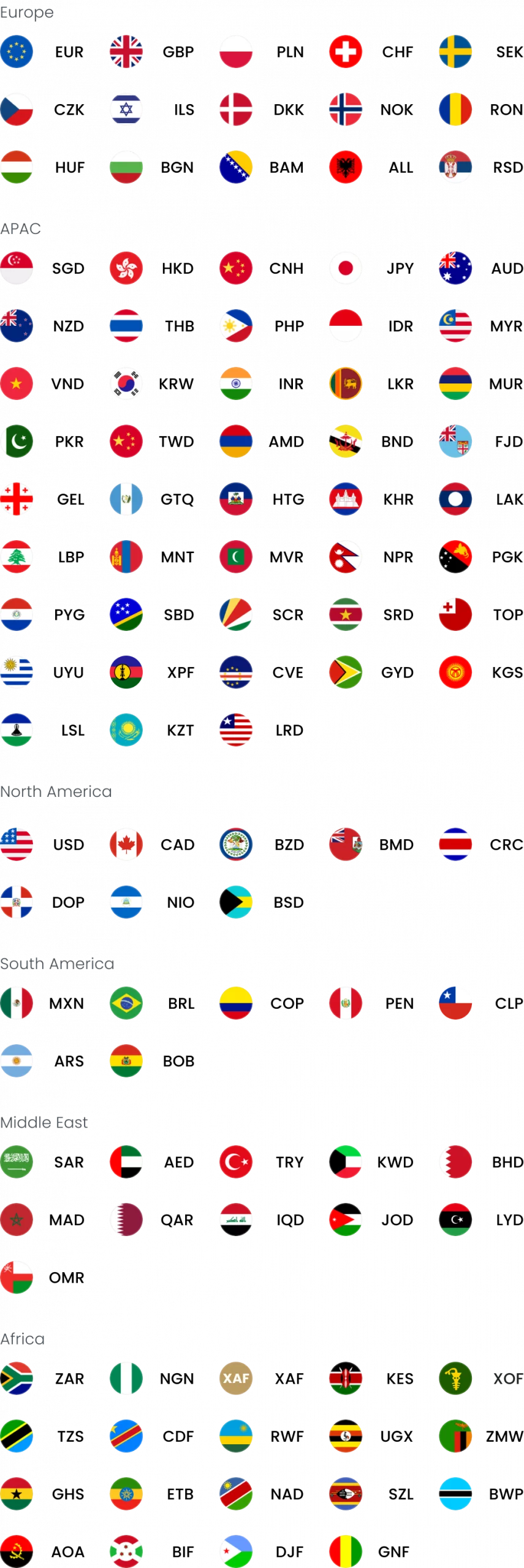
- Support for major and emerging currencies. Can you receive and send payments in USD, EUR, GBP, SGD, AUD, and CNH? WorldFirst, for example, lets you send in 100+ different currencies and offers local receiving accounts in 20+ currencies across key markets including the US, UK, EU, China, Singapore, Australia and Japan.
- Local account details. Look for a provider that gives you local account details (e.g. a US routing number and account, an EU IBAN) so marketplaces and suppliers can pay you as if you had a local account.
- Competitive, transparent FX rates. Avoid hidden charges by choosing a provider that publishes its FX margin clearly. Better yet, find one that lets you hold foreign currency until the time is right to convert, rather than forcing an automatic conversion the moment funds land.
- Fast global transfers. You should be able to pay suppliers, freelancers or partners in their own currency, without delays or excessive transfer fees.
- Online account management. Choose a platform that lets you track incoming payments, convert funds and make transfers all from a single dashboard. It should be clear about monthly fees for account maintenance too.
- Marketplace integrations. If you sell on Amazon, TikTok Shop, Etsy, Shopify or eBay, make sure your provider can plug directly into your storefronts to collect payments quickly and securely.
- Regulatory status and safeguarding. Check who regulates the provider, how customer funds are protected, and whether that protection is deposit insurance or fund safeguarding. The two are not the same, and it’s worth knowing the difference before you move significant balances.
Is it safe to hold funds with a digital account provider?
This is one of the most common questions UK businesses ask when comparing digital accounts to traditional banking, and it’s a fair one. The short answer is that regulated digital account providers are safe to use, but the type of protection they offer is different from a bank.
In the UK, EMIs and payment institutions are regulated by the FCA and required to safeguard customer funds, usually by holding them in segregated accounts with tier-1 partner banks, separate from the provider’s own operating money. That means the funds are protected if the provider fails, but this safeguarding arrangement is not the same as the Financial Services Compensation Scheme (FSCS), which protects eligible deposits at licensed banks up to £85,000 per person, per institution.
WorldFirst is a case in point. World First UK Limited is a UK registered company authorised by the FCA as an Electronic Money Institution under the Electronic Money Regulations 2011, not a bank. Customer funds are safeguarded with tier-1 partner banks in line with regulatory requirements. For most cross-border businesses, the practical takeaway is straightforward: check who regulates a provider, understand how it safeguards funds, and decide how much of your working capital you’re comfortable holding in a non-deposit account versus a traditional bank account. Our guide to alternatives to traditional banks covers this distinction in more depth.
How WorldFirst helps you simplify your international transactions
If you’re running a growing international business, you don’t need the hassle of opening and managing foreign business accounts in every market.
With WorldFirst, you get the practical benefits of international banking, combined with modern financial services built specifically for global businesses. As part of Ant International, WorldFirst has supported over 1.5 million businesses since 2004 and has been named a Top Global Fintech Company by CNBC and Statista.
WorldFirst delivers business-first tools such as multi-currency support, integrations with 130+ e-commerce marketplaces and payment providers, and competitive FX rates, all from one platform. Plus, you’ll be able to hold funds in 20+ currencies without needing a local banking presence or physical address.
Here are three reasons why you should open a World Account with us today.
Hold funds in 20+ currencies and pay in 100+
With a World Account, you can open local receiving accounts in currencies across up to 10 key markets, including the US, UK, EU, Japan, China, Singapore, Australia and more, without needing a local entity.
That means:
- You get local account details in 20+ currencies, so you can make payments faster and more affordably via local payment networks
- You can hold foreign currency without being forced to convert
- You choose when to exchange, based on market rates
- You can pay out to suppliers, platforms and partners in 200+ countries and territories, whether that’s supplier payments in RMB or SEPA transfers across the EU
Unlike traditional banks, which often rely on the SWIFT network and its intermediary deductions, WorldFirst provides faster, cheaper payments using local payment rails wherever possible. Funds often arrive same-day or next-day, with full visibility at every step.
Connect with 130+ marketplaces and payment platforms globally
WorldFirst is built for cross-border e-commerce. That’s why the platform connects directly to over 130 global marketplaces and payment providers, including:
- Amazon (all major global regions)
- TikTok Shop
- Shopify
- Etsy
- eBay
- AliExpress
- And many more
Instead of having to open accounts for each platform or country, you can consolidate your global payments into one dashboard. That makes it easier to track your revenue, reconcile accounts, and manage cash flow across multiple storefronts, especially useful given that brands are increasingly reliant on international revenue, with more than 4 in 10 online sellers now expecting a fifth or more of their revenue to come from overseas markets in 2026.
You can also integrate with accounting tools like Xero to keep your books up to date, without jumping between platforms.
Access more affordable, transparent FX rates
One of the biggest drains on global business margins is poor exchange rates and hidden conversion fees. Recent research into UK transfer providers found markups ranging from around 2% at more transparent banks to over 4% at some well-known payment apps, all built into the exchange rate rather than shown as a separate fee. WorldFirst helps you protect your profits with:
- Low-margin, transparent FX rates, including an exclusive reduced exchange fee for new customers (terms apply)
- Real-time rate visibility before every conversion
- Batch conversion tools for high-volume sellers
- No forced conversion, so you can hold currency until the rate is right
- Forward contracts to help you lock in exchange rates ahead of time
Whether you’re converting USD revenue to GBP, or paying a supplier in CNH, you’ll know exactly what you’re paying, with no guesswork or inflated margins.
WorldFirst: A smarter way to manage international payments
Expanding your business globally doesn’t mean you need to open a separate account in every country you operate in. While international bank accounts can help establish a local presence, they often come with frustrating limitations, from residency requirements to high transaction fees and slow transfers.
For most e-commerce sellers and small businesses, a multi-currency account offers a faster, simpler and more cost-effective alternative. With one account, you can collect payments in multiple currencies, hold and convert funds when it suits you, and pay global suppliers, without the paperwork or overhead of opening foreign accounts.
Platforms like WorldFirst are built specifically for international business. Whether you’re scaling up on Amazon, expanding into Asia, or streamlining your FX operations, WorldFirst gives you the tools and support to trade across borders with confidence.
Ready to simplify international payments and grow your business globally? Open a World Account today and take the first step toward seamless global selling.
Frequently asked questions about international digital bank accounts
1. What is an international digital bank account?
It’s a broad term for any online account that lets a business send, receive or hold money in foreign currencies. The category includes everything from foreign currency accounts at traditional banks to multi-currency accounts run by fintechs and electronic money institutions like WorldFirst.
2. Can I open a business account in another country online?
Some providers allow you to open a business account online in another country. However, eligibility criteria vary widely, and many still require proof of local residency, a tax ID, or a physical business presence.
If you’re a UK-based seller looking to expand, fintechs like WorldFirst offer a more accessible option by giving you local account details in key markets, without needing to incorporate overseas.
3. What’s the difference between a foreign account and an international account?
A foreign bank account is an account based in a country where you’re not a resident. Opening one usually requires local documentation and often a registered business entity. An international or multi-currency account, like a World Account, is designed to support multiple currencies and can be opened and operated entirely from your home country.
4. Is a digital business account safe if the provider isn’t a bank?
Yes, provided the provider is properly regulated. In the UK, electronic money institutions are authorised by the FCA and must safeguard customer funds in segregated accounts with partner banks. This protects your money if the provider fails, but it’s a different mechanism from FSCS deposit protection, which only applies to licensed banks. Always check a provider’s regulatory status before moving significant balances.
5. What’s the difference between an EMI and a bank account?
A bank holds a full banking licence, can lend money, and eligible deposits are typically covered by the FSCS. An electronic money institution (EMI) is authorised to issue electronic money and provide payment services, but cannot lend customer deposits and must safeguard funds instead of holding them on its own balance sheet. WorldFirst operates as an EMI, not a bank.
6. Can a UK business open a bank account in another country?
Yes, it’s legal for UK businesses to open foreign accounts, but you must comply with tax and reporting rules both in the UK and in the country where the account is based. In the UK, for example, HMRC may require disclosure of overseas accounts if they generate business income.
7. Which account is best for online business?
If you’re selling internationally, a multi-currency account is often the better fit. It lets you receive payments from marketplaces, hold multiple currencies and pay global suppliers, all from one central dashboard. Our comparison of the best multi-currency business bank accounts breaks down how leading providers compare.
8. How do I open a business bank account?
To open a business account in the UK, you typically need proof of identity, proof of address, and your business registration details, such as your Companies House number. Some providers may also ask for your projected turnover. With fintechs like WorldFirst, the process is digital and often faster, with fewer documentation requirements.
9. Do I need a local company to open a foreign business account?
Usually yes. Most traditional foreign banks require you to have a registered business or local tax ID. Multi-currency fintech accounts, however, allow UK-based businesses to access local account details in places like the US, EU and China without needing to set up a local entity.
10. Can I use a multi-currency account for both receiving and sending money?
Yes. A good multi-currency account should let you receive payments from customers or marketplaces in local currency, hold those funds, convert them at competitive rates, and send payments to suppliers or partners abroad, all from one dashboard. This is exactly what a World Account is built for, making it a practical choice for international sellers.