



























If you send or receive international payments, fluctuations in the market put your money at risk as it moves from one currency to another.
This means you could end up paying more, or receiving less, than you expected when making international payments. For businesses handling large or frequent transactions, these additional costs can add up quickly.
To manage this risk, many companies use hedging tools. But protecting your cash flow from currency volatility is only part of the picture. You also need to reflect that protection accurately in your financials – and that’s where hedge accounting comes in.
In this guide, we cover everything you need to know about hedge accounting – an accounting practice that keeps your numbers steady by matching your currency protection with the payment it’s meant to cover.
We’ll also introduce what we do at WorldFirst to make it simpler and more affordable to do business in multiple currencies.
We’ll cover:
- What is hedge accounting?
- 3 types of hedge accounting
- Why many global businesses consider hedge accounting
- Forward contracts: A common hedging tool used to manage currency volatility
- How WorldFirst helps SMEs protect against risk when sending and receiving international currency
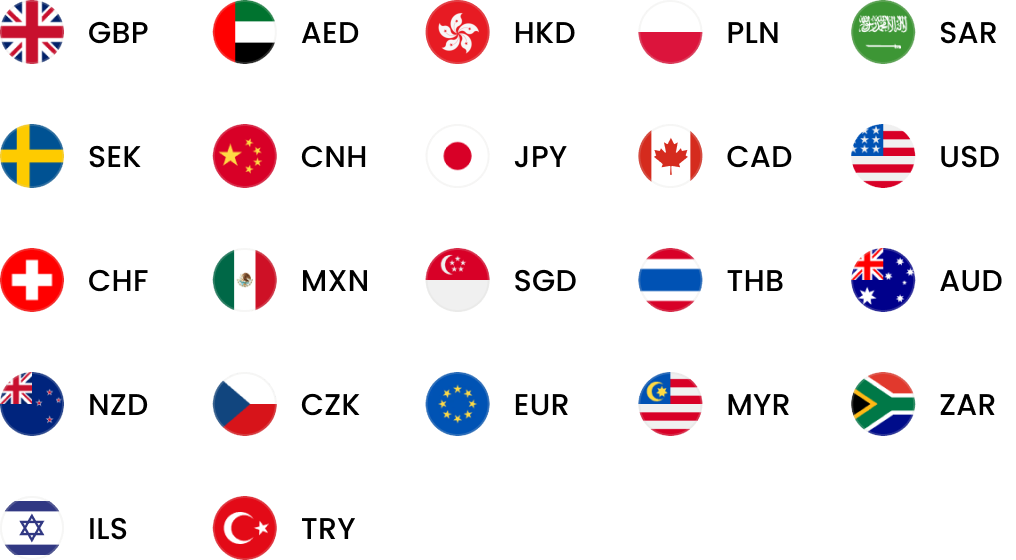
Ready to manage your currency risk and gain more control over your international payments? Open a World Account for free today to hold funds in 20+ currencies.
What is hedge accounting?
Hedge accounting is a way to record your risk protection so your financial results reflect what’s really happening in your business.
Many SMEs use hedging tools to protect against things like changing exchange rates or interest rates. But under IFRS rules (which determine how businesses report their financials), changes in the fair value of these hedging instruments are often recorded immediately in profit or loss. This can cause your reported profits to rise or fall even if your underlying business hasn’t changed.
Hedge accounting solves this by aligning the timing. It records the effects of your hedge and the transaction it relates to in the same period.
For example, if you’re expecting to pay an overseas supplier in three months, you might lock in an exchange rate today using a forward contract.
If the market moves before you pay, the value of that contract changes. Without hedge accounting, that change is typically recognised immediately in profit and loss, even though the underlying payment hasn’t happened yet.
With hedge accounting, the effective portion of that gain or loss is initially recorded in other comprehensive income (OCI) and then recognised in profit or loss when the payment is made. This removes the timing mismatch and keeps your results aligned with what actually happens in your business.
3 types of hedge accounting
There are three main types of hedge accounting, depending on what you’re protecting:
- Cash flow hedges: Used for future transactions, like paying a supplier or receiving revenue. These help reduce uncertainty in future cash flows, so changes in rates don’t affect what you expect to pay or receive.For example, if you agree today to buy goods in US dollars in three months, you might use a forward contract to fix the exchange rate. If rates move before you pay, the value of the contract changes. But with hedge accounting, those changes are initially recorded in OCI and recognised in profit or loss when the transaction happens.
- Fair value hedges: Used for things you already have, like assets or liabilities. These protect against changes in the current value of those items caused by market movements.
For instance, if you take out a fixed-rate loan and interest rates rise, the loan’s fair value falls even though your payments stay the same. A fair value hedge (such as an interest rate swap) offsets that change – with both the change in the loan’s value and the hedge recorded in profit and loss – reducing volatility in your financial statements. - Net investment hedges: Used for investments in overseas operations. These reduce the impact of currency movements when translating foreign business performance back into your home currency.
For example, if you own a subsidiary in another country, changes in exchange rates can affect the value of that investment when reported in your financial statements. A net investment hedge (such as a foreign currency loan) helps offset those movements, with gains or losses typically recorded in OCI until the investment is disposed of.;
Why many global businesses use hedge accounting
Hedge accounting isn’t required, but it becomes especially useful for businesses that regularly pay or get paid in foreign currencies.
If you’re working with overseas suppliers or customers, foreign exchange rates can move between agreeing on a price and making the payment.
Even if you’ve managed the risk and haven’t exchanged the currency yet, the value of your hedge still changes with the market – and accounting rules require that change to be recorded early.
Hedge accounting helps smooth this out by aligning your hedge with the underlying currency transaction, so your financial results reflect the final exchange rate you actually pay or receive, rather than short-term market movements.
Forward contracts: A common hedging tool used to manage currency volatility
One of the most common tools businesses use to manage currency risk is a forward contract. A forward contract is an agreement to exchange one currency for another at a fixed rate on a future date.
Instead of using whatever the market rate is at the time of payment, you agree on the rate up front. This means you know exactly what you’ll pay or receive in your home currency, regardless of how exchange rates move in the meantime.
For many SMEs, using forward contracts on their own is enough to manage risk effectively.
In some cases, however, businesses may also use hedge accounting alongside forward contracts. This helps ensure the hedge and the transaction are recorded at the same time, so financial results stay consistent and easier to understand.
Read more: How to lock in exchange rates as a cross-border business: 3 best methods
How WorldFirst helps SMEs protect against risk when sending and receiving international currency
Whether you’re managing hedge accounting for your global business or simply looking to reduce risk when sending money internationally, WorldFirst offers an easier way to handle currency transactions – so you can feel at ease as your money travels overseas.
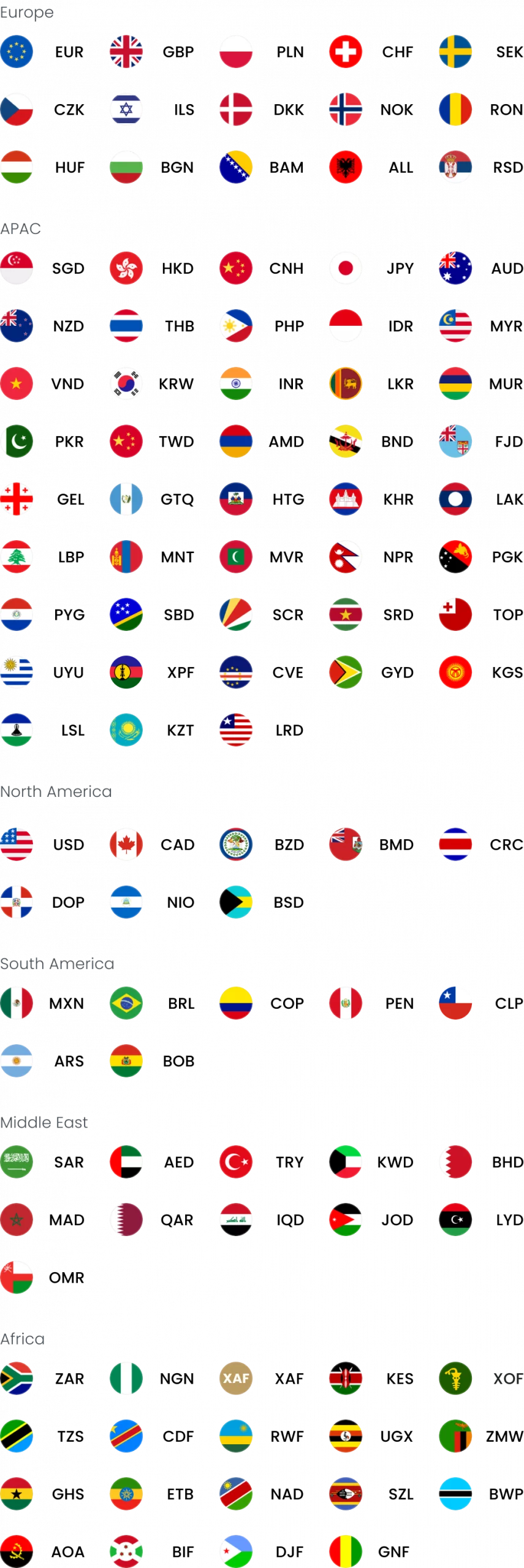
For over 20 years, we’ve helped 1.5 million customers send and receive money globally. With our World Account, you can hold 20+ currencies like a local business, without opening a bank account in every country you operate in.
This way, you can receive, hold and pay in the currencies you hold – so you don’t have to convert currency (and risk fluctuating currency rates).
Our World Account has one dashboard, where you can manage your currencies, receive instant alerts when money arrives and connect to accounting software to seamlessly reconcile transactions and reduce your admin.
Here are three ways WorldFirst helps reduce currency risk when sending money internationally.
Hold payments in 20+ currency accounts and minimise your exposure to currency volatility
When you sign up for a World Account, you can open 20+ currency accounts – each connected to local payment networks. This means you can send and receive money as if you were a local in the country you’re doing business in.
For example, if you’re a UK business working with a Singapore company, you can receive SGD and pay Singapore businesses directly from that balance, without converting currencies.
Then, because you’re paying locally, you avoid the 3–6 day delays that often come with international transfers. Plus, there are no FX fees when you pay from the currency you already hold.
It also means you’re not exposed to exchange rate fluctuations in between transactions, so you can operate with more certainty.
Read more: How to pick the best online business bank account (12 options)
Lock in exchange rates for up to 24 months with forward contracts
To manage risk, you can use forward contracts to lock in an exchange rate for up to 24 months. This means you agree on a rate today for a payment you’ll make later, giving you certainty over what you’ll pay or receive – even if the market moves.
For example, if you know you’ll need to pay a supplier in a few months, you can lock in today’s rate and avoid any increase in costs if exchange rates change. This makes budgeting and cash flow planning more predictable.
With forward contracts, you get three flexible settlement options:
- Flexible forward: lets you lock in an exchange rate and use the money in smaller amounts over time, instead of all at once.
- Fixed forward: locks in an exchange rate for a single, specific date when the full amount is exchanged.
- Window forward: locks in an exchange rate but allows you to settle the full amount at any time within a defined date range.
If you prefer control over your exchange rate without tracking the market yourself, firm orders let you automate the process. You set the exchange rate you want and the amount to convert, and WorldFirst monitors the market for you. When the rate is reached, the trade executes automatically.
Read more: What is a forward contract and why should you use one?
Manage your risk from one account and always keep an eye on rates
Many SMEs end up managing multiple currencies, payments and accounting across different platforms – which makes it harder to stay on top of cash flow and risk.
With a World Account, everything is in one place. You can hold multiple currencies, decide when to convert those currencies and track your cash flow.
You can also create predefined roles for teams and accountants and even choose who is authorised to process payments. And as soon as those payments are made, you’ll receive instant notifications.
And payments can be synced with accounting software like Xero and NetSuite, making it easier to reconcile transactions and reduce administrative tasks.
Partner with WorldFirst to simplify your hedge accounting
WorldFirst partners with accountants to give their clients smarter ways to manage payments, currencies and financial operations in one place.
If you’re looking to simplify cross-border payments, improve visibility and support your clients more effectively, explore how partnering with WorldFirst can help.
To start the partnership process:
- Complete our online partnership application form
- We’ll be in touch to discuss next steps
- Once approved, you’ll receive training and onboarding support
From there, you can take advantage of WorldFirst’s risk management tools and a range of other features that will support your overseas business transactions.
If you’d like to open a World Account, get approved in under two days and start managing your currency risk right away, go to the World Account sign-up page.
FAQs
Do SMEs need hedge accounting?
Not always. Many SMEs use tools like forward contracts to manage risk without applying hedge accounting. It’s typically more relevant for larger businesses or those with more complex reporting needs, where financial statement volatility matters more.
For many businesses, hedge accounting treatments are an important part of their overall risk management approach, helping align financial reporting with real-world decisions and outcomes.
What are the alternatives to hedge accounting for SMEs?
Most SMEs focus on managing the risk itself rather than how it’s reported. This usually involves tools like forward contracts, options or simply holding and paying in the same currency to avoid unnecessary conversions.
Is hedge accounting required?
No, hedge accounting is optional. Businesses can choose whether to apply it based on their needs. It’s mainly used when companies want their financial results to better reflect their risk management strategy.
What is IFRS and why does it matter for hedge accounting?
IFRS is a set of global accounting rules that many businesses follow when preparing their financial statements. Essentially, it decides when and how gains or losses appear in your numbers.
It does this by setting rules for how different types of transactions and financial instruments are recorded. In the past, hedge accounting rules were governed by IAS 39, which was more rigid and difficult to apply in practice.
Today, IFRS 9 has replaced IAS 39, making hedge accounting more flexible and better aligned with how businesses actually manage risk.
What is a hedging relationship?
A hedging relationship is the link between what you’re protecting (the hedged item, such as receivables or a future payment) and the tool you’re using to protect it (the hedging instrument, like a forward contract).
To apply hedge accounting, businesses must document this relationship at inception, along with their risk management objectives and the particular risk being hedged (such as foreign exchange or interest rate risk).
What are hedge accounting requirements?
To apply hedge accounting, businesses must meet certain hedge accounting requirements set out in accounting standards. This includes identifying the hedged risk, documenting the hedging strategy and demonstrating that the hedge is effective over time.
These requirements ensure that how you report your hedge reflects how you actually manage risk in your business.
What causes a hedge mismatch on balance sheets?
A mismatch happens when gains or losses on your hedge are recorded at a different time than the transaction it’s meant to protect.
This often occurs because hedging tools are treated as financial instruments, meaning their value changes over time. Under accounting rules, any change in fair value may be recorded early in your profit and loss or balance sheet, even if the actual transaction hasn’t happened yet.
What is foreign currency exposure?
Foreign currency exposure refers to the risk that exchange rate movements will affect your business.
This typically arises when dealing with foreign currency-denominated invoices, contracts or receivables, where the final amount you pay or receive depends on foreign exchange rates.