
























Opening a Swedish business bank account can quickly become frustrating, if you’re not an official resident or don’t have a local business presence.
Since Brexit, UK businesses are treated as third-country entities, which means banks across Europe often apply extra compliance checks under EU anti-money-laundering rules. This typically means you’ll be asked to provide detailed information about your ownership structure, source of funds and business activity before an account can be approved.
Plus, the onboarding process can also involve in-person verification appointments and timelines that stretch for several weeks.
Fortunately, though, you can send and receive Swedish kronor without opening a local bank account at all.
At WorldFirst, we offer a digital, multi-currency account that allows UK SMEs to make payments in 100+ currencies worldwide: the World Account.
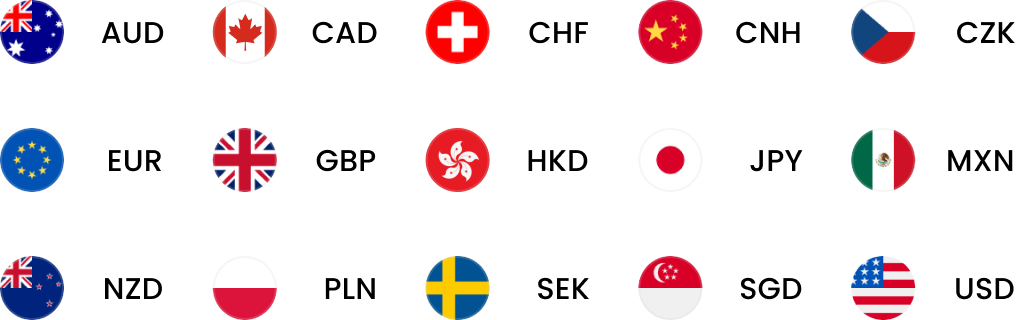
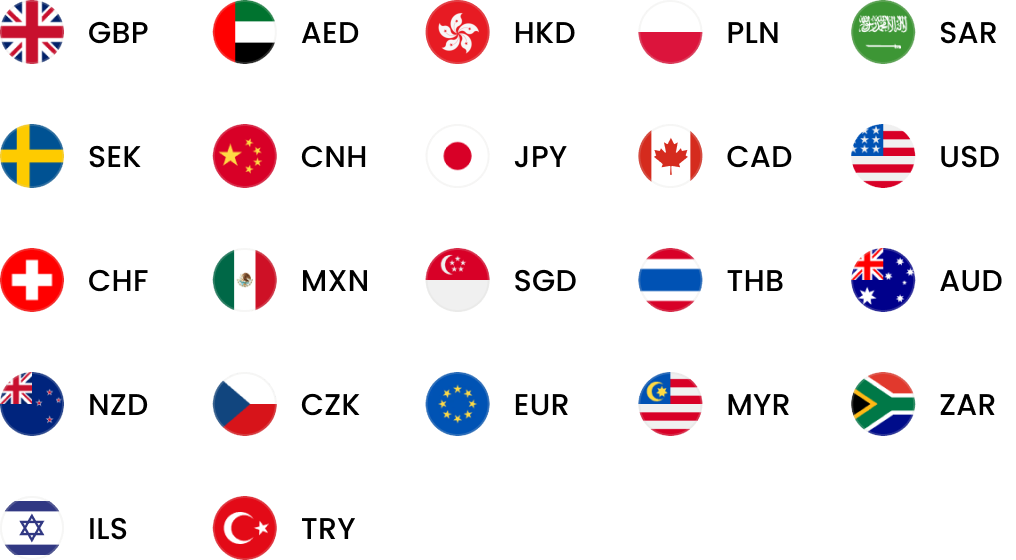
You can open a World Account for free within minutes and receive, hold and pay in 20+ currencies (including SEK and GBP). This gives you many of the benefits of a Swedish business account without the hassle of visiting a traditional bank.
In this guide, we explain how WorldFirst simplifies payments in Sweden for UK SMEs.
You’ll learn about:
- Why opening a Swedish business bank account can be difficult for UK SMEs
- Why many UK businesses choose WorldFirst over traditional banks
- 3 foreign-friendly Swedish bank accounts for UK businesses
- Documents required to open a Swedish business bank account as a UK SME
Open a World Account in minutes and start paying in Sweden once you’re approved.
Why opening a Swedish business bank account can be difficult for UK SMEs
Sweden has several large traditional banks, and while they offer full-service banking, opening an account as a foreign company can be quite complex.
If you’re a UK SME looking to open a Swedish business bank account, there are some common requirements to be aware of. You’ll typically need to:
- Register your business in Sweden. Many Swedish banks require foreign businesses to obtain a Swedish organisation number by registering with the Swedish Companies Registration Office (Bolagsverket). This allows banks to verify your business and meet anti-money-laundering requirements.
- Provide proof of a Swedish address. Some banks ask foreign companies to provide a Swedish address. Directors may also need a Swedish personal identity number (personnummer) or a residence permit, so they can prove their identity via BankID.
- Ensure directors have a coordination number. If company directors don’t have a Swedish personal identity number, banks may ask them to obtain a samordningsnummer (coordination number) from the Swedish Tax Agency for identification purposes.
- Visit a branch in-person. Many banks require at least one company director or authorised representative to visit a branch to verify their identity and sign documents.
- Wait weeks for approval. Banks carry out strict compliance checks under rules enforced by the Swedish Financial Supervisory Authority, which takes 2–4 weeks for local companies and can extend to 4–8 weeks for non-residents.
- Provide any extra documents that banks might request. Banks sometimes request certified Swedish translations or additional proof of business activity in Sweden. Foreign SMEs can face additional scrutiny, particularly if you don’t have a physical presence in Sweden.
It’s due to hurdles like these that UK SMEs are increasingly turning to platforms like WorldFirst.
Why many UK businesses choose WorldFirst over traditional banks
WorldFirst is a fully online fintech platform that allows SMEs to do business globally without obtaining a samordningsnummer or waiting weeks to run through strict compliance checks.
For more than 20 years, WorldFirst has helped 1.5 million businesses operate across 210+ countries.
With a World Account, you can pay suppliers, vendors or contractors in Swedish krona (SEK) just as you would with a traditional local bank account. You can also receive SEK, EUR, GBP and 20+ other currencies, without paying FX fees.
What’s more, it takes less than 15 minutes to set up an account. You’ll also get access to support teams fluent in 11+ languages, so you can get answers quickly and start making payments sooner.
Here’s what you get when you open a World Account.
Set up an account in minutes, without paperwork or branch visits
Compared to the 2–8 weeks it can take to set up an account with a conventional Swedish bank, registering for a World Account typically only takes 10–15 minutes.
Just complete an online form with your company details, verify your identity with the WorldFirst team and upload any requested documents. All of this is fully online – so there’s no need for branch visits, paperwork or in-person meetings.
Once your application is reviewed and approved – sometimes the same day, though typically within 2–5 days – you can begin opening currency accounts and using your account details to send and receive SEK payments.
Plus, it’s free to set up an account, with no monthly maintenance fees and no minimum deposits. And when you pay between World Accounts, same-currency transfers are free and land within minutes.
Read more: How to pick the best online business bank account (12 options)
Pay in SEK like a local business, with 90% of payments landing in less than 48 hours
Once you sign up for a World Account, you can open 20+ local currency accounts online (including SEK, EUR and GBP) without a local address or branch visit.
Using local account details and domestic payment networks, you can send and receive SEK as if you were paying within Sweden.
When you receive payments in Swedish krona, you don’t have to convert them back to GBP (as you would if you were only using a UK account). Instead, you can hold the funds in your account and use them later when paying Swedish businesses. And because you’re using local payment networks, 90% of payments arrive in less than 48 hours.
Setting up multiple currency accounts is also fast, and most are activated instantly.
Read more: How to make same-day international money transfers as a cross-border business
Pay zero FX fees when sending SEK, or just 0.5% when converting
Traditional Swedish business bank accounts often come with multiple fees. These can include account opening costs of 500kr–2,000kr (~£40–£160), monthly maintenance fees of 100kr–500kr (~£8–£40) and FX markups of 2–5% above the mid-market rate.
With a World Account, fees are designed to be simpler and more transparent. You can receive, hold and pay in 20+ currencies at no additional cost. Currency accounts are free to open, and when you send payments using currencies you already hold, there are no FX fees.
When you do need to convert currencies, you’ll get the mid-market exchange rate with a low FX fee, currently capped at 0.3% for new customers.
Because the mid-market rate fluctuates throughout the day, you also have access to FX tools to help you manage exchange rates. With features like firm orders, you can choose the rate you’re willing to pay. WorldFirst then monitors the market 24/7 and automatically executes the trade once your target rate is reached.
Read more: Foreign exchange risk management: How to make international business more affordable
3 foreign-friendly Swedish bank accounts for UK businesses
If you’d like to compare WorldFirst with traditional banking options, here are three Swedish banks UK businesses often consider.
1. Nordea
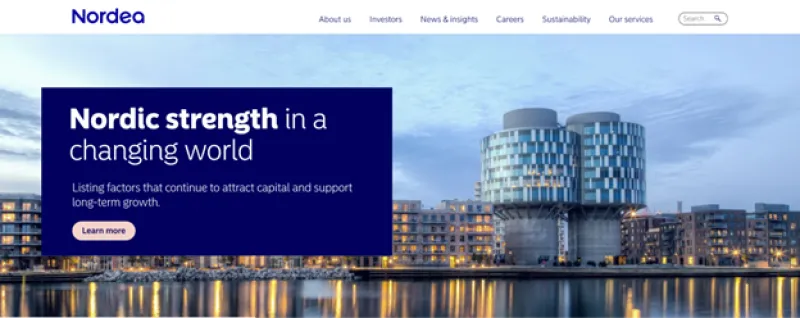
Nordea is one of the largest banks in the Nordic region, known for its strong international presence and advanced digital banking.
It supports international businesses with multi-currency accounts, cross-border payments and English-language online banking – making it easier for companies operating across multiple countries to manage their finances.
Requirements to open an account:
- Company registration documents
- Identification for directors and beneficial owners
- Details of ownership structure and business activities
- A Swedish company registration number, in many cases
- Possible in-person verification before approval
2. SEB
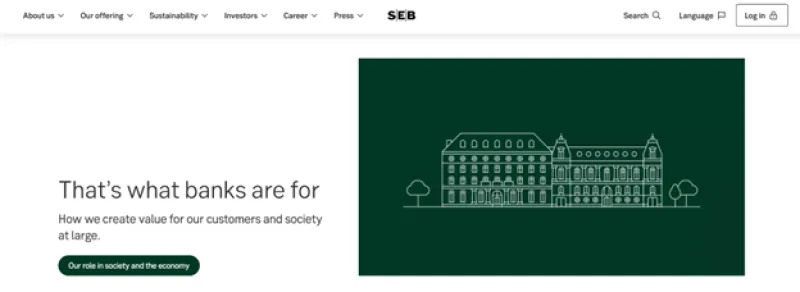
SEB (Skandinaviska Enskilda Banken) specialises in international corporate banking, and has extensive experience supporting foreign companies operating in more than 20 countries.
It’s often considered a strong option for businesses dealing with international trade, high transaction volumes or non-EU payments. However, businesses with complex ownership structures, cross-border transactions or higher regulatory risk may face enhanced due diligence and longer onboarding times.
Requirements to open an account:
- Proof of company registration
- Beneficial owner information (anyone who owns or controls more than 25% of the company)
- Ownership structure, including an organisational chart showing all companies and individuals involved
- Identification and personal details for directors, beneficial owners and key stakeholders
- Details of expected payment activity, including transaction types, frequency and purpose
- Information about the company’s planned operations in Sweden
- A meeting with company representatives in some cases
3. Handelsbanken
Handelsbanken operates with a decentralised model, meaning local branches make many decisions independently.
This can provide a more personalised banking relationship and flexible support for businesses with specific needs. The bank also works with international companies and offers services designed for cross-border operations.
Requirements to open an account:
- Company registration documents
- Identification for directors and beneficial owners
- Information about the company’s operations in Sweden
- Personal meeting at a local branch
- Additional information may be required depending on the local office
How to open your World Account and start making payments in Sweden
For UK SMEs looking to pay and receive money in SEK, WorldFirst is a faster, more affordable alternative to opening a business bank account in Sweden.
It’s completely online and just takes a few simple steps:
- Register your account. Visit WorldFirst and sign up with your email and mobile number. You’ll create a password and verify your contact details with a one-time code.
- Enter your company details. Provide basic business information such as your company name, registration number, registered address, industry and estimated monthly turnover.
- Upload verification documents. Submit identity documents for company directors and any shareholders who own 25% or more of the business, along with company registration documents such as your certificate of incorporation.
- Complete identity verification. The applying director verifies their identity by uploading an ID and completing a quick facial verification check on their phone.
- Wait for approval. Once your documents are reviewed and approved, your account will be activated and you can begin opening currency accounts and receiving payments.
Open a World Account for free today and start making payments in SEK in just a few days.
FAQs
What is the onboarding process for opening a Swedish business bank account?
The onboarding process typically includes identity verification, submitting required documents and completing Know Your Customer (KYC) checks. Banks will assess your company structure, ownership and expected activity before approving your application.
How long does it take to open a business bank account in Sweden?
Opening a business bank account in Sweden can take several weeks to a few months, especially for foreign companies.
Swedish banks typically carry out detailed due diligence checks, which may include reviewing company registration documents, ownership structures and planned business activities in Sweden. The timeline often depends on how complex the business structure is and whether additional verification is required.
Do I need to visit Sweden to open a business bank account?
In many cases, yes. Swedish banks often require at least one company representative or director to attend an in-person meeting as part of the identity verification process. This is particularly common for foreign businesses without an existing presence in Sweden. However, requirements can vary by bank and by company structure.
Are there alternatives to traditional Swedish banks for international businesses?
Yes. Many UK SMEs use fintech service providers that specialise in multi-currency cross-border payments. These platforms often have simpler onboarding processes, fewer documentation requirements and allow you to manage international transfers from a single account.
Sources:
- https://www.openaeuropeancompany.com/blog/open-business-bank-account-sweden/
- https://scandicorp.com/how-much-does-it-cost-to-start-a-business-in-sweden/
- https://sebgroup.com/legal-and-regulatory-information/information-about-your-company
- https://sebgroup.com/large-corporates-and-financial-institutions
- https://www.handelsbanken.se/en/
- https://seb.se/
- https://www.nordea.se/foretag/