



























A cross-border payment company is a firm that helps you to send and receive money internationally. Working with one can help you to save money on FX fees, make fast global payments and even simplify your financial management.
However, different companies specialise in specific types of services, such as purchasing wholesale goods from overseas suppliers, paying international employees or supporting personal transfers to family and friends. That means that you’ll need to figure out which provider is the right fit for your needs.
As you compare providers, it’s important to select for:
- Competitive fees, transparent pricing and no hidden fees or high recurring costs
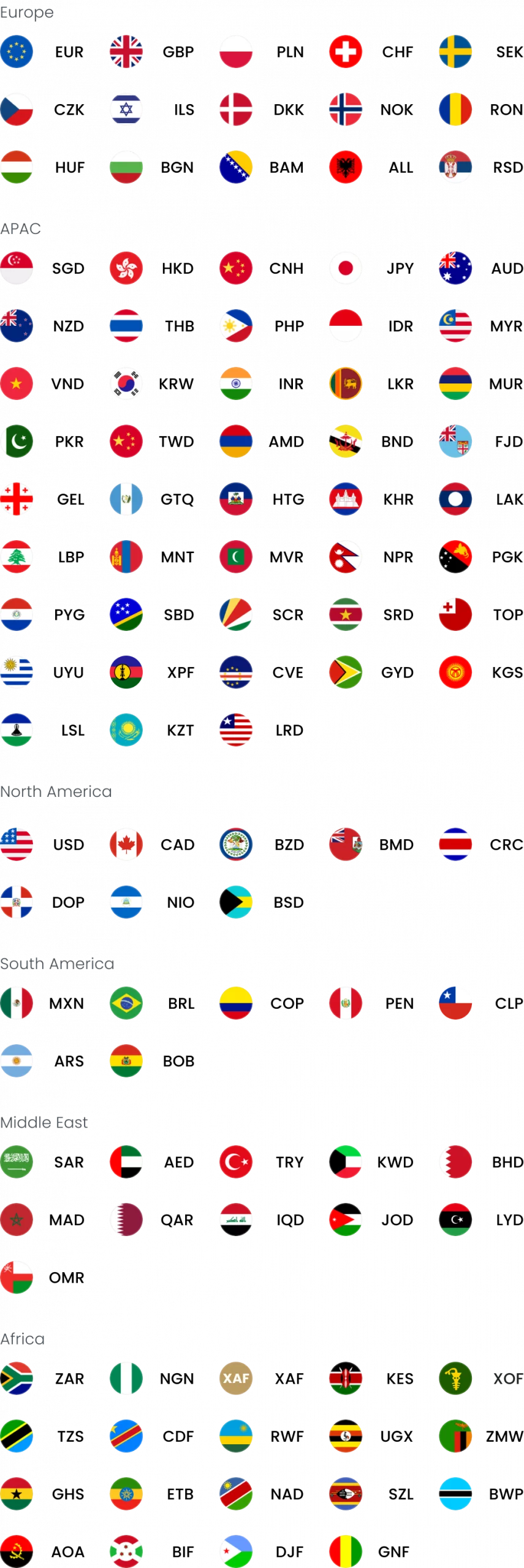
- All the currencies you need. For example, if you’re paying suppliers in China, you’ll need to pay in CNH or CNY
- Fast transfer speeds and the ability to take advantage of local payment rails, rather than relying on the SWIFT network and its correspondent banks for every transfer
- Other perks, like virtual currency cards, the ability to earn cashback on purchases and compatibility with your financial software
- Regulatory status and how your funds are safeguarded, since providers in this space range from licensed banks to electronic money institutions, and that affects your protection if something goes wrong
In this guide, we’ll compare some of the top options side by side and help you choose the best fit for your business.
We’ll start with WorldFirst, a multi-currency account that offers cross-border payments to 210+ destinations, with a special focus on faster, more reliable payments to China.
Open a World Account for free today for fast, convenient cross-border business payments.
Key Takeaways
- Cross-border payment providers help businesses reduce costs and speed up international transactions
They offer better FX rates, faster transfers, and more transparency compared to traditional banks. - Different providers are built for different use cases
Some focus on e-commerce and supplier payments (like WorldFirst), while others specialise in freelancers, enterprise solutions, or global payroll. - Fees, currency support, and transfer speed are the most important factors
Choosing the right provider depends on FX margins, supported currencies (e.g. CNH for China), and access to fast local payment rails. - Modern fintech platforms outperform traditional banking for global operations
They offer automation, integrations, and multi-currency management that simplify financial workflows. - The right solution improves cash flow, supplier relationships, and scalability
Faster, more reliable payments reduce delays, protect margins, and make it easier to grow internationally.
WorldFirst: The business account built for cross-border payments
WorldFirst is a specialist in cross-border payments for growing businesses, SMEs and sole proprietors.
While many providers focus on individual consumer payments or comprehensive enterprise-level solutions, WorldFirst is built specifically to enable faster and more affordable business payments than traditional overseas payment methods.
Our multi-currency World Account is made to help businesses save on fees, reduce transfer times and operate more efficiently across borders. For instance, WorldFirst customers can access favourable conversion rates, make faster transfers using local payment rails, and avoid the red tape associated with opening overseas bank accounts.
Over the past 20 years, WorldFirst has supported 1.5M+ businesses and processed over US$500 billion in international payments. Here are just some of the reasons to choose us for cross-border payment needs:
Make instant, same-day and next day payments to 210+ destinations
WorldFirst enables payments in 100+ currencies to 210+ destinations, with 80% of payments arriving on the same day and 90% by the next day. That means more on-time payments, improved relationships with your business partners and less stress about maintaining inventory levels.
You can also get even faster payments with free instant payments between World Accounts. Pay your recipient for free in seconds if they already have a World Account, or when they sign up for their own World Account at no charge.
We’re also one of the few providers offering same-day USD payments to China, via our exclusive network of local Chinese banks. In partnership with Ant Group and major Chinese banks like China Merchants Bank and Zhejiang Chouzhou Commercial Bank, WorldFirst lets you pay Mainland China and Hong Kong in just hours, with real-time payment tracking.
Read more: The best way to pay Chinese suppliers: A guide for cross-border businesses
Pay with World Cards online wherever Mastercard is accepted
When you open a World Account, you also get 50 virtual World Cards for free, which you can use wherever Mastercard is accepted.
Use your World Cards to make payments in 150+ currencies. You also pay no FX fees on 15+ major currencies when you pay from your World Account balance.
Use a different World Card to separate expenses out by expense type, supplier, department or any other category of your choice for simplified accounting. You can also set custom limits for improved security and instantly freeze, unfreeze or cancel your card from your World Account dashboard to prevent theft, fraud and accidental overspending
When you pay with a World Card, you earn 1.2% unlimited cashback on all business expenses, so you earn money every time you make cross-border payments.
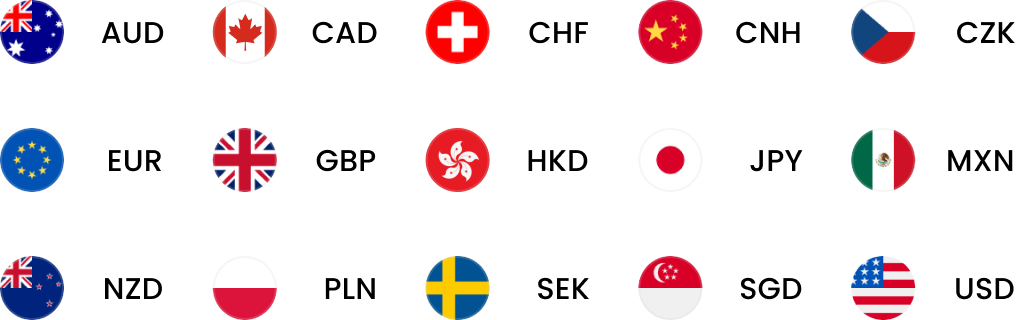
Hold funds in 20+ currencies with no monthly fees and only exchange funds when you’re ready
With a World Account, you can receive and hold funds in 20+ currencies and get separate local account details for each currency.
With local currency accounts, you don’t have to accept unfavourable automatic conversion rates, poor market conditions or high FX fees. Instead, control how and when to exchange funds, so you can protect your cash flow. For more on what to consider when a payout lands in a currency you don’t normally hold, see our guide to receiving foreign currency.
As we use the mid-market exchange rate with a low, transparent markup, you always know exactly what you’re paying. There are no setup costs, no fees to receive or hold foreign currency and no hidden charges that other cross-border payment providers often build into their pricing.
Use your World Account as your receiving account when you sign up with major marketplaces like Amazon and TikTok Shop, and gateways like Stripe and Shopify payments. Then, collect payments in local currency, and skip the high conversion fees and unpredictable charges.
Read more: UK online business bank accounts for non-residents: 4 top options
Protect large cross-border payments with WorldTrade escrow
Making large cross-border payments or working with new suppliers can raise doubts about the security of your funds. Many businesses choose to use an escrow service for extra piece of mind and protection against fraud and scams.
With an escrow service, like WorldTrade escrow, your funds are held securely by a neutral third party until your supplier ships your order. WorldTrade also comes with instant payment confirmation and real-time order tracking, so there’s never any doubt about where your funds or goods are.
Add WorldTrade at no cost when you pay with your World Account balance, or pay with a credit or debit card at just 2.9%. Use WorldTrade when you buy from nearly a million Chinese suppliers who are also WorldFirst users.
Manage all of your currencies and payments through one easy-to-open account
With the World Account dashboard, you can view all of your transaction data in one single, central platform. There’s no need to manage multiple accounts from different providers, for example different business banking accounts in different countries.
WorldFirst is also integrated with finance and business software like Xero and NetSuite, for simplified accounting and financial management. Or, easily export your World Account data to sync with other business software.
Opening a World Account account is incredibly simple, and the entire process can be completed entirely online. There’s no need to make an in-person visit and no requirement to have a local presence in any of the countries whose currencies you hold.
Read more: How to pick the best online business bank account (12 options)
How to open a World Account
It takes just minutes to complete your World Account application, and most accounts are approved within 48 hours. Here’s how to open an a World Account and start making simplified cross-border payments right away:
Visit our online registration portal with your mobile phone, email and qualifying documents ready. Then:
- Click the Sign up button and choose your region
- Click the Create account button
- Enter your personal details and business information
- Upload any required documents
The account verification process can take up to 48 hours, but typically takes less than a day. As soon as you’re approved, you can set up your account and start making cross-border payments.
5 alternative cross-border payment companies
Here’s how five of the most popular cross-border payment solutions compare to WorldFirst, and who they’re best for:
1. Best choice for individual consumer payments: Wise
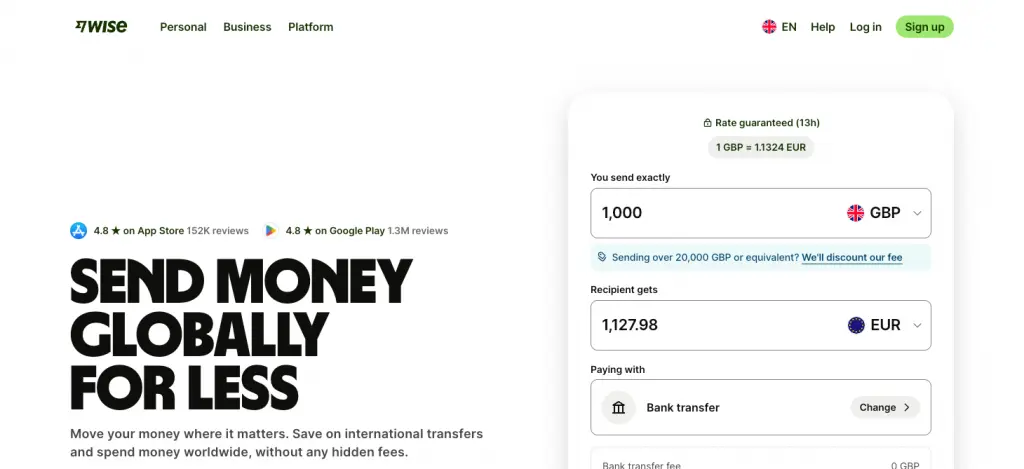
Wise specialises in individual overseas transfers, and has recently begun supporting business functionality. Today, businesses can open an account for a small fee to get faster overseas transfers than traditional bank wires.
Like WorldFirst, Wise offers business debit cards, but each card comes at a cost of 3GBP. You can also earn cashback, at a rate of 0.5% (with WorldFirst 1.2% cashback on all business expenses).
- Currencies supported: Receive 22+ currencies and hold 40+ currencies, but note that several restrictions apply
- Fees: Free to open on the Essential plan; a one-off fee of around £50 unlocks the Advanced plan, which most businesses need for receiving payments, invoicing and direct debits
- Transfer speeds: Wise reports that a large share of payments settle within seconds to hours, with the large majority arriving within 24 hours, though this varies by currency corridor
- Payment cards: Get one card for free or order additional cards for 3GBP each and pay online or in-store in 40+ currencies to 160+ countries
Account opening requirements: Fully online application process, with the Essential plan free and the Advanced plan carrying its one-off setup fee
2. Best choice for enterprises and high-growth startups: Rapyd

Rapyd is an all-inclusive suite of fintech solutions built to serve large enterprises and high-performing startups. It’s a solid choice particularly for tech-forward companies with the capital to make a significant investment in their cross-border payment infrastructure.
Unlike other providers, Rapyd’s fees are not listed on their site. Interested companies should contact sales to find out whether they qualify to partner with Rapyd.
- Currencies: A multi-currency account lets you route all incoming payments to one settlement account and hold funds in multiple currencies, as well as send payments to vendors and clients. Available currencies are not publicly listed
- Fees: Contact Rapyd for information about costs and fees
- Transfer speeds: Depends on the route. Rapyd offers many ways to receive incoming payments, including SWIFT, RTP and global ACH. You can also send payouts using real-time push-to-card payments, stablecoin payouts, and single and mass payouts, with local clearing and instant payouts in some countries, plus eWallet payments across Southeast Asia and Europe
- Payment cards: You can issue virtual and physical cards, though additional fees may apply
- Account opening requirements: Contact Rapyd to see if you qualify for an account
3. Best choice for automated workflows: Airwallex
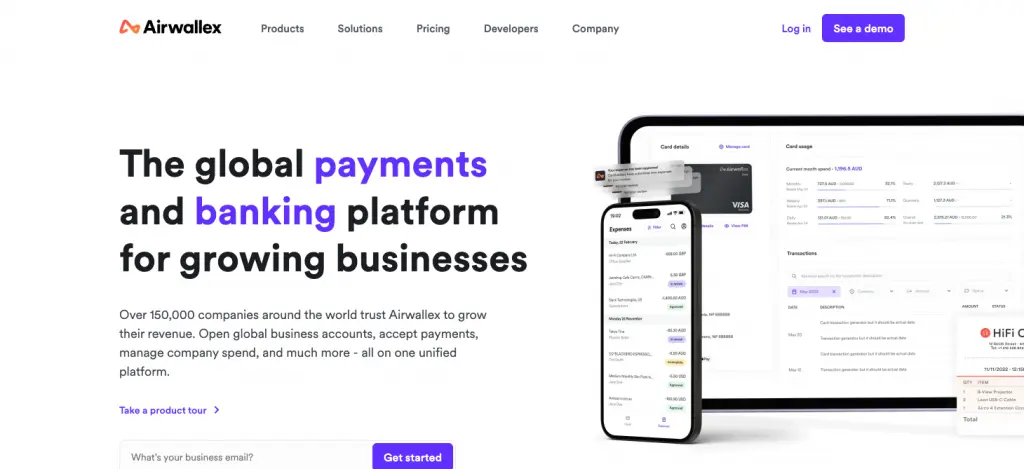
Airwallex offers a full suite of payment and banking solutions with membership plans tailored for a wide range of business sizes. The platform stands out for its robust API and the ability to build custom workflows.
Businesses that need to automate routine tasks like bulk payouts or integrate payment acceptance with their accounting software should consider Airwallex for maximum customisability. Note, however, that pricing for these additional services is not publicly listed.
Airwallex may not be a strong choice for companies wishing to partner with suppliers and manufacturers in China. Unlike some other multi-currency accounts, CNH and CNY are not listed among its currency offerings.
- Currencies: Collect funds in 17 currencies with local bank and branch codes and dedicated account numbers, including AUD, CAD, DKK, EUR, HKD, IDR, ILS, NZD, PHP, PLN, SGD, AED, GBP and USD. Send money in 60+ currencies to over 150+ countries and regions. No CNH or CNY
- Fees: UK plans run from around £19 a month, often waived above a minimum monthly deposit or balance, up to £49 a month for growing businesses, with larger plans starting from around £999 a month plus additional charges for certain services
- Transfer speeds: As little as one business day for many corridors
- Payment cards: Sign up with a card provider, then request a virtual card in your Airwallex account portal. Depending on your financial provider or card issuer, you may be able to create multiple virtual cards
- Account opening requirements: You must be an officially registered and active business that is fully incorporated and in good standing, and registered in an eligible country
4. Best choice for freelancers and sole traders: Revolut
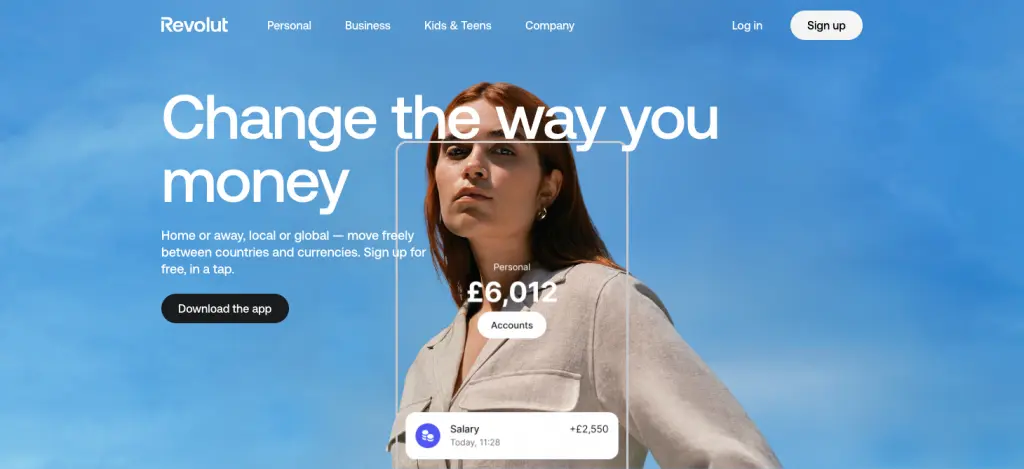
Revolut’s mobile-first design and abundant virtual card offerings make it a strong fit for daily spending. Monthly fees are affordable, and it’s a great choice for small businesses making small, frequent payments, especially in person and on-the-go.
Enterprise offerings are also strong, but interested companies should note that Revolut offers limited support for trade with China. The availability of SEPA transfers, however, does make Revolut a strong fit for companies making regular payments within Europe.
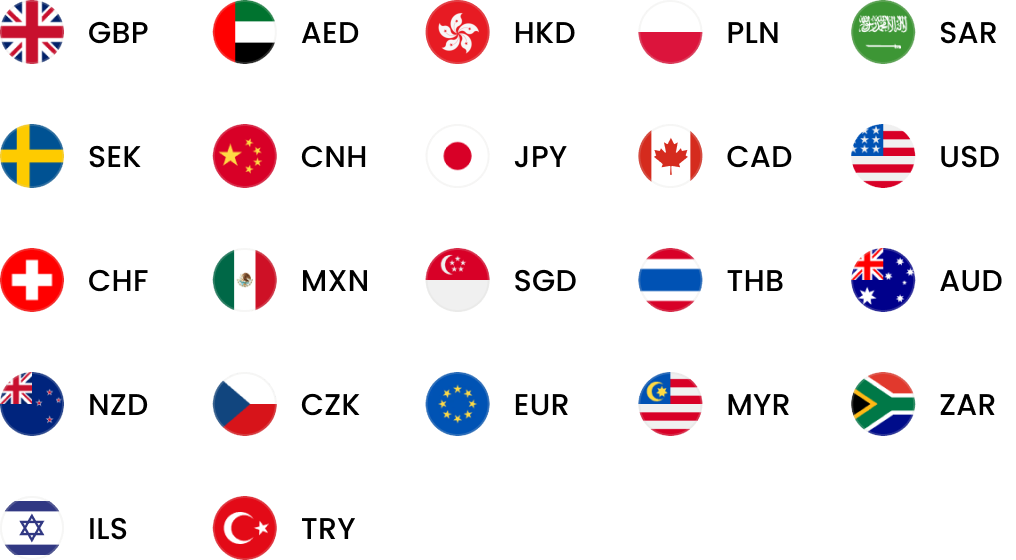
- Currencies: Hold and exchange in around 25 to 33 currencies depending on your plan, including GBP, USD, AED, AUD, CAD, CHF, EUR, HKD, JPY, NZD, PLN, SGD, THB, TRY and ZAR. No CNH or CNY
- Fees: Plans range from £10 a month on the entry tier to £125 a month on the higher business tier, or custom enterprise pricing, plus additional fees if you exceed your plan’s no-fee local transfer and FX allowance
- Transfer speeds: Depending on the type of payment, transfers typically take between one and two business days using local networks, SEPA or SWIFT
- Payment cards: Issue physical and virtual corporate cards and spend in 130+ currencies. Can link cards to specific currency accounts or exchange at the interbank rate as you pay. Every team member can hold up to 3 active physical cards and up to 200 active virtual cards with any Revolut Business plan. Delivery fees for physical cards apply
- Account opening requirements: Company must be fully incorporated, active and registered in an eligible country. No restricted industries allowed
5. Best choice for paying employees and contractors: Payoneer
Payoneer is a good fit for companies whose primary use case is paying employees, contractors and remote teams in other countries. While payment acceptance is fairly limited, the platform supports payments in 70+ currencies to 190+ countries and territories.
The platform also boasts strong integrations with online platforms like Fiverr and Upwork, enabling simplified payments to global freelancers. Note that payment fees can be quite high, up to 3% of the transaction amount, plus up to 3.5% for transactions involving currency conversion.
- Currencies: Payoneer’s multi-currency account supports payment acceptance in 10 currencies: USD, GBP, EUR, AUD, CAD, SGD, HKD, AED, MXN and JPY. No CNH/CNY
- Fees: Pricing depends on transaction type, currency and other factors. There’s also an annual account fee of US$29.95, waived once an account passes an activity threshold, plus a registration fee in certain countries. Payoneer’s own pricing page notes that fees can vary by territory and account type
- Transfer speeds: Not specified; fees vary depending on transfer type
- Payment cards: Cards available in USD, EUR, GBP or CAD, but you must choose one currency for each card. There’s no multi-currency card available at this time
- Account opening requirements: Sole proprietors and many different types of businesses can apply, each submitting different relevant documentation
WorldFirst: the best choice for your cross-border business
While there are many cross-border payment companies to suit all kinds of business needs, WorldFirst stands out for our ability to serve all business sizes with secure, enterprise-ready global infrastructure.
Our partnership with Ant Group and connections to local banking networks make us one of the most reliable choices for global payments to China. We also serve more countries and support more currencies than many other international payment platforms.
Open a World Account for free today and start making payments in 100+ currencies to 210+ destinations.
FAQs
1. What should I look for when choosing a cross-border payment company?
Look for transparent pricing, strong payment services and support for the currencies you use most often. A good provider should offer cost-effective options for cross-border transactions and work with reputable financial institutions to keep your transfers secure. It also helps if the platform uses a reliable payment network that reduces delays and makes the overall experience smoother.
2. How do different providers handle foreign exchange and international transfers?
Each provider has its own approach to foreign exchange, including how rates are set and when fees apply. Some companies focus on simple international transfers, while others support more complex international banking needs. A strong provider will also minimise heavy reliance on correspondent banking, which can slow things down and increase costs during international transactions.
3. Why are some cross-border payments faster than others?
Transfer speeds depend on the provider’s access to local rails, its global network and whether it works directly with banks in emerging markets. When fewer intermediaries are involved, the payment process moves faster and requires less liquidity. Some providers also use more modern payment system technology that shortens settlement times for both cross-border and domestic payments.
4. How do virtual cards support business spending across multiple countries?
Virtual cards let businesses separate expenses, set custom limits and manage payments across teams or suppliers. They can simplify checkout for online purchases and provide flexibility when paying vendors internationally.
5. What risks should businesses consider when sending money across borders?
Key concerns include fraud, delayed remittances, weak oversight from a provider or exposure to volatile digital currencies. Businesses should look for companies regulated by agencies and review the provider’s risk management policies.
6. What are cross-border payment companies?
Cross-border payment companies are financial providers that enable businesses and individuals to send and receive money internationally. They offer services such as currency conversion, international transfers, local bank details in multiple countries, and payment processing across borders. These companies are commonly used for global trade, ecommerce, freelancing, and international payroll.
7. What are the top 10 cross-border payment platforms?
Some of the top cross-border payment platforms include Wise, PayPal, Payoneer, WorldFirst, Airwallex, Stripe, Revolut, Western Union Business Solutions, Adyen, and OFX. These platforms are known for supporting international payments, offering multi-currency accounts, and providing competitive exchange rates. The best option depends on your business size, payment volume, and geographic focus.
8. Who are the key players in cross-border payments?
Key players in cross-border payments include Wise, PayPal, Payoneer, WorldFirst, Airwallex, Stripe, and traditional networks like SWIFT. These providers handle international money movement, currency exchange, and global payment infrastructure. They serve a wide range of users, from individuals sending remittances to businesses managing global operations.
9. Is PayPal cross-border?
Yes, PayPal supports cross-border payments. It allows users to send and receive money internationally in multiple currencies and is widely used for online transactions and e-commerce. However, fees and exchange rate margins can be higher compared to some specialised international payment providers, especially for business transactions.
Sources:
- https://wise.com/gb/business/
- https://wise.com/gb/business/card
- https://www.rapyd.net/products/disburse/
- https://www.airwallex.com/uk/business-account/global-accounts
- https://www.airwallex.com/uk/spend-management/cards/virtual-cards
- https://www.airwallex.com/uk/blog/how-encryption-safeguards-payment-data
- https://www.airwallex.com/hk/blog/understanding-of-large-value-transfer
- https://www.revolut.com/business/business-account-plans/
- https://help.revolut.com/help/transfers/bank-transfers/timeframes-for-transfers/
- https://www.revolut.com/business/cards/
- https://payoneer.custhelp.com/app/answers/detail/a_id/37663/~/registration-%E2%80%93-choosing-the-right-type-of-legal-entity
- https://www.payoneer.com/multi-currency-account/