You’ve just brought on your first warehouse hand or a second buyer to help manage supplier relationships, and now you’re juggling PAYE registration alongside the usual deposit payment to your supplier in Shenzhen.
If you’re already running a small import business, you know the drill: goods arrive, invoices land in CNY or USD, marketplace payouts trickle in across different currencies, and somewhere in the middle of all that you need to get how to pay employees in a small business right, every single month, without fail.
Employer National Insurance alone jumped from 13.8% to 15% from 6 April 2025, with the secondary threshold cut from £9,100 to just £5,000 a year, meaning employer costs bite earlier and harder than they used to.
This article walks through the five practical steps to paying staff compliantly, then looks at how importers can manage the cash-flow squeeze that comes from running payroll and international supplier payments side by side.
Key takeaways:
- Set up PAYE before the first payday: employer registration can take time, so payroll needs to be in place before wages are due
- Employer NI adds a meaningful cost: the current rate and lower threshold mean staffing costs can rise faster than gross salary alone suggests
- Employment Allowance can reduce the NI bill: eligible employers can offset part of their employer National Insurance costs
- Workplace pensions need to be built into payroll: eligible staff must be auto-enrolled and contributions paid on time
- HMRC reporting follows each payday: Full Payment Submissions are due on or before employees are paid
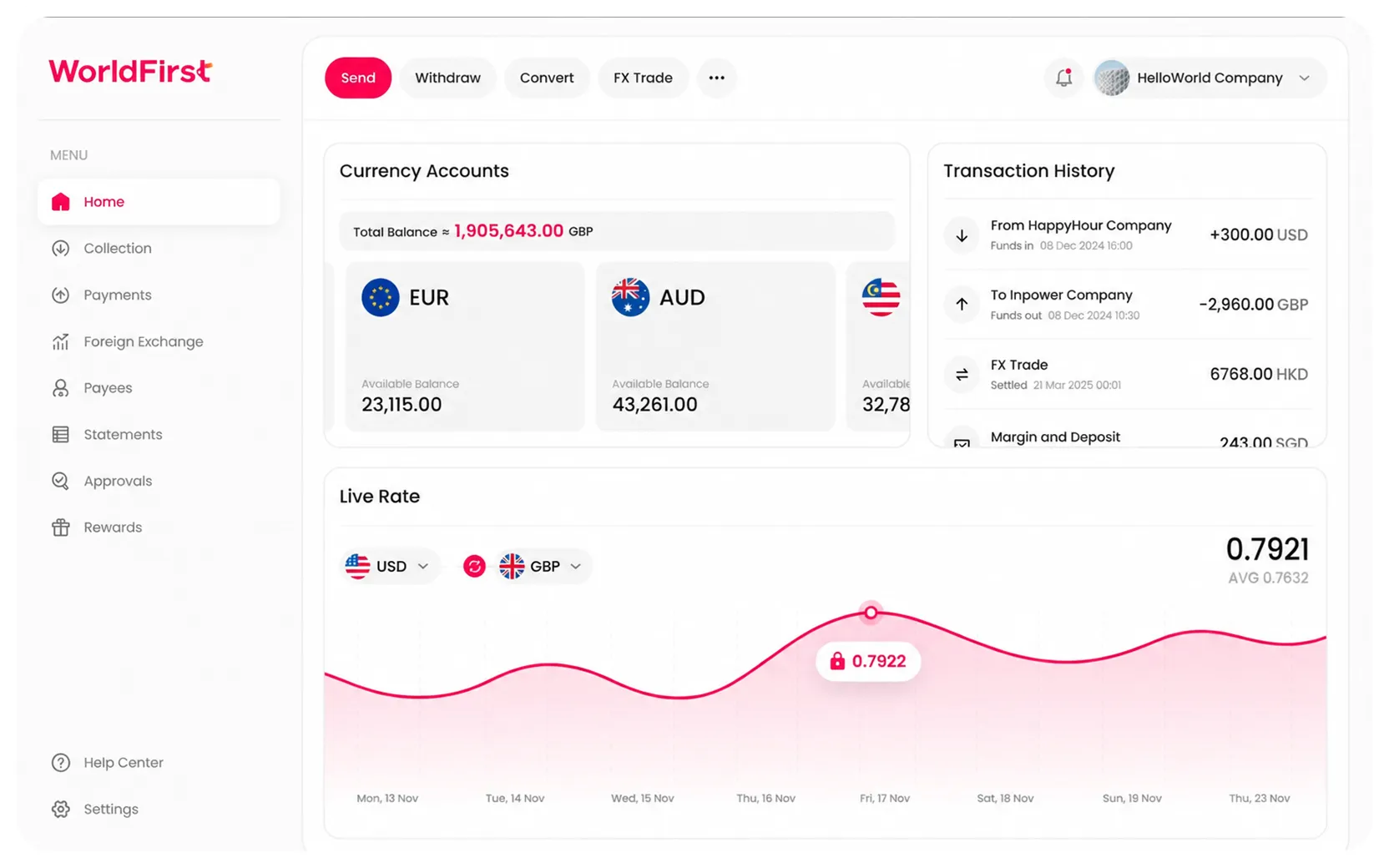
- WorldFirst can support the currency side of payroll planning: importers can hold and convert marketplace or export revenue separately from supplier-payment balances, giving them more control over when GBP is available for payroll
Open a World Account to separate the currency you hold for payroll from the currency you’re paying suppliers in, and see FX rates before you convert.
What you need in place before you pay anyone
Before you can legally put anyone on payroll, three things need to be sorted: your HMRC employer registration, your Employers’ Liability insurance, and a decision on how you’ll actually run the payroll each month.
You must register as an employer with HMRC before your first employee’s payday, and get set up for PAYE Online. Registration can take up to 15 days, so don’t leave it until the week you need to pay someone.
You must register as an employer with HMRC before your first payday if you need to operate PAYE. For 2026/27, employees generally need to be paid through PAYE if they earn £129 or more a week, £559 a month or £6,708 a year. PAYE may also apply in other circumstances, so check HMRC’s current rules when taking on a new employee.
You’ll also need Employers’ Liability insurance in place before you employ anyone at all. This is a legal requirement, not a nice-to-have, and it’s a distinct step in the government’s employer checklist. For an importer who already carries goods-in-transit or product liability cover, this is one more policy to add, but it’s non-negotiable once you have staff on the books.
With those basics in place, you can move through the five steps below to set up and run payroll correctly each month.
Step 1: choose how you’ll run payroll
You have two realistic options: pay a bureau or accountant to run payroll for you, or run it yourself using payroll software. Neither choice removes your legal responsibility.

HMRC offers free Basic PAYE Tools for businesses with fewer than 10 employees, which covers the basics of calculating deductions and submitting reports.
Many established importers outgrow this quickly once they add warehouse staff, a bookkeeper, or seasonal hires, and move to paid software or a bureau instead. Whichever route you pick, remember that you remain legally responsible for every PAYE task, even if you’ve outsourced the mechanics to an accountant. If your bureau misses a deadline, HMRC comes to you, not them.
Step 2: calculate gross pay, deductions and employer costs correctly
Getting the maths right means tracking four separate numbers for every employee: gross pay, Income Tax, employee National Insurance, and employer National Insurance, plus checking you’re meeting minimum wage law.
National Minimum and Living Wage rates change every 1 April, and missing the update is one of the most common compliance failures among small employers.
For the current tax year, 6 April 2026 to 5 April 2027, the National Living Wage for workers aged 21 and over is £12.71 an hour, with £10.85 for workers aged 18 to 20 and £8.00 for under-18s and eligible apprentices. From April 2026, these rose again to £12.71, £10.85 and £8.00 respectively, as confirmed in the government’s announcement.
The table below shows the current National Minimum and Living Wage rates by age group.
| Age band | Rate from April 2026 |
| 21 and over (NLW) | £12.71/hr |
| 18 to 20 | £10.85/hr |
| Under 18 | £8.00/hr |
| Apprentice | £8.00/hr |
Rates checked against GOV.UK as of the 2026/27 tax year.
For 2026/27, the standard Personal Allowance remains £12,570.
For employees in England, Wales and Northern Ireland, the basic Income Tax rate is 20%, the higher rate is 40% and the additional rate is 45%. Scotland uses different Income Tax bands. Payroll software applies the relevant tax code and thresholds automatically.
Employee National Insurance is charged at 8% on earnings between £12,570 and £50,270 a year, dropping to 2% above that.
Employer National Insurance is where the real cost surprise lives. Since 6 April 2025, you pay 15% on each employee’s earnings above £5,000 a year, down from a £9,100 threshold and 13.8% rate the year before. That’s a meaningful jump for any importer with more than one or two staff on the books.


The Employment Allowance can offset this, now worth up to £10,500 a year, with the old £100,000 eligibility cap scrapped. It’s worth noting you can’t claim it if you’re a limited company with a single director and no other staff earning above £5,000.
Step 3: enrol eligible staff into a workplace pension
Every UK employer must automatically enrol eligible staff into a workplace pension scheme and contribute to it – there’s no opt-out for the business, only for the individual employee.
Eligibility covers staff aged 22 to State Pension age who earn more than £10,000 a year.
The minimum total contribution is 8% of qualifying earnings, split as 3% from you as the employer and 5% from the employee (including their tax relief).
Qualifying earnings for 2026/27 run between £6,240 and £50,270 a year. Contributions must reach the pension scheme by the 22nd of the following month, the same deadline that applies to your HMRC payments, which is worth building into a single monthly cash-flow checkpoint rather than treating as two separate admin tasks.
Step 4: report to HMRC in real time
Payroll reporting in the UK runs on Real Time Information, meaning you tell HMRC what you’ve paid as you pay it, not weeks later.
You must send a Full Payment Submission on or before each payday, covering pay, deductions and employer NI for everyone you’ve paid, even those earning below the reporting threshold. If you didn’t pay anyone in a given tax month, you send an Employer Payment Summary instead.
An EPS is also how you claim reductions such as statutory pay recovery or your Employment Allowance, and it’s due by the 19th of the following tax month. The UK tax year runs from 6 April to 5 April, and tax months follow the same 6th-to-5th pattern, which matters when you’re aligning payroll cycles with supplier payment schedules that might follow a calendar month instead.
Step 5: pay HMRC on time, every time
You owe HMRC the Income Tax and National Insurance you’ve deducted, plus your employer NI, and missing pension contribution deadlines: pension contributions must be paid to your scheme within the required timeframe, so build the scheme’s payment deadline into your payroll calendar.
If your average monthly PAYE liability is under £1,500, you may be able to arrange quarterly payments instead, which can smooth cash flow for a smaller team.
Miss the deadline and you’re looking at interest plus escalating penalties. HMRC doesn’t treat payroll tax as discretionary, and persistent late payment can trigger closer scrutiny of your wider tax affairs.
Keep records for at least six years for National Minimum Wage compliance, and give every employee a payslip on or before payday.
Managing cash flow when payroll meets international trade
The real complication for an established importer is timing payroll against everything else moving through the business:
- Supplier deposits: payments may be due in CNY or another foreign currency
- Marketplace payouts: revenue can arrive in USD, EUR or other currencies
- HMRC payments: PAYE and National Insurance create fixed monthly obligations
- Pension contributions: these have their own payment deadlines regardless of when customer or marketplace revenue arrives
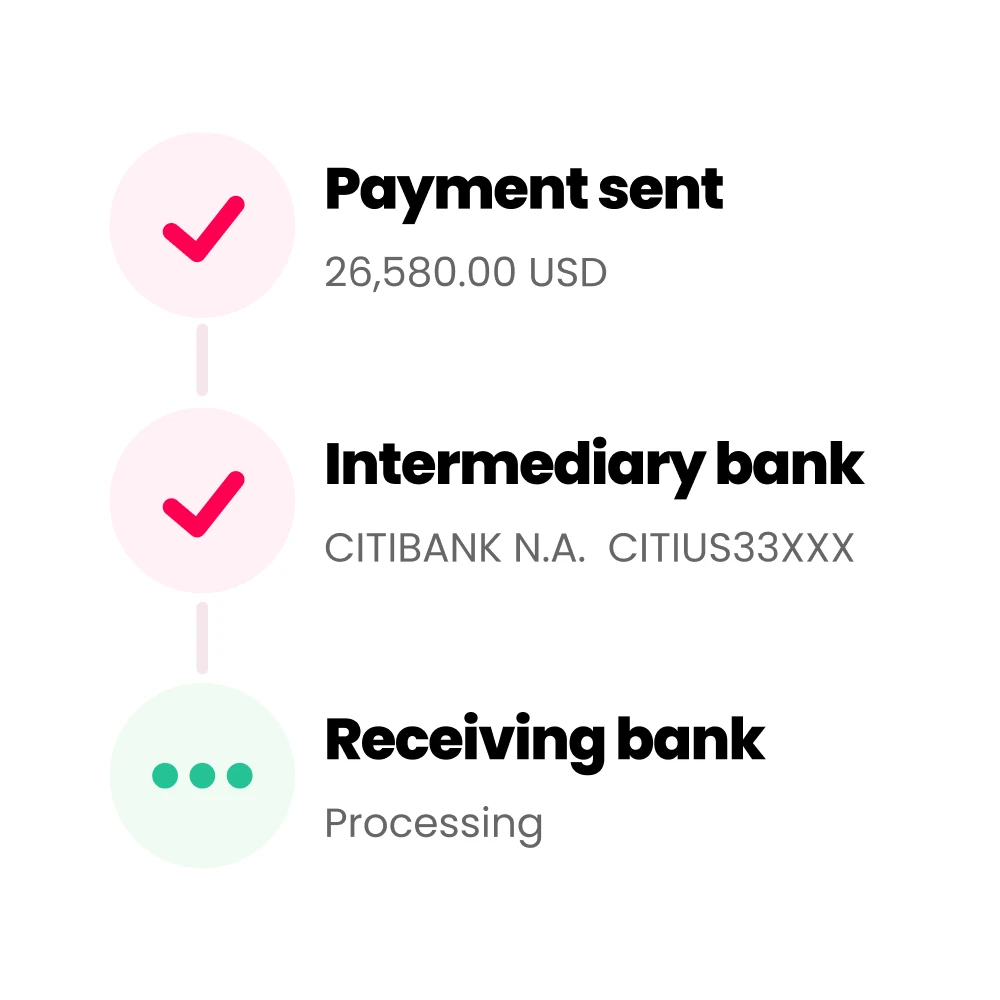
Chinese suppliers may invoice or receive payments in RMB, USD or other supported currencies, and the FX route used can affect the sterling cost of the payment.
If you’re also collecting marketplace revenue in USD or EUR and converting it ad hoc to cover payroll, you’re exposed to whatever the rate happens to be on payday, rather than a rate you’ve chosen.
One practical fix is separating the currency you hold for payroll funding from the currency you’re using to pay suppliers, so a weak day for GBP against USD doesn’t force you to convert supplier funds at a bad rate just to cover a wage bill.
Holding foreign currency revenue until the rate suits you, rather than converting every receipt the moment it lands, is a habit that established importers increasingly use to protect margin on both sides of the business. If you employ overseas contractors alongside UK staff, for example a freelance product photographer in the Philippines or a sourcing agent in Vietnam, batching those payments and locking in a rate ahead of time gives you cost certainty that a spot conversion each month doesn’t.
Common payroll mistakes small importers make
Most payroll errors among small businesses come down to timing and threshold changes rather than genuine confusion about the rules, which makes them avoidable with the right calendar discipline.
- Missing the 1 April wage rise: National Minimum and Living Wage rates change annually, and running last year’s rate into the new tax year is a common and easily checked mistake
- Treating employer NI as an afterthought: Employer NI at 15% above £5,000 is a real cost on top of gross pay, not a rounding error, and it needs to be budgeted into every hiring decision
- Late FPS submissions: Reporting after payday rather than on or before it puts you in breach of RTI rules even if the wages themselves went out on time
- Missing pension contribution deadlines: The same 22nd-of-the-month deadline applies to pension contributions as to HMRC payments, and it’s easy to pay one and forget the other
- Converting currency reactively: Waiting until the day payroll is due to convert marketplace or export earnings into GBP leaves you at the mercy of that day’s rate, with no room to plan around a weak spot
Read more: FX international payments explained for businesses
How WorldFirst supports UK importers alongside payroll
WorldFirst doesn’t replace your payroll software or accountant. It supports a different part of the workflow by helping you manage the currencies used to fund payroll and pay overseas suppliers.
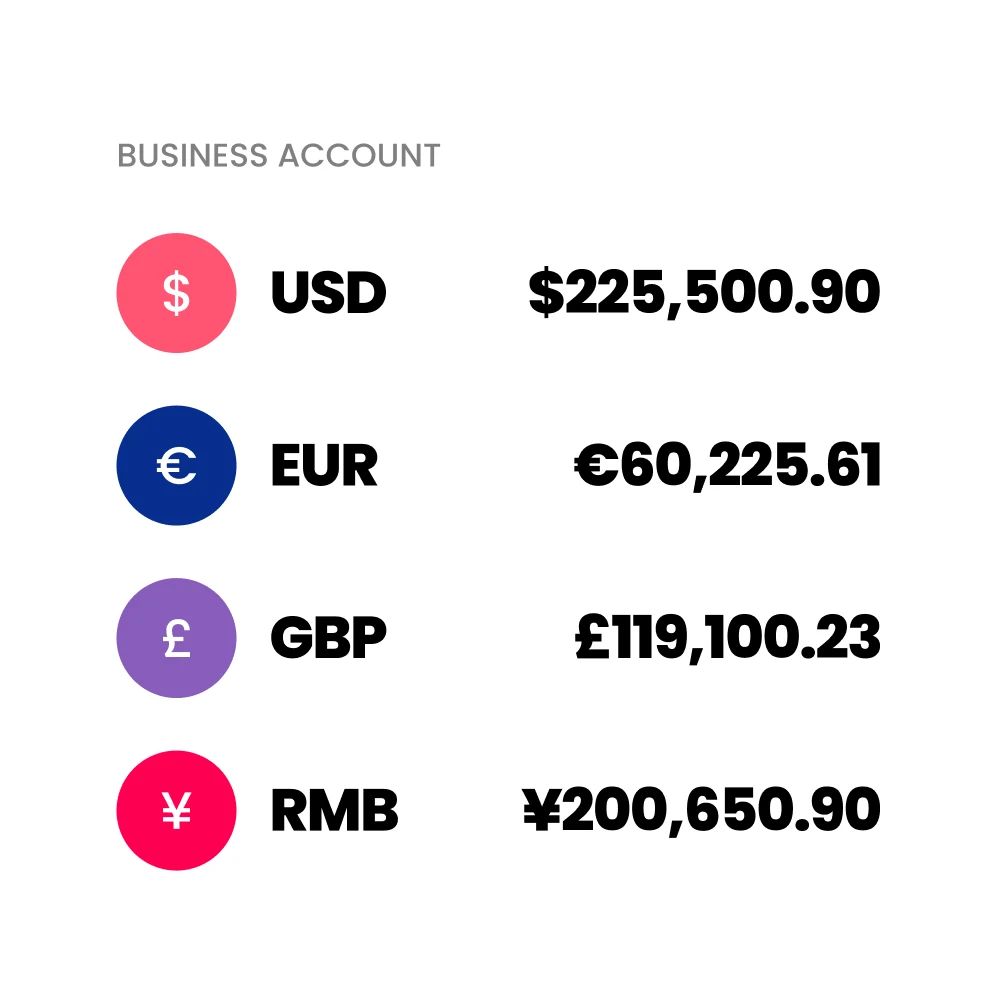
A World Account is a multi-currency account that lets you collect in 20+ currencies with no fees on collection, hold that balance rather than auto-converting it, and send payments in 100+ currencies to over 210 regions when you’re ready, whether that’s a supplier deposit, a balance payment, or a contractor invoice.
Transfers between your own WorldFirst balances are free and instant, which matters if you’re moving funds from a marketplace collection account into a GBP balance earmarked for payroll rather than supplier payments.
For day-to-day operational spend, the World Card holds and pays in 15 major currencies with 0% FX fees.
WorldFirst has supported over 1.5 million businesses since 2004 and is authorised by the FCA as an Electronic Money Institution, not a bank, so it’s worth being clear that safeguarded client funds don’t carry FSCS protection the way a bank deposit would.
WorldFirst holds funds in segregated accounts instead. For an importer whose main friction is bank FX markups, the value is in visibility over the rate before you convert, not in replacing your payroll process.
Paying employees correctly in a small UK business isn’t complicated once the steps are in a routine, but it does compound. Get registration, deductions, pensions and HMRC deadlines right from month one, and payroll becomes a predictable monthly task rather than a recurring fire drill.
The harder part for an established importer is making sure the currency you’re using to fund that payroll isn’t quietly eroding your margin every time you convert it, and that’s worth as much attention as the payroll calculation itself.
Open a World Account to hold and convert currency on your terms, and keep payroll funding separate from your supplier payment flow.
FAQs
1. Do I need to register as an employer if I only hire one part-time member of staff?
Yes, potentially. For 2026/27, employees generally need to be included in PAYE reporting if they earn £129 or more a week (£559 a month or £6,708 a year), though PAYE obligations can also arise in other circumstances. Check HMRC’s current rules when taking on any employee, including part-time staff..
2. Can I run payroll myself without an accountant?
Yes, HMRC’s free Basic PAYE Tools is designed for businesses with fewer than 10 employees, though you remain fully responsible for accuracy and deadlines whether you use it or outsource to a bureau.
3. What happens if I miss the National Minimum Wage increase on 1 April?
You risk underpaying staff, which HMRC can pursue as a compliance breach with back-pay requirements and potential penalties, so it’s worth calendaring the annual rate change well ahead of time.
4. Does Employment Allowance apply to every small business?
Not quite. It’s available to most employers up to £10,500 against employer NI, but it cannot be claimed by a limited company where the only employee is also the sole director earning above £5,000.
5. How does paying overseas contractors differ from paying UK employees?
Genuinely self-employed overseas contractors are generally not paid through your normal UK employee payroll, but you should not assume that someone is outside PAYE simply because they are based overseas or described as a contractor. Their employment status, where they work and the relevant UK and local tax rules all matter.
Sources:
- https://www.gov.uk/national-minimum-wage-rates
- https://www.gov.uk/government/publications/changes-to-the-class-1-national-insurance-contributions-secondary-threshold-the-secondary-class-1-national-insurance-contributions-rate-and-the-empl
- https://www.gov.uk/paye-for-employers/setting-up-payroll
- https://www.gov.uk/get-ready-to-employ-someone
- https://www.gov.uk/government/news/national-living-wage-increases-to-1271-per-hour
- https://www.gov.uk/guidance/rates-and-thresholds-for-employers-2025-to-2026
- https://www.thepensionsregulator.gov.uk/en/employers/new-employers/im-an-employer-who-has-to-provide-a-pension/choose-a-pension-scheme/understanding-your-costs/making-contributions-to-your-pension-scheme
- https://www.gov.uk/running-payroll/reporting-to-hmrc
- https://www.gov.uk/guidance/what-payroll-information-to-report-to-hmrc