Multi-currency accounts, competitive FX, and global transfers — Everything you need to pay and get paid internationally

Smart enterprise solution

The unified global financial stack for smart enterprises.

What we offer

API integration

Checkout

Account

Spend

AI FX

Real-time treasury

Embedded finance

Who we serve

Marketplaces

Travel platforms

Workforce platforms

Social media

SaaS

Pricing

Enterprise pricing

Resources

API doc

Case studies

Named a Top Global Fintech Company by CNBC & Statista, we’ve supported 1.5M+ businesses since 2004.

Europe

Asia

Oceania

Africa

We provide coverage in South Asia and Middle East: servicing 210+ countries and territories.

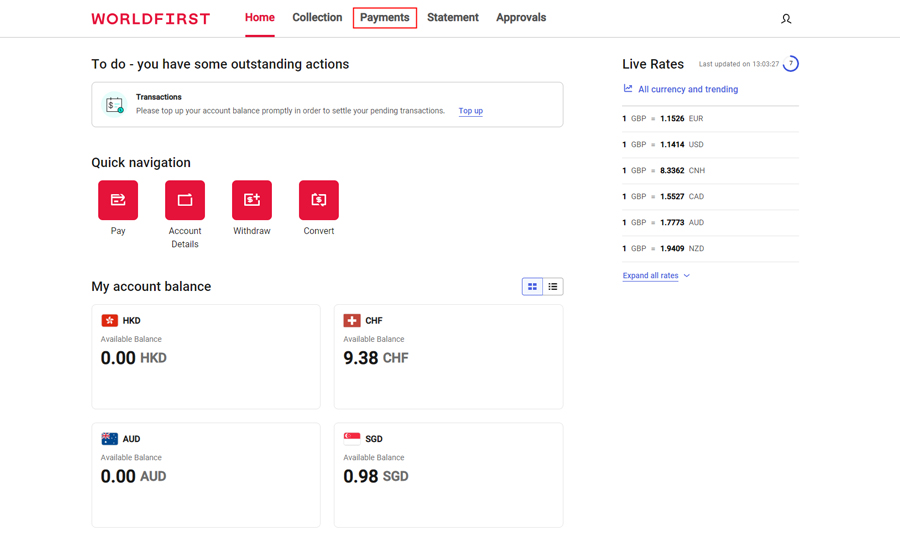
How to set up automatic transfers to sweep funds

Step 1:

Select ‘Payments’ from the Top Nav.

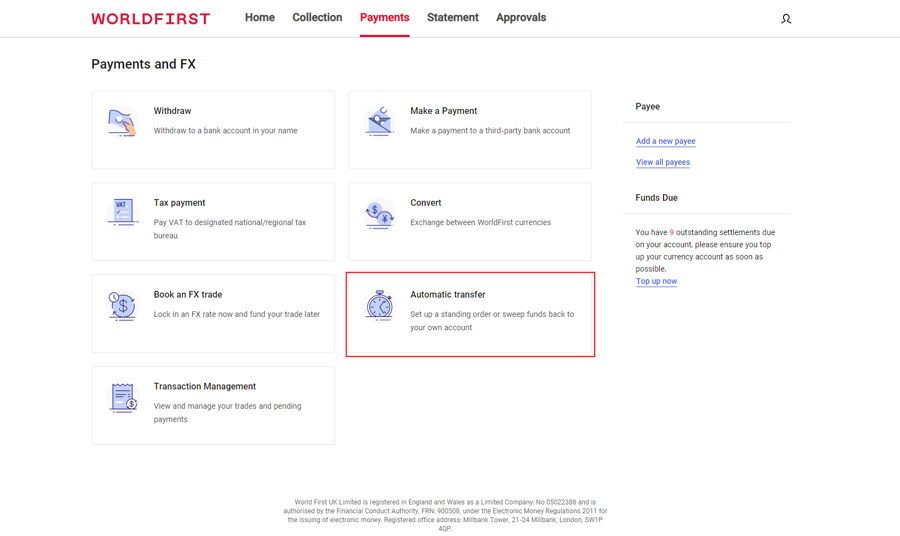
Step 2:

Select ‘Automatic transfer.’

Step 3:

Select ‘Create a new rule’ in the top-right corner.

Step 4:

Select the desired payee from the drop down menu and input a reference if required.

Step 5:

Choose the currency account you wish to debit and select ‘Minimum amount’. Next, input the minimum balance required for the payment.

You’ll also have the option to input the account balance you would like to retain when the payment is sent.

Step 6:

Select the start date and the frequency of payment.

Step 7:

You’ll then be asked to confirm via Authy or SMS.

Step 8:

Review your automatic transfer rule and hit confirm.

Step 9:

Once complete, you’ll see a screen confirming that your new automatic transfer rule has been booked.

Sorry, our accounts are currently available for business use only.

Stream A

Death, taxes and expanding to the U.S.

This session will cover the basics of what your key tax obligations are and answer questions

such as:

  • What are the biggest mistakes businesses make when expanding to the US (from a tax perspective)?
  • How to avoid penalties: what happens if you don’t comply? How to stay ahead of changing regulations?
  • How to keep tax compliance from being a bottleneck?
  • What resources or tools can businesses use to manage tax compliance without an in-house expert?
  • At what stage should businesses invest in tax automation software?
  • How can automation help prevent tax errors?