


























Home > blog > International Transactions > International transfer fees explained (banks vs fintechs)
International transfer fees explained (banks vs fintechs)
Last update:


It’s not uncommon for international transfer fees to surface only after a business sends a payment. Suppliers receive less than expected, funds arrive later than planned or the FX rate on the statement doesn’t match what the finance team approved.
Research shows that about 44% of users cite poor exchange rates as their biggest issue with international transfers, while 35% cite high or hidden fees, reflecting how often the real cost only becomes clear after the payment has moved.
For UK businesses that pay overseas suppliers or collect revenue in multiple currencies, this lack of clarity makes international payments harder to predict. Even small differences in timing or pricing can affect supplier relationships, month-end reconciliation and cash flow forecasts.
This guide explains how international transfer fees actually work, how banks and fintechs structure and apply those costs differently and how businesses can reduce total transfer costs without changing how they manage payments day to day.
Key takeaways:
- International transfer fees often appear after payment: The real cost usually shows up through FX margins, intermediary deductions or settlement delays, not in the headline fee shown before sending
- Exchange rate margins drive most of the cost: FX pricing typically has a bigger impact than transfer fees, especially at volume. When providers automatically apply FX, businesses lose control over timing and final value
- Banks and fintechs charge in fundamentally different ways: Banks spread costs across initiation, conversion and settlement, often through correspondent networks. Fintechs usually simplify routes and display more costs upfront
- Predictability matters more than price as volume grows: As international payments become routine, slight inconsistencies in FX, timing and routing create reconciliation and cash flow issues
- WorldFirst provides a clearer alternative to bank transfers: WorldFirst is not a bank. It helps UK businesses manage international transfer fees by keeping FX pricing, routing and settlement outcomes visible before payments leave the account
Open a World Account to manage multi-currency payments in one place and reduce avoidable conversion and routing costs.
What are international transfer fees?
International transfer fees are the combined costs that reduce the value or delay the settlement of a cross-border payment.
Banks and fintechs apply these costs differently, which is why the same payment can produce different outcomes even when the headline fee looks similar. This matters more as cross-border activity increases.
The Bank of England estimates that the value of cross-border payments worldwide will grow from nearly $150 trillion in 2017 to over $250 trillion by 2027, putting greater pressure on cost control, speed and transparency.
Banks typically split costs across fixed transfer charges, FX margins applied at conversion and deductions taken by correspondent banks during settlement. Fintechs more often consolidate pricing, apply FX at a more precise point in the payment flow and avoid correspondent routing for specific corridors.
For example, when a UK business pays a US supplier from a GBP account, a bank transfer may incur a visible fee, an FX markup at conversion and an intermediary deduction before funds arrive. At the same time, a fintech may convert upfront and deliver the agreed USD amount directly.
Because these costs appear at different stages, the approved payment amount often differs from the amount received. That gap is where visibility, reconciliation accuracy and cash flow predictability start to break down.
The main types of international transfer fees that UK businesses actually pay
When a UK business sends or receives money internationally, the real cost is rarely a single line item. Different providers break costs out differently and some charges only appear after settlement or in FX execution.
Understanding the major cost components helps you manage forecasting, reconciliation and supplier relationships more reliably.
1. Upfront transfer and processing fees
Banks almost always charge a fixed fee each time you make a cross-border payment. These can be flat amounts or based on the amount sent and they are higher for traditional SWIFT transfers than for local payment rails.
Specialist providers and fintechs often waive these upfront fees entirely or charge much less, focusing instead on FX pricing.
2. Exchange rate margins on currency conversion
Providers often apply a margin between the mid-market rate and the rate used for the transfer and that margin is frequently the highest cost UK businesses pay, even when providers don’t label it as a fee.
Banks typically apply a margin of several percent above the interbank rate, which can add up quickly at scale.
Many fintechs and FX-focused platforms offer tighter margins, sometimes 0.5% above the interbank rate and make their FX pricing explicit at the point of quote.
3. Intermediary (correspondent) bank charges
SWIFT transfers and many bank-to-bank international payments move through one or more correspondent banks.
Each intermediary can deduct a fee from the payment en route and these amounts often only appear on the statement after the funds arrive, complicating reconciliation.
4. Receiving and foreign-currency holding costs
Some banks and business accounts apply charges for receiving international payments, especially outside the EU/SEPA framework or for holding foreign currency balances.
Even if these seem small, they form part of the actual cost of moving and managing multi-currency payments.
How traditional banks charge international transfer fees
Traditional banks price international transfers through a layered system that reflects how global banking networks operate, not how modern businesses move money. Fees accumulate across the payment lifecycle, often at different stages, which makes total costs harder to predict upfront.
This lack of transparency isn’t marginal. The World Bank’s Remittance Prices Worldwide project shows that global cross-border payments still cost around 6.49% of the amount sent, once providers factor in all fees and exchange rate margins.
While this figure reflects global flows rather than UK-only payments, it illustrates how easily costs compound when pricing spreads across multiple points in the payment journey.
Here’s how these charges typically appear across an international bank transfer, from initiation through settlement:
1. Fees applied at payment initiation
When a business sends an international payment through a bank, the first cost usually appears at the initiation stage. This charge covers the processing and routing of the payment through international banking networks and applies regardless of destination currency.
If the payment requires currency conversion, the bank applies an exchange rate at the time of execution. That rate typically includes a margin above the mid-market rate. Because providers build this margin into the exchange rate rather than itemising it, the transfer delivers less value while showing no visible fee.
2. Costs introduced during settlement
Many bank transfers rely on correspondent banking networks to reach the recipient’s bank. When no direct relationship exists, intermediary banks handle part of the transaction and each intermediary can deduct a charge before passing the funds along.
These deductions occur during settlement rather than at initiation.
Businesses, therefore, often discover the full cost only after payment is complete, when the recipient receives less than expected. The number of intermediaries involved varies by payment corridor, which explains why costs and delivery times differ between similar payments.
3. Timing and routing effects
Traditional bank transfers operate within fixed cut-off times and batch processing cycles. Payments sent later in the day or across less common corridors may settle more slowly, increasing uncertainty around when funds become available.
Routing decisions also influence cost. Depending on currency and destination, the payment may follow different correspondent paths, introducing variability that businesses can’t easily control or price in advance.
4. Receiving and account-level charges
In addition to sending and settlement costs, some banks apply charges when funds are received or credited to a foreign-currency account.
While these charges may appear modest, they further reduce the net value of international payments, particularly as transaction volumes grow.
How fintech platforms approach international transfer fees
Instead of treating cross-border payments as an extension of domestic banking, many fintech platforms build their systems around multi-currency balances, local payment rails and tighter control over when conversion happens.
1. They shorten the payment route by using local rails where possible
Traditional bank transfers often flow through correspondent banking networks.
Many fintechs reduce that dependency by routing payments through local clearing systems in the receiving country when the corridor supports it, rather than sending everything as a SWIFT-style bank-to-bank transfer. The practical effect is fewer “hands” touching the payment, which reduces opportunities for mid-route deductions and improves delivery certainty.
Central banks and the G20 consistently highlight routing complexity as a core driver of higher costs and reduced transparency, precisely what local-rail routing aims to reduce.
2. They separate the FX decision from the payment instruction
With banks, currency conversion often occurs during execution, making it harder to lock in pricing at approval.
Many fintech platforms let businesses hold balances in multiple currencies and convert deliberately, based on timing and exposure, rather than forcing conversion at the moment of send.
That changes the fee conversation because the FX margin becomes a decision point that finance teams can manage rather than a by-product that shows up after the fact.
3. They make the "total delivered amount" easier to predict before sending
A practical difference for finance teams is how clearly the platform tells you what will happen before you release the payment.
Fintech platforms often quote the conversion rate and the expected delivered amount upfront, then keep the payment route simpler so the delivered amount more closely matches the approved amount.
The Bank of England highlights transparency and reliability as core cross-border payment challenges and the G20 roadmap explicitly targets greater transparency, lower costs and faster settlement.
4. They reduce reconciliation work by improving payment traceability
Reconciliation pain usually comes from gaps, including:
- Missing or incomplete fee detail
- Unclear payment routing
- Uncertainty about where a payment sits in the settlement chain
Modern cross-border initiatives have prioritised end-to-end visibility and clearer status updates.
Fintech platforms typically design reporting and references around operational needs so that finance teams can match payments to invoices with fewer exceptions, fewer email chases and fewer “why did the supplier receive less” disputes.
5. They operate under a different UK regulatory framework than banks, which shapes how they handle funds
In the UK, cross-border payments fall under the Payment Services Regulations 2017, with the Financial Conduct Authority acting as the regulator for both banks and fintechs. All authorised providers must meet AML and KYC requirements, but they don’t operate under the same funding model.
Payment and e-money institutions safeguard customer funds rather than take deposits. They hold relevant balances separately from their own capital – a structure that affects how money is moved and managed, and differs from traditional bank deposit protection.
UK law requires providers to disclose currency conversion charges before a transfer takes place, including any FX markup. The FCA’s 2025 Consumer Duty review reinforced expectations for more transparent, upfront disclosure, even when firms still fall short.
Banks vs fintechs: how fees differ in practice
For most UK businesses, the difference between banks and fintechs shows up in day-to-day payments. On paper, fees can look similar. In practice, the experience is not.
Where costs actually appear
With traditional banks, costs tend to surface in stages. The provider charges a fee when the business sends the payment. The exchange rate applies later, often at a different time of day.
Additional deductions may appear once the payment settles, depending on the route it takes.
That means finance teams often approve payments without knowing exactly how much will arrive or when. The information comes together only after the fact.
Fintech platforms usually display more of that information at the beginning. By simplifying routes and quoting FX more explicitly, they reduce the number of moving parts between approval and settlement. The goal isn’t to remove fees entirely, but to make outcomes easier to anticipate.
How payment providers apply exchange rates
Banks typically convert currency during payment execution. The rate depends on when the payment is processed, which gives finance teams little room to manage timing or exposure.
Many fintech platforms separate conversion from payment. Businesses can hold balances in different currencies and convert when it suits their cash flow or FX position, rather than being forced to convert at the moment of sending.
Speed and certainty
International bank transfers still depend on cut-off times and routing through other banks. Two payments sent on the same day can arrive at different times and with different results, simply because they followed different paths.
Fintech platforms often use local payment systems where possible. Shorter routes deliver funds faster and reduce surprises, which matters when suppliers expect payment on a specific date.
What happens as volume grows
At low volumes, these differences can feel manageable. As international payments become routine, minor inconsistencies start to add up.
Platforms designed for multi-currency use handle growth more effectively because they organise workflows around repeat payments, clear visibility and control, rather than occasional international transfers.
Banks vs fintechs: fee and workflow comparison
| Area | Traditional banks | Fintech platforms |
| Fee visibility before sending | Partial. Some fees shown upfront, others appear after settlement | More visible. FX and expected delivered amount often clearer before approval |
| Exchange rate handling | FX usually applied automatically at execution | FX can be separated from payment and timed deliberately |
| Intermediary deductions | Common on international routes | Reduced on supported corridors using local rails |
| Settlement speed | Dependent on cut-off times and routing | Often faster where local clearing is available |
| Reconciliation effort | Higher due to post-settlement adjustments | Lower due to clearer pricing and routing |
| Scalability for international growth | Inefficiencies compound as volume increases | Built to support multi-currency, repeat payments |
Where WorldFirst fits in the international payment landscape
WorldFirst fits in where traditional bank transfers start to introduce uncertainty, and where generic fintech tools stop supporting real finance workflows.
It’s not a bank and it doesn’t operate like one. Instead, it focuses on international payments, FX and multi-currency cash management for businesses that move money across borders as part of day-to-day operations.
As a UK business, you can access these capabilities through the World Account, which brings international collections, payments and currency management into a single account rather than spreading them across multiple banks.
The World Account lets finance teams hold, pay and get paid in multiple currencies while keeping FX timing, routing and costs visible before payments leave the account.
Rather than bundling international payments into domestic banking products, WorldFirst structures the World Account specifically around cross-border use.
In practical terms, that approach shows up in clear capabilities and numbers rather than abstract claims:
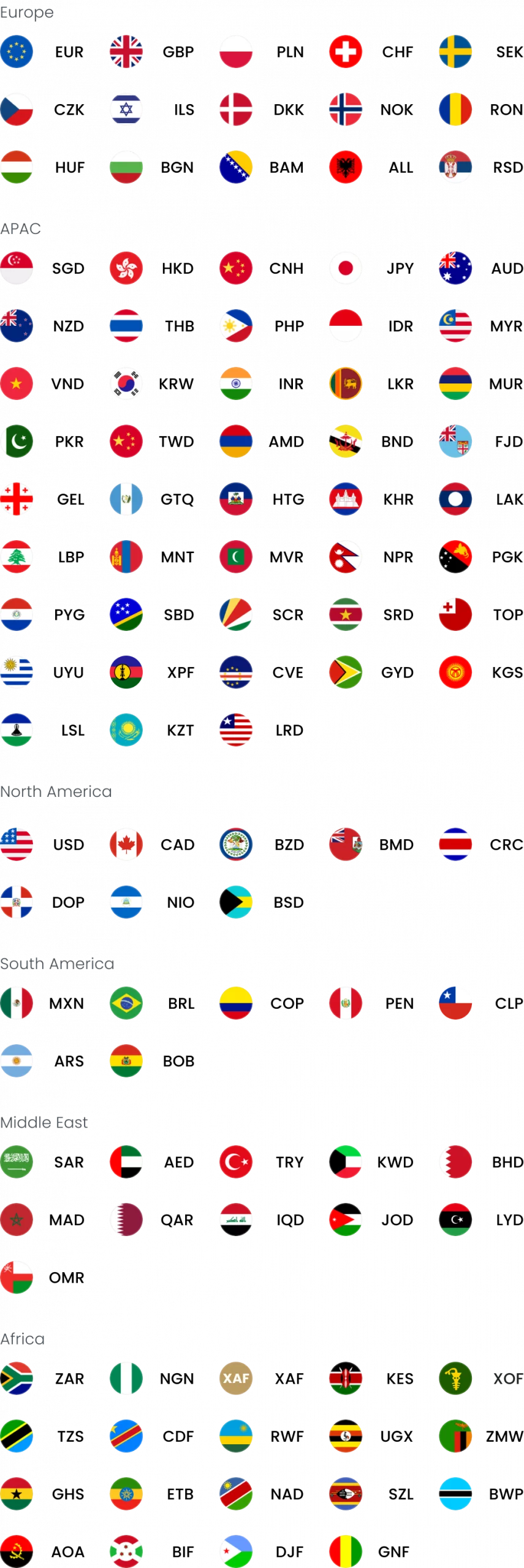
- Send payments in 100+ currencies to 200+ regions worldwide
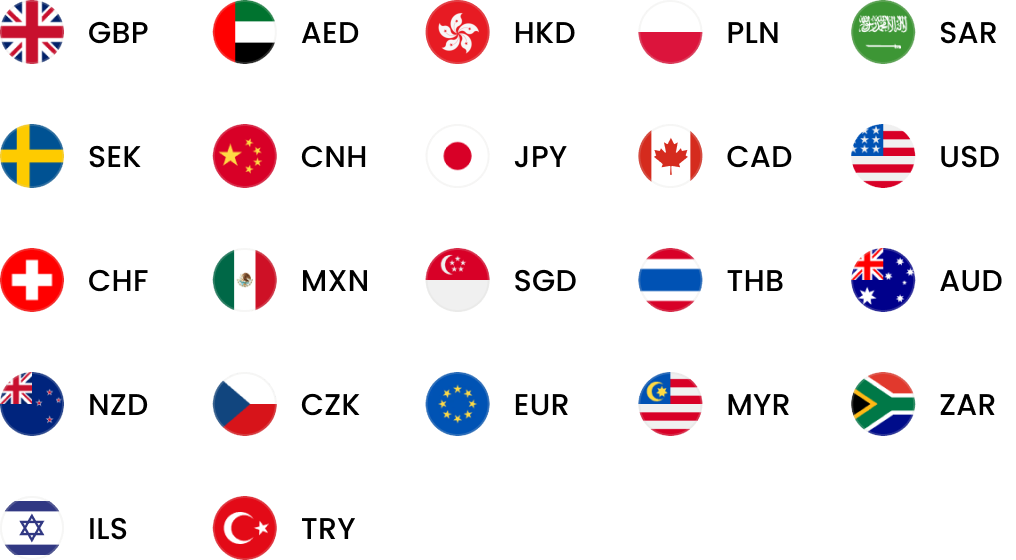
- Receive funds in 20+ currencies using local account details through the World Account
- No receiving or holding fees
- FX pricing capped at 0.50% above the mid-market rate on major currency pairs
- Instant, free transfers between WorldFirst accounts
- Client funds safeguarded with established global banking partners under UK regulatory rules
Understanding how banks and fintechs apply international transfer fees is only the first step.
Open a World Account to handle cross-border payments with clearer costs and more control over FX and settlement.
Sources:
- https://www.thunes.com/news/top-growth-drivers-in-consumer-cross-border-payments/
- https://www.bankofengland.co.uk/payment-and-settlement/cross-border-payments
- https://remittanceprices.worldbank.org/
- https://www.bis.org/cpmi/cross_border.htm
- https://www.fsb.org/what-we-do/financial-innovation-and-structural-change/cross-border-payments/
- https://www.legislation.gov.uk/uksi/2017/752/contents/made
- https://www.fca.org.uk/firms/payment-services-regulations
- https://www.fca.org.uk/publications/corporate-documents/consumer-duty
- https://www.worldfirst.com/uk/
- https://www.worldfirst.com/uk/pricing/
- https://www.worldfirst.com/uk/product/pay/pay-business-partners/
Jennifer Dodd leads marketing for WorldFirst UK, and has over 20 years' experience in financial services and publishing.

Jennifer Dodd
Author
Continue reading


Subscribe
The Weekly Dispatch
Get the latest news and event invites. Signup for our weekly update from the worlds of fashion, design, and tech.
You might also like
Choose a product or service to find out more

E-commerce guides


Doing business with China

Exploring new markets

Business Tips

International transactions
E-commerce expansion guides
Doing business with China
The simpler way to pay and get paid
Save money, time, and have peace of mind when expanding your global business.