



























International transfers take longer than domestic ones because they often pass through multiple banks, currencies, compliance checks and payment systems before the money reaches the recipient.
This may be frustrating. The money’s already left your account, but the recipient can’t access the funds. Domestic transfers often arrive quickly, but cross-border payments usually move through a more complex process, which can slow fund delivery.
In 2024, roughly one-third of retail international payments took more than one business day to arrive.
This guide explains why international transfers take so long, what happens behind the scenes when money moves across borders and how businesses can reduce delays when paying overseas partners.
Key takeaways:
- International transfers take longer because they move through multiple systems and checks: Cross-border payments often pass through several intermediary banks, require currency conversion and must clear compliance screening. Each step adds processing time, which explains why transfers can take several days after the sender initiates the payment
- Most international bank transfers take between one and five business days: Transfers between major financial centres may arrive within one or two business days, while more complex routes can take up to five days
- Several operational factors can speed up or slow down a transfer: Payment speed depends on the banking route, the number of intermediary institutions, the payment method used and daily bank cut-off times
- Businesses can reduce delays by following guidelines: Submit transfers before cut-off times, send funds in the recipient’s currency and ensure accurate payment details. Using local clearing systems or modern payment platforms can also shorten transfer routes
- Modern payment platforms can significantly speed up cross-border payments: WorldFirst allows businesses to hold multiple currencies, send payments through local networks and reduce reliance on long correspondent banking chains
Open a World Account today and manage supplier payments with stronger FX control and clearer cash flow oversight.
Why do international transfers take so long?
International transfers take longer than domestic payments because funds often pass through several banks, involve currency conversion and must clear regulatory checks across different countries. Each step requires verification and coordination between financial institutions, which can add hours or even days to the overall transfer time.
Here’s the main reasons international transfers take longer:
1. Multiple banking steps can slow the payment route
Many international transfers still rely on correspondent banking, meaning the sending and receiving banks don’t always connect directly. Instead, the payment travels through intermediary banks before reaching the final account.
Each bank in the chain must:
- Receive the payment instruction
- Validate the transaction details
- Run internal compliance checks
- Forward the payment to the next bank
For businesses, the practical point is simple: even if you send a payment instruction immediately, the money may still move through a chain of banks before the recipient sees it.
2. Timezones and banking hours still create delays
Banks in different countries operate on different schedules. When payments move across regions, processing windows don’t always align.
Common timing issues include:
- Different banking hours across countries
- Weekends and public holidays in the receiving country
- Limited overlap in payment system operating hours
For example, a payment sent late in the UK day may arrive after the processing window has closed in the next country. In that case, the transfer won’t move forward until the following business day.
The BIS has reported that only a small share of real-time settlement systems worldwide currently operate 24 hours a day, which means cross-border transfers often pause until systems reopen.
3. Currency conversion adds another processing step
If a transfer involves two different currencies, the payment must go through a foreign exchange process before it can continue.
This step may involve:
- Converting the payment from one currency to another
- Confirming the exchange rate applied to the transfer
- Processing the FX transaction within bank cut-off times
Many banks process foreign exchange at specific intervals during the day. If a payment arrives after the daily FX cut-off, the transaction may wait until the next processing cycle.
4. Compliance screening can pause a payment
Every international transfer must pass regulatory screening designed to detect fraud, sanctions breaches and money-laundering activity.
Banks typically run automated checks against:
- Global sanctions lists
- Anti-money laundering monitoring systems
- Fraud detection tools
- Risk scoring models
Most payments pass these checks automatically. However, if a transaction triggers a risk alert, the bank may pause the transfer for additional review.
Industry data suggests that 5–10% of cross-border payments generate compliance alerts, though most are false positives. Even brief investigations can slow the payment.
5. Manual processing and data errors can interrupt transfers
Incorrect payment information is one of the most common reasons for delays.
Problems can occur if a transfer contains:
- Incorrect IBAN or account numbers
- Mismatched beneficiary names
- Incomplete address or reference information
- Incorrect bank identifiers
When a payment can’t pass automated validation checks, the bank may need to manually investigate or repair the transaction before sending it onward.
6. Legacy infrastructure still affects cross-border payments
Many international payment processes still rely on older banking infrastructure. Unlike modern domestic payment systems, cross-border transfers must move between different national networks and technical standards.
Challenges in the system include:
- Older payment messaging formats
- Batch processing rather than continuous processing
- Limited interoperability between national payment systems
- Different regulatory and technical requirements across countries
Efforts are underway to improve this infrastructure. Global initiatives led by organisations such as the Financial Stability Board aim to make cross-border payments faster, cheaper and more transparent. One target is for most international payments to arrive within one hour by 2027.
How long do international transfers usually take?
International transfers don’t follow a single fixed timeline. In practice, most international bank transfers fall into a few common time ranges:
- 1–2 business days: Payments between well-connected financial centres can arrive within one or two business days. These routes often involve direct banking relationships and fewer intermediary institutions, which allow payments to move through the system more quickly
- 2–4 business days: This is the most common timeframe for traditional international bank transfers. The payment may pass through intermediary banks, undergo compliance screening and involve currency conversion before reaching the final account
- Up to 5 business days: Transfers may take longer when the payment travels through several intermediary banks, involves currencies with lower liquidity or requires additional regulatory checks. Differences in banking hours and local holidays can also extend the timelineInternational transfers don’t follow a single fixed timeline. In practice, most international bank transfers fall into a few common time ranges:
- 1–2 business days: Payments between well-connected financial centres can arrive within one or two business days. These routes often involve direct banking relationships and fewer intermediary institutions, which allow payments to move through the system more quickly
- 2–4 business days: This is the most common timeframe for traditional international bank transfers. The payment may pass through intermediary banks, undergo compliance screening and involve currency conversion before reaching the final account
- Up to 5 business days: Transfers may take longer when the payment travels through several intermediary banks, involves currencies with lower liquidity or requires additional regulatory checks. Differences in banking hours and local holidays can also extend the timeline
Typical transfer times by country corridor
Payment times vary widely depending on the countries and methods involved.
Below is a summary of typical timelines for key corridors, comparing traditional bank wires vs faster solutions (like fintech providers with local payment networks):
| Corridor | Traditional SWIFT transfer | Faster option (local rails / fintech) |
|---|---|---|
| UK → US | 1–3 business days (via correspondent banks) | Same-day or 1 business day (direct networks or if recipient has local USD account) |
| UK → China | 2–5 business days (longer compliance / no direct rails) | Same-day (if using a service with ocal clearing; e.g. WorldFirst to WorldFirst) |
| UK → EU (euro) | 1–2 business days | Same-day / next day (using SEPA-equivalent rails where possible) |
| UK → Australia | 3–5 business days (long distance + timezones) | Next business day (via local AUD networks) |
These are rough ranges; actual times depend on cut-off times and specific banks. For example, transfers between Europe and North America (UK–US) are often faster due to strong banking links. By contrast, payments to distant or more regulated markets, such as China, may take several days via traditional banks.
Modern payment platforms connect to many local clearing systems. For instance, WorldFirst offers same-day or next-day delivery to major APAC markets (China, Singapore, Hong Kong, Australia, etc.), where banks normally take 2–5 days.
What makes some international transfers faster
A few things make a big difference to how fast the money arrives:
1. Payment corridor
The countries involved in a transfer play a major role in delivery time. Certain payment corridors operate more efficiently because banks maintain strong direct relationships and process large volumes of transactions between those markets.
Payments between well-connected financial centres tend to move faster because they require fewer intermediaries and leverage established banking infrastructure.
Global data shows how different payment corridors can perform very differently. In some regions, over 70% of wholesale cross-border payments arrive within one hour, whereas in other corridors, far fewer payments arrive within that timeframe.
That difference explains why payments between major financial centres often arrive faster, while transfers involving smaller or less connected markets can take several days.
2. Payment method
The payment method you choose also affects how fast the money arrives.
Traditional bank wires often rely on correspondent banking networks, where payments move in steps between institutions. Each bank processes the payment before forwarding it to the next.
Businesses using multi-currency accounts can move funds faster. These accounts allow companies to hold balances in multiple currencies and pay suppliers using local banking rails in the destination country. Fewer conversions and fewer banks in the payment chain can reduce processing time.
Global payment infrastructure is evolving to support faster transfers. For example, instant payment transactions in the euro area increased by about 72% in 2024, reflecting the rapid adoption of faster payment systems.
3. Number of intermediary banks
The number of banks involved in a transfer strongly influences delivery speed.
When the sending bank has a direct relationship with the receiving bank, the payment can be processed directly between them. When that connection doesn’t exist, the transfer may pass through several intermediary banks before reaching the recipient.
Each intermediary must:
- Receive the payment instruction
- Perform compliance checks
- Process the transaction internally
- Forward the payment to the next bank
Reducing the number of banks involved in the payment route is one of the main ways to improve transfer speed.
4. Daily processing cut-off times
Banks process international payments within specific daily windows known as cut-off times. When a payment instruction arrives after the cut-off, the bank typically processes it on the next business day.
Payment systems around the world also operate on different schedules. Many real-time settlement systems don’t run continuously, which means cross-border payments may pause until the relevant payment infrastructure reopens.
Timing, therefore, plays an important role in transfer speed. Payments submitted earlier in the day are more likely to enter the processing cycle immediately.
How UK businesses can speed up international payments
With the right payment infrastructure, a transfer that normally takes three to five days can arrive the next business day.
While some delays are inherent to cross-border payments, you take practical steps to reduce wait times and avoid common pitfalls:
- Submit payments early in the day: Make sure to initiate transfers before your bank’s cut-off time. Payment requests after the cut-off roll to the next business day. Sending early helps the payment start processing sooner
- Use accurate and complete details: Double-check IBANs, SWIFT/BIC codes and beneficiary names. Errors cause rejections and back-and-forth queries
- Pay in the recipient’s currency: If possible, send money in the currency the beneficiary uses. This avoids extra conversion steps on arrival. For example, paying a US supplier in USD (instead of GBP) can sometimes go through faster
- Avoid weekends and holidays: Initiate transfers on business days. A payment scheduled for Friday evening may not start until Monday (especially across time zones). Accounting for local holidays in the destination country helps too
- Use local clearing when available: Leverage local payment networks. Some fintech platforms and banks enable domestic rail transfers. These can deliver funds much faster than routing via multiple correspondent banks
- Choose the right provider: Many digital payment platforms (like WorldFirst) connect to dozens of local payment systems. They often bypass long SWIFT chains by using their own banking partnerships, reducing intermediaries
- Pre-fund or batch transactions: For repeat payments, consider pre-funding accounts in foreign currencies so transfers can be made instantly from that balance or batch multiple transactions to save on fixed fees
How WorldFirst helps businesses move money across borders
WorldFirst helps businesses make cross-border payments with fewer delays and better visibility.
WorldFirst is not a bank. Instead, it operates as a global payments platform that provides businesses with a multi-currency account and tools to manage international payments more efficiently.
With a World Account, companies can receive, hold, convert and send funds across multiple currencies from a single platform. Businesses can collect revenue from overseas marketplaces, keep balances in different currencies and pay international suppliers directly without relying on multiple bank accounts.
Key advantages include:
- Global reach, local speed: With a World Account, you can send payments in 100+ currencies to over 200 countries. 80% of WorldFirst payments arrive on the same day and 90% by the next day. For UK businesses sourcing from APAC, WorldFirst can pay Chinese, Singapore or Australian suppliers the same day (compared to 2–5 days via traditional banks)
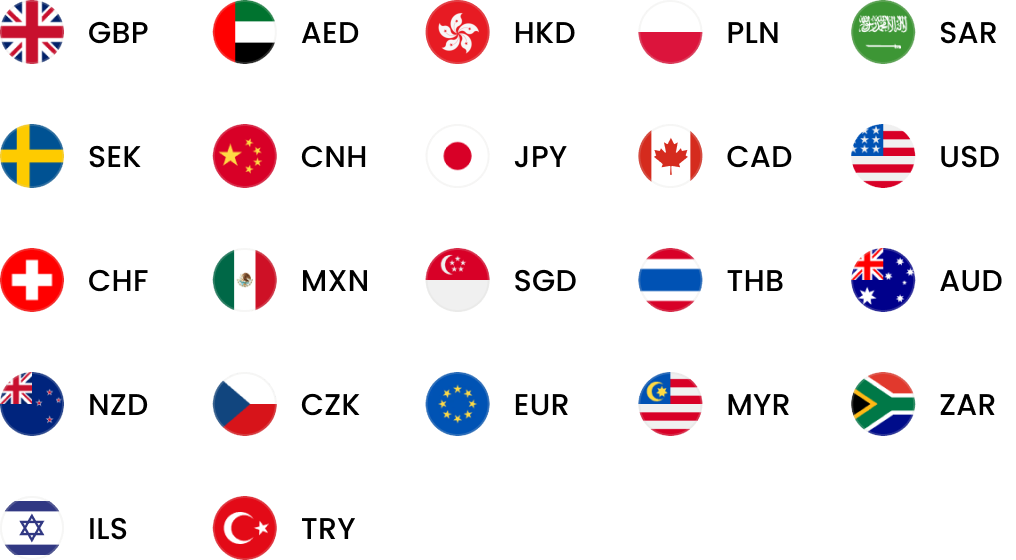
- Multi-currency holding and conversion: You can receive and hold funds in 20+ currencies (USD, EUR, CNH, SGD, etc.). This means you can collect sales revenue abroad and then pay suppliers in the appropriate currency. Avoiding forced conversions protects your margins
- Local account details: WorldFirst provides free local bank account details in 20+ currencies (GBP, EUR, USD, CNH, SGD, AUD, NZD, JPY and more). You can give these details to foreign partners, effectively acting as a domestic payee in their country
- End-to-end visibility: The World Account dashboard lets you track all your international payments in one place. You can see when you send a payment, check its status and confirm when it arrives
- Competitive, transparent pricing: WorldFirst charges no monthly or hidden fees for the World Account. You pay a low transaction fee, often lower than a bank’s and the platform shows the FX margin upfront
- Instant transfers between World Accounts: If both sender and recipient use WorldFirst, transfers are instant and free. Businesses in the network can pay each other in seconds. For example, a UK company with a World Account can pay a Chinese supplier who also has one and the funds will arrive immediately
International transfers don’t need to involve long banking chains and unpredictable delivery times.
Open a World Account today and manage cross-border payments with faster transfers and clearer FX visibility.
Sources:
- https://www.ecb.europa.eu/press/key/date/2025/html /ecb.sp250401~9e1ee05e88.en.html
- https://www.bis.org/cpmi/publ/brief5.pdf
- https://www.swift.com/standards/iso-20022/supercharge-your-payments-business/chapter-5
- https://www.fsb.org/2025/10/g20-roadmap-for-cross-border-payments-consolidated-progress-report-for-2025/
- https://financialit.net/news/payments/worldfirst-world-account-enables-instant-cross-border-business-payment-function-over
- https://www.fsb.org/uploads/P091025-1.pdf
- https://www.marketdataforecast.com/market-reports/europe-cross-border-payments-market
- https://www.worldfirst.com/uk/