






















As one of the five largest economies in Asia, South Korea is a great place to do business. But expanding into any new market can be a challenge, with different customs to learn, new consumer behaviours to get familiar with and new relationships to build.
In this article, we’ll share some key business tips to bear in mind if you’re expanding into South Korea. We’ll start by laying out what it takes to set up a local business in Korea, including how to navigate cultural expectations and what it takes to set up a foreign bank account.
Then, we’ll introduce WorldFirst, an online payment solution that makes it easy to send and receive Korean won, without needing to open a Korean bank account or set up a local office.
A World Account is free to set up from anywhere in the world, and it takes less than two days to be approved and start business transactions.
In this article:
- 4 things to consider before setting up a business in South Korea
- What it takes to set up a UK business in South Korea
- How WorldFirst simplifies business transactions from the UK to South Korea
Open a World Account in minutes and simplify your business operations in South Korea.
4 things to consider before setting up a business in South Korea
South Korea is a highly developed, digitally advanced market with strong consumer demand – but success depends on understanding how to operate locally.
Here are four key considerations for UK SMEs entering the market:
1. Understand the market and consumer expectations
South Korea combines a sophisticated economy with one of the world’s most connected consumer bases. It’s a market that moves quickly, with trends often emerging and scaling at speed.
Consumers are digitally savvy, highly informed and quick to compare options. That means that not only product quality – but also brand perception and social proof (including reviews and influencer visibility) – all play a significant role in purchasing decisions.
At the same time, business culture in South Korea is formal and relationship-driven. Hierarchy, respect and attention to detail matter, especially in the early stages of a partnership. Simple gestures – like exchanging business cards with both hands and offering a slight bow – are seen as signs of professionalism and respect.
Understanding both consumer expectations and business etiquette can help you build relationships as you establish your business in Korea.
2. Factor in pricing, duties and delivery expectations
When you sell products into South Korea, there are usually extra costs added at the border – including import taxes (duties) and VAT. These costs affect how much your product ends up costing, so they need to be built into your pricing.
The UK–Korea Free Trade Agreement can help lower or remove some of these taxes. However, this only applies if your product officially qualifies as being made in the UK and you have the right paperwork to prove it.
Delivery expectations are equally important. Fast, reliable shipping is standard (often next-day), and customers expect clear pricing with no hidden costs. Factoring in logistics, returns and currency fluctuations early on will help protect your margins.
3. Assess your sector and competitive positioning
South Korea is a highly competitive market, with many industries already dominated by strong local brands and fast-moving competitors. Before entering the market, it’s important to understand how your sector operates locally and where your business fits within it.
Research the major players in your industry, how products are positioned and priced, and what local consumers expect. More importantly, identify whether there is a genuine gap in the market or a clear point of differentiation that your business can offer.
Opportunities exist across sectors like beauty, consumer goods, technology and education, but businesses tend to succeed when they focus on a clearly defined niche rather than trying to appeal to everyone.
4. Choose the right route to market
For many small businesses, the easiest way to start selling in South Korea is online. Popular local websites like Coupang and Gmarket already have millions of customers, so they can help you start selling faster than building your own website from scratch.
If you need a physical location, where you choose to set up matters. Seoul has the best access to customers, talent and infrastructure, but it’s also the most expensive. Cities like Busan or Incheon can be more cost-effective, especially if your business relies on shipping or trade.
What it takes to set up a UK business in South Korea
Setting up a business in South Korea requires careful planning around regulation, banking and local compliance. Understanding the process early can help UK SMEs avoid delays and unexpected costs.
1. Choose the right business structure
Foreign businesses are typically set up in one of three ways:
- Local subsidiary (usually a limited company). This offers the most flexibility and is treated as a Korean company.
- Branch office. It allows you to operate in South Korea under your existing UK entity rather than forming a separate Korean company.
- Liaison office. With just a liaison office, you cannot generate revenue locally, making it better suited for market research, relationship building or establishing an early-stage presence in Korea.
2. Register your business and investment
To officially set up a business in South Korea, foreign companies need to register their investment and complete the company setup with local authorities.
This involves submitting key documents, registering your business and declaring how much you’re investing. While the process is generally efficient, it still requires accurate paperwork and following local rules closely.
3. Secure a local address and documentation
To officially set up a business in South Korea, you’ll need a local address. Many small businesses start with a serviced office or shared workspace to keep things simple and affordable.
You’ll also need to submit official paperwork, including documents about your company and IDs for anyone involved. Some of these documents may need to be translated into Korean or formally certified before they’re accepted.
4. Register for tax and ongoing compliance
Once incorporated, your business must register for corporate tax and VAT, and comply with ongoing reporting requirements.
South Korea has a well-regulated tax system, and filings must be accurate and timely. Many SMEs choose to work with local accountants or advisors to manage compliance and avoid penalties.
5. Plan your payments and currency strategy early
Even after your business is set up in South Korea, day-to-day operations can be tricky – especially when it comes to getting paid.
Customers and online marketplaces in Korea pay in Korean won, so if you’re using a standard UK bank account, you may face extra fees and poor exchange rates when converting money back and forth.
Opening a local bank account isn’t always simple either. Banks often ask for a South Korean address, detailed paperwork and sometimes even someone based in Korea to represent your business. For new foreign companies, this process can take time and add extra admin before you’re fully up and running.
How WorldFirst simplifies business transactions from the UK to South Korea
Korean businesses favour local payment methods, like domestic cards and digital wallets. If you want to compete, your payments need to feel local to Korean customers and partners – even if you’re operating from the UK.
That’s where WorldFirst comes in. With a World Account, you can send and receive payments with businesses in South Korea without needing to open a local bank account.
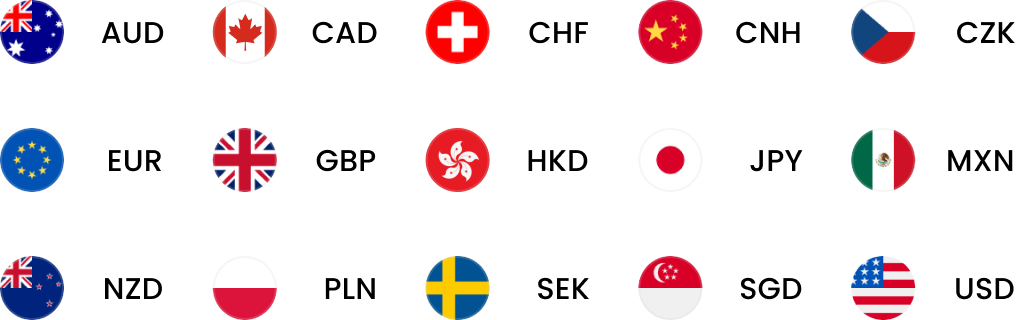
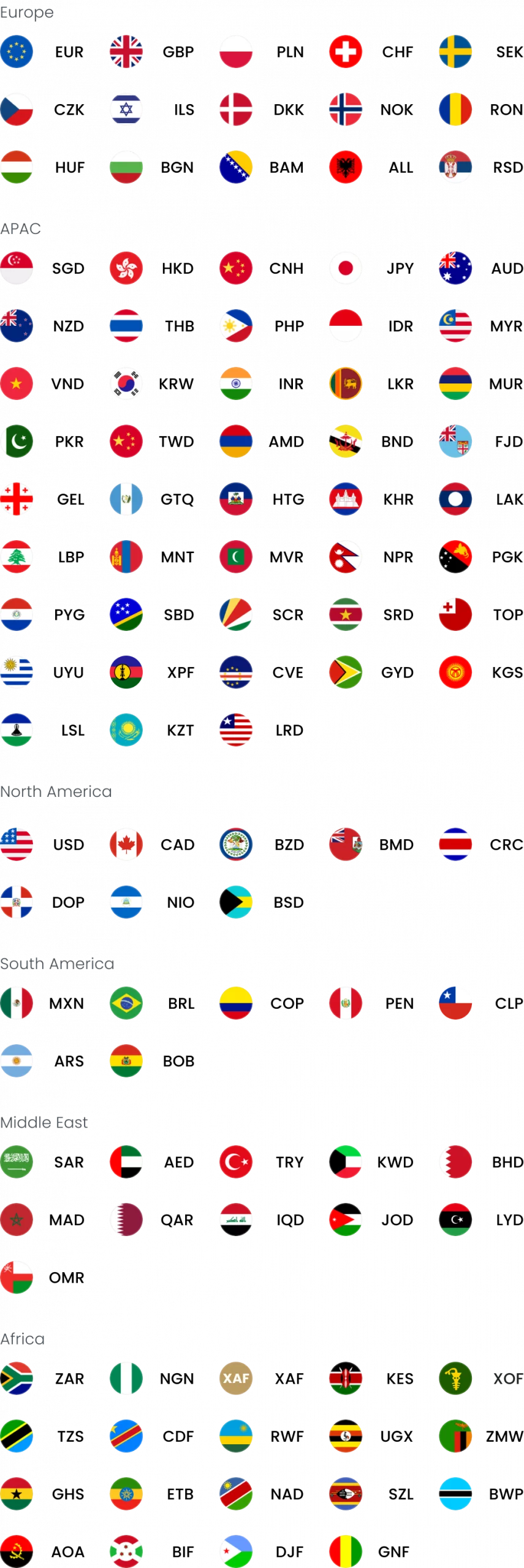
WorldFirst has been supporting international businesses for over 20 years, serving more than 1.5 million customers and enabling payments in 100+ currencies across 210+ regions.
We’re also authorised by the Financial Conduct Authority (FCA) as an Electronic Money Institution, offering a secure and reliable platform for cross-border transactions.
Here are a few ways a World Account can make doing business with South Korea simpler.
Pay in Korean won, without opening a foreign bank account
It’s common for businesses to think they need a local bank account to trade in South Korea. But in reality, opening one can be difficult for foreign companies. Banks often ask for a registered business, a local office and even a Korean phone number before they’ll approve an account.
With a World Account, UK businesses can transact with South Korea, without ever setting foot in Korea or going through the complicated setup process.
It’s also free to set up an account and only takes 15 minutes to register. Once you hit submit, you’ll typically be approved in less than 24 hours. From there, you can send KWR (and 100+ currencies) using local networks or SWIFT, depending on the transaction. And if you pay another World Account user, transactions are immediate and free.
Everything is managed through one simple dashboard you can access anytime. You can schedule payments in advance, send up to 200 payments at once and set permissions for your team as your business grows. You’ll also have full visibility into every transaction, with real-time updates so you always know where your money is.
Pay KWR with no hidden fees and a low markup
When sending SWIFT payments overseas, businesses are often charged a 2–3% FX markup by traditional banks. That’s usually on top of currency conversion costs, transfer fees and intermediary bank deductions.
And in many cases, the total cost isn’t fully visible until the payment has already been processed and fees have been deducted.
At WorldFirst, we’re always fully upfront with our fees. We offer a low 0.5% markup fee on major currencies and 0.75% on all other currencies – so you always know what you’re paying.
Plus, you get more control over currency exchange when converting GBP to KRW – or back again. Because exchange rates fluctuate regularly, it can be difficult for businesses to predict costs and manage budgets confidently.
With a World Account, you can use risk management tools to lock in an exchange rate for up to two years. That means greater cost certainty, fewer surprises and easier financial planning for your business.
Read more: Foreign exchange risk management: How to make international business more affordable
Use the World Card for fast payments and up to 1.2% cashback
If you need to pay suppliers or partners in South Korea quickly, use the World Card to pay anywhere Mastercard is accepted – in seconds.
You can pay in 150+ currencies and enjoy up to 1.2% cashback on all your monthly card purchases, helping you get more value from everyday business expenses.
And there are no FX fees when paying in 15 major currencies. However, if you’re paying in currencies outside of these 15 major currencies (like Korean won), you’ll be charged a low 1.5% transaction fee (compared to the average 2-4% many banks charge).
As your team grows, you can create up to 50 cards and assign them to specific budgets, vendors or team members. You can also set individual spending limits, making it easier to track expenses and manage costs across your business.
Read more: What is a virtual card? A guide to smarter payments
Start making payments in South Korea with a World Account
Instead of navigating the complexity of opening a local bank account in South Korea or dealing with your bank’s high FX fees, you can simplify business transactions in South Korea with a World Account.
Here are just a few of the benefits you’ll find with a World Account:
- Pay suppliers, partners and staff worldwide in 100+ currencies
- Collect payments for free from 130+ marketplaces, including Gmarket and Coupang
- Save with competitive exchange rates on currency conversions and transfers
- Lock in exchange rates for up to 24 months for greater cash flow certainty
- Pay instantly with a World Card and get up to 1.2% cash back
Register for a free World Account in just minutes and start making business payments in KWR.
FAQs
Is it easy for foreigners to set up and run a small business in South Korea?
South Korea is generally considered a business-friendly market with a relatively efficient setup process for foreign companies. However, businesses still need to navigate local regulations, registration requirements, tax obligations and cultural differences. Many foreign businesses choose to work with local legal or accounting experts to help manage the setup process and ensure compliance.
How do UK businesses make payments to Korean suppliers?
UK businesses typically pay Korean suppliers through international bank transfers, often using the SWIFT network. However, traditional banks can charge high FX markups, transfer fees and intermediary banking costs. Many businesses use international payment platforms or multi-currency accounts to access more competitive exchange rates, reduce fees and manage payments in KRW more efficiently.
What should foreign businesses know about South Korean business culture?
South Korean business culture is formal, relationship-driven and built on mutual respect. Business settings often place strong importance on hierarchy, punctuality and professionalism. Taking time to understand local customs can help businesses build trust and strengthen long-term relationships with Korean business partners.
How important are business relationships in South Korea?
Building trust and strong business relationships is an important part of doing business in South Korea. Many business decisions are influenced by relationships and reputation, so networking, consistency and respectful communication can go a long way.
What is considered respectful behaviour in Korean business meetings?
Showing respect is a key part of South Korean culture. Arriving on time, dressing professionally and using polite body language all leave a positive impression. Business cards are typically exchanged with both hands and read carefully as a sign of respect.
Is communication style different in South Korea?
Yes. Communication in Korean business environments can be more indirect than in the UK or US. Rather than giving direct criticism or disagreement, people may communicate more subtly to maintain harmony and avoid embarrassment during business interactions.
Is gift-giving expected in Korean business culture?
Gift-giving can sometimes play a role in building business relationships, especially during first meetings or holidays. Gifts are usually modest and professional, and the gesture itself is often seen as more important than the value of the gift.
What is the typical dress code for business in South Korea?
Business dress codes in South Korea tend to be formal and conservative, particularly in corporate settings. Professional attire helps show respect and create a strong first impression during meetings with potential business partners.