



























You’ve found a supplier in Shenzhen, negotiated a decent unit price, and you’re ready to place your first order. Then reality bites: your personal credit history is patchy, maybe there’s an old CCJ sitting on file, and you’re assuming that means no UK bank will let you open a business account. That assumption stops a lot of new importers before they’ve even sent a deposit payment.
It shouldn’t. Roughly 1.3 million new businesses were registered in the UK in 2023, and a meaningful share of their founders won’t have a spotless credit file. Traditional high-street banks lean heavily on personal credit checks when they assess business account applications, but that’s not the only route available to you.
This article answers the questions you’re actually asking: whether you can get a business account for bad credit, what a CCJ really does to your options, whether you can register a company at all with poor credit, and how a payments-focused account can get your import business moving without waiting on a bank’s decision.
Key takeaways:
- Bad credit doesn’t automatically block access: challenger banks and e-money institutions may focus on identity, AML and business checks rather than a hard credit search
- No-credit-check accounts usually exclude borrowing: easier access often comes without overdrafts, loans or other credit facilities
- A CCJ mainly affects credit products: it can make borrowing harder without necessarily preventing you from opening and using a standard business account
- You can still register a company: Companies House verifies your identity rather than your credit history, so poor credit doesn’t stop you forming a limited company
- WorldFirst can fit import-focused businesses: if you mainly need to pay overseas suppliers and manage multiple currencies, a payments-focused account can work alongside or instead of a traditional bank account for those transactions
Open a World Account to start paying suppliers in multiple currencies – no traditional bank application required.
Can I get a business bank account with bad credit?
Yes, you can get a business bank account with bad credit, though which type of account you’ll qualify for depends heavily on the provider and whether you want lending features attached.
Traditional high-street banks generally carry out a personal credit check as part of onboarding, particularly for sole traders and new limited companies without a trading history, and a poor score can lead to a decline or a much slower review process.
The trade-off is straightforward: accounts that skip the hard credit check almost always exclude overdrafts and credit facilities.
Government guidance puts it plainly, advising that if you have poor credit, you should look for accounts that don’t offer credit or overdraft facilities, because those are the ones you’re more likely to qualify for. If you later apply for a loan, credit card or overdraft, a separate affordability and credit check will apply at that point.
What does “no credit check” actually mean?
‘No credit check’ means the provider isn’t running a hard search that shows up on your credit file and could lower your score, not that they’re skipping verification altogether.
Every FCA-regulated provider, bank or otherwise, must still confirm who you are and where your business operates before it can open an account, under standard know-your-customer and anti-money-laundering obligations.
There’s a real difference between three checks that get lumped together:
- Hard credit checks: used by traditional banks assessing credit or lending products; visible to other lenders and capable of nudging your score down.
- Soft credit checks: used by some fintechs purely for risk assessment; invisible to other lenders and don’t affect your score.
- KYC and AML identity checks: confirm your identity, address and business legitimacy; required by law for every regulated account, regardless of your credit history.
Understanding that distinction matters because it reframes the question. You’re not being assessed on whether you’re a good credit risk for lending, you’re being assessed on whether you are who you say you are and whether your business is legitimate.
Can I open a business account with bad credit?
Yes, and what most non-bank providers look for instead of a credit score is proof of identity, a UK business address and evidence that your business is legitimate.
For a limited company, that typically means your Companies House registration number and director details; for a sole trader, your Unique Taxpayer Reference and personal ID are usually enough.
It’s worth being clear on who actually needs one.
Limited companies are legally required to keep business finances separate from personal ones, which in practice means a dedicated business account. Sole traders aren’t legally obliged to open one, but doing so makes bookkeeping, VAT and HMRC reporting considerably simpler.
Speed is another practical difference. Traditional banks can take anywhere from a week to four weeks to approve a new business account, particularly if a manual credit review is triggered.
Most fintech and EMI providers complete online registration in minutes and approve accounts within hours to a couple of business days, which matters if you’ve already agreed supplier terms and need to move a deposit payment quickly.
Why a non-bank account may be the better route for importers with bad credit
If your core need is sending and receiving international payments rather than borrowing, a payments-focused electronic money institution structurally sidesteps the barrier that trips up bank applications.
WorldFirst is a case in point: it isn’t a bank, it’s authorised and regulated by the FCA as an Electronic Money Institution under the Electronic Money Regulations 2011, and it’s built specifically around cross-border trade rather than lending.
The onboarding process reflects that focus. WorldFirst’s UK product page states there’s no paperwork needed, no overseas address or existing banking relationship required, and no fee to open or maintain the account. Because the account isn’t designed to offer overdrafts or credit lines, the underwriting emphasis sits on verifying your identity and business rather than running the kind of hard credit search a bank might use before extending credit facilities.
To be clear, WorldFirst’s UK pages don’t explicitly state ‘no credit check’ as a blanket guarantee, so treat this as a structural difference in how payments-focused EMIs are built, not a formal promise.
For a new importer, that structural difference is genuinely useful. You get local receiving accounts, multi-currency holding and international payment capability, which is what you actually need to pay a supplier, without your personal credit history being the deciding factor in whether you can transact at all.
Can I open a business bank account with a CCJ?
Yes, a County Court Judgment doesn’t automatically prevent you from opening or holding a business bank account. A CCJ is a court order confirming that you owe a debt, and
it stays on the Register of Judgments, Orders and Fines for six years, according to GOV.UK.
What happens next depends on timing:
- Pay it in full within one month and you can apply to have it removed from the register entirely
- Pay it after a month and it’s marked ‘satisfied’ but still visible for the full six years
- Leave it unpaid and it remains on record with the most significant impact on your credit file
Crucially, a CCJ mainly affects your access to credit-based products, not your ability to hold a standard account.
As Citizens Advice confirms, many people and businesses with a CCJ on file continue to use ordinary bank accounts day to day. Where it does bite is in overdraft eligibility, loan applications and how suppliers or landlords view your creditworthiness, since a CCJ is a public record that can lower your business credit score and lead to stricter payment terms from third parties.
Can I set up a business with bad credit?
Yes, registering a business in the UK doesn’t involve a credit check at any stage.
Companies House verifies your identity through GOV.UK One Login, not your credit file, so a poor score has no bearing on whether your company formation application succeeds.
Online registration of a private limited company costs £100 and is usually completed within 24 hours, according to GOV.UK’s own guidance on the process.
Sole traders have it even simpler: registering with HMRC for self-assessment involves no credit assessment whatsoever. In both cases, the credit-check hurdle you might hit later comes from opening a business bank account or applying for external funding, not from the act of setting the business up.
If you do need startup capital, bad credit doesn’t automatically rule out government-backed finance either. The Start Up Loans programme offers between £500 and £25,000 per founder, and its guidance is explicit that having a less-than-perfect credit history isn’t an automatic barrier to approval, though your application will still be assessed on affordability.
Worth noting too: the three main UK credit reference agencies, Experian, Equifax and TransUnion, each hold your data for six years and score you on slightly different scales, so a ‘poor’ rating with one agency – Experian’s ‘Poor’ band runs 561-720 – doesn’t necessarily mean every lender or provider sees you the same way.
Tips for improving your credit while running your business
Getting an account sorted solves your immediate payments problem, but it’s worth working on your credit profile in parallel so your options widen as your business grows. A few practical steps:
- Check your file with all three agencies: Experian, Equifax and TransUnion don’t always hold identical data, so reviewing all three gives you a fuller picture of where you stand
- Settle any CCJ within one month: doing so lets you apply to have it removed from the register entirely, rather than carrying a six-year “satisfied” mark
- Register on the electoral roll: this simple step helps credit reference agencies verify your identity and address, which can improve your score
- Keep credit utilisation low: if you do have access to credit, using a small proportion of your available limit signals financial discipline to future lenders
- Pay bills and invoices on time: consistent, on-time payment history is one of the most heavily weighted factors in most scoring models
None of this needs to hold up your import business today, but a stronger credit profile down the line will open up bank lending, better supplier credit terms and lower-cost finance if you need to scale.
How WorldFirst helps UK importers manage international payments
Once your business is registered and you’ve opened an account, the real work for an importer is moving money to suppliers reliably and at a sensible cost. This is where the practical differences between a bank account and a payments-focused World Account become most relevant to your day-to-day operation.
WorldFirst’s UK offering includes local receiving accounts in 15+ currencies, the ability to hold funds in 20+ currencies, and the capacity to send payments to over 200 countries in more than 100 currencies.
If your supplier invoices you in Chinese yuan, it’s worth knowing that domestic Chinese transactions use onshore CNY, while international payments settle in offshore CNH, a distinction that affects how your payment is priced and cleared.
On cost, new customers get an introductory 0.3% exchange fee, with the standard rate sitting at up to 0.50% for major currencies. Payment fees are modest: £0.30 for local payments in GBP, EUR or USD, and £4.00 for international payments, with cross-currency payments above £5,000 processed free of charge. Transfers between World Accounts are instant and free. For risk management, forward contracts and rate alerts let you fix a future exchange rate rather than being exposed to swings between placing an order and paying the balance.
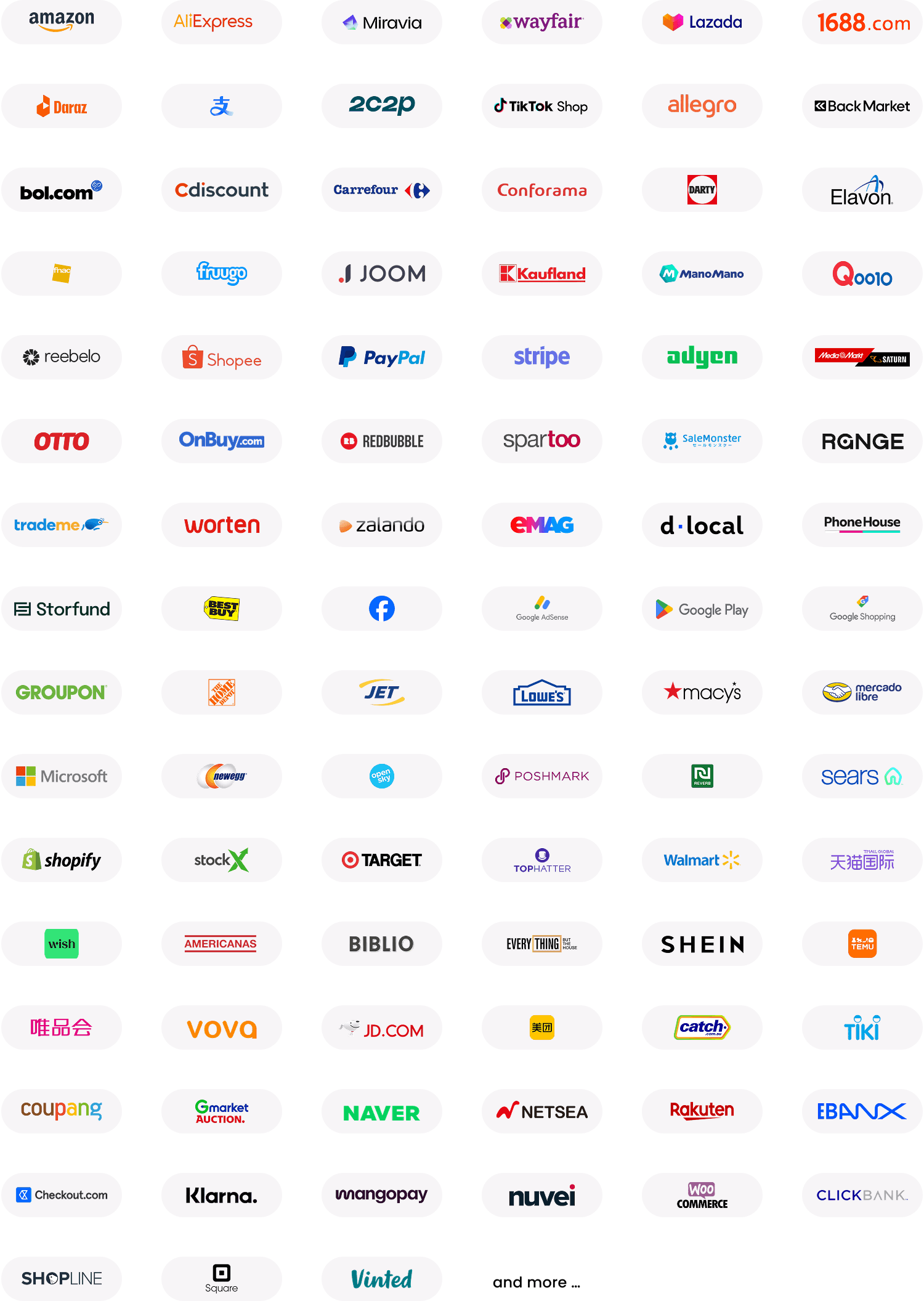
The account also connects with over 130 marketplaces and payment gateways, including Amazon, Shopify and PayPal, which is useful if you’re sourcing stock to resell online rather than purely importing for a bricks-and-mortar operation.
WorldFirst isn’t a bank, it’s a regulated electronic money institution, and safeguarded funds don’t carry the same FSCS protection that a bank deposit would. There’s no lending, payroll or domestic cash management on offer either, so if you need an overdraft or a business loan alongside your payments account, you’ll need a separate banking relationship for that.
The account itself is free to open, carries no ongoing fees and has no minimum balance requirement, which keeps the cost of testing the water low if you’re not yet sure how much import volume you’ll be handling.
Steps to open a World Account
Getting started follows a simple sequence, designed to move faster than a traditional bank’s onboarding:
- Sign up online with your basic business details, no branch visit or paper application required
- Complete identity and compliance verification, which WorldFirst’s UK site describes as needing no paperwork, just the standard information required to confirm who you are and what your business does
- Get approved, usually within a few hours and typically no longer than a couple of business days
- Receive your local currency account details and start receiving, holding or sending payments straight away
Open a World Account and start sending supplier payments in multiple currencies today, with a payments-focused onboarding process built for international trade.
FAQs
1. Can I get a business bank account with bad credit?
Yes. Traditional banks tend to run hard credit checks and may decline or delay applications from businesses with poor credit, but challenger banks and electronic money institutions generally use identity verification and soft or no credit checks instead. The trade-off is that these accounts typically don’t offer overdrafts or credit facilities, which is exactly why bad credit is less of a barrier to opening them.
2. Can I open a business account with bad credit?
Yes. Non-bank providers usually assess proof of identity, your UK business address and evidence of business legitimacy rather than your credit score. Limited companies typically need to supply Companies House registration details and director information, while sole traders can usually provide a Unique Taxpayer Reference and personal ID. Payments-focused EMIs like WorldFirst are built around facilitating transactions rather than lending, so the underwriting emphasis sits on verification rather than a hard credit search.
3. Can I open a business bank account with a CCJ?
Yes. A CCJ stays on the Register of Judgments, Orders and Fines for six years, but it mainly restricts access to credit-based products like loans and overdrafts rather than blocking standard account access. Providers that don’t run hard credit checks, remain accessible with a CCJ on file. For international payments specifically, WorldFirst’s World Account offers multi-currency functionality without the bank credit-check step that a CCJ might otherwise complicate.
4. Can I set up a business with bad credit?
Yes. Registering a company with Companies House requires identity verification through GOV.UK One Login, not a credit check, and costs £100 online with approval usually within 24 hours. Sole traders register with HMRC with no credit assessment at all. Bad credit affects your ability to get bank lending or certain business bank accounts later, not your ability to legally form the business in the first place.
Sources:
- https://www.gov.uk/government/statistics/business-population-estimates-2023
- https://www.business.gov.uk/support/accounting-tax-cashflow/getting-a-business-bank-account/
- https://www.wollit.com/learn/credit-building/business-bank-account-bad-credit
- https://www.nibusinessinfo.co.uk/content/open-business-bank-account-step-step
- https://capitalise.com/gb/insights/business-banking/how-to-open-a-business-bank-account
- https://www.gov.uk/county-court-judgments-ccj-for-debt/ccjs-and-your-credit-rating
- https://www.citizensadvice.org.uk/debt-and-money/borrowing-money/county-court-judgments-and-your-credit-rating/
- https://capitalise.com/gb/insights/business-credit-scores/how-will-a-ccj-affect-my-business
- https://www.gov.uk/guidance/verifying-your-identity-for-companies-house
- https://www.gov.uk/limited-company-formation/register-your-company
- https://www.startuploans.co.uk/support-and-guidance/business-guidance/finance/can-i-get-a-business-loan-with-bad-credit
- https://www.rapidformations.co.uk/blog/business-funding-bad-credit-uk/