



























If you’re preparing to trade with China and are looking for some advice before getting started, then this article is for you. You might have questions such as:
- How do you source quality products from reputable Chinese suppliers?
- How do you keep the costs of international payments low when sending money to China?
- How do you manage shipping, and how long does it take?
- What kinds of documentation do you need to import and export from China?
China remains the UK’s fourth largest trading partner, with UK imports from China reaching £74.9 billion in the four quarters to Q1 2026, so it’s no surprise more online sellers are looking to buy from, or sell into, Chinese markets. In this guide, we answer the questions above, with five tips to help online sellers get up and running as smoothly as possible.
We’ll also show you how WorldFirst makes buying and selling from China easier. As a China payments specialist with strong ties to local banks, WorldFirst simplifies international payments and currency conversions so that you can trade overseas with confidence.
Save on the costs of moving money across borders with WorldFirst. Open a World Account for free today.
Key takeaways
- China remains one of the UK’s largest trading partners, so having a clear sourcing and payments process in place matters more than ever for online sellers.
- Marketplaces like 1688.com and Tmall Global make it easier to reach Chinese suppliers and customers without needing a local presence or fluent Mandarin.
- Vetting suppliers with samples, credential checks and inspection-linked payment terms reduces the risk of a costly quality issue further down the line.
- A multi-currency account lets you hold CNH and convert only when it suits you, which can lead to better supplier pricing and fewer double-conversion costs.
- Import documentation now includes a safety and security declaration alongside the usual customs paperwork, and Chinese New Year (6 February 2027) should be factored into any Q1 production planning.
- WorldFirst is an FCA-regulated electronic money institution, not a bank, offering local receiving accounts in 20+ currencies, payments to 200+ countries, and integrations with 130+ marketplaces including major Chinese platforms.
5 tips for businesses buying and selling from China
1. Use e-commerce sites to more easily reach Chinese sellers and buyers
Sourcing Chinese suppliers or customers yourself can be a challenge, particularly if you don’t speak the local language.
That’s why one of the best ways to make your life easier is to use an online marketplace such as 1688.com for suppliers or Tmall Global for customers. You can also set up a store on China’s most popular super app, WeChat, and sell directly to users. These are platforms that link you with buyers and sellers and enable you to choose from or share products and help you manage your payments.
For international businesses, marketplaces can act as hubs for suppliers and manufacturers, making it much easier to buy and sell. Wholesale platforms like 1688.com, for instance, are ideal for entrepreneurs looking to bulk buy products for dropshipping or reselling, since wholesale items are usually sold at a low minimum order quantity (MOQ).
If you’re looking to sell to China, choose a platform that aligns with your target audience. For example, Tmall Global is a popular choice for foreign brands aiming to sell directly to Chinese consumers. Since it’s specifically for foreign imported goods, it attracts shoppers seeking high quality products that they might not be able to find on AliExpress.
By the way, buying and selling from Chinese marketplaces is simple with WorldFirst’s multi-currency World Account. Use it to pay for orders on 1688.com directly, or receive payouts from 130+ marketplaces and payment gateways. Find out more below.
2. Vet suppliers and build quality control into your process
Finding a supplier is only the first step. Before you commit to a large order, it’s worth putting a few basic checks in place to protect your margin and your reputation with customers.
- Ask for samples first. Order a sample before placing a bulk order, and inspect it for materials, finishing and packaging quality.
- Check supplier credentials. Look for a registered business licence, verified supplier badges on platforms like 1688.com or Alibaba, and, where relevant, evidence of previous export experience.
- Negotiate payment terms tied to inspection. A common structure for new suppliers is a deposit of around 30% upfront, with the balance paid after a pre-shipment inspection confirms the order meets your agreed specification.
- Schedule inspections at the right point. For higher-risk or higher-value orders, a mid-production check can catch problems before the goods are finished, in addition to a final pre-shipment inspection.
- Get everything in writing. A clear purchase contract covering specifications, tolerances, delivery dates and Incoterms reduces the risk of disputes further down the line.
Taking these steps early costs little, but it can save considerable time, money and stress if a shipment doesn’t meet expectations.
3. Use a multi-currency account to manage expenses
A multi-currency account is an account that lets your business hold, send and receive funds in several currencies, all from one centralised account. Without one, you often have to open a separate account for each currency you trade in, which can be particularly difficult in heavily regulated markets such as China.
Multi-currency accounts help you trade with China by letting you hold CNH until you’re ready to use it. Imagine you make a sale in RMB. Instead of converting the sales income, you can hold those funds until you need to pay a Chinese supplier in CNH later down the line. This way, you only convert currency when necessary, which helps you save on FX costs.
This makes it easier to pay Chinese suppliers because they don’t have to include exchange rate buffers in their pricing. As a result, you may be offered more favourable quotes and benefit from a stronger relationship with your supplier.
Multi-currency accounts also often use local payment rails where possible, which means that your transactions will settle much faster than if you were to use an international network like SWIFT. Chinese suppliers expect timely payments, so having the ability to pay in their preferred currency without delays helps keep your supply chain running smoothly. If you want to compare providers before choosing one, our roundup of the best multi-currency business bank accounts is a good place to start.
4. Prepare your documentation early, and plan around Chinese New Year
Delays in paperwork can hold up your entire supply chain, so it’s crucial to get any documentation prepared as early as possible.
Here’s a quick overview of the key documents you’ll need to start importing and exporting from China:
Please note that the following lists are indicative only. Regulations and procedures change over time and can vary depending on the products you’re importing. Please seek professional advice before proceeding with your imports and exports.
Documents you’ll need for both the UK and China
Regardless of which way your cargo is travelling, the essential documents that you’ll need in order to clear customs include:
| Document | What it’s for |
|---|---|
| A commercial invoice | Also called a customs invoice, it contains information about the products you intend to export to China. It describes goods, value and parties involved, and it’s required for customs in both countries. |
| A packing list | Also known as a delivery docket or a manifest, this is a detailed list of every item in your shipment, including contents, quantity and packaging. Sometimes mandatory. |
| A bill of lading | Proof of shipment and transport document. The shipping company will give you a bill of lading when they accept your goods, which you can use to prove shipment to customs officials. |
| Customs declaration | Submitted in the UK before goods leave. You’ll need to create a customs declaration to get your shipment through UK customs, and your buyer will draft a Chinese customs declaration. |
| Certificate of origin | Confirms the country where the goods were manufactured and can impact tariff rates or qualify for preferential trade agreements. |
| EORI number | Required for all businesses and importers to identify them for customs purposes in the UK. |
| Commodity code (HS code) | When you import from China, the HS code classifies your goods and determines your import duty rates. |
| Safety and security declaration (ENS) | Required for goods entering Great Britain, including from China. It’s usually filed by your carrier or freight forwarder, but as the importer you’re responsible for making sure the required information reaches them in good time. |
Export to China
Depending on the type of product you’re exporting to China (higher-value or regulated goods), you might need the following:
| Document | What it’s for |
|---|---|
| An inspection certificate | Some goods, like food products, animals, chemicals and medical drugs, must go through an inspection in China. |
| China compulsory certification (CCC) | Applies to certain products to prove safety and quality requirements. |
| China inspection and quarantine (CIQ) | Applies to food, agricultural products, and some manufactured goods for health and quarantine compliance. |
| Import licence | Required for some regulated goods to enter China and obtained by the importer through the Ministry of Commerce (MOFCOM). |
| Export licence | Needed for certain sensitive or dual-use goods controlled by UK or Chinese authorities. |
| Power of attorney | Authorises customs brokers or agents to act on behalf of the importer or exporter during customs clearance. |
Import from China
Depending on the type of product you’re importing to the UK, you might need the following:
| Document | What it’s for |
|---|---|
| UKCA mark certification | Proof of conformity with UK safety, health and environmental requirements. |
| Export health certificate (EHC) | Mandatory for medium and high risk animal products and some plants. |
| Phytosanitary certificate | Required for many plants and plant products to show they meet plant health standards. |
| Health certificate | Includes official certificates for safety and health compliance. |
| Import declaration on IPAFFS | For the Import of Products, Animals, Food and Feed System (IPAFFS), pre-notification of goods before arrival is required. |
| Import licence or authorisation | If you import high-risk products into the UK, you might need to get authorisation before you begin shipping. |
| Safety data sheets (SDS) | Required for hazardous chemicals, showing safety handling information. |
| Testing and certification reports | May be needed for product safety or chemical content, such as REACH compliance. |
| Regulatory approval licences | Authorisation from the MHRA (Medicines and Healthcare products Regulatory Agency). |
Additionally, your supplier or buyer in China must be registered with China Customs and have an import and export business licence. If you’re feeling overwhelmed with gathering all the necessary documentation, you should consider partnering with a freight forwarding service that will handle it for you. It’s also worth reading up on UK customs charges from China so you can build duty and VAT into your landed cost from the outset, rather than finding out about them at the border.
Build Chinese New Year into your timeline
One timing factor that catches out many first-time importers is Chinese New Year. The holiday falls on 6 February 2027, but factories typically begin scaling down production three to four weeks beforehand, and full output can take another two to four weeks to resume afterwards. In practice, that means a disruption window of six to eight weeks surrounding the holiday, during which quotes, production and shipping can all slow down or become harder to arrange.
If you’re placing orders for stock you’ll need in the first quarter of the year, it’s worth confirming your supplier’s shutdown dates by around October or November, and finalising production well before the holiday period begins.
5. Consider working with a freight forwarder
Freight forwarding services are intermediaries that reduce the logistical effort of importing and exporting from China. Whether you plan to ship products via air freight, sea freight or rail freight, you can effectively outsource your entire shipment process to them.
A freight forwarder can help with:
- Sourcing products or reliable suppliers (they might be able to help you source Chinese products that meet your quality standards, though this depends on the company and the type of products you’re seeking)
- Planning the most efficient transport routes and modes (sea, air, land)
- Arranging the pickup of freight from the seller and delivery to ports, airports, or final warehouses
- Drafting contracts with shippers
- Coordinating with carriers like shipping lines, airlines, trucking, and rail companies
- Handling customs clearance, ensuring compliance with local regulations, and preparing necessary documentation, including documents specific to certain product categories
- Monitoring shipments during transit and providing tracking updates to clients
- Managing freight charges, insurance, and claims if issues arise
- Consolidating shipments to reduce shipping costs and organising multimodal transport when needed
Many freight forwarders and shipping companies offer express shipping services for items which need to be delivered in one to three business days, though it usually comes with a premium price tag.
Read more: How to ship from China to the UK and doing business in China: 5 key strategies and expert insights.
How WorldFirst helps you buy and sell from Chinese markets
WorldFirst is a digital payment platform that simplifies international trade, not a bank. We’ve been sending payments to and from China for over two decades. Since we were founded in 2004, we’ve supported over 1.5 million businesses and processed more than US$500 billion in transaction volume globally.
We’ve built strong relationships with local Chinese banks, which helps you make quick, reliable payments in CNH and receive fast payouts when you sell overseas.
Here’s how our World Account can help you buy and sell from Chinese markets:
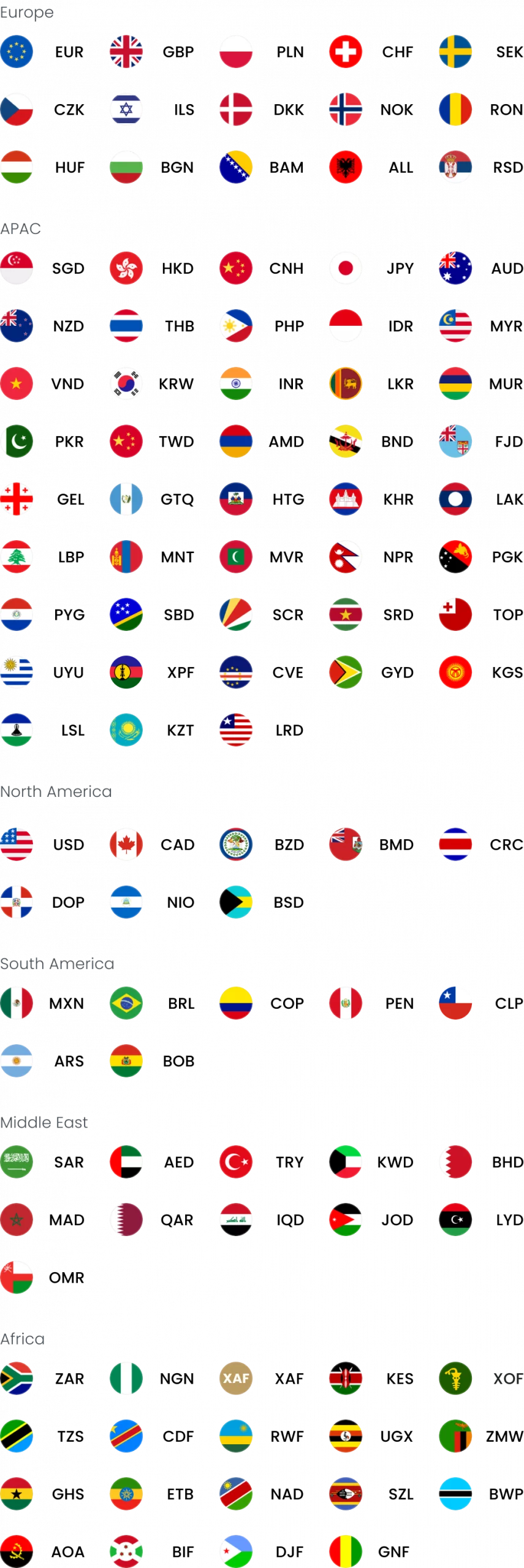
Hold CNH (and 20+ other currencies) and save money on currency exchange
With WorldFirst, you can receive and hold funds in CNH (and 20+ other currencies) free of charge.
Since Chinese suppliers often only accept payments from domestic accounts, holding CNH allows you to pay your suppliers directly in their preferred currency without losing money to FX fees. Payments to China are fast, typically processed within 24 hours, compared to up to six days with SWIFT.
By holding local currency, you can save money on currency exchange by only converting when exchange rates are most favourable. You have the option to lock in a conversion rate for up to 24 months, or set up an alert for when the exchange rate hits your target. This makes currency conversion more cost-effective, and it gives you peace of mind by allowing you to plan ahead for future transaction costs.
There are no recurring fees for holding an account, and it’s completely free to open a World Account. To view a full list of our pricing, click here.
Integrate with Chinese marketplaces (and 130+ other platforms worldwide)
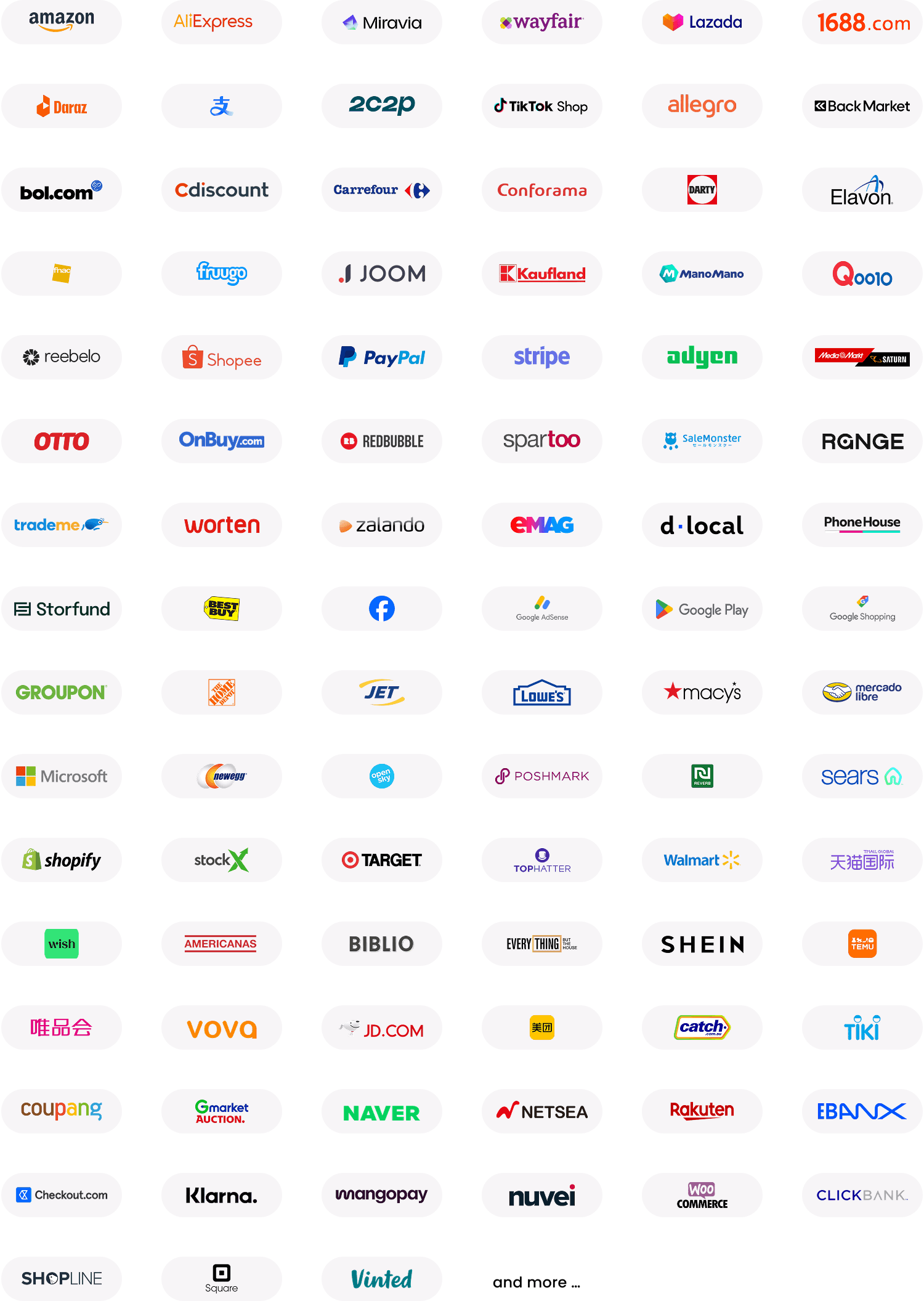
You can integrate your World Account with over 130 marketplaces, including major Chinese platforms like 1688.com, AliExpress and Tmall Global, alongside global platforms such as Amazon, Shopify and Etsy. This makes it easier to manage revenue from marketplace sales, with funds flowing directly into your account in the local currency once you make a sale.
Our exclusive integration with 1688 (one of China’s most popular wholesale platforms) is called World Pay, and it allows you to make instant, direct payments from your World Account to your 1688 suppliers. This not only speeds up transactions but also helps strengthen your relationships by offering fast and reliable payments.
Read more: How to pay international suppliers: 6 methods.
Manage all your global spending in one place
With WorldFirst, you can manage all your funds from one centralised account. We’re a payment platform that’s specifically built for online businesses, which is why everything from registration to account management is done entirely online.
You don’t need separate logins for each currency, and you can view all your currencies in one place. You can even automate collections from linked sub-accounts to your World Account, or integrate your World Account with accounting software like Xero or NetSuite to keep your finances in sync.
Funds can be converted between currencies within the same account, and you have the flexibility to spend from balances that already exist, or add funds when balances are insufficient.
Read more: How to pick the best online business bank account (12 options).
Make global spending easier with a virtual card
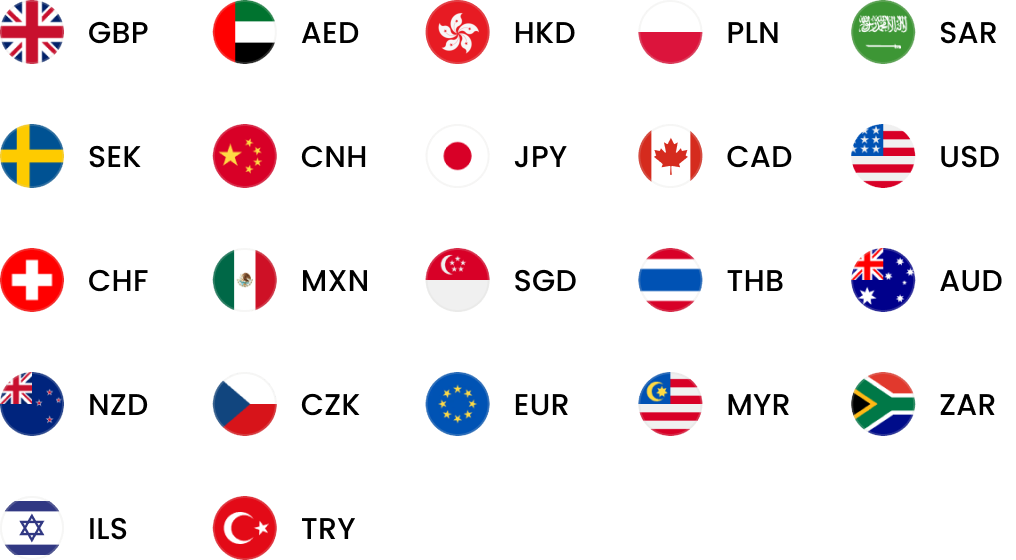
Link up to 20 virtual World Cards to your World Account and enjoy the flexibility of paying wherever Mastercard is accepted, without incurring foreign exchange fees on CNH and 14 other major currencies.
You can segment spending across different categories to simplify accounting and gain clear visibility over your spending. Plus, you can earn up to 1.2% unlimited cashback on eligible business expenditure, credited back to your World Account on a monthly basis.
Each card has its own custom spending limits, and you can instantly freeze or deactivate cards via the WorldFirst dashboard if you suspect a card has been compromised. Your World Card benefits from advanced Mastercard security measures including PCI DSS certification and 3D Secure authentication.
Although the card is virtual and not accepted for in-store payments globally, it supports in-person payments in China via Alipay+.
Read more: What’s the best online bank with a virtual debit card? Your options.
Sign up for a World Account to make buying and selling from China easier
Opening a WorldFirst account means you can easily pay Chinese suppliers in their preferred currency or integrate with 130+ marketplaces to receive payments. Our competitive FX pricing lets you save on costs and plan ahead for future payments.
Ready to open a World Account? Here’s a step-by-step guide on how to get started:
- Navigate to the sign up page
- Enter your personal and business details
- Share your verification documents
- Set up your currency accounts
- Connect with Chinese partners and marketplaces to send and receive payments faster
FAQs
1. How do I start buying and selling from China as a UK business?
Start by choosing a sourcing route, such as a wholesale marketplace like 1688.com, a sourcing agent, or direct contact with manufacturers. Vet any supplier with samples and credential checks before placing a large order, then set up a multi-currency account so you can pay and get paid in CNH without unnecessary conversion costs.
2. Do I need a licence to import from China to the UK?
It depends on the product. Many consumer goods and clothing items don’t require a specific import licence, but regulated categories such as food, chemicals, medical devices and certain electronics do. Always check the current requirements for your specific commodity code before shipping.
3. How long does it take to receive payments from Chinese marketplaces?
This varies by platform and payment method, but a multi-currency account that uses local payment rails, rather than routing everything through SWIFT, generally settles China-related payments within 24 hours, compared with up to six days for a standard international bank transfer.
4. What’s the best way to pay a Chinese supplier?
Most Chinese suppliers prefer to be paid directly in RMB or CNH into a domestic account. A multi-currency business account that lets you hold and pay in CNH avoids the exchange rate buffers suppliers sometimes build into quotes for international buyers, and can result in more competitive pricing.
5. How much does it cost to import from China to the UK?
Costs typically include the product price, freight and insurance, UK import duty (which depends on the commodity’s HS code), VAT at the standard UK rate on most goods, and any customs brokerage or handling fees. Our guide to UK customs charges from China breaks this down in more detail.
6. When should I place orders to avoid Chinese New Year delays?
Confirm your supplier’s shutdown dates as early as October or November, and aim to complete production at least a few weeks before the holiday begins. Chinese New Year 2027 falls on 6 February, with practical disruption to factories and shipping typically running for six to eight weeks around that date.