



























For many e-commerce sellers in the UK, sourcing products from Chinese manufacturers remains one of the most effective ways to keep costs down and margins healthy. China stayed the UK’s second-largest source of goods imports in 2025, behind only Germany, and total UK imports of Chinese goods and services reached £74.9 billion in the four quarters to the end of Q1 2026 alone.
But before you partner with a new supplier, there’s one thing worth checking every time: whether they’re actually set up to export legally.
Whether a supplier can legally export goods from China, receive international payments, and clear customs without delays all comes down to their export credentials. Working with a supplier who isn’t properly registered can lead to blocked payments, goods held at the border, or shipments that never arrive.
The good news is that general trading rights in China have become far more accessible over the past two decades. Registering as a foreign trade operator is now a filing process rather than an approval one, so most manufacturers and wholesalers can legally export with relatively little friction. At the same time, the list of specific goods that need a separate, case by case licence has kept growing, particularly for electronics components, chemicals and rare earth linked materials. Knowing the difference matters, both when you’re vetting a supplier and when you’re deciding what to source.
In this guide, we’ll break down what a China export licence actually covers, how to verify a supplier’s credentials yourself, and what it means for you as a UK importer.
What we’ll cover:
- What to know about export licences
- Do all Chinese suppliers have export licences?
- How do I verify a Chinese supplier’s export licence?
- Paying for goods and importing into the UK
- Why open a WorldFirst account?
Note: Looking to send money to and from China? Open a World Account for free now and enjoy competitive exchange rates and faster payments.
Key takeaways
- Most Chinese manufacturers and wholesalers can legally export because they’re registered as foreign trade operators, a filing based process rather than a licence you apply for and wait on.
- A smaller, growing list of goods, including electronics components, chemicals, certain rare earth linked materials and wildlife products, needs a separate, category specific export licence issued by MOFCOM.
- You can check most of a supplier’s credentials yourself, for free, through China’s official business registry, without needing to pay an agent.
- Unlicensed or improperly registered suppliers can lead to blocked payments, seized goods or customs delays, so it’s worth checking before you place a large order.
- UK importers need an EORI number and the right commodity code, but don’t need a China export licence themselves. That responsibility sits with the supplier.
What is an export licence?
An export licence is a legal document, or in many cases a registration, that permits a business to send its goods to buyers in other countries. Most countries, including the UK, operate some form of export control, though for the vast majority of everyday consumer goods it works more like a registration than a permit you have to earn each time.
What is a China export license?
Being able to export from China rests on two separate things. First, a company needs to be registered as a foreign trade operator, a filing made with the Ministry of Commerce (MOFCOM) that gives it general rights to trade internationally, alongside a customs registration with the General Administration of Customs (GACC). Second, if the goods themselves fall into a controlled or regulated category, such as certain electronics components, chemicals or strategic minerals, the exporter also needs a specific export licence approved by MOFCOM for that shipment or product line.
The State Administration of Foreign Exchange (SAFE) sits alongside this system rather than issuing licences itself. SAFE oversees the foreign exchange checks that Chinese banks carry out when a supplier receives an international payment, which is one reason payments to an unregistered or non-compliant supplier can end up delayed or blocked.
Why is it important for Chinese suppliers to have an export licence?
If a supplier isn’t properly registered, CNH or CNY payments sent by international buyers can be delayed or blocked during their bank’s foreign exchange checks. Goods ordered through an unregistered seller can also be held at the border by Chinese customs. For marketplace sellers, this makes checking a supplier’s export credentials a basic part of due diligence rather than an optional extra.
Do all Chinese suppliers have export licenses?
No. While export licensing has become easier in recent years, not all Chinese suppliers hold one.
These suppliers are more likely to have export licences:
- Manufacturers of finished goods
- Established wholesalers
- Suppliers selling directly to overseas buyers
These are the suppliers that are less likely to have export licences:
- Component or raw material manufacturers
- Small domestic-only factories
- Businesses selling only within China
Many smaller manufacturers still route their exports through a third-party trading company or export agent rather than registering themselves, typically for a fee of around 1% of the export value. That isn’t necessarily a red flag on its own, but it’s worth knowing exactly who you’re contracting with, and whether that third party is properly registered too. For more on telling manufacturers and trading companies apart, see our guide to finding reliable China wholesale suppliers.
What’s included in a Chinese export licence application?
Suppliers looking to export from China need to fill in a People’s Republic of China export application including the following information:
- Details of the shipped goods, including name, specifications, unit price, quantity, shipping destinations and payment details
- Business details, including an annual export plan and copies of contracts they have in place with international buyers
Who’s responsible for applying for an export licence?
The Chinese manufacturer or supplier is responsible for applying for an export license. Alternatively, a supplier may seek the help of a third-party trading agent who can help them meet the legal export activities requirements.
Some exporters that are smaller companies don’t hold export licences in order to avoid the bureaucracy and cost of getting an export licence. This is why it’s important for you to check for your suppliers’ general licences to ensure they’re compliant.
What are some products that you can’t export?
Before importing products, it’s crucial to ensure that your items comply with export administration regulations and aren’t restricted or subject to special requirements. Some products are outright prohibited, while others may require additional documentation or permits. Commonly restricted items include:
- Dog and cat fur
- Wildlife and fish
- Certain food items
- Flora or fauna
- Explosive items
- Other items that may be harmful
This list isn’t fixed. China updates its export licensing catalogues every year, and the most recent update, effective from January 2026, extended licensing requirements to a wider range of strategic minerals and rare earth compounds, alongside additional precursor chemicals. China accounts for around 90% of global rare earth refining capacity, which is a large part of why this list keeps expanding. These changes are aimed mainly at industrial and technology supply chains rather than finished consumer goods, but anyone sourcing electronics, batteries or components with rare earth content should ask their supplier directly whether a category specific licence applies, rather than assuming it doesn’t.
How do I verify a Chinese supplier’s export licence?
As an e-commerce brand, you’re expected to carry out basic due diligence on your suppliers, and verifying their export credentials is one of the more straightforward checks you can run yourself.
1. Check the business licence through China’s official registry
Every legally registered Chinese company holds a business licence carrying an 18-digit Unified Social Credit Code. You can search this for free through China’s National Enterprise Credit Information Publicity System, run by the State Administration for Market Regulation. Searching by company name or credit code will show you:
- Company name and registered address
- Legal representative
- Date of establishment and registered capital
- Business scope, which needs to explicitly cover import and export activity
- Registration status, and any administrative penalties on record
The site is only available in Chinese, so if you’re not comfortable navigating it yourself, a China based sourcing agent or supplier verification service can run the check on your behalf.
2. Ask for the customs registration certificate
A business licence on its own doesn’t confirm export rights. Ask your supplier for their Customs Registration Certificate, which carries a 10-digit customs code and confirms they’re cleared by the General Administration of Customs (GACC) to make export declarations. This certificate, alongside the business licence, is the combination most reputable suppliers will provide without hesitation.
3. Check whether the product needs a category specific licence
If you’re sourcing electronics, chemicals, food, medical devices, or anything with rare earth or battery components, ask your supplier directly whether the product needs its own MOFCOM export licence, and ask to see it. This sits separately from their general trading registration, and some smaller manufacturers rely on a licensed trading company to handle this step for them, which is worth confirming upfront.
Red flags that suggest a supplier isn’t being straight with you
A few warning signs are worth watching for during verification:
- The supplier avoids providing documents, or offers excuses instead
- Pricing that sits well below the market average for comparable products
- Requests to pay a personal bank account rather than the company’s registered business account
- Company details on invoices or contracts that don’t match what’s on the business licence
- No verifiable factory address, or reluctance to provide photos, videos or a third party audit
For higher value orders, a factory audit or third party inspection, from firms such as SGS or Bureau Veritas, adds another layer of confidence beyond paperwork alone, particularly on a first order with a new supplier.
Open a WorldFirst account for free
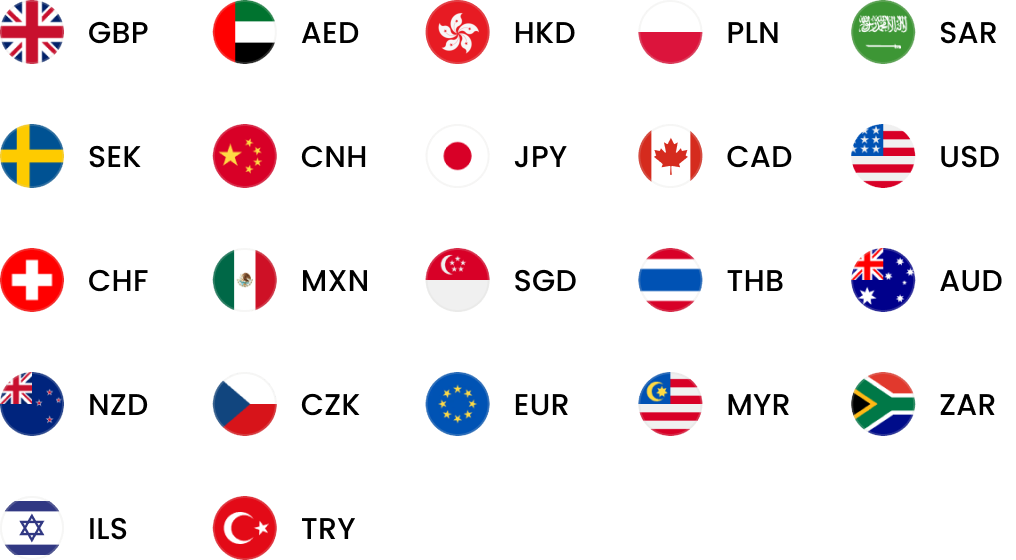
- Open 20+ local currency accounts and get paid like a local
- Pay suppliers, partners and staff worldwide in 100+ currencies
- Collect payments for free from 130+ marketplaces and payment gateways, including Amazon, Etsy, PayPal and Shopify
- Save with competitive exchange rates on currency conversions and transfers
- Lock in exchange rates for up to 24 months for cash flow certainty
Paying for goods and importing into the UK
Do international buyers have to pay export taxes or fees on Chinese goods?
You won’t pay a specific export tax on Chinese goods, though you may owe import taxes once they reach the UK. There are still export related costs, usually built into the product price rather than billed separately, broken down into:
- FOB (Free On Board)
- CIF (Cost, Insurance, Freight)
- DAP (Delivered At Place)
Some suppliers quote Ex Works (EXW) instead, where you take on responsibility for export procedures, and any loss or damage during loading and transport, from the point the goods leave the factory. For a full breakdown of what you’ll owe once goods land in the UK, see our guide to UK customs charges from China.
What do I need to know about importing goods from China into the UK?
If your company is based in the UK, you may need a licence or certificate for certain product categories, such as food, medicine or chemicals. For most general goods, none is required on the UK side.
To import legally, you’ll need to:
- Apply for an EORI number (Economic Operators Registration and Identification), which usually takes a few minutes online and is issued within a few days
- Determine the correct commodity code for your products
- Calculate the customs value, duties and VAT that apply
- Confirm your documentation is ready before your goods reach the UK, particularly if you’re working with a freight forwarder
For the full process, see the UK government’s official import guide and our guide to how to buy and sell from China, which lists the documents you’ll need on both sides of the transaction.
Having an international business account can also help you negotiate better terms with suppliers and manage the timing of payments around customs deadlines.
Why open a WorldFirst account?
WorldFirst’s World Account gives businesses a flexible multi-currency platform to send, receive and manage international payments in one place.
Since 2019, we’ve been part of Ant Group, the parent company of Alipay, one of the world’s leading digital payment platforms. Being part of that network means we can offer secure, cost-effective transactions across 100+ currencies. World First UK Limited is authorised by the Financial Conduct Authority as an Electronic Money Institution, rather than a bank, and customer funds are safeguarded in line with the Electronic Money Regulations 2011.
Save fees on foreign exchange
Opening a WorldFirst account is free, with no ongoing account fees. A World Account lets you hold 20+ currencies and pay international suppliers like a local, so you’re not converting more often than you need to. FX fees apply when you do convert, but rates are competitive, and you can lock in a rate for up to 24 months for extra certainty over costs. On payments over $5,000, there are no FX fees at all.
With access to 100+ currencies, you can pay suppliers in their preferred currency and build stronger relationships with partners around the world.
Make payments to China on the same or next day
Supply chain delays caused by slow payments can push back fulfilment and dispatch. Traditional cross-border transfers can take several days to clear, which delays your supplier too.
With WorldFirst, most payments arrive quickly, and around 90% settle the same day. Payments made before the daily cut-off, between 09:30 and 15:00 China Standard Time, can land with your supplier that same day, keeping your supply chain, and your customers, happy.
Set up and manage your account online
Setting up a WorldFirst account takes minutes, entirely online, with no physical paperwork. You can open receiving accounts in multiple currencies without needing a local office or entity, making it easier to manage payments across marketplaces like Amazon UK and Amazon US. You can add unlimited team members with custom permissions, and connect accounting platforms like Xero and NetSuite to keep your books in sync automatically.
Operate in the UK and do business with China? Try WorldFirst
Understanding a supplier’s export credentials is one of the simplest ways to reduce risk when sourcing from China, and it takes far less time than dealing with a blocked payment or a shipment stuck at customs.
If you’re looking for a faster, more cost-effective way to pay Chinese suppliers while keeping FX costs down, a World Account can help.
FAQs
1. Can I import from China without an export licence?
Not reliably. If your supplier isn’t properly registered, goods can be stopped at customs, or payments blocked, unless they’re working through a licensed trading company on your behalf.
2. How long does it take to get a China export licence?
Basic foreign trade operator registration is largely a filing process and can be completed quickly. A category specific export licence for controlled goods is slower, typically taking several weeks, since MOFCOM reviews each application individually.
3. Is a China export licence the same as a business licence?
No. A business licence allows a company to operate domestically. Foreign trade operator registration, and where relevant a category specific export licence, are what authorise it to trade internationally.
4. Do I need an export licence as a UK buyer?
No. Export licences and registrations sit with the Chinese supplier. As a UK buyer, you’re responsible for import compliance instead, including an EORI number, the correct commodity code, and any applicable duties and VAT.
5. How can I check a Chinese supplier’s export credentials for free?
You can search a supplier’s business licence details through China’s National Enterprise Credit Information Publicity System at no cost. It’s only available in Chinese, so many buyers use a sourcing agent to run the check and interpret the results.
6. What’s the difference between a manufacturer’s export licence and a trading company’s?
A manufacturer with its own registration ships goods directly under its own name. A trading company acts as an intermediary, exporting on behalf of factories that haven’t registered themselves, usually for a fee. Neither arrangement is inherently a problem, but it changes who you’re contracting with and who’s accountable if something goes wrong.
7. What happens if I buy from a supplier without a valid export licence?
Your payment can be delayed or blocked by the supplier’s bank, and the goods themselves can be held at Chinese customs rather than shipped. In practice this usually shows up as missed deadlines or unexplained delays rather than a clear rejection, which is exactly why checking credentials upfront is worth it.