



























A dedicated business account keeps your finances separate, your taxes simpler and your cash flow easier to track. If you trade internationally, it can also cut the cost and complexity of every cross-border payment.
There are around 5.7 million private-sector businesses in the UK, most of which are SMEs. Many rely on fast payments, clear reporting and reliable access to funds to stay competitive.
This guide breaks down the benefits of using a business bank account, where traditional accounts can limit flexibility and how modern options like multi-currency accounts give you more control, especially if you send or receive payments internationally.
Key takeaways:
- Limited companies must keep finances separate; sole traders benefit from cleaner records and easier bookkeeping
- A dedicated account keeps income, expenses and tax records in one place – making VAT returns, self‑assessments and accountant handovers much simpler, including supplier payments
- Seeing what’s coming in and going out becomes straightforward when personal and business spending don’t mix
- Bulk payments, team access, card controls, accounting integrations and fraud checks reduce day‑to‑day finance admin
- Standard UK accounts can be restrictive for businesses trading in foreign currencies. World Account lets you hold, send, receive and convert currencies – and manage FX and international spend – from one place
What is a business bank account and who needs one?
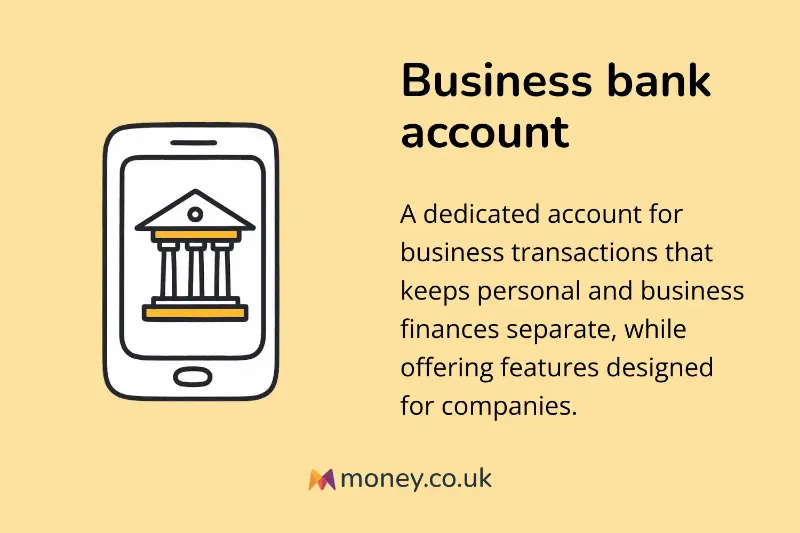
A business bank account is a dedicated account for managing company income, expenses, supplier payments, tax records and cash flow, separate from personal funds.
From your first customer payment, separation makes your finances easier to manage. You get a single, clear record of what the business earns, spends, owes and keeps.
The requirement depends on your business structure:
- Limited companies should use a separate business account. They’re legally separate from their directors and shareholders, so income and costs should move through a company account – not a personal one
- Sole traders aren’t legally required to open one, but a dedicated account becomes valuable quickly once payments become regular, expenses grow or tax records start taking real time to manage
Without a separate account, business admin gets harder quickly. Personal and business spending can blur together, making it harder to claim the right expenses, prepare records for HMRC or spot cash flow problems early.
A business bank account gives you cleaner records, simpler bookkeeping and a more professional way to receive and make payments.
For businesses operating across borders, a multi‑currency account goes further – letting you hold, send and receive different currencies without routing every international payment through a standard UK account.
Why a business bank account matters more in the UK today
A business bank account matters because UK businesses now need cleaner records, faster payments and better control over domestic and international cash flow.
Several changes make a dedicated business account more important today:
- Tax admin is becoming more digital: HMRC’s Making Tax Digital initiative expects businesses to keep digital records and submit information through compatible software. A separate business account helps keep income, expenses, supplier payments and tax-related transactions organised before they reach your accounting system.
- Payment expectations are higher: UK transfers through Faster Payments can move money quickly, so customers and suppliers often expect fast settlement. International payments can be less predictable, especially when SWIFT transfers, correspondent banks, currency conversion and FX margins are involved.
- Cross-border trade is part of everyday business: According to the Office for National Statistics, UK businesses exported more than £800 billion in goods and services in 2024. That creates a practical need for accounts that can support foreign currencies, overseas suppliers and clearer FX costs.
- Account setup now affects daily control: The right account structure helps you manage records, pay and get paid faster, understand costs more clearly and operate across markets with fewer manual workarounds.
10 key benefits of a business bank account
1. Clear separation of finances
Mixing personal and business transactions through one account creates admin that compounds quickly. A dedicated business account gives you a clear record of what the business earns, spends and keeps available.
For limited companies, that separation is a legal and practical necessity. Company income, supplier payments, tax payments and operating costs belong in a business account – not a director’s personal one.
For sole traders, the separation isn’t legally required but it pays for itself in time saved. HMRC expects accurate records. A dedicated account makes it far easier to track income, claim the right expenses and prepare tax returns without sorting through personal transactions.
2. Simpler tax reporting and accounting
A business account gives you a single, accurate record of everything the business earns and spends – which is exactly what HMRC, your accountant and your own reporting needs.
Instead of sorting through personal transactions, you can see what the business earned, what it spent and which payments you need to include in your tax records.
Many business accounts also connect with accounting tools, so transactions can sync automatically and give your accountant cleaner records.
Practically, that means:
- Expenses tracked in real time across suppliers, subscriptions and travel
- Transactions categorised without manual sorting
- VAT returns, self-assessments and company accounts prepared faster
3. Better cash flow visibility
Late payments cost the UK economy almost £11 billion a year and 38 businesses close every day because customers don’t pay them on time, according to the UK Government and Small Business Commissioner.
A dedicated business account makes it much easier to see what’s coming in, what’s due and what’s available. You’re not piecing the picture together from a shared personal account – it’s all in one place.
4. Professional credibility
When clients or customers see payments from ‘Your Company Ltd’, your business looks more established. Suppliers and larger clients may also prefer or require payments through a company account.
Some larger firms won’t even contract someone who uses a personal account for business dealings.
A business account means your company name appears consistently on invoices, statements and transfers. That consistency builds trust and removes a friction point that can quietly cost you work.
5. Better business tools
A business bank account gives you access to tools that personal accounts usually don’t offer – and that time saving adds up.
Common features include:
- Bulk payments and scheduled transfers for payroll, supplier invoices and recurring costs
- Expense cards for team members, with individual spending limits and cleaner transaction records
- Accounting integrations with tools like Xero or NetSuite, so reconciliation happens automatically
- Reporting dashboards that let you track spend by category, supplier or time period
6. Easier access to finance
When you apply for a loan, overdraft or credit facility, lenders look at your business account history. Regular income, clear payment patterns and consistent activity give them something to assess.
Without a business account, there’s no clean record to show. If you plan to borrow, raise finance or build a stronger financial profile, a dedicated account is where that history starts.
7. Stronger fraud controls
A business account gives you more control over who can access company money – which matters as fraud incidents continue to rise.
The ONS estimated 4.4 million fraud incidents in England and Wales in the year ending December 2025, with bank and credit account fraud rising by 15% to around 2.7 million incidents.
Controls typically include:
- Multi-level access so different team members can view, prepare or approve payments – but not all three
- Card controls including spending limits, merchant restrictions and the ability to freeze cards instantly
- Fraud monitoring that flags unusual activity or large transfers before they’re processed
A business account won’t eliminate fraud risk, but it gives you real levers to limit exposure.
8. Team access and multi-user controls
As your business grows, finance can’t run through one person. A business account lets you add co-founders, finance managers or department heads with appropriate access levels – without giving everyone the same permissions.
You can issue expense cards to employees, link payroll systems for bulk salary runs and keep a clear record of who authorised what.
9. Faster and more reliable domestic payments
UK business accounts connect directly to domestic payment networks.
For example, you can use:
- Faster Payments: most UK transfers (including payroll) clear within seconds
- Bacs: for scheduled payments such as payroll, direct debits and supplier invoices
- CHAPS: for high-value same-day transfers (e.g., buying property or paying large invoices)
10. Better handling of international payments and FX
A standard UK business account can handle overseas transfers – but once you’re trading regularly across currencies, the limitations add up.
Traditional accounts can usually send money overseas, but the process often comes with extra steps:
- SWIFT transfers can take longer: International bank transfers often move through intermediary banks, which can add delays, extra checks and less predictable delivery times
- Fees can add up quickly: Banks may charge a transfer fee, intermediary fee, receiving fee or currency conversion fee, depending on the route
- FX costs aren’t always obvious: Some providers add a margin to the exchange rate, so the real cost is embedded in the rate rather than appearing as a separate fee
- Foreign currency receipts may convert automatically: Some accounts convert incoming foreign payments into GBP, which gives you less control over timing and exchange rates
- Single-currency accounts can create extra conversions: If you receive euros, convert them to pounds, then later need euros again to pay a supplier, you may pay FX costs twice
A multi-currency business account gives you more control. Instead of converting every payment back to GBP, you can hold balances in different currencies, receive international payments into local account details and pay overseas suppliers from the right currency balance.
A practical example: a UK business receives €10,000 from a European customer. Rather than converting the full amount immediately, they keep part in euros for upcoming supplier invoices, convert only what’s needed for UK costs and avoid paying for a second conversion later.
Get more control over your business account with WorldFirst
The core benefits of a business bank account – cleaner records, simpler tax reporting, stronger payment control – are enough for most UK businesses to manage day-to-day finance with more confidence.
But if your business sells internationally, pays overseas suppliers or receives payments in multiple currencies, a standard account becomes a bottleneck. You’re dealing with automatic conversions, SWIFT delays, opaque FX costs and extra admin every time a payment crosses a border.
WorldFirst is a global payments provider, not a bank. The World Account is a multi-currency account built for businesses that operate across markets.
With World Account, you can:
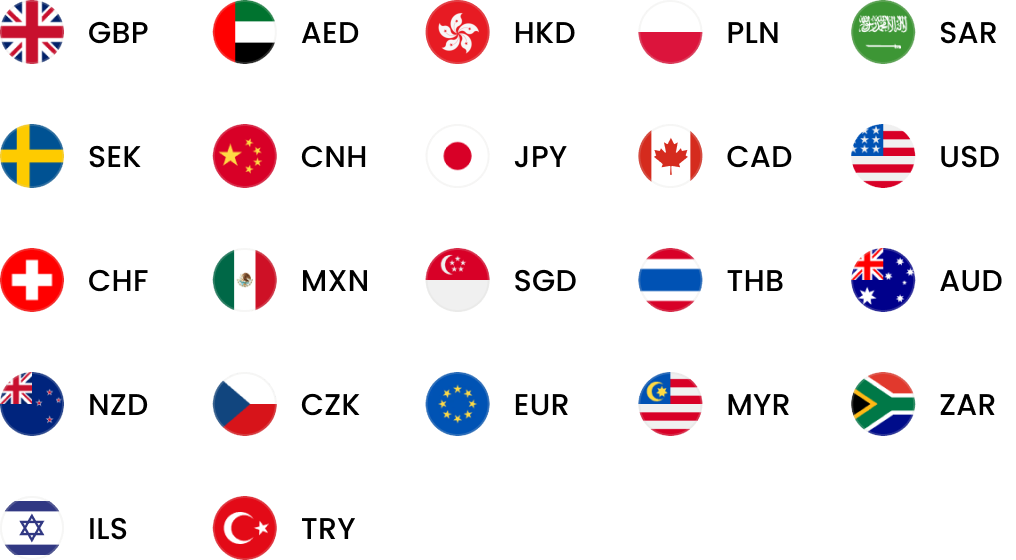
- Hold funds in 20+ currencies without converting everything back to GBP
- Receive payments like a local business in major currencies, using local account details
- Pay in 100+ currencies to suppliers, contractors and partners worldwide
- Send to 200+ countries and territories from one online account
- Make batch payments – up to 200 at once – for businesses managing multiple suppliers or sellers
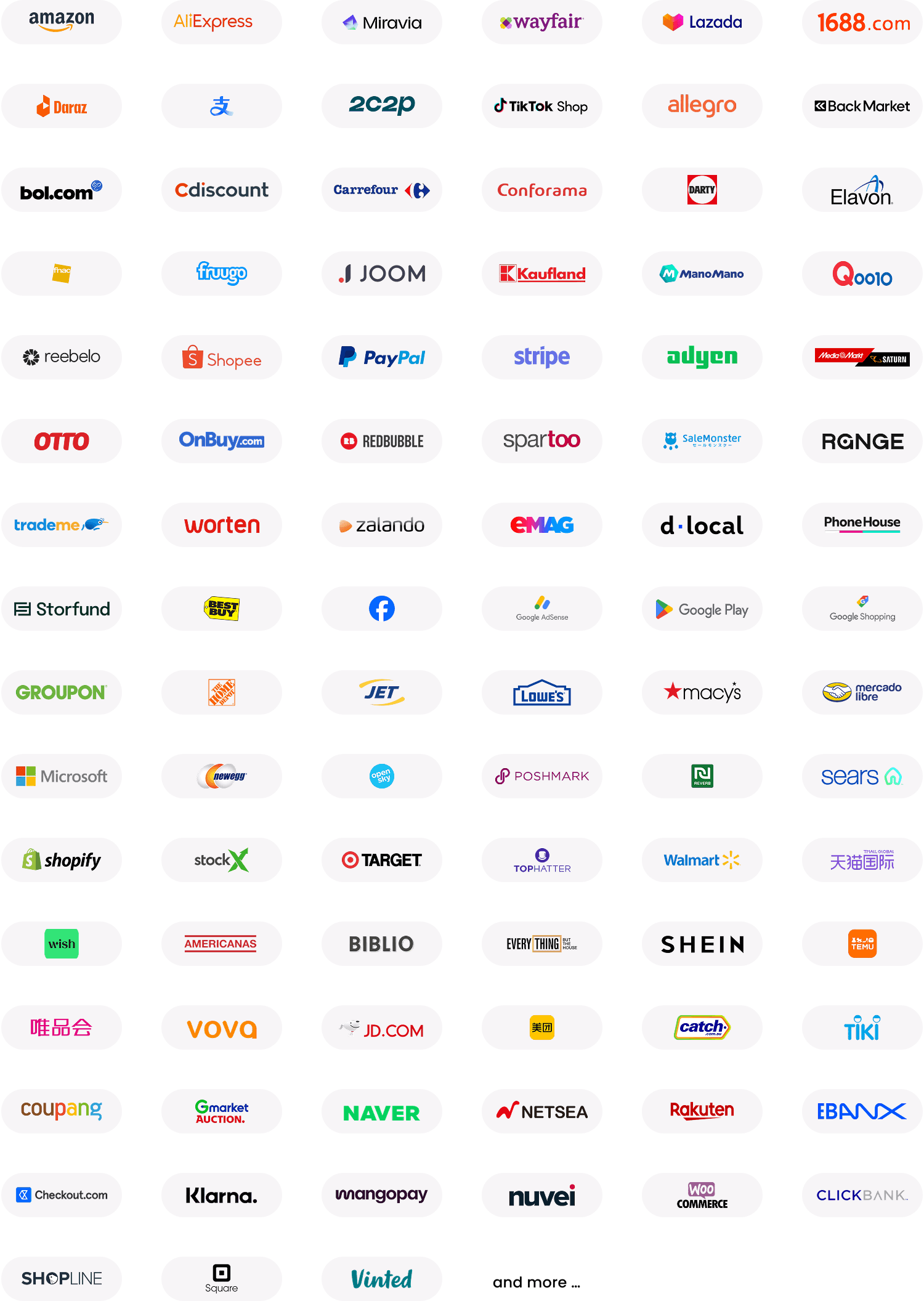
- Connect 100+ marketplaces and 30+ payment gateways, including Amazon, AliExpress, Etsy and PayPal
- Convert currencies with transparent FX pricing – markups capped at 0.5% for major currencies and 0.75% for non-major currencies
- Pay with World Card, a multi-currency virtual card with zero FX fees on 15 major currencies from existing balances, and up to 1.2% cashback on eligible transactions
- Connect Xero or NetSuite for automatic transaction syncing and cleaner multi-currency accounting
- Manage team access with custom permission levels across your account
For businesses that sell through marketplaces, pay overseas suppliers, receive foreign currency or manage international spend, World Account offers a more practical way to manage money across currencies and markets.
FAQ
1. Do I need a business bank account as a sole trader in the UK?
2. Can I use a personal account for my business?
3. How do I choose the right business account?
Sources:
- https://www.gov.uk/government/statistics/business-population-estimates-2025/business-population-estimates-for-the-uk-and-regions-2025-statistical-release
- https://www.gov.uk/government/collections/making-tax-digital-for-income-tax
- https://www.ons.gov.uk/economy/nationalaccounts/balanceofpayments/bulletins/uktrade/december2024
- https://www.nibusinessinfo.co.uk/content/advantages-having-business-bank-account
- https://www.smallbusinesscommissioner.gov.uk/new-powers-for-the-small-business-commissioner-as-part-of-government-package-to-tackle-late-payments/
- https://www.ons.gov.uk/peoplepopulationandcommunity/crimeandjustice/bulletins/crimeinenglandandwales/yearendingdecember2025
- https://www.worldfirst.com/uk/