



























If you do business in the UK – whether you’re based here or selling from abroad – you’ve likely come across Value Added Tax (VAT). VAT is a consumption tax charged on most goods and services, and it can affect everything from your pricing and cash flow to when you move money internationally.
For businesses trading across borders, VAT can be complex, especially when payments need to be made in different currencies and on fixed deadlines. To help you out, we’re explaining what VAT is, how it works in the UK and what you need to know about VAT if you’re operating internationally.
We’ll also touch on how WorldFirst’s World Account can help you manage cross-border VAT payments more efficiently. With the World Account, you can hold multiple currencies, pay VAT and other tax obligations quickly and reduce unnecessary FX costs, all from a single platform.
Read on to learn:
- What VAT is and how it works in the UK
- How VAT works when you operate across borders
- Common VAT challenges for global businesses
- How WorldFirst helps businesses manage cross-border VAT more efficiently
Want to simplify your international VAT payments? Open your World Account for free.
What is VAT and how does it work in the UK?
Value Added Tax is a consumption tax charged on most goods and services in the UK.
At a high level, it works similarly to sales tax: it’s added to the price of goods or services, collected by businesses and then paid to the government. The key difference, though, is how VAT is collected.
Sales tax is a single-stage tax collected only at the point of sale to the final consumer. VAT, on the other hand, is a multi-stage tax applied at each stage of the supply chain, with each business in the chain charging VAT and paying it to the government. This system ensures VAT is paid gradually as value is added throughout the supply chain.
The good news? Businesses can claim credits for the VAT they paid on their own purchases, which lets them offset VAT paid against VAT collected.
Here’s an example of how that works:
- A UK supplier sells goods to a UK retailer for a total price of £1,200 (£1,000 + £200 VAT at the standard VAT rate of 20%)
- The supplier collects the £200 VAT and pays it to HMRC
- The retailer later sells the goods to a UK customer for £1,800 (£1,500 + £300 VAT)
- As the retailer already paid £200 VAT, they only owe HMRC the £100 difference
- Meanwhile, the customer pays the full £300 VAT as the final consumer
While businesses are responsible for collecting and paying VAT to HMRC, the tax is ultimately borne by the end consumer.
UK VAT rates and VAT registration requirements
The UK applies different VAT rates depending on what’s being sold:
- Standard rate (20%) applies to most goods and services
- Reduced rate (5%) applies to certain items, such as domestic energy and children’s car seats
- Zero-rated (0%) applies to essentials like most food and children’s clothing
Understanding which rate applies is essential for correct pricing and invoicing. UK businesses must also register for VAT if their VAT taxable turnover exceeds £90,000 in a 12-month period. VAT-registered businesses must:
- Charge VAT at the correct rate
- Issue VAT-compliant invoices
- Keep accurate VAT records, following the rules for Making Tax Digital (MTD) for VAT
- Submit VAT returns
- Pay VAT owed or reclaim VAT due
For businesses operating domestically, this system works relatively smoothly. Once you start buying or selling across different markets, though, VAT becomes much more complex.
How VAT works when you operate across borders
For transactions that span borders, who charges VAT, who pays it and where it’s reported depends on:
- Where the buyer and seller are based
- Whether goods are being imported or exported
- What goods or services are involved
Below are two common cross-border scenarios UK and international businesses face – and how VAT fits into each.
Importing goods into the UK: Where VAT applies
If a business imports goods into the UK from overseas suppliers, import VAT is usually due when goods enter the UK.
Here’s what happens in practice:
- The overseas supplier typically does not charge UK VAT
- UK import VAT is applied at the border when goods are imported
Import VAT is calculated on the value of the goods, shipping and insurance costs and any customs duties. In many cases, import VAT must be paid before goods are released, which means businesses need sufficient GBP liquidity at the right time. This creates several challenges:
- Upfront cash flow pressure: You have to pay VAT before you’ve sold the goods or received customer payments
- Timing risk: Delays in VAT payment can delay your entire shipment
- Currency mismatch: You might pay suppliers in one currency, but need GBP ready for UK import VAT
For businesses that import regularly, being able to hold GBP, pay import VAT quickly and control when currency conversion happens can make a real difference.
Read more: UK customs charges from China: What you need to know
Selling goods to non-UK customers: How VAT works
When UK businesses sell goods to customers outside the UK, whether VAT applies depends on where the goods are going.
Most UK exports are zero-rated. But while you won’t charge UK VAT to the overseas customer, you must keep evidence that the goods have left the UK. Proper documentation and reporting are required to justify the zero rate.
If you sell into areas with their own VAT systems (such as the EU):
- You may need to register for VAT locally and appoint a fiscal representative
- You may need to charge local VAT at checkout
- You may need to file VAT returns and pay VAT in a foreign currency
This transforms VAT from a single compliance obligation into a multi-currency, multi-jurisdiction challenge. For instance, you might find yourself needing to pay German VAT in EUR, French VAT in EUR and UK VAT in GBP – all while collecting customer payments in various currencies.
Common VAT challenges for global businesses
For international businesses, VAT often creates friction beyond compliance. Even when VAT is reclaimable, businesses still need to manage when, where and in which currency it’s paid.
The most common challenges tend to fall into three areas:
- Cash flow pressure: VAT payments don’t always line up neatly with revenue. Import VAT is typically due before goods are released, VAT collected on sales may need to be paid before customers settle invoices and VAT reclaims can take weeks or months. Without planning, VAT can become a working-capital drain, especially for fast-growing or inventory-heavy businesses.
- Multi-currency headaches: As your business grows internationally, VAT stops being a GBP-only obligation. You may need to pay UK VAT in GBP, pay overseas VAT in local currencies and collect VAT-inclusive payments from customers in different markets. Poorly timed or forced FX conversions can quietly increase costs and make VAT harder to track and reconcile.
- Time-sensitive payments: Late or failed VAT payments can result in penalties and interest charges from tax authorities, shipment delays at customs and other compliance issues that can escalate quickly. For cross-border businesses, delays are often caused by slow international transfers, a lack of local banking details or fragmented payment processes across multiple platforms.
These operational challenges mean that even when you have the money to pay VAT, getting it to the right place at the right time can be surprisingly difficult.
This combination of cash flow pressure and operational complexity makes VAT one of the most challenging aspects of international business – but the right financial infrastructure can help.
How WorldFirst helps businesses manage cross-border VAT more efficiently
WorldFirst is a global payments and financial platform built specifically for international businesses. Since 2004, we’ve helped over 1.5 million businesses manage more than $500 billion in international business payments.
Our World Account is a multi-currency business account that lets companies hold, receive and manage funds in multiple currencies from a single platform.
While WorldFirst doesn’t calculate or file VAT on your behalf, we can help smooth out many of the friction points around VAT management. Instead of relying on multiple bank accounts or costly international transfers, businesses can use the World Account to streamline how their money moves across borders.
Here are three ways the World Account can help you with VAT-related payments:
More easily set money aside for VAT in multiple currencies
One of the trickiest parts of managing VAT is having the right amount of money ready in the right currency at the right time.
You might need to:
- Pay import VAT before goods are released at the border
- Hold on to VAT collected from customers until your return is due
- Cover VAT payments before you’ve received all customer funds
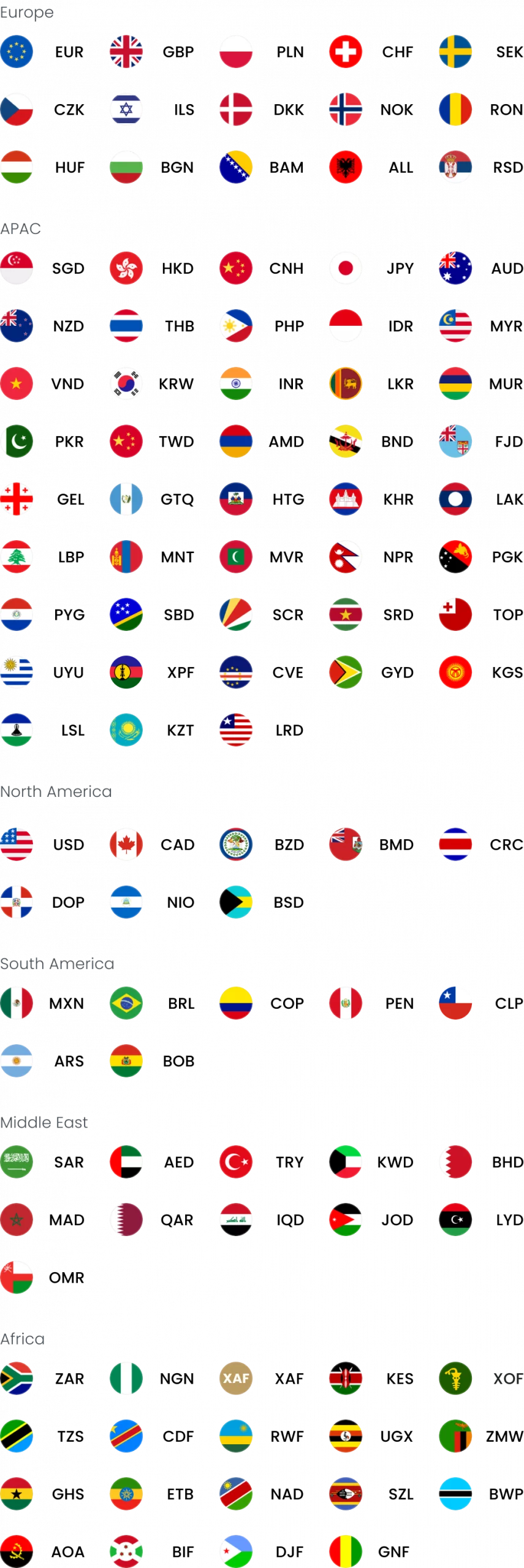
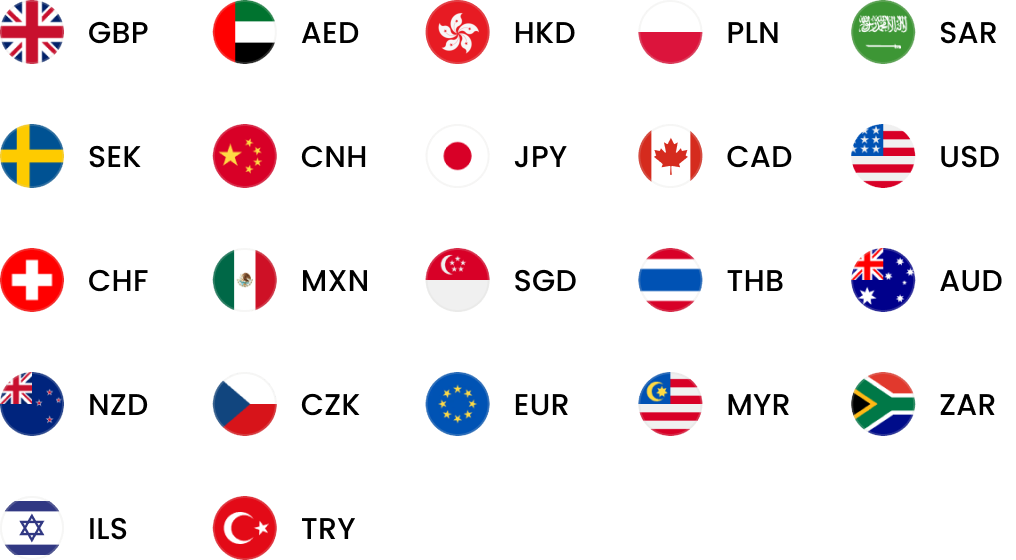
The World Account helps by letting you hold and organise funds in 20+ major currencies, including GBP, in one place. With separate currency balances, you can add and set aside funds specifically for upcoming VAT payments and keep VAT money separate from day-to-day operating cash.
For example, a UK business importing goods from China might pay suppliers in CNH, collect customer payments in EUR and keep a dedicated GBP balance reserved for VAT and other obligations. This clear separation makes it easier to see what’s available and what’s already earmarked.
Plus, the World Account has no setup fees, monthly maintenance fees or fees for receiving payments. This is a significant difference from many traditional banks or fintech alternatives, which often charge setup costs or monthly subscription fees just to access multi-currency functionality.
Read more: How to choose a multi-currency business account (+ 6 options)
Avoid unnecessary currency conversions when paying VAT
VAT payments often come with hidden FX costs – not because VAT itself is expensive, but because businesses are forced to convert money at the wrong time or at poor rates.
Here’s a common scenario: You collect customer payments in EUR or USD, but need to pay UK import VAT in GBP. When you initiate a payment or transfer with traditional banks, currency conversion happens automatically, potentially at an unfavourable rate.
With the World Account, you can collect, hold and convert currencies much more flexibly:
- Hold customer payments in foreign currencies until you’re ready to convert
- Convert only what you need for specific payments
- Choose when to convert, taking advantage of favourable exchange rates rather than being forced into conversions at unfavourable moments
WorldFirst’s conversion fee is capped at 0.5%, with competitive, mid-market rates for major currencies. Make payments over $5,000, and it’s fee free. We also offer tools like forward contracts (up to 24 months) and firm orders to help manage FX risk more proactively.
Read more: How to lock in exchange rates as a cross-border business: 3 best methods
Pay VAT on time, without international banking delays
VAT deadlines don’t move, and late payments can quickly cause problems, from penalties to delayed shipments at customs.
With a World Account, you can send payments in 100+ currencies to 210+ countries and territories. More importantly, because we use local payment routes where available, your payments arrive faster than if we were to use the slower SWIFT networks that traditional banks rely on. In fact, around 90% of our payments arrive within the same day.
For UK businesses trading internationally – and overseas businesses selling into the UK – this makes VAT payments:
- Faster and more predictable
- Easier to track and reconcile
- Less exposed to last-minute banking issues
The result? VAT payments become just another predictable part of your payment workflow, handled in the same platform as supplier payments, marketplace payouts and operational expenses.
Get started with a World Account today
Managing VAT across borders doesn’t have to be complicated – and getting set up with the right financial tools doesn’t have to be either.
With a World Account, you can hold multiple currencies, pay VAT on time and manage international payments without unnecessary FX costs or banking delays. Plus, signing up is completely online and takes just a few minutes.
Whether you’re a UK business importing goods, selling overseas or an international company trading with UK customers, the World Account gives you a simple, centralised way to manage your money.
See how much easier making international payments can be by opening your World Account for free.