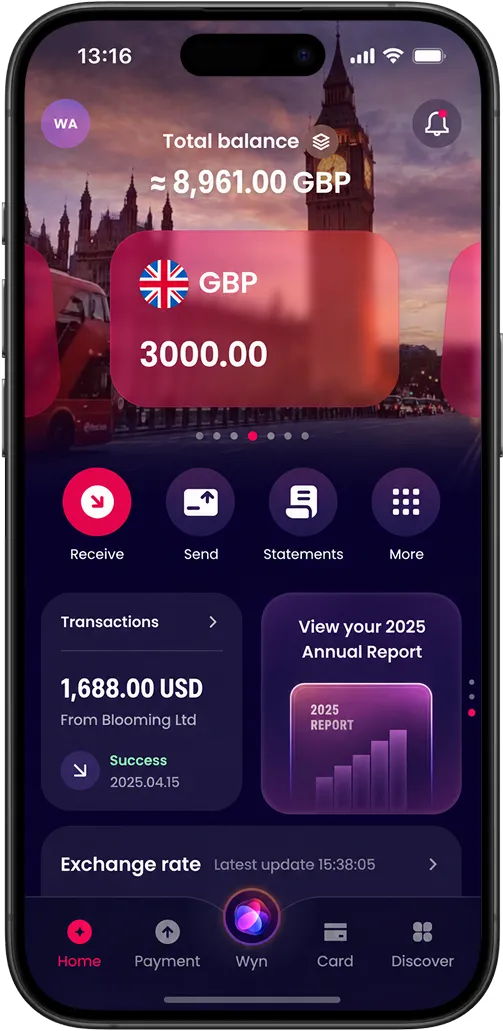
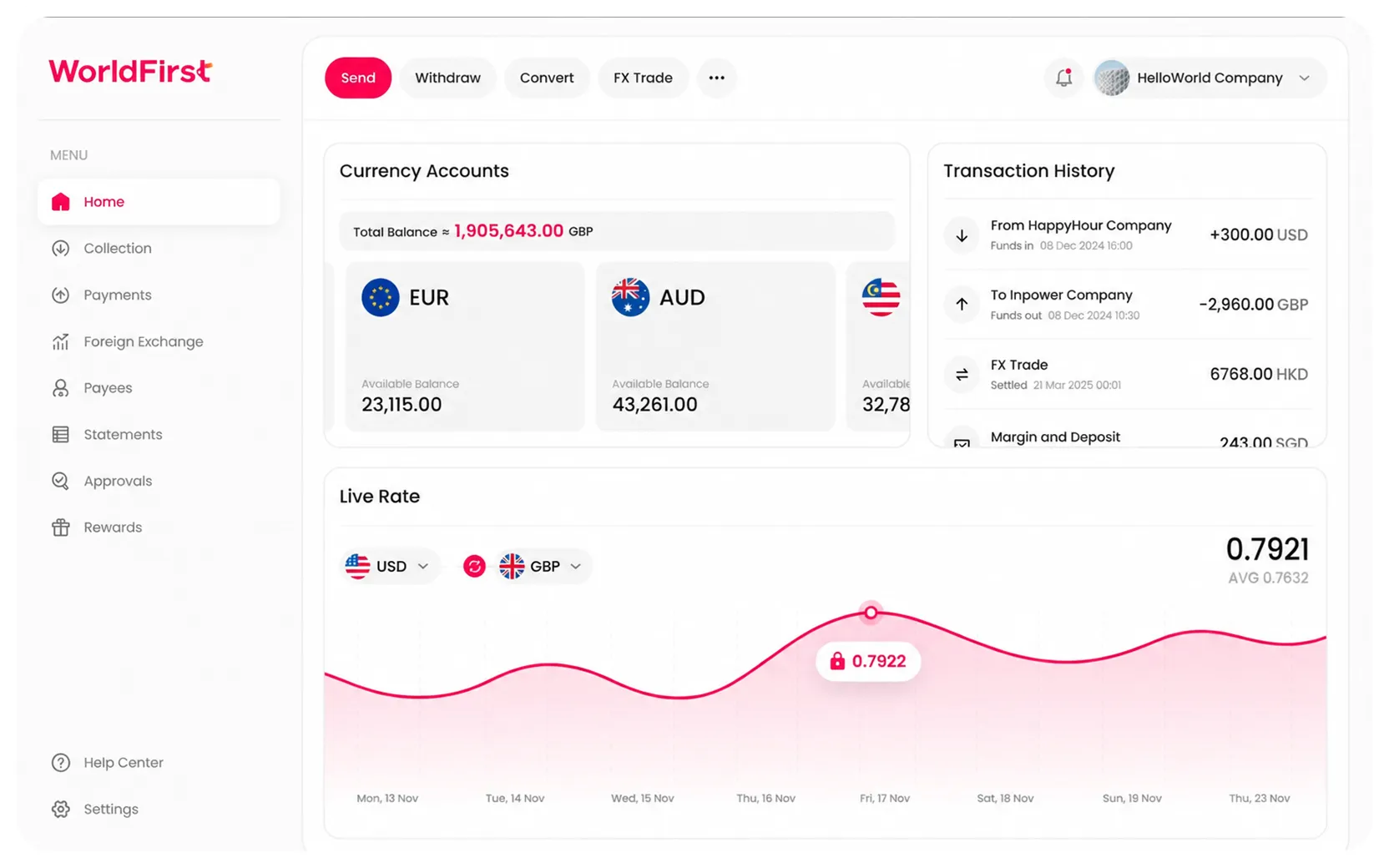
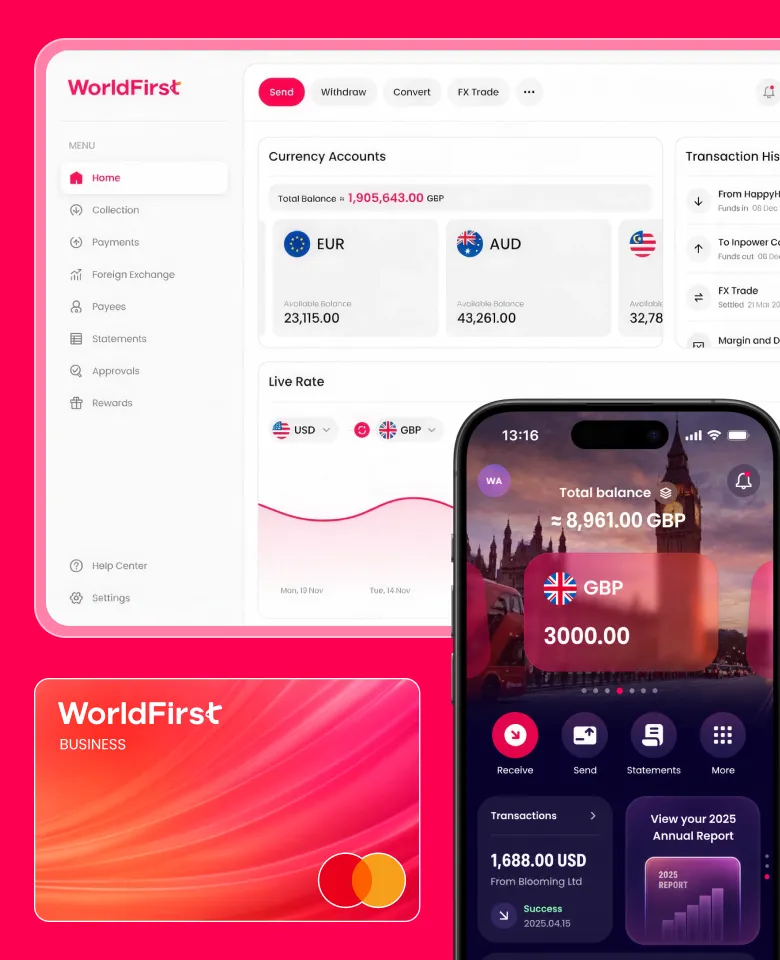
Multi-currency accounts, competitive FX, and global transfers — Everything you need to pay and get paid internationally
Built for faster payments, smarter liquidity, and robust compliance-all powered by our next-gen API toolkit and Al-native architecture.
Named a Top Global Fintech Company by CNBC & Statista, we’ve supported 1.5M+ businesses since 2004.

Europe

Asia

Oceania

Africa

We provide coverage in South Asia and Middle East: servicing 210+ countries and territories.

Late FX payments: causes, risks and how to avoid

Contents

Late FX payments happen when an international payment settles later than expected, often due to the extra steps involved in cross-border transfers. Even when you pay on time, the funds can still arrive late to your supplier.

For UK importers, exporters, e-commerce sellers, wholesalers, manufacturers and finance teams, late FX payments rarely stop at an awkward email chase. Late settlement widens FX exposure windows, increases admin workload, disrupts inventory flow and weakens commercial leverage with suppliers.

A European Central Bank review found that about one-third of retail cross-border payments took more than one business day to settle in 2024.

Delayed payments aren’tt always avoidable. But many come down to timing, cleaner data incorrect payment details or workflows that aren’t designed for cross-border trade.

This article explains what late FX payments are, the common causes and the practical steps you can take to prevent delays.

Key takeaways

  • Late FX payments usually result from cross-border payment mechanics rather than poor discipline: You can approve and send a payment on time and still have it arrive late. Multiple systems, intermediaries, compliance checks and currency conversions can all extend settlement beyond expectations
  • Delays increase both FX exposure and financial cost: When settlement shifts, your exposure window to exchange rate movements widens. That can raise the sterling cost of an invoice, eliminate early payment discounts, tighten supplier terms and reduce forecasting accuracy
  • Impact goes beyond finance: Delays in payments can slow shipments, disrupt production schedules, cause marketplace stock-outs and create extra work for your teams
  • Most delays are preventable with better workflow design: Accurate beneficiary data, fewer intermediaries, planned processing calendars and separating conversion timing from payment timing all reduce avoidable friction
  • A multi-currency structure helps reduce late FX payments at the source. Using a World Account lets you receive, hold, convert and pay in multiple currencies within a single connected account

Open a World Account to reduce the risk of late FX payments and manage international transfers with greater control.

What are late FX payments?

Late FX payments are cross-border payments that settle later than expected due to foreign exchange conversion and international payment processing. That is different from paying an invoice late: you can approve and send the payment on time, yet the beneficiary may still receive funds late.

While domestic payments tend to run on connected rails, cross-border payments often involve separate national systems, additional intermediaries and more checks.

A key technical reason is that currencies operate as “closed-loop” systems. Domestic payment systems in different regions aren’t traditionally connected, so international bank networks use correspondent accounts to debit and credit funds across jurisdictions rather than physically moving currency overseas

That added complexity directly increases the risk of late FX payments. The more steps involved, the easier it is to miss a processing deadline, trigger a manual compliance review or introduce delays caused by incorrect or incomplete payment details.

Late FX payments and FX risk are related, but not the same

FX risk is your exposure to exchange-rate movements. Late FX payments are a timing and process problem: the transfer settles later than expected. They overlap because delays extend the window during which rates can move against you.

If your payment settles a day later than planned, your exposure window is longer. You may not be able to convert at the time you intended or you may have to convert at the last minute at a less favourable rate, purely to meet a supplier deadline.

Why late FX payments happen

Late FX payments happen for several reasons, most of which come from the way cross-border payments actually work, rather than from simple mistakes or missing deadlines:

1. Cut-off times and operating hours

Even if you initiate a payment “today”, it may miss the provider’s processing cut-off. If the bank queues the payment for the next business day, settlement shifts and your supplier receives it late.

Central banks are evolving to reduce delays.. In February 2026, the Bank of England published a policy statement confirming an early-morning extension to CHAPS settlement hours, with the start time moving from 06:00 to 01:30. This would align UK settlement with international markets. 

At a global level, monitoring also shows that payment system operators are considering longer operating hours. A BIS CPMI brief on the 2024 cross-border payments monitoring survey notes that 53% RTGS systems are operating with extended hours, planning to extend or considering an extension.

2. Correspondent banking and intermediary routing

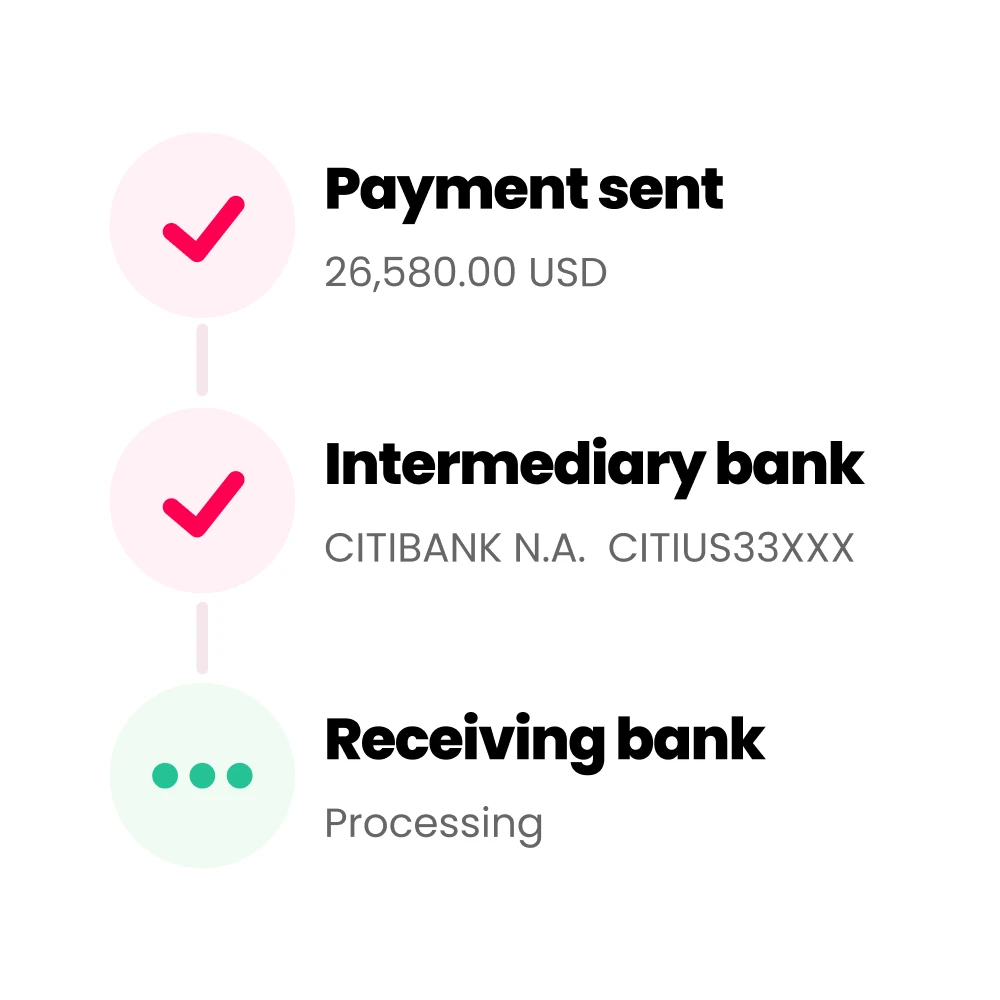
When the sending and receiving payment service providers don’thave a direct relationship, the transfer typically moves through one or more correspondent banks.

Intermediaries aren’t inherently problematic. They’re a core part of how cross-border payments function. The issue is that each additional hand-off introduces:

  • Another processing stage and queue
  • Another potential compliance or manual review point
  • Less visibility into the payment’s exact position in the chain

That’s why changes to global payment infrastructure now focus on transparency and straight-through processing.

3. Compliance screening and sanctions controls

Banks and payment providers need to screen international payments to prevent fraud, money laundering and sanctions breaches. It’s a regulatory requirement, with penalties in place.

In the UK, the Office of Financial Sanctions Implementation sets out how financial sanctions restrict access to funds and financial services, including through targeted asset freezes. Its guidance makes clear that UK financial sanctions apply to persons in the UK and to UK persons worldwide.

Even when your business complies fully with the rules, screening can still extend processing time. Automated filters may flag similar names, banks may request supporting documents or teams may need to clarify details about parties in the payment chain. Each additional check adds time before funds reach the beneficiary.

The Financial Conduct Authority reinforced this dynamic in its guidance FG24/6, updated in April 2025. The guidance confirms that legislative changes allow payment service providers to delay outbound payments when they have reasonable grounds to suspect fraud, extending the maximum time available for investigation.

Although the guidance focuses on fraud, it highlights a broader reality: when payments trigger risk checks, providers extend processing time to investigate.

4. Beneficiary errors and data quality issues

A surprisingly large share of “mystery delays” comes from incomplete, inconsistent or incompatible payment data.

The global shift to ISO 20022 is partly about reducing data-related frictions by improving message structure and data quality to enable more efficient processing. A BIS CPMI report on ISO 20022 harmonisation notes that cross-border data requirements are intended to support processing “in the most efficient manner” by 2027.

The practical implication is that you need accurate beneficiary master data: names, addresses, identifiers and currency-account matching.

5. Forced conversions and unnecessary currency hops

Late FX payments often have a structural root cause: the business is forced into converting at inconvenient times because it can’t hold or use the right currency when needed.

A common pattern looks like this:

  • You get paid in EUR
  • The funds are converted to GBP by default
  • You later need to pay a supplier in EUR
  • You convert GBP back to EUR

That adds at least one extra conversion step and can introduce internal delay (waiting for approval, waiting for “a better rate” or simply waiting for the team with access). It also widens your FX exposure window.

6. Approval lag and internal workflow drag

Many international businesses route supplier payments through multi-step approval chains. Strong governance protects the business, but complex workflows can introduce timing risk.

Approval lag leads to late FX payments when:

  • The team waits for sign-off before executing the FX conversion
  • The team holds the payment until the conversion fully settles
  • Decision-makers delay action in an attempt to improve the exchange rate while the supplier deadline approaches

In many cases, the delay reflects how the workflow operates. When the process links conversion timing directly to payment release, the business increases its exposure to operational hold-ups and exchange rate fluctuations.

Risks of late FX payments

Late FX payments have two main impacts: financial risk and operational risk. Trading across multiple markets and currencies increases both.

Financial risks

Late FX payments create clear financial risks that businesses can measure and quantify:

  • Direct FX impact from a longer exposure window: Exchange rates move continuously. When settlement takes longer than expected, you remain exposed to market movement for longer, which increases the risk of converting at a worse rate than planned and raises the sterling cost of the same foreign-currency invoice
  • Lost early payment discounts: Many suppliers offer small but meaningful discounts for early settlement. If funds arrive late, you forfeit that discount and reduce your margin
  • Pricing and credit impact with suppliers: Suppliers price risk into their terms. Repeated late settlement can result in tighter payment terms, reduced credit limits, higher deposit requirements or less favourable pricing
  • Cash flow forecasting and reconciliation drag: Unpredictable settlement reduces visibility over the near-term cash position. If you’re tracing payments, responding to supplier queries and reconciling invoice dates with actual settlement dates, your workload increases while forecasting accuracy decreases

Operational risks

Late FX payments also create operational risks that many teams underestimate:

  • Inventory and production disruption: For importers and manufacturers, payment timing links directly to shipment release, production scheduling and raw material allocation. A settlement delay can hold goods at the origin, delay warehouse intake or push back your production slot, disrupting sales cycles and planning
  • Marketplace and e-commerce knock-on effects: If you sell through online marketplaces, a late supplier payment can trigger stock-outs, slower fulfilment times, higher unit costs due to urgent shipping and added customer service pressure. What begins as a finance delay can quickly reduce revenue and weaken account performance metrics
  • Internal inefficiency and payment investigations: Delays often create follow-up workload. Teams may need to contact the payment provider, request trace details, reconfirm beneficiary information or repeat approval steps if changes are required. Limited visibility across the payment chain increases the time and effort required to resolve a simple supplier query

How to avoid late FX payments

Late FX payments are easiest to reduce when you treat them like an operational risk with a measurable workflow.

1. Use multi-currency balances strategically

If you regularly pay suppliers in EUR or USD, holding those currencies in advance removes a time-sensitive step from the execution chain. Instead of converting funds at the moment an invoice is due, you convert when it suits your treasury position and then pay directly from the balance.

A well-structured multi-currency account allows you to:

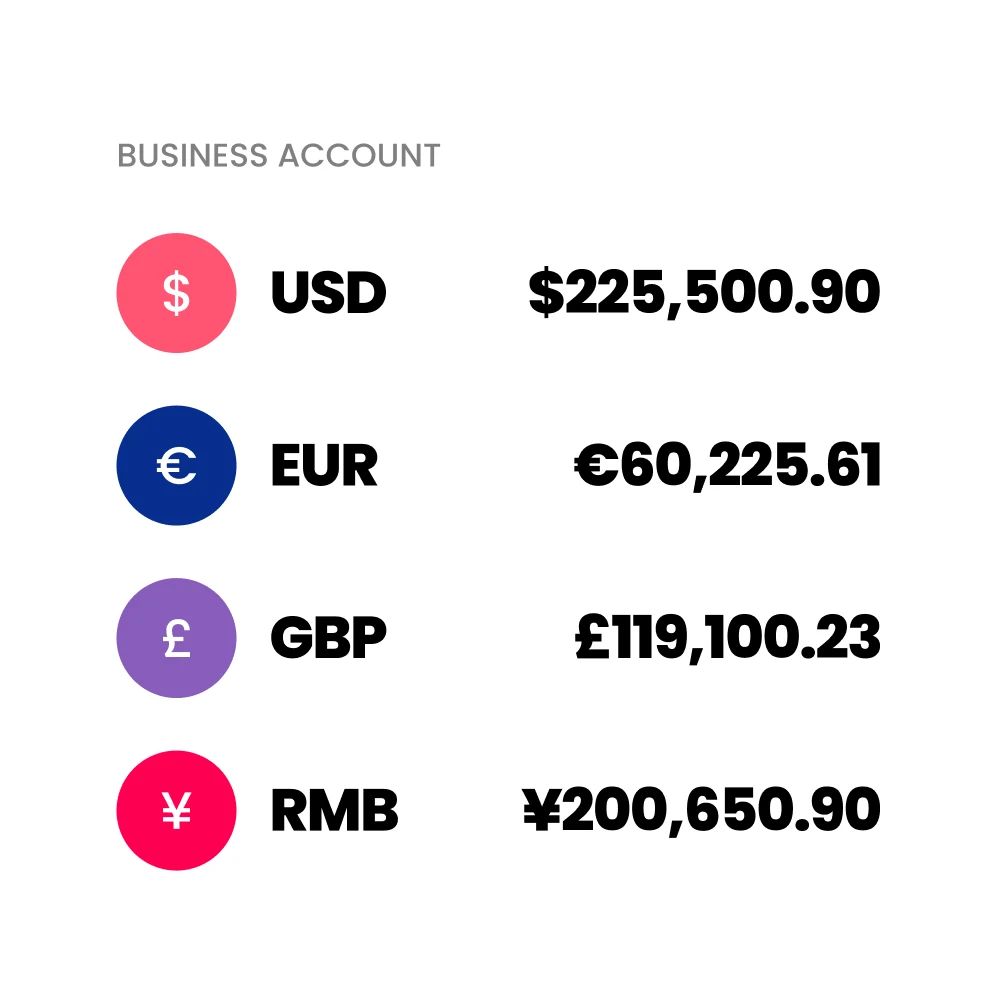
  • Hold funds in several currencies simultaneously
  • Convert at a time you choose rather than under deadline pressure
  • Pay suppliers directly in their local currency without re-converting
  • Reduce dependency on same-day FX execution before release

By shortening the path between approval and settlement, you reduce exposure to both operational delay and adverse rate movement.

One account to manage global payments
Pay your suppliers around the world. Collect payments for free in 20+ currencies. Convert when it suits you. All in one place.

2. Plan around processing windows and local calendars

Create a clear payment calendar for your core trade corridors that includes:

  • Provider processing deadlines
  • Supplier bank operating hours and public holidays
  • Internal approval cut-off points

Mapping these timelines prevents last-minute surprises. Many delays occur not because funds are unavailable, but because cut-off times and settlement windows vary across countries and banking systems.

3. Limit unnecessary intermediaries and improve visibility

Where you have a choice of payment routes, opt for structures that minimise intermediary bank hand-offs and provide clear end-to-end tracking. Each additional transfer stage increases review points.

Stronger visibility enables you to confirm your payment status quickly and respond to supplier queries with certainty, rather than resorting to escalation.

4. Validate beneficiary data before release

Incorrect or inconsistent payment information frequently triggers manual review. Treat data accuracy as a control function rather than an administrative step.

Practical safeguards include:

  • Maintaining a single verified supplier master record
  • Using consistent legal entity names across invoices and payment instructions
  • Confirming that the receiving account accepts the intended currency

5. Separate conversion timing from payment timing

Delays often arise when teams tie FX conversion and payment release too closely together. If approval moves or teams hesitate on rate timing, settlement moves with it.

Funding key currencies in advance allows you to manage exchange timing independently while keeping supplier payment timing predictable.

6. Centralise execution and reconciliation

Fragmented systems create friction. Multiple portals, disconnected approval chains and inconsistent reporting make it harder to track funds and respond quickly.

A more controlled structure focuses on:

  • One consolidated view of balances and payment status
  • A consistent approval workflow
  • Direct reconciliation into ERP and accounting systems
Power your global growth with one account
Get local currency accounts, fast payments and competitive FX – all in one place.

How WorldFirst helps reduce late FX payment risk

Late FX payments appear when receipt, conversion, approval and payment collapse into a single, compressed sequence. Stronger outcomes follow when each stage of a cross-border payment remains deliberate and visible.

WorldFirst’s World Account is a multi-currency business account designed to manage international collection, holding, conversion and payment within a single operational environment.

WorldFirst is not a bank. It’s a regulated payment institution providing international payment and foreign exchange services to businesses trading across borders.

The World Account supports the stages that most often create delay:

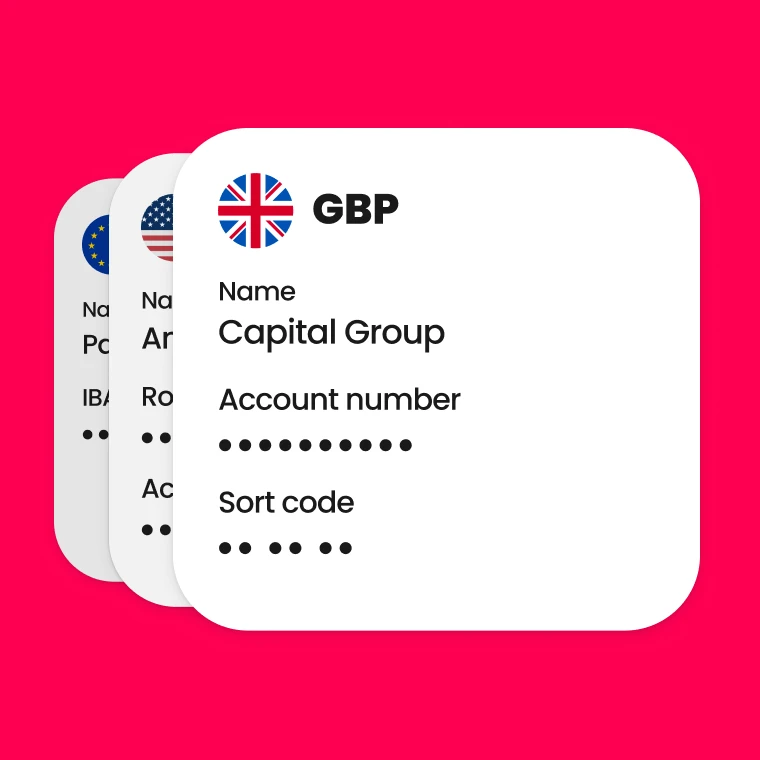
  • Receive funds in 20+ currencies: Use local account details in supported regions so revenue arrives through domestic payment networks in the payer’s market, helping preserve the original currency and reduce unnecessary routing steps
  • Hold balances in 20+ currencies: Maintain multiple currency balances within one account. Funds aren’t converted automatically on arrival, allowing finance teams to decide when to exchange
  • Convert currencies when it suits your schedule: Exchange balances inside the account in line with pricing, cash flow or supplier timelines. Separating conversion from payment reduces pressure to execute FX at the last moment
  • Pay suppliers in 100+ currencies: Route transactions through domestic rails in the destination country, when available, to reduce reliance on intermediaries and improve settlement clarity
  • Withdraw to a UK bank account when required: Transfer funds from the World Account to a UK bank account held in your company’s name for payroll, tax or domestic expenses without forcing conversion earlier than necessary

Separating these functions creates clearer control:

  • Revenue can remain in its original currency until needed
  • Conversion can align with treasury planning rather than supplier pressure
  • Payments can be drawn directly from existing currency balances
  • Settlement expectations become easier to forecast

Holding and paying in the same currency can remove conversion from the critical path. Fewer steps between approval and supplier credit reduce exposure to both timing friction and short-term rate movement.

For UK businesses managing international supplier relationships, reducing late FX payments starts with workflow design. Gaining control over when currencies are received, converted and paid improves predictability, strengthens supplier confidence and protects margin.

Open a World Account to manage international payments with clearer timing control, stronger visibility and more predictable cross-border execution.

Sources:

  1. https://www.ecb.europa.eu/press/key/date/2025/html/ecb.sp250401~9e1ee05e88.en.html
  2. https://www.bankofengland.co.uk/paper/2026/ps/extending-rtgs-and-chaps-settlement-hours-early-morning-extension
  3. https://www.bis.org/cpmi/publ/brief10.pdf
  4. https://www.fca.org.uk/publication/finalised-guidance/fg24-6.pdf
  5. https://www.fca.org.uk/publications/finalised-guidance/fg24-6-guidance-firms-enables-risk-based-approach-payments
  6. https://www.bis.org/cpmi/pietf/iso20022.pdf
  7. https://www.worldfirst.com/uk/blog/international-transactions/cross-border-business-payments/
  8. https://www.worldfirst.com/uk/blog/international-transactions/cross-border-payments-challenges/
  9. https://www.worldfirst.com/uk/

Lawrence Bennett is UK Country Manager at WorldFirst. He brings 15+ years of experience across fintech, ventures and e-commerce.

Lawrence Bennett

Author

Country Manager, WorldFirst UK

Continue reading

Subscribe

The Weekly Dispatch

Get the latest news and event invites. Signup for our weekly update from the worlds of fashion, design, and tech.


Pay your suppliers around the world. Collect payments for free in 20+ currencies. Convert when it suits you. All in one place.

The simpler way to pay and get paid

Save money, time, and have peace of mind when expanding your global business.

Sorry, our accounts are currently available for business use only.

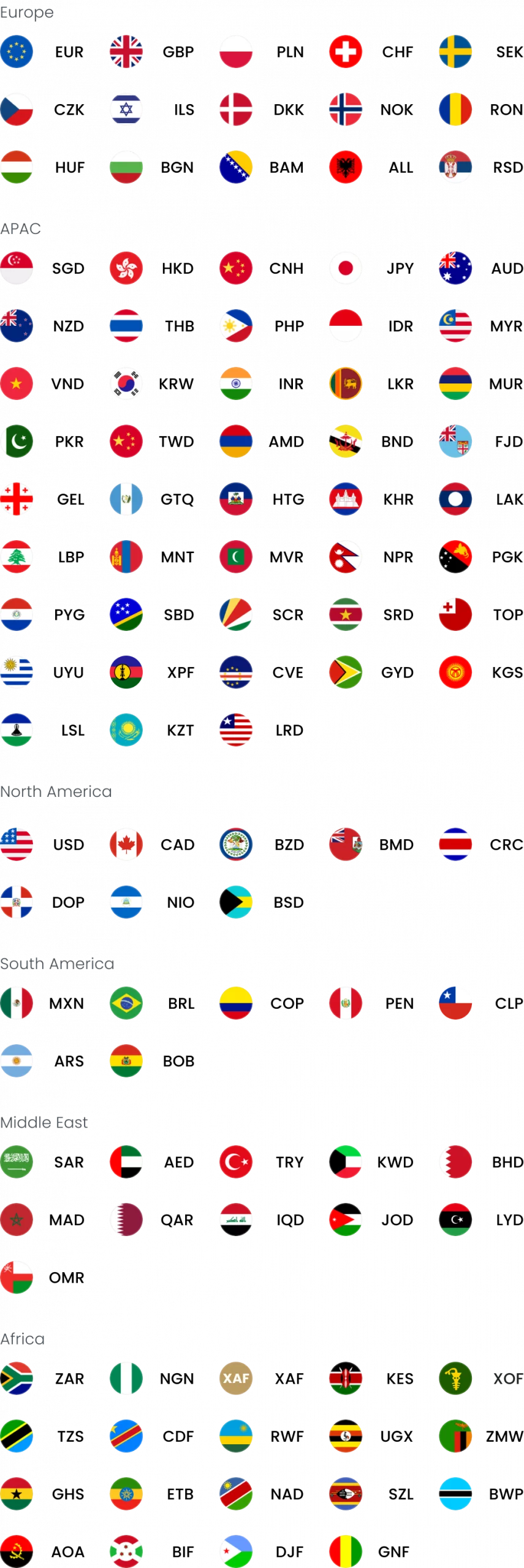
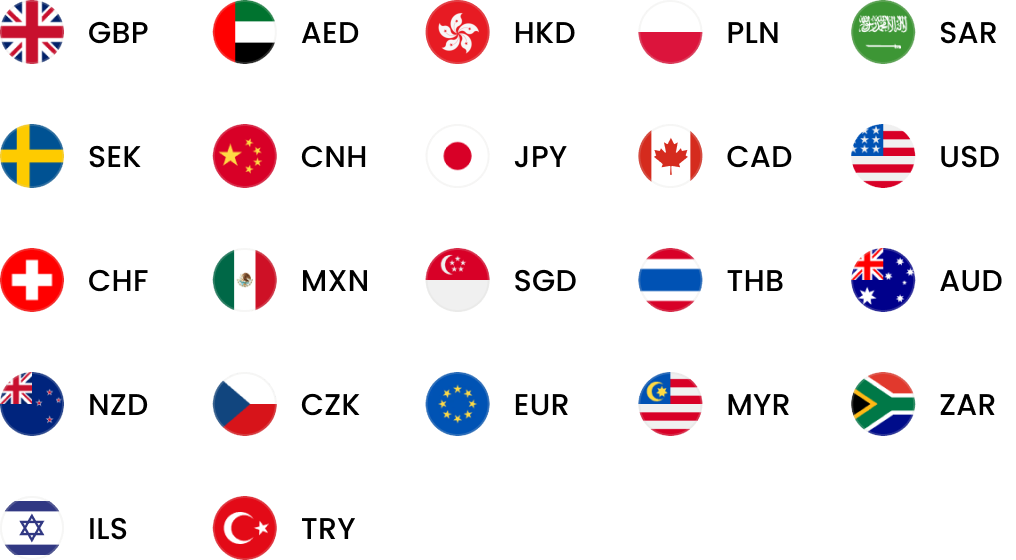
Pay in 15 currencies with World Card, no FX fees

Enjoy zero FX fees when paying in the following 15 currencies with World Card.

Send money in 100+ currencies

You can send money in your WorldFirst account to any of the currencies we support.

Get Paid by 130+ marketplaces

Seamlessly get paid by 130+ marketplaces and pay your suppliers anywhere.

Collect money in 20+ currencies

You can collect money in 20+ currencies. It only takes a few minutes to open an account in the currency you need.