



























If you pay suppliers or receive revenue in foreign currencies, exchange rates directly change how much you actually pay or receive in GBP. Foreign exchange risk management strategies can help your business control how exchange rate movements affect your costs, margins, and cash flow when you trade internationally.
For many UK SMEs, this is a real cost. Some estimates suggest that businesses lost around £53,000 on average due to currency volatility in 2024–2025, although outcomes vary by sector and exposure.
Without a clear approach, exchange rates turn routine payments into unpredictable costs.
This guide explains eight foreign exchange risk management strategies to reduce unnecessary conversions and make international payments more predictable.
Key takeaways:
- Exchange rate movements can directly reduce margins: When businesses trade internationally, currency fluctuations can change the real cost of supplier payments or the value of overseas revenue once converted into GBP
- Currency volatility makes financial planning harder: Exchange-rate movements can affect payment costs, export revenue and working capital needs, making cash flow forecasting less predictable
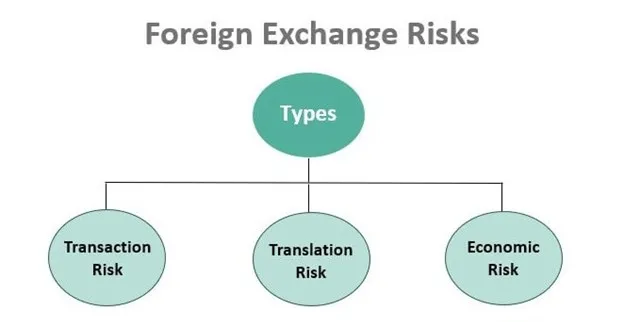
- Businesses face different types of FX risk: Transaction risk affects individual payments, translation risk impacts financial reporting and economic risk influences long-term competitiveness
- Structured strategies help control currency exposure: Approaches such as natural hedging, multi-currency accounts, forward contracts and conversion timing help businesses stabilise international payment costs
- The World Account from WorldFirst can help manage foreign exchange risk: Businesses can reduce unnecessary FX exposure and improve visibility into international cash flow with a multi-currency account
Open a World Account today and make foreign exchange risk management strategies part of your business operations.
What are foreign exchange risk management strategies?
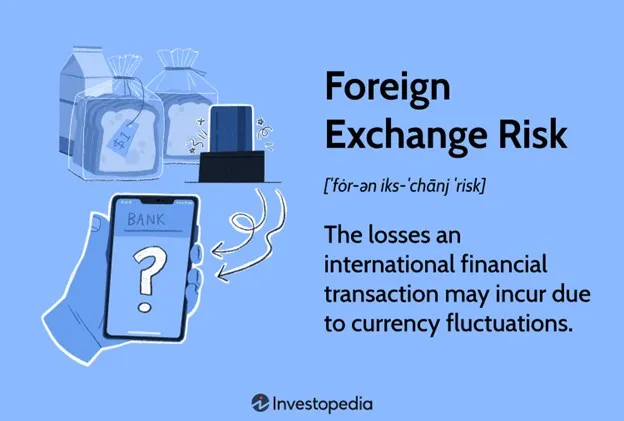
Foreign exchange risk management strategies are practical ways to reduce how much exchange rate movements affect your payments, revenue, and margins.
If your business deals in more than one currency, you’re exposed to FX risk every time:
- You pay a supplier overseas
- You receive revenue in another currency
- You hold funds in a foreign currency
The key issue is timing. You might agree on a price today, but the exchange rate can change before the payment happens.
For example:
- You agree to pay US$100,000 when the GBP value is £79,000
- The pound weakens before payment
- You now pay £83,000 for the same invoice
FX strategies help you manage the gap between agreement and payment, keeping outcomes predictable.
For businesses that trade internationally, exchange rate movements influence several important financial areas:
- Supplier payment costs
- The GBP value of overseas revenue
- Operating margins on cross-border sales
- Financial forecasting and cash flow planning
Without structured currency management, exchange rate volatility makes routine payments unpredictable. Businesses address that exposure by adopting foreign exchange risk management strategies that help stabilise costs, protect margins and improve visibility over international payments and revenue.
Why FX risk matters for UK businesses
There’s a reason why FX risk plays an important role in day-to-day operations:
1. Profit margins become harder to protect
Exchange rate movements can change the real cost of supplier invoices or the value of overseas revenue. A deal that appeared profitable at the time of agreement may deliver a smaller margin once the business converts the currency back to GBP.
Even moderate rate movements can quietly reduce profitability across multiple international transactions.
2. Cash flow planning becomes less predictable
3. Supplier payments become more complicated
International transfers often pass through multiple financial institutions before reaching the beneficiary.
Processing delays or exchange rate movements during that period can affect the final amount the supplier receives, creating friction in commercial relationships and complicating payment planning.
4. International expansion introduces additional currency exposure
Entering new markets usually means operating in multiple currencies at the same time. A UK company exporting to Europe, the United States or Asia may need to manage euros, dollars or yuan alongside GBP.
Many UK SMEs are already dealing with cross-border payments, with 86% of exporters trading with Europe.
Types of foreign exchange risk businesses face
FX risk comes in different forms and each type requires a different strategy:
1. Transaction risk
Transaction risk arises from individual payments or receivables in foreign currencies. Whenever a company agrees to buy or sell goods in USD, EUR, RMB or another currency, exchange rate movements can change the value of that transaction before settlement.
The exposure exists during the period between agreeing on the price and completing the payment. If the exchange rate moves during that time, the final GBP amount received can increase or decrease.
Transaction risk typically affects:
- Supplier invoices in foreign currencies
- Export sales invoiced to overseas customers
- Marketplace payouts received in international currencies
- Cross-border service payments
Currency volatility already affects many small businesses dealing with international payments. About 54% of SMEs report that exchange-rate movements have negatively affected their business, showing how routine cross-border transactions can expose companies to FX risk.
2. Translation risk
Translation risk, also known as accounting exposure, affects how companies report foreign currency balances when they consolidate international assets or liabilities.
Translation risk arises because companies with foreign assets, subsidiaries or liabilities must convert their value into the home currency for financial reporting, which can result in gains or losses solely from exchange-rate movements.
Items commonly affected include:
- Overseas subsidiaries
- Foreign-currency loans
- International investments
- Assets held in foreign currencies
Underlying business performance may remain unchanged, yet exchange rate shifts can still alter balance sheet values and reported earnings. For multinational firms that consolidate accounts across multiple countries, translation risk becomes an important financial reporting consideration.
3. Economic risk
Economic risk describes the long-term effect that exchange rate movements can have on a company’s competitiveness and cost structure.
Exchange rate changes influence pricing, demand and supplier costs across markets. When currencies move, exports may become more or less competitive, while imported goods or raw materials can cost more or less, too.
Examples include:
- A stronger GBP making UK exports more expensive for foreign buyers
- A weaker GBP increases the cost of imported goods or materials
- Currency movements affecting long-term pricing strategies in global markets
The UK FX market handles about US$4.7 trillion in average daily trading. That gives you an idea of how active currency markets are and how quickly rates can move.
Foreign exchange risk management strategies for businesses
Foreign exchange risk management doesn’t eliminate currency risk completely. But its goal is simple: control exposure so exchange rate movements don’t disrupt payments, margins or planning.
The strategies below represent common ways UK companies manage currency exposure:
1. Natural hedging (currency matching)
Natural hedging reduces exposure by matching incoming and outgoing payments in the same currency.
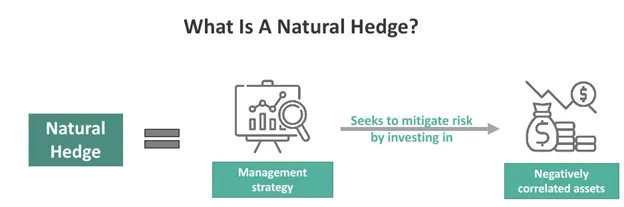
A simple example is a UK business that receives revenue in US dollars and also pays a US supplier in dollars. Instead of converting those funds from USD to pounds and back to USD later, the business uses the same USD balance for both sides of the transaction.
That approach can help businesses:
- Reduce the number of conversions they make
- Limit exposure to short-term exchange-rate swings
- Lower the cumulative FX cost built into repeated conversions
Natural hedging works best when currency inflows and outflows naturally match. Businesses that receive revenue in one currency but pay suppliers in another may need additional strategies to manage exposure.
2. Multi-currency accounts
Multi-currency accounts allow businesses to hold, receive and send funds in several currencies without converting every payment immediately.
A multi-currency setup gives finance teams greater control over when and how currency conversions occur. Fewer forced conversions mean lower FX friction and more deliberate control over exchange rate exposure.
If you collect revenue in EUR and pay a supplier in EUR, you can use the same balance instead of converting twice.
Multi-currency accounts are especially useful for:
- Importers paying overseas suppliers regularly
- Exporters receiving foreign currency revenue
- E-commerce businesses collecting marketplace payouts in several currencies
They also reflect how cross-border payments operate in practice. International transfers often pass through several financial institutions and banks frequently use correspondent banking when payment providers don’t have a direct relationship.
Because of this structure, multi-currency tools make it easier to hold foreign currencies and manage international payments more efficiently.
3. Forward contracts
Forward contracts allow a business to agree on an exchange rate now for a currency transaction that will happen later.
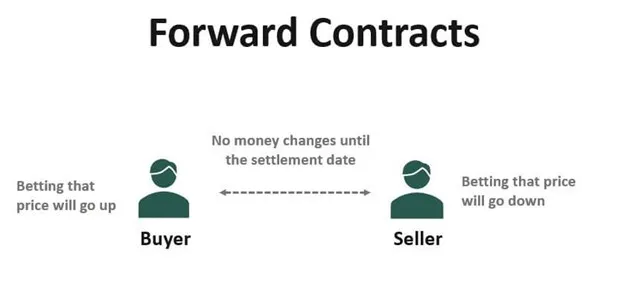
A forward foreign exchange contract is defined as a legally binding agreement to buy or sell one currency for another on a specified future date.
That means a UK importer can fix the GBP cost of a future supplier payment, rather than leaving the outcome exposed to market moves.
Forward contracts are useful when a business needs:
- Cost certainty for a known future payment
- Margin protection on a contract already agreed
- More reliable budgeting for international purchases
However, forward contracts also reduce flexibility. If exchange rates later move in a favourable direction, the business still needs to complete the transaction at the previously agreed rate.
4. Timing currency conversions
Some businesses choose to delay conversion rather than exchange funds immediately on receipt. The logic is straightforward: hold the foreign currency for longer and convert when the rate is more favourable.
This approach can work well when a business already uses a multi-currency account and has flexibility around when it needs GBP. It can also support businesses that want to wait for a target rate before converting.
Potential advantages include:
- Better control over conversion timing
- The chance to improve the effective GBP value of receipts
- More flexibility when businesses reuse foreign currency balances
The downside is exposure. Waiting for a better rate also means the rate could move in the opposite direction.
This strategy works best when the company follows a clear treasury process rather than relying on instinct.
5. Invoicing in GBP
Some businesses reduce exposure by invoicing international customers in pounds. That shifts the exchange rate risk to the buyer rather than the UK seller.
Pricing international transactions in GBP often simplifies operations because:
- Revenue arrives in GBP
- Accounting becomes more straightforward
- The seller avoids conversion risk on that transaction
Still, this strategy isn’t always commercially realistic. Overseas buyers often prefer pricing in their own currency so they can compare suppliers more easily and manage their own budgeting. GBP invoicing tends to work best when the UK company has pricing power, a differentiated product or long-standing customer relationships.
6. Diversifying suppliers and currency exposure
Businesses can also reduce concentration risk by avoiding over-reliance on a single currency corridor.
If a company sources heavily from one region and pays most suppliers in one currency, it becomes more exposed to adverse moves in that currency. Broadening the supplier base across different regions can reduce that dependence.
Benefits include:
- Less exposure to volatility in one currency
- Greater sourcing flexibility
- Stronger resilience if exchange rate shifts coincide with regional disruption
This approach doesn’t eliminate FX risk, but it can prevent a single currency move from having an outsized effect on purchasing costs.
7. Currency options
Currency options give the holder the right, but not the obligation, to exchange currency at a predetermined rate before a set date.
That makes options more flexible than forwards. A business can protect itself against an adverse move while still keeping the ability to benefit if the market moves in its favour.
Options tend to suit:
- Larger transactions
- Businesses with more advanced treasury needs
- Situations where flexibility matters more than simplicity
They’re also more complex and usually involve an upfront premium, which might not suit businesses working with tight margins. BIS data shows FX options activity more than doubled in April 2025, suggesting growing use of instruments that offer protection and flexibility in volatile markets.
8. Risk limits and internal FX policies
Many businesses eventually need formal rules for how much exposure they’ll tolerate and when action is required.
Your FX policy should set out:
- Which currency exposures to monitor
- When hedging becomes mandatory
- What proportion of future payments should be covered
- Who approves conversions, forwards or other hedging decisions
Unmanaged FX risk often builds gradually. A policy helps businesses make consistent decisions instead of reacting to market moves at the last minute.
How WorldFirst helps businesses manage foreign exchange risk
For many UK businesses, managing foreign exchange risk becomes easier when payments, currency balances and conversions sit in one place. The World Account from WorldFirst provides that infrastructure through a multi-currency business account designed for international trade.
WorldFirst is not a bank. It operates as a regulated payments provider, while partner banks hold client funds. The World Account focuses on simplifying cross-border payments, currency management and international collections.
Here’s how the World Account helps you manage FX risk:
- Hold and manage multiple currencies: UK companies can receive, hold and send funds in 20+ currencies, including US dollars, euros and offshore Chinese yuan (CNH). Maintaining balances in multiple currencies helps businesses avoid unnecessary conversions
- Local account details for global payments: The World Account provides local receiving account details in major currencies, allowing customers, marketplaces and partners to pay as if they were sending a domestic transfer. This structure reduces friction in international payments. A UK seller on marketplaces such as Amazon, Shopify or Etsy can receive USD or EUR revenue directly into a corresponding currency balance rather than routing everything through GBP
- Pay suppliers worldwide in their local currency: Businesses using the World Account can send payments in 100+ currencies to suppliers worldwide. Many transfers reach recipients on the same day or the next business day when using local payment rails. Paying suppliers in their preferred currency can improve commercial relationships and remove the need for suppliers to apply their own exchange rate margins
- Competitive, transparent FX pricing: WorldFirst offers FX margins as low as 0.3% for new customers. No setup fees or monthly charges apply, which helps businesses manage international payment costs more predictably
- Forward contracts and target orders: Businesses that want greater certainty around future payments can access forward contracts for up to 24 months or set a target rate. Locking in an exchange rate allows companies to budget for supplier payments or international expenses without worrying about sudden market movements
- Visibility over international cash flow: The World Account dashboard provides a single view of all currency balances and transactions. Track incoming revenue, outgoing supplier payments and currency positions from one interface. Integration with accounting software such as Xero simplifies reconciliation and bookkeeping
Instead of reacting to exchange rate movements after they occur, you can plan conversions, manage balances and pay suppliers while reducing FX exposure.
Open a World Account today to strengthen your foreign exchange risk management strategies and manage international payments with greater control.
Sources:
- https://ffnews.com/newsarticle/tradetech/smes-hit-hard-by-53000-loss-from-currency-fluctuations/
- https://www.imf.org/en/publications/wp/issues/2025/06/13/global-cross-border-payments-a-1-quadrillion-evolving-market-567604
- https://www.stablepayments.co.uk/blog/successful-exporting-strategies-for-uk-smes-top-markets-and-sectors
- https://financialit.net/news/payments/smes-hit-hard-ps53000-loss-currency-fluctuations
- https://www.bankofengland.co.uk/-/media/boe/files/statistics/bis-survey/2025/summary-of-uk-survey-results-2025.pdf
- https://www.gov.uk/hmrc-internal-manuals/corporate-finance-manual/cfm13140
- https://www.bis.org/statistics/rpfx25_fx.htm
- https://www.reuters.com/world/uk/many-uk-firms-say-volatile-pound-triggered-losses-2025-need-hedge-grows-2025-12-11/
- https://www.worldfirst.com/uk/