




























Telegraphic transfers (TT) are the standard route for Singapore businesses sending money overseas, and the volumes reflect how embedded they are in daily operations.
The debit advice shows a handling commission and a cable fee. What it doesn’t show is the FX margin or the deductions correspondent banks may take before funds reach the beneficiary. Those costs are included in the rate or arrive as short payments, with no line item on either side.
Singapore’s total merchandise trade reached SG$1,397.7 billion in 2025, with Mainland China, Malaysia and the US among its largest trading partners. Across those corridors, each outward TT carries fees that few businesses track in full.
This guide covers what telegraphic transfer fees in Singapore consist of, how the three main banks price them, and the steps businesses take to reduce what they pay.
Key takeaways:
- The FX margin is the largest TT cost and the hardest to see. The handling commission and cable fee appear on your debit advice. The FX margin, which is typically 1–3% at Singapore’s main banks, is embedded in the exchange rate and scales with every transfer.
- Your charge code choice determines what your supplier receives. OUR, SHA and BEN determine who absorbs correspondent bank deductions in transit. For supplier payments where full receipt matters, OUR is the safer choice, even though it costs more upfront.
- You can reduce TT costs without switching providers. Initiating transfers online, holding foreign currency balances, asking your bank about volume-based rate improvements, and using intra-network routing where available can all reduce what you pay on a standard TT.
- Settlement time and rate visibility differ between banks and payment providers. Bank TTs typically take 1–5 business days and don’t disclose correspondent deductions upfront. Multi-currency payment accounts settled via local rails can be faster and show the full cost before you confirm.
- A multi-currency account changes the cost structure of cross-border payments. With a World Account from WorldFirst, the FX margin is up to 0.6%, there are no cable fees on supported corridors, and the rate is visible before each transfer confirms, with no ongoing account fees.
How telegraphic transfer fees are structured
Each outward TT from a Singapore bank account carries three separate charges. The one with the biggest impact on cost doesn’t appear on the debit advice.
- Handling commission: the bank’s processing charge, calculated as a percentage of the transfer amount (usually 1/8%, or 0.125%), subject to a minimum and maximum.
- Cable/telex fee: a flat charge for transmitting the SWIFT payment message, typically SG$20–SG$30 per transfer regardless of the amount sent.
- FX margin: the spread the bank adds above the mid-market rate when converting SGD into the recipient’s currency. It typically runs 1–3% for major currency pairs at Singapore’s main banks, but the bank folds it into the exchange rate it quotes with no separate line item.
The FX margin is the only one of the three that scales with the transfer amount. A 2% margin on SG$10,000 costs SG$200, but on SG$100,000, that increases to SG$2,000. The cable fee stays flat either way.
What Singapore banks charge for telegraphic transfer fees
OCBC, DBS and UOB each publish a handling commission and cable fee for outward TTs. The FX margin (which varies by currency pair and isn’t shown on the same schedule) typically has a larger impact on the total cost than either of those charges.
The figures below are as of July 2026.
| Bank | Handling commission | Cable/telex fee | FX margin (typical) | Notes |
| DBS | 1/8% (min SG$10, max SG$120) | SG$20 | 1–2%+ | SG$30 standard flat rate for Business Multi-Currency Account via DBS IDEAL. Promotional rate of SG$15 available Jul–Sep 2026 (limited to first 200 sign-ups per month, excluding agent bank charges).
Cable fee waived for transfers to DBS accounts in select markets. DBS also offers DBS Remit (SG$0 transfer fee, same-day, 50+ destinations in 19 currencies) for business senders, but payments can only be made to individual recipients, not business or corporate accounts. Transfers to Mainland China are subject to China’s SAFE individual quota. Standard OTT applies for most business supplier payments to China. |
| OCBC | 1/8% (min SG$10, max SG$100) | SG$20 | 1–2%+ | Flat fee of SG$30 (no commission, no cable charges) for online TTs to 8 supported markets in local currency via OCBC Velocity.
From 1 August 2026, commission for FCY account holders via Velocity/API rising to US$30 |
| UOB | 1/16% online via UOB Infinity or SME app (min SG$10, max SG$100); 1/8% manual (min SG$10, max SG$100) | SG$20–SG$30 | 1–2%+ | eBusiness and BizTransact accounts: SG$15 flat fee for electronic outward TTs via UOB Infinity or SME app (promotional rate, 1 June 2026 to 31 December 2027).
UOBSend (separate cross-border product, BizTransact and BizGlobal accounts only): SG$8 flat fee inclusive of cable and agent fees, promotional until 31 March 2027. From 1 November 2026, manual outward TT cable charges increase to SG$40 flat. Online submission via UOB Infinity avoids this increase. |
Note: Indicative only. Correspondent and agent bank fees are additional and not controlled by the sending bank. Verify current charges on each bank’s pricing page before sending
Correspondent bank deductions
Payments sent via SWIFT often pass through one or more correspondent banks before reaching the beneficiary, and each intermediary may deduct its own processing fee from the amount in transit. Your supplier can receive a short payment with no error on your side.
The charge code on the transfer determines who absorbs those deductions:
- OUR: you cover all charges, including agent bank fees, and your supplier receives the full amount sent.
- SHA: you and the beneficiary split charges, with correspondent deductions taken from the payment in transit.
- BEN: the beneficiary covers all charges, and the amount that arrives may be considerably less than what you sent.
For supplier relationships where full payment on invoice is expected, OUR costs more upfront but protects against short payments.
How to calculate the true cost of a telegraphic transfer
The debit advice your bank sends after a TT shows the handling commission and cable fee. The FX margin doesn’t appear on it, but it’s the figure that determines if the transfer was competitively priced.
The full cost of a TT is:
Total TT cost = handling commission + cable fee + (transfer amount × FX margin %) + any correspondent deductions
For example, a SG$50,000 payment to a Chinese supplier in CNH (offshore renminbi, the currency used for international transfers to mainland China, as distinct from onshore CNY) at a 2% FX margin costs approximately SG$1,000 in conversion. With a SG$20 cable fee and a SG$63 handling commission (1/8% of SG$50,000), the total comes to around SG$1,083 before any correspondent deductions.
The same transfer sent via WorldFirst at a 0.6% FX margin costs approximately SG$300 in conversion, with no cable fee and no handling commission where local-rail delivery applies. The total comes to SG$300, a saving of roughly SG$783 on a single payment.
Read more:
What affects telegraphic transfer fees
Five factors determine how much a TT costs on any given payment:
- Currency pair: some currencies involve longer correspondent banking chains, which increases both the risk of deductions and the margin banks apply. CNH payments to China are a common example for Singapore importers, as the offshore renminbi route typically passes through Hong Kong clearing, adding routing complexity that doesn’t apply to major Western currencies.
- Transfer amount: the FX margin is a percentage, so it scales directly with what you send. A margin that looks modest on a small transfer becomes a material cost on a large one, while fixed fees (cable and handling) stay the same regardless of transfer size.
- Online vs branch: most Singapore banks charge more for TTs initiated at a branch counter. Online submission via DBS IDEAL, OCBC Velocity or UOB Infinity typically reduces the total transfer charge, with a potential saving of SG$10–SG$30 per transfer.
- Charge code: the OUR/SHA/BEN selection affects both what the supplier receives and what you pay in total. OUR transfers cost more upfront but protect against short-payment disputes.
- Daily submission deadline: transfers submitted before the bank’s processing deadline for that currency go out the same business day. Those submitted after are processed the following business day, which can affect the FX rate applied if the conversion rate hasn’t been locked in.
Read more: How to transfer money to a China bank account the easy way
How to cut telegraphic transfer fees: a step-by-step guide
Step 1: Reduce the FX margin
The FX margin is the largest and least visible component of TT costs. Most of what businesses pay on a supplier transfer is buried in the rate, not the fee schedule.
There are four practical ways to reduce it:
- Check the mid-market rate for your currency pair on MAS or a live FX data source before initiating any transfer, then compare it to the rate your bank quotes. The difference is the margin.
- Ask your relationship manager about volume-based rate improvements if you send regularly in the same currency. Banks don’t always advertise these, but they exist for frequent business customers.
- Hold foreign currency balances where possible. Paying a USD-invoiced supplier from an existing USD balance avoids a SGD-to-USD conversion entirely.
- Use forward contracts or firm orders to lock in rates ahead of payment. This removes the timing risk that comes with converting at spot on the day of transfer.
Read more: How to manage foreign exchange risk and make business costs more predictable
Step 2: Control fixed fees and correspondent deductions
Fixed fees are smaller than the FX margin but predictable, and some are avoidable. Four steps that reduce them include:
- Initiate TTs online rather than at a branch. The per-transfer saving is modest but applies consistently across every payment.
- Select the right charge code. OUR means you cover all charges and your supplier receives the full payment. For supplier payments where full receipt is expected, OUR is the safer choice.
- Use intra-network routing where your bank supports it. DBS PriorityPay, for example, routes transfers to DBS accounts in supported markets without cable charges (where supported) and settles faster than standard SWIFT.
- Batch payments where your supplier terms allow. Some banks reduce per-transaction charges for bulk or file-upload submissions via their business internet banking platforms.
Step 3: Use the World Account for cross-border payments
A multi-currency account can replace the SWIFT route for most regular transfers at a significantly lower cost. The difference from a standard bank TT is where the costs appear, and if they appear at all, before you confirm.
The standard bank TT process involves logging into DBS IDEAL or OCBC Velocity, accepting a quoted rate that includes an FX margin not shown separately, paying a cable fee and a handling commission, then waiting 1–5 business days.
If a correspondent bank takes a cut en route, the first sign is usually a supplier contacting you about a short payment.
With a World Account from WorldFirst, the rate is visible before you confirm. The fees are fixed upfront, and there are no intermediary deductions on the receiving side for supported corridors.
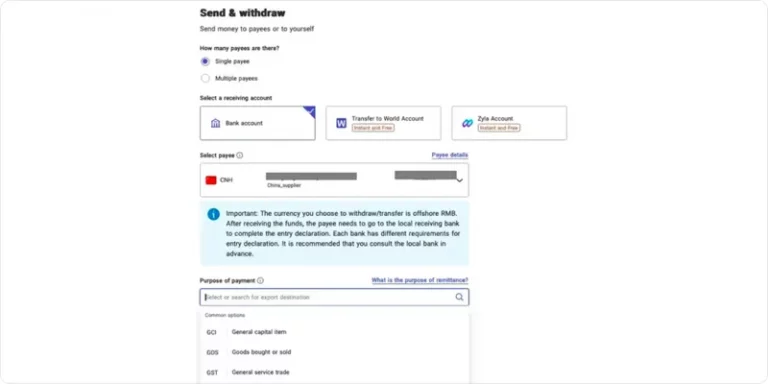
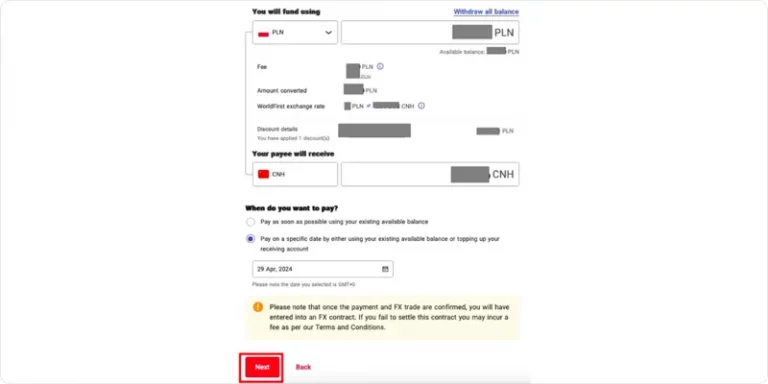
How to pay with the World Account (example: CNH payment to a Chinese supplier)
- Open a World Account free of charge, with no monthly fee.

2. Fund the account in SGD or hold an existing balance in a supported currency.
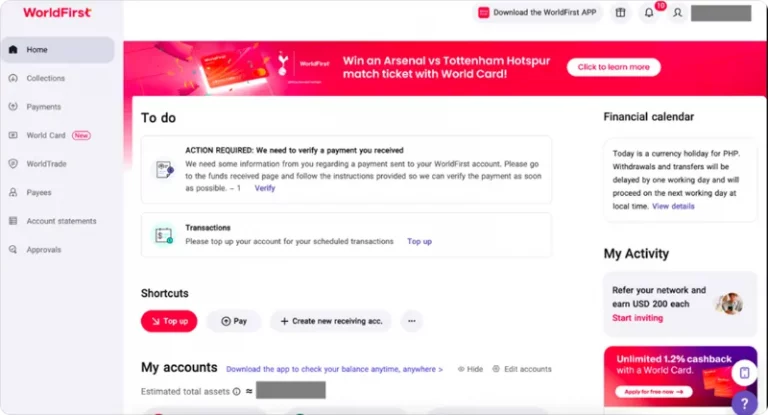
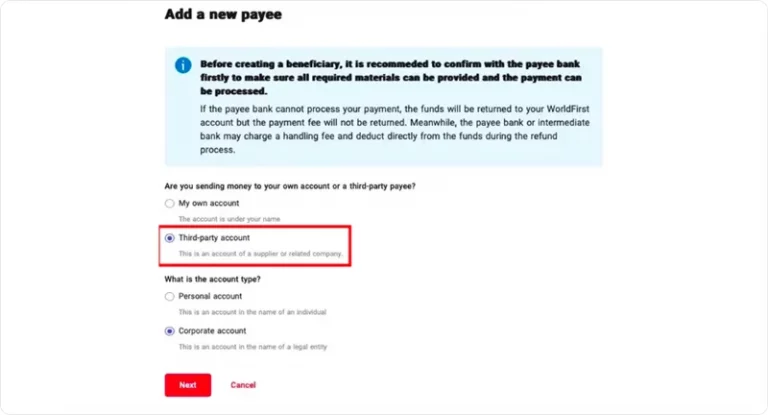
3. Go to Payees > Add a new payee > Add a single payee > Third-party account. Select personal or corporate account based on your supplier’s account type.
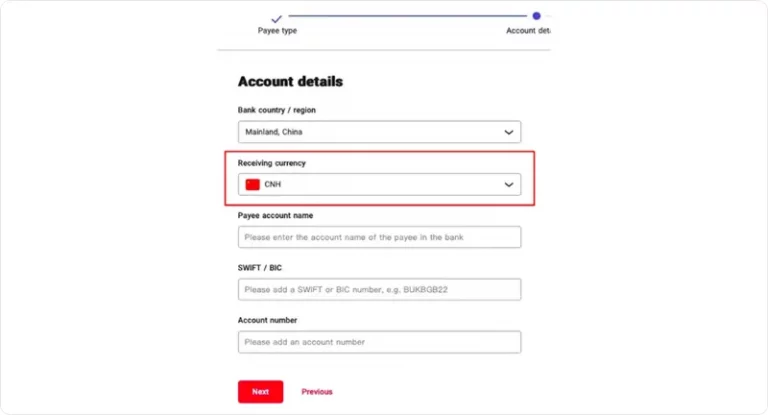
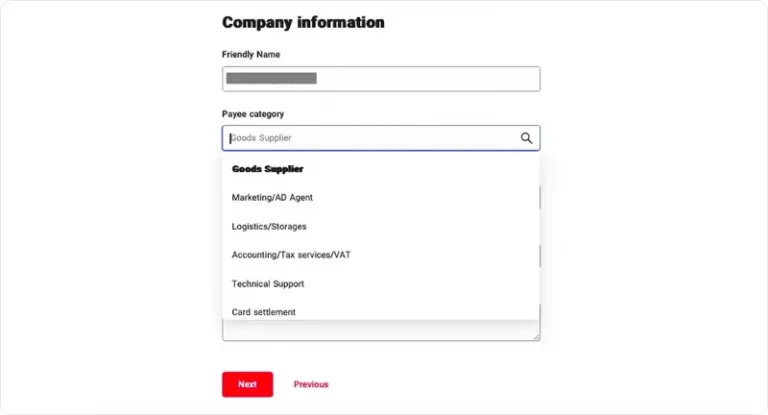
Cut your telegraphic transfer costs with the World Account
For Singapore businesses paying overseas suppliers regularly, the total cost of each transfer depends on three things: the FX margin applied, the fixed fees charged and whether deductions are disclosed before the payment is sent.
For instance, on a SG$300,000 annual payment run at a 2% bank FX margin, the currency conversion alone costs SG$6,000. At 0.6%, that figure drops to SG$1,800, with fixed fees unchanged either way.
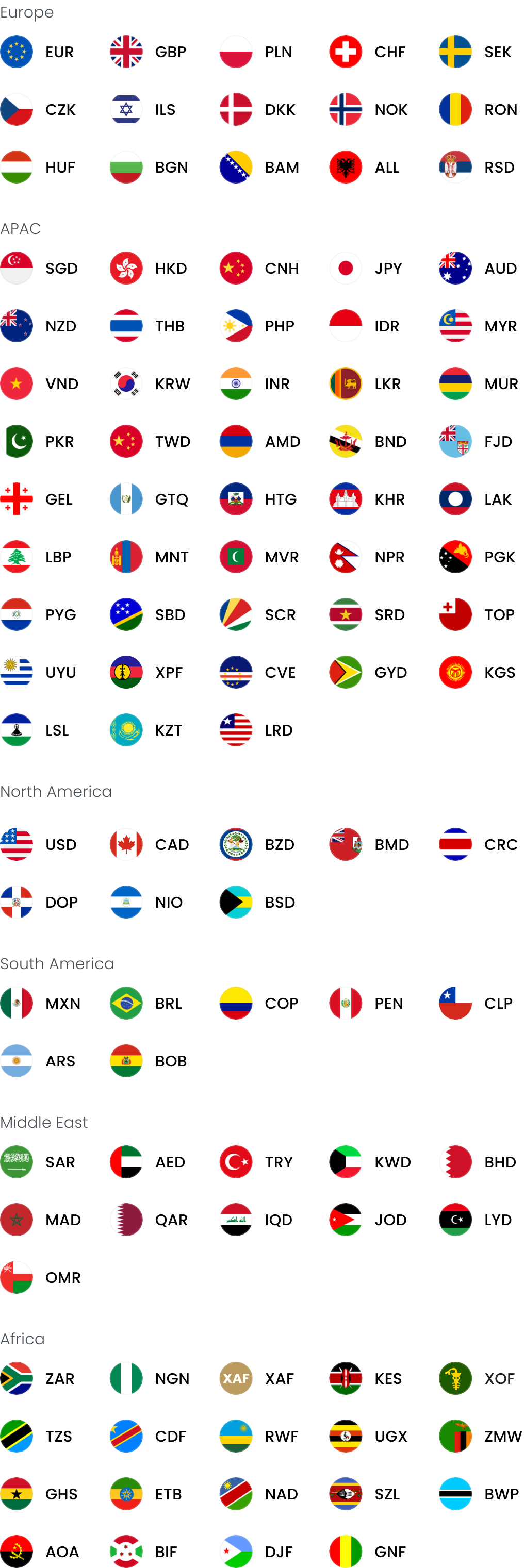
The World Account is a multi-currency business account built for businesses that move money across borders regularly. You can hold, convert and pay in 20+ currencies, with no ongoing account fees and full cost visibility before each transfer confirms.
Chinese supplier payments benefit from CNH settlement directly, removing the double-conversion that occurs when SGD converts to USD before converting to CNH through a correspondent chain.
WorldFirst also connects directly with 1688.com via 1688 World Pay, allowing Singapore importers to pay Chinese suppliers in CNH without a mainland bank account or intermediary agent, and without the fees that card payments typically carry on that platform.
WorldFirst is a regulated payments provider, not a bank. WorldFirst entities in Singapore hold MAS licences under the Payment Services Act for services including account issuance, domestic and cross-border money transfers and e-money issuance.
FAQ
1. What information do I need to send a telegraphic transfer from Singapore?
2. Do I pay fees on inward telegraphic transfers in Singapore?
3. What is SWIFT GPI and does it affect my TT fees?
4. Is a telegraphic transfer the same as a wire transfer?
5. Can I cancel or amend a telegraphic transfer after submitting it?
Contact your bank immediately. Most allow amendments before the payment is processed, though a fee usually applies. Once the TT has been sent through SWIFT, recalling it depends on the recipient bank’s cooperation and can take several days.
The sooner you flag the issue, the higher the chance of a successful recall or amendment.
6. What is the minimum amount for a telegraphic transfer in Singapore?
Most Singapore banks don’t set a general minimum for outward TTs, but some currency-specific limits apply. UOB requires a minimum of SG$200 for transfers in Indian rupees or Philippine pesos.
For smaller cross-border payments, local rail options through specialist payment providers tend to be a better fit than a standard TT.
Sources:
- https://www.singstat.gov.sg/infographics/singapore-international-trade
- https://www.mas.gov.sg/statistics/exchange-rates
- https://www.dbs.com.sg/business/support/fees-and-charges/overseas-funds-transfer.html
- https://www.ocbc.com/business-banking/help-and-support/accounts-and-services/business-pricing-guide
- https://www.ocbc.com/business-banking/notices
- https://www.uob.com.sg/business/help-support/rates-fees/remittance-fees-outward.page
- https://www.uob.com.sg/business/accounts/uob-ebusiness-account.page
- https://www.mas.gov.sg/regulation/payments
- https://www.dbs.com.sg/personal/support/bank-overseas-funds-transfer-fees-and-charges.html



![Revolut Business Card review Singapore [2027]: Features, fees & more](https://mdn.marmot-cloud.com/worldfirst/sites/9/2026/09/20261001002258848-300x200.webp)