





























You’ve probably come across Remitly while comparing ways to send money in or out of Singapore. It’s a familiar name in personal remittances, the kind of app a colleague uses to send money home to family in Manila or Chennai.
But if you’re an SME owner sizing up providers for recurring supplier payments to Guangzhou or Shenzhen, or trying to reconcile a batch of marketplace payouts, you’ll quickly find that Remitly Singapore wasn’t built for what you’re doing.
Cross-border friction is a real cost for local businesses. Visa’s research on Singapore SMEs found that 36% report problems with cross-border payments. That need for alternatives to traditional bank transfers explains why personal remittance apps like Remitly keep surfacing in SME searches, even though they sit in a different category from business payment platforms.
This review walks through what Remitly actually offers in Singapore, what it charges, how safe your money is with it, and where its personal-use design leaves a gap for SMEs that need multi-currency business accounts rather than one-off remittances.
Key takeaways:
- Remitly is designed for personal remittances, not business payments: Singapore users can send money abroad through a MAS-licensed service, but Remitly does not support business accounts, supplier invoices, payroll, or other commercial payment workflows.
- Fees depend on speed, corridor, and exchange rate: Express transfers are faster but typically more expensive, while Economy transfers take around 3 to 5 business days. Remitly also applies an FX markup that is not published as a fixed percentage.
- Remitly’s limits and features make it impractical for many SMEs: It does not offer multi-currency holding, batch payments, business reconciliation tools, or broad enough outbound coverage for recurring supplier payments across major markets.
- Remitly is regulated, but it is not a bank: Customer funds are safeguarded under MAS requirements, but they are not protected by Singapore’s Deposit Insurance Scheme in the same way as eligible bank deposits.
- WorldFirst is better suited to recurring international business payments: The World Account lets Singapore businesses hold 20+ currencies, pay into 210+ countries and territories, use batch payments and marketplace collection tools, and access FX margins of up to 0.6% on major currency pairs.
Open a World Account to make repeat supplier payments easier to manage.
What is Remitly, and why does it matter when comparing providers?
Remitly is a digital remittance app founded in 2011 in Seattle by Matt Oppenheimer, Josh Hug and Shivaas Gulati, originally incorporated as ‘Beamit Mobile’.
It grew into one of the best-known consumer remittance brands globally, and its scale is why it appears alongside business-grade platforms in comparison searches, even though it was never designed for commercial payment flows.
Remitly’s official Singapore page advertises coverage across ‘175+ countries’ globally, and the app is genuinely easy to use for sending money to family or covering a personal bill overseas.
However, an SME comparing providers for recurring China payments, marketplace collections or multi-currency reconciliation needs a materially different feature set.
Read more: How to pay CNY to China
Does Remitly work in Singapore?
Yes, Remitly operates fully in Singapore through a locally licensed entity, but only for personal transfers, not business payments. Remitly Singapore Pte. Ltd. was incorporated on 28 June 2019 (UEN 201920838N), and it holds a Major Payment Institution licence from MAS under the Payment Services Act.
Senders in Singapore can fund a transfer using a debit card, credit card or bank transfer, and recipients abroad receive money via bank deposit, cash pickup, mobile wallet or, in select countries, home delivery.
The exact number of receiving destinations available from a Singapore account is reported inconsistently across third-party sources, ranging from roughly 80+ in older coverage to 100+ in more recent reviews, so treat any specific country count as approximate rather than official.
Two limitations matter most for an SME reader:
- Personal use only: Remitly explicitly restricts its service to personal remittances, so it isn’t positioned, priced or structured for invoiced business payments, supplier deposits or payroll.
- Limited outbound corridors: From Singapore, you can send to common remittance destinations such as the Philippines, India, Indonesia, Bangladesh, and Vietnam, but not to other major ‘send’ economies like the United States, the United Kingdom, or Australia, which limits its use even for personal cross-border needs involving those markets.
Read more:
- Outward telegraphic transfer: what it costs and how it works
- Telegraphic transfer fees in Singapore (and how to reduce them)
Remitly Singapore fees, exchange rates, and limits
Remitly’s pricing is corridor- and speed-dependent, not a single flat rate, and it layers an exchange rate markup on top of the transfer fee. Understanding both pieces is more important than fixating on the headline fee alone.
Remitly offers two speed tiers:
- Express transfers: Funded by debit or credit card, funds typically arrive within minutes, but you pay a higher fee and a less favourable exchange rate for that speed.
- Economy transfers: Funded by bank transfer, arriving in 3 to 5 business days, with lower fees and a better exchange rate in exchange for the wait.
On top of the stated fee, Remitly applies a markup to the mid-market exchange rate, similar to most consumer remittance apps and retail bank counters. Remitly doesn’t publish this margin as a fixed percentage, and it can vary by corridor, amount and promotional status, so first-time customers may see a more favourable rate than they will on repeat transfers.
Remitly tiers its sending limits to your verification level, and even the top tier is modest by SME payment-run standards. The maximum you can send from Singapore is S$130,000.
Read more:
Is Remitly safe?
Yes, Remitly is regulated in every market it operates in and has a substantial operating history, though its customer protections work differently from a bank deposit.
In Singapore, it holds a Major Payment Institution licence from MAS, which means it must safeguard customer funds through segregated trust accounts or bank guarantees under the Payment Services Act.
Keep in mind that those safeguarded funds are not covered by the Singapore Deposit Insurance Scheme (SDIC), which only protects eligible deposits at full banks. This is the standard position for non-bank payment institutions operating under MAS licensing, and the same caveat applies to other fintech remittance and FX providers.
Beyond Singapore, Remitly holds licences and registrations that span its major operating markets:
- FCA authorisation in the UK as an e-money institution, subjecting it to UK conduct standards.
- FinCEN registration and money-transmitter licences across all 50 US states, the baseline requirement for US remittance operators.
- Central Bank of Ireland passporting for EU operations, FINTRAC registration in Canada, AUSTRAC registration in Australia and a BSP licence in the Philippines.
Remitly for Singapore SMEs: where it falls short
Remitly’s personal-use design means the gaps are structural mismatches with how an SME actually pays suppliers or collects marketplace revenue.
If you’re an established importer running recurring China payments, or an SME already comparing providers before switching, these are the practical blockers you’ll hit:
- No business account structure: Remitly’s terms of service restrict the platform to personal remittances, so there’s no invoicing, no business KYC pathway and no way to attach a UEN-registered entity to the account for commercial use.
- Transfer limits too low for supplier runs: Even the highest tier’s cap falls short of a typical deposit-and-balance payment cycle on a larger container order or seasonal restocking run.
- No multi-currency holding: Remitly moves money from one currency to another per transaction; it doesn’t let you hold a balance in CNH (offshore renminbi), USD or other currencies to manage timing around supplier invoices or marketplace payouts.
- Limited outbound corridors: You can’t send from Singapore to major markets like the US, UK or Australia, which rules out paying suppliers or contractors based in those countries.
- No batch payments or reconciliation tools: Paying multiple suppliers or handling multiple marketplace settlements requires manual, one-by-one transfers rather than bulk processing with exportable records.
- Undisclosed FX margin at scale: The exchange rate markup isn’t published as a fixed percentage, making it harder to model total cost across a year of recurring payments compared with a provider that quotes a transparent margin.
Read more:
WorldFirst World Account as a business alternative
If Remitly’s gaps sound familiar, the fix usually isn’t finding a cheaper remittance app but switching to a platform built for commercial cross-border payments from the start.
WorldFirst is a UK-founded fintech, now part of Ant Group, operating in Singapore as WorldFirst (Singapore) Merchant Services Pte. Ltd. under a MAS Major Payment Institution licence covering account issuance, domestic and cross-border money transfers, and e-money issuance, which is the same regulatory category that governs Remitly, but applied to a business-first product.
The practical differences map directly onto the gaps above:
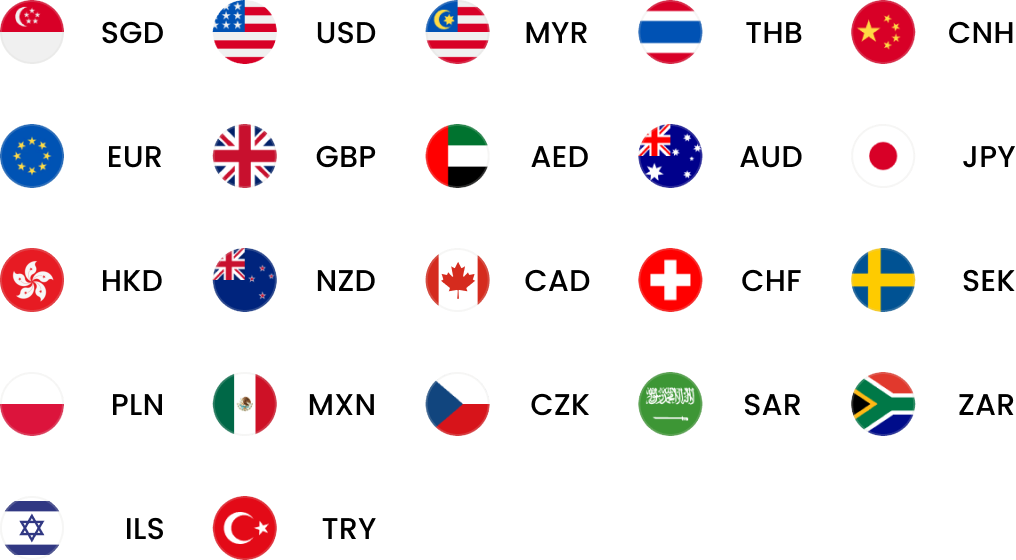
- A World Account lets you hold balances across 20+ currencies and pay out to 210+ countries and territories in 100+ currencies, with an FX margin of up to 0.6% on major currency pairs
- There are no setup fees, no monthly fees and no minimum balance requirement
- For Singapore importers sourcing from China specifically, 1688 World Pay enables direct CNH supplier payments without routing through a personal remittance corridor
- It offers batch payment tools and marketplace collection features that suit sellers reconciling multiple revenue streams
Consider a Tanjong Pagar trading SME paying a Guangzhou supplier a 30% deposit followed by a 70% balance payment on a container order. At a typical bank’s undisclosed FX margin, often cited around 2% on retail international transfers, a S$300,000 annual payment run can carry roughly S$6,000 in FX cost alone, before handling and cable fees. At a 0.6% margin, the same volume costs closer to S$1,800 in FX, a difference that compounds across every restocking cycle.
WorldFirst is a regulated payment institution, not a bank, and it doesn’t offer lending, payroll or full domestic cash management, the kind of services you’d still go to DBS, OCBC or UOB for.
Open a World Account to benefit from transparent FX margins and multi-currency tools.
FAQs
1. Can you use Remitly from Singapore?
Yes. Remitly allows you to send personal remittances from a Singapore-funded account to common corridors such as the Philippines, India and Indonesia. It doesn’t support business transfers, and you can’t send from Singapore to larger ‘send’ markets like the US, UK or Australia.
2. How much does Remitly charge for 1000 dollars?
There’s no single flat fee, as it depends on the destination country, whether you choose Express or Economy speed, and your funding method, plus a markup applied to the mid-market exchange rate.
3. Is Remitly legit?
Yes, in the sense that it’s regulated across every market it operates in and safe to use. It holds a MAS licence in Singapore, FCA authorisation in the UK and money-transmitter registrations across the US.
Sources:
- https://www.remitly.com/blog/news/the-start-of-remitly/
- https://www.techstars.com/blog/startup-spotlight/remitly-a-unicorn-for-cross-border-payments
- https://ir.remitly.com/shareholder-services/investor-faqs
- https://capitalmarkets.sg/remittance/remitly-singapore-pte-ltd
- https://www.forexfee.com/guides/is-remitly-safe-2026
- https://www.remitly.com/sg/en



![AliExpress dropshipping: How to source and pay suppliers from Singapore [2026]](https://mdn.marmot-cloud.com/worldfirst/sites/9/2026/10/20261021131155864-300x200.webp)

![Trust card review [2027]: Features, fees and more](https://mdn.marmot-cloud.com/worldfirst/sites/9/2026/10/20261020214810193-300x200.webp)