





























An outward telegraphic transfer can look settled in your banking portal while your supplier is still chasing a short payment.
Maybe the value date moved, the invoice reference didn’t match, or the payment route deducted fees along the way. If you import goods into Singapore, this can slow down your order, create extra supplier follow-up and make reconciliation harder at month-end.
Enterprise Singapore reported SG$75.1 billion in imports in May 2026, which points to the volume of overseas payments Singapore importers need to track across stock, supplier deposits and overseas services.
When money also comes in from abroad, the direction of the transfer affects what to check and how easily the payment can be reconciled.
This guide compares outward vs inward telegraphic transfer workflows, so you know what to check before money moves and what to verify when it lands.
Key takeaways:
- Outward TT moves money from your Singapore business to an overseas account: You’ll usually use it to pay supplier deposits, balance payments, larger invoices or overseas service providers in a foreign currency
- Inward TT brings overseas money into your Singapore business: You may receive one when a supplier sends a refund, pays back a credit note, returns an overpayment or sends back part of a deposit
- Fees don’t stop at the visible transfer charge: Check the sending fee, FX rate and charge arrangement together, because each one can change the real SGD cost of paying an overseas invoice
- The amount that lands matters most for reconciliation: For outward TT, confirm what your supplier receives. For inward TT, match the amount that reaches your account against the invoice, refund or credit note.
- A World Account can help you manage both payment directions in one place: With WorldFirst, you can handle supported currency balances, overseas supplier payments and incoming funds from one platform, where supported.
What is an outward telegraphic transfer?
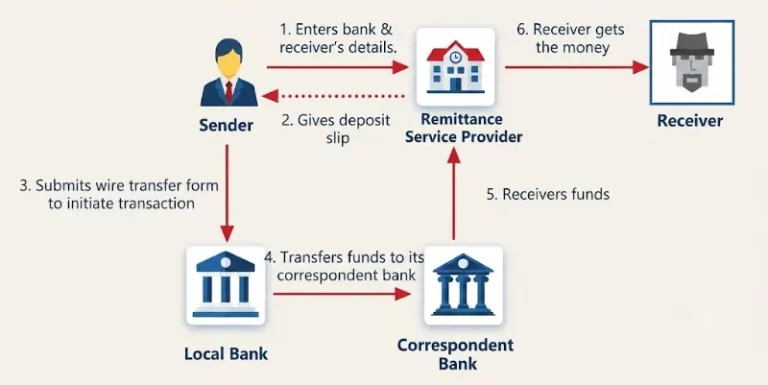
An outward telegraphic transfer, often shortened to outward TT or OTT, is an international payment your business sends from Singapore to an overseas account. Here, outward refers to the direction of the transfer.
In Singapore, the term usually refers to money leaving the country through a bank or licensed payment provider, often in a foreign currency.
For importers, this is the outgoing side of a cross-border payment: funds leave your Singapore account and go to a supplier, partner or service provider overseas.
When would a Singapore business use an outward TT?
Use an outward TT when an overseas payment needs a clear record, and the invoice is in a foreign currency.
Common situations include:
- Supplier deposits: paying part of the invoice before production starts
- Balance payments: paying the remaining amount before goods are released
- Larger supplier invoices: sending payments that need a clear record for finance and supplier matching
- Overseas service invoices: paying inspection, agency or specialist service providers abroad
- Contracted partner payments: paying overseas businesses where the payment needs to match a contract, invoice or purchase order
What is an inward telegraphic transfer?
When money comes into your Singapore business from overseas, the payment may arrive as an inward telegraphic transfer, often shortened to inward TT.
Unlike with an outward TT, you usually don’t control how the sender sets up the payment. You can give the correct receiving details, but the final amount may still change before it reaches your account.
When would a Singapore business receive an inward TT?
A Singapore business may receive an inward TT when an overseas sender pays into its Singapore account through an international transfer route.
For importers, inward TT often shows up as:
- Supplier refunds: receiving money back for returned, rejected or unavailable goods
- Credit notes: receiving cash back instead of offsetting the amount against the next invoice
- Overpayments: receiving a return of funds after paying too much on an earlier invoice
- Deposit returns: getting part of an upfront payment back after an order changes
- Related-company transfers: receiving funds from an overseas branch or group entity
Outward vs inward telegraphic transfer: the main differences
To compare outward and inward TT, start with who controls the payment and what needs to be checked:
| Area | Outward telegraphic transfer | Inward telegraphic transfer |
| Direction | Money leaves your Singapore business | Money comes into your Singapore business |
| Who initiates it | You or your finance team | Your customer, supplier, distributor or platform |
| Main use | Paying overseas suppliers or partners | Receiving overseas payments, refunds or credits |
| Details needed | Beneficiary name, bank details, SWIFT/BIC, account number, currency, amount and reference | Your account name, receiving details, SWIFT/BIC, account number or local account details and reference |
| Fee control | You may choose the charge code, depending on provider and route | The sender may choose the fee arrangement before funds reach you |
| FX control | You usually decide when and how to convert | The sender or payment route may convert before funds arrive |
| Main risk | Wrong details, wrong currency or the supplier receives less than expected | Deductions, missing references or unexpected conversion |
How outward TT fees work
For Singapore importers, outward TT costs usually come from three places:
- Transfer fee: the visible charge for sending the payment
- FX rate: the rate used to convert SGD into the invoice currency
- Route charges: charges that may reduce the amount that reaches the supplier
The fee arrangement also matters. You may see charge options such as OUR, SHA or BEN, depending on the provider and route. These decide whether charges sit with the sender, the receiver or both. If charges come out before the payment reaches the supplier, the invoice may arrive short.
The FX rate can carry more cost than the visible fee. For example, if you send a US$50,000 supplier payment and the FX margin adds 0.5% to the conversion, the FX cost alone is about US$250 before any transfer fees or routing charges. At 1%, that rises to about US$500.
When you compare outward TT costs, consider the sending fee, FX rate and charge arrangement together, as all three can affect the real SGD cost of paying an overseas invoice.
How inward TT fees work
With an inward TT, the sender starts the payment overseas, so you may not see the full cost until the funds arrive.
Inward TT costs usually show up in three ways:
- Sending-side charges: fees the overseas sender may pay before the transfer leaves
- Route deductions: charges that may come out before the payment reaches your account
- FX conversion: conversion that may happen before or when the funds arrive
For example, if an overseas sender pays US$4,000 and US$25 is deducted before the payment arrives, your business receives US$3,975 before any FX conversion. The difference then needs to be explained when matching the payment to an invoice, a refund or a credit note.
For inward TT, verify the amount that reaches your account. The amount sent still matters, but your records need to match what actually lands.
How long do outward and inward telegraphic transfers take?
TT timing should be assessed by when the funds are credited, not when the payment is submitted.
Submission time still matters, though. Many providers use currency-specific cut-off times, so a payment approved after the relevant cut-off may move to the next business day. Destination-market holidays can also affect when the recipient can use the funds.
Swift states that nearly 60% of Swift GPI payments are credited to end beneficiaries within 30 minutes, with almost all credited within 24 hours. It also lists real-time tracking and confirmed delivery as part of Swift GPI, which can be important when your team needs to trace a payment after submission.
What details do you need for an outward telegraphic transfer?
For an outward TT, your business needs the recipient’s payment details before you send money from Singapore to an overseas account. The most important check is that the account name, account number, payment currency and reference match the supplier’s invoice or payment instruction.
You’ll usually need:
- Beneficiary name: the supplier or recipient name as it appears on the receiving account
- Beneficiary account number: the account that should receive the funds
- Bank or provider name: the institution receiving the payment
- SWIFT/BIC: the identifier used for many international payment messages
- IBAN: needed for destinations that use IBANs, with each country following its own national IBAN format
- Local clearing details: routing code, bank code or branch code, where the destination country requires them
- Payment currency and amount: the currency and amount shown on the supplier invoice
- Payment reference: the invoice number, purchase order number or supplier reference for matching the payment
If you see any details that are different from your previous order, confirm them through a trusted channel before sending.
What details should you give for an inward telegraphic transfer?
For an inward TT, send the overseas payer one clean set of receiving details, including the account information and reference your team needs to recognise the payment.
You should usually share:
- Registered business name: the name as it appears on your receiving account
- Receiving account details: the account number or local receiving details for the currency the sender uses
- Bank or provider name: the institution receiving the funds
- SWIFT/BIC: if the sender uses an international payment route
- Receiving currency: the currency you want the sender to use
- Payment reference: the invoice number, credit note number, payout ID or order reference
- Business address: if the sender’s provider asks for beneficiary address details
The payment reference makes the transfer easier to match. If the sender leaves it out or changes the format, reconciliation may take longer.
How WorldFirst supports outward and inward international payments
A standard TT process may be enough for occasional overseas payments.
However, once you’re paying suppliers, receiving credits and working across several currencies in the same month, you need to start paying more attention to how those transfers connect. A multi-currency account gives you a clearer way to handle money moving in both directions.
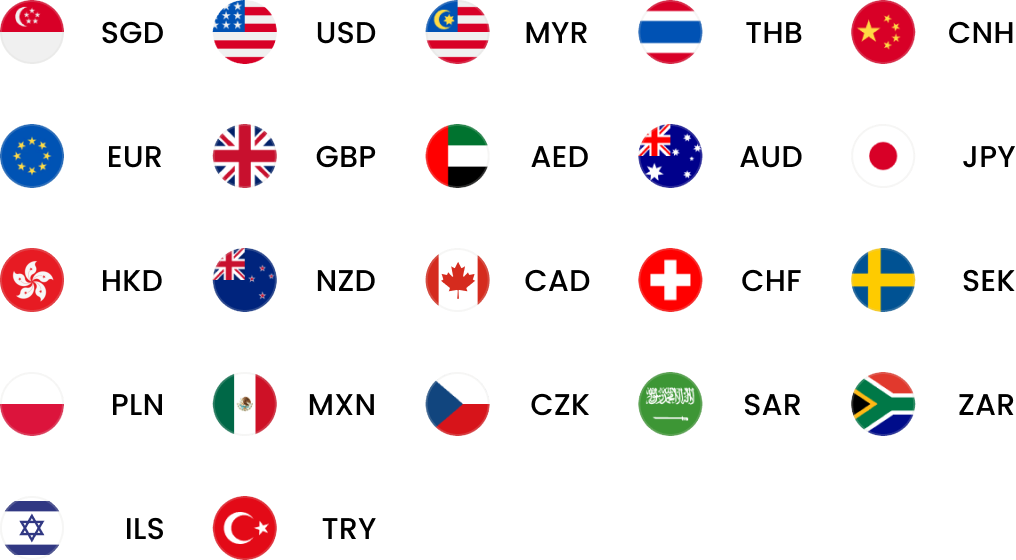
With a World Account, you can receive and hold funds in supported currencies, pay overseas suppliers, collect incoming funds and convert currencies from one platform. You can collect business payments in 20+ currencies and make payments to 210+ countries and territories in 100+ currencies, where supported.
Example: a Singapore importer paying a Vietnam supplier in USD
Say you run a Singapore homeware business and buy ceramic tableware from a supplier in Ho Chi Minh City. The supplier invoices you US$50,000 in two stages: a US$15,000 deposit before production and a US$35,000 balance payment before shipment.
If your provider applies a 1% FX margin when you convert SGD into USD, the FX cost on the full US$50,000 payment is about US$500 before transfer fees or route charges. With WorldFirst’s FX margin of up to 0.6% for major currencies, the FX cost would be about US$300 on the same conversion. That’s a difference of about US$200 before any other charges.
After inspection, one batch doesn’t meet the agreed specification. The supplier issues a US$4,000 credit and refunds it instead of offsetting it against your next order.
With a standard TT process, two outward TTs and one inward TT may need to be handled as separate tasks. If the US$4,000 credit lands in SGD, you may need to convert again before the next USD supplier payment.
With a World Account, you can handle the outward supplier payments and inward supplier credit from the same platform, where supported. You could receive and hold the US$4,000 credit in USD and use it towards your next USD supplier payment.
WorldFirst isn’t a bank. In Singapore, WorldFirst MS is licensed by MAS as a Major Payment Institution for account issuance, domestic money transfer, cross-border money transfer and e-money issuance services.
FAQ
1. Can I recall or cancel an outward TT after sending it?
2. What should I do if my supplier says they haven’t received my TT?
3. Why is my telegraphic transfer stuck or under review?
4. Should I pay an overseas supplier in SGD or the invoice currency?
5. Is a telegraphic transfer safe for paying a new overseas supplier?
- https://www.channelnewsasia.com/singapore/nodx-export-may-growth-oil-trade-6172811
- https://www.swift.com/fr/node/309931


![Revolut Business Card review Singapore [2027]: Features, fees & more](https://mdn.marmot-cloud.com/worldfirst/sites/9/2026/09/20261001002258848-300x200.webp)