




























Learn how Singapore corporates can manage foreign exchange risk and protect margins against currency movements
Key takeaways
- Foreign exchange risk affects any Singapore corporate that buys, sells, invests or holds assets in a currency other than SGD
- The main tools for managing FX risk are natural hedging, forward contracts, and multi-currency accounts
- WorldFirst offers Singapore corporates a multi-currency account with forward contracts, competitive FX conversion, and multi-currency spending through the World Card–all managed from a single dashboard
For Singapore corporates trading across borders, currency movements are one of the least controllable variables in the business.
Left unmanaged, these exposures show up in the same place every quarter: unexpected variance between forecast and actual, margin compression on international orders, and volatile line items that make budget-setting harder than it should be. Managed properly, FX risk becomes something a corporate treasury or finance team can plan around rather than react to.
This guide covers the main types of FX risk, the tools available to manage them, and how Singapore corporates can build a practical hedging approach that fits their business.
The three types of FX risk
FX risk splits into three broad categories, each with different characteristics and different management approaches.
Transaction risk
Transaction risk is the most immediate. It shows up when a Singapore corporate agrees a price or contract in a foreign currency, and then pays or gets paid at a later date. Between those two points, the exchange rate can move, changing the SGD-equivalent value of the transaction.
Translation risk
Translation risk affects Singapore corporates with foreign subsidiaries or operations. The subsidiary transacts in its local currency, but for group reporting the financials have to be translated back into SGD. Currency movements between reporting periods shift the reported value of foreign assets, liabilities,
revenue and expenses, without any change in the underlying business.
Translation risk is largely an accounting exposure. It doesn’t directly affect cash flow, but it does affect reported earnings, balance sheet ratios and covenant calculations, which matters for boards, investors and lenders.
Economic risk
Economic risk is the longest-term and most strategic. It captures how sustained currency movements affect a corporate’s competitive position over time.
It is is harder to hedge with financial instruments and typically requires strategic responses: diversifying markets, adjusting pricing structures, or shifting parts of the supply chain to different currency zones.
Tools for managing FX risk
Corporates can combine several tools rather than relying on one.
Natural hedging
Natural hedging matches inflows and outflows in the same currency, so that currency movements offset rather than accumulate.
Forward contracts
A forward contract locks in an exchange rate today for a currency conversion that will settle at a future date. This gives certainty on the SGD cost of a known future payment or the SGD value of a known future receivable.
Multi-currency accounts
A multi-currency account holds balances in multiple foreign currencies rather than converting each transaction into SGD immediately. This gives the corporate control over when to convert, which becomes useful when timing matters or when funds will be spent in the same currency anyway.
How WorldFirst supports FX risk management for Singapore corporates
WorldFirst is an international payments provider, and the World Account is a multi-currency account built for businesses managing cross-border operations. For Singapore corporates managing FX risk, the account brings several tools together in one place.
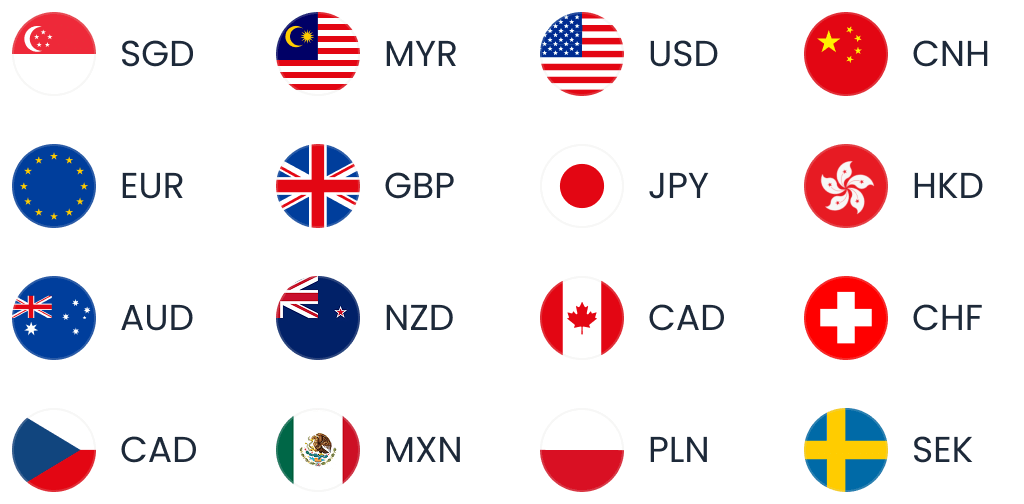
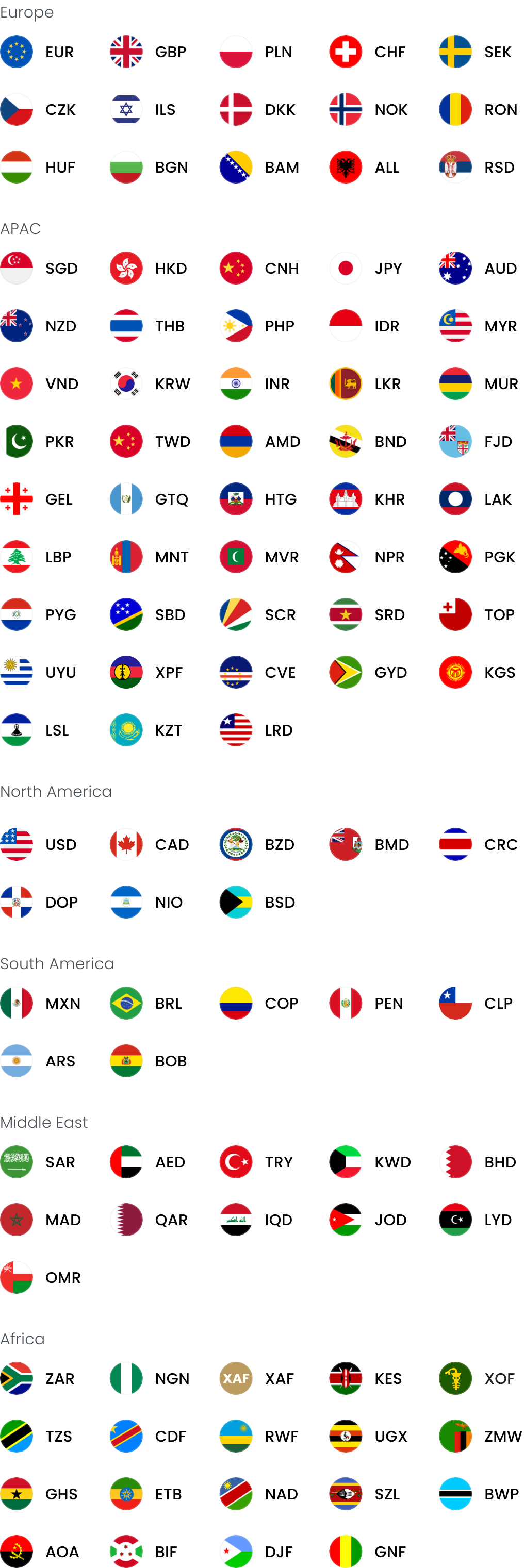
- Multi-currency accounts in 15+ currencies, including SGD, USD, GBP, EUR, JPY, CNH, AUD and others. Each currency account carries local bank details, so international customers, marketplaces and payment platforms can pay in their own currency without triggering an incoming SWIFT wire.
- Forward contracts for locking in an exchange rate on future currency conversions, useful for known supplier payments, planned dividend repatriations, or budgeted foreign currency spend.
- Rate Alerts for tracking specific currency pairs and receiving notifications when the market hits a target rate, so treasury teams can time discretionary conversions when the market moves in their favour.
- Competitive FX conversion for spot conversions when funds need to move between currency balances.
- Payments in 100+ currencies to 200+ countries and regions, for settling international supplier invoices, contractor payments and cross-border business expenses.
- The World Card, a Mastercard-powered business payment card linked to the account, letting corporates spend directly from held currency balances. Up to 20 virtual cards can be issued at no additional cost, with no fees when paying in any of the 15 supported currencies (with sufficient balance held in that currency). Cashback is available on eligible spending (Terms and Conditions Apply).
For a Singapore corporate with regular international payments, the practical value is having one platform handle the day-to-day multi-currency flows, the forward contracts for known future exposures, and the treasury-level rate monitoring, without needing separate providers for each function.
This article is intended for informational purposes only and does not constitute legal advice or professional advice. This article should not be regarded as constituting an offer or a solicitation to buy or sell any regulated or financial products or services. WorldFirst makes no representations or warranties regarding the accuracy, completeness, or applicability of the content, and readers are encouraged to consult with legal professionals or other professionals for advice tailored to their specific situation. WorldFirst does not guarantee the accuracy and completeness of this article and expressly disclaims any and all liability to any person in respect of the consequences of anything done or omitted to be done wholly or partly in reliance on this article.

![Revolut Business Card review Singapore [2027]: Features, fees & more](https://mdn.marmot-cloud.com/worldfirst/sites/9/2026/09/20261001002258848-300x200.webp)