




























Here are the main ways Singapore freelancers get paid–from local SGD transfers to international payouts, and how to keep more of each invoice
Key takeaways
- Singapore freelancers typically mix several payment methods: direct bank transfer for local clients, payment links or gateways for one-off invoices, freelance platforms for marketplace work, and multi-currency accounts for international clients.
- Fees and FX markups eat into freelance income quickly. A SWIFT wire transfer can lose 2% to 5% on conversion plus flat receiving fees.
- A multi-currency account like the World Account lets Singapore freelancers hold USD, GBP and EUR in their original currency and convert when the rate is favourable.

Freelancing in Singapore can look very different depending on your clients. A designer working with local SMEs might get paid through FAST or PayNow. A content writer working with US clients might get paid in USD through Stripe or Upwork. A consultant with a mix of local and international clients deals with both at once.
Each payment method has its own fees, settlement time and currency considerations. The right setup depends on where your clients are, how often you invoice and how much foreign currency you handle.
This guide walks through the four main ways Singapore freelancers get paid, and how to receive international payments while protecting margins.
How to get paid as a freelancer: Top freelancer payment methods in Singapore
Direct bank transfer
This involves getting directly paid into your bank account. Domestic clients can send directly to your bank account using FAST, PayNow or GIRO. For international clients, the equivalent is a SWIFT wire transfer..
Direct bank transfer works well for larger one-off invoices where fixed fees are a smaller percentage of the payment. For smaller invoices or regular international income, the fees add up quickly.
Payment links and payment gateways
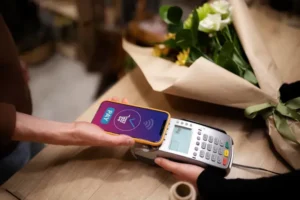
Payment gateways like Stripe and Square let clients pay you by card through an invoice, a payment link or a checkout page on your website. The gateway processes the payment and settles the funds into your linked bank or multi-currency account. There is usually a transaction fee charged on top of FX markups.
Freelance platforms
Platforms like Upwork, Fiverr, Toptal and Freelancer handle the client-payment-work cycle end-to-end. The client pays the platform, the platform holds funds in escrow, and you receive the money once the project or milestone is approved. Freelance platforms charge their fixed commissions over any FX markups that may apply.
If the earnings are in USD and you withdraw to an SGD account, the platform’s FX rate applies on conversion.
Multi-currency account
A multi-currency account lets Singapore freelancers receive and hold funds in multiple currencies through one account. Instead of every USD or GBP payment converting to SGD at the bank’s rate, foreign currency lands in a matching balance and you convert when it suits you.
How it works:
- You open a multi-currency account that includes local receiving details in USD, GBP, EUR and other currencies
- Share your local account details with international clients, platforms and payment gateways
- Clients pay you through local payment rails as if you had a US, UK or EU bank account
- Funds land in your matching currency balance and stay there until you decide to convert
Multi currency accounts are particularly useful for Singapore freelancers whose income regularly includes USD, GBP or EUR from different clients and platforms. Instead of forced conversion on every payment, you can hold the foreign currency, use it directly for USD-denominated tools and subscriptions, or convert in larger amounts when the rate is favourable.
How to receive international payments in Singapore with your World Account
The World Account from WorldFirst is a multi-currency account for cross-border businesses and freelancers. For Singapore freelancers receiving regular international payments, it works as a central hub to receive, hold, and spend multi-currency freelance income.
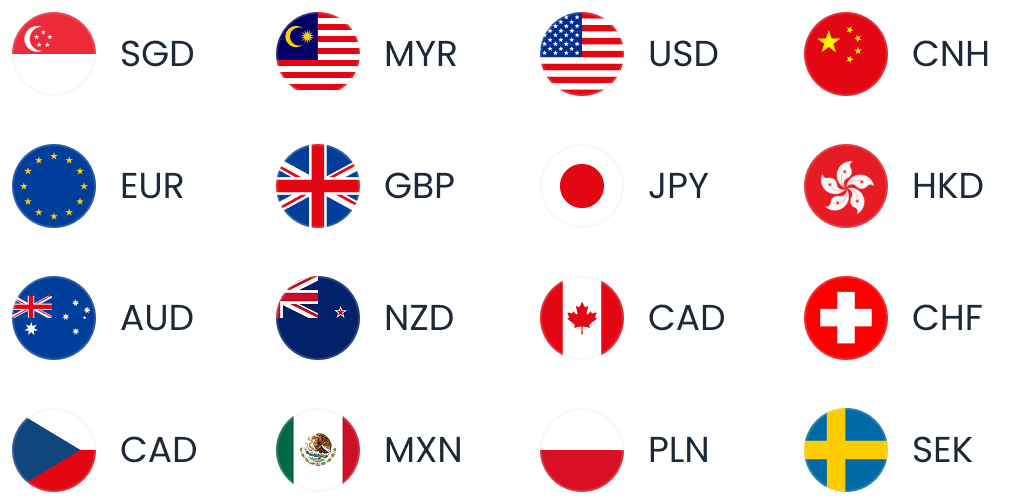
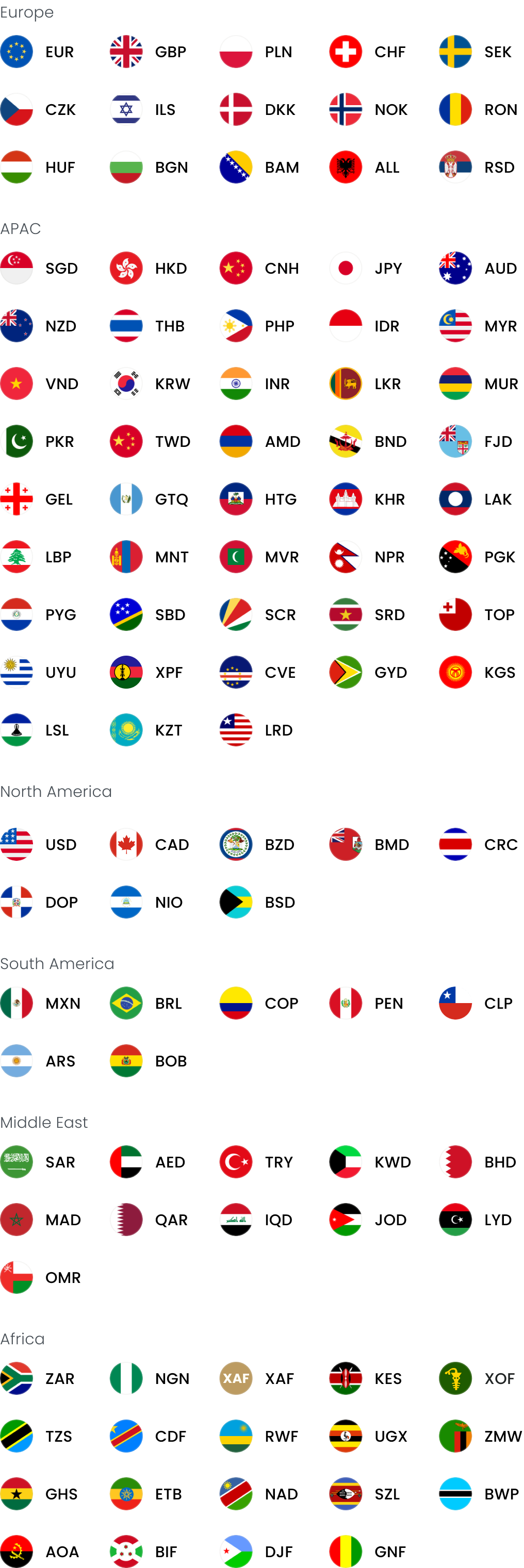
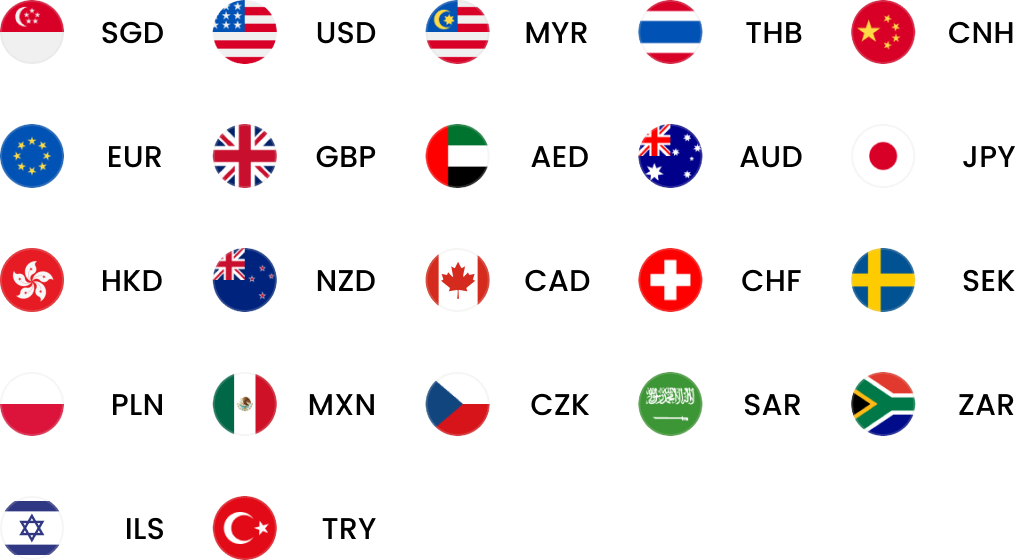
Local receiving accounts in 20+ currencies: Each supported currency comes with its own local account number and bank details under your name. Share your USD details with US clients, GBP details with UK clients, and so on. Clients pay through local payment rails rather than SWIFT, which is faster and cheaper on both sides.
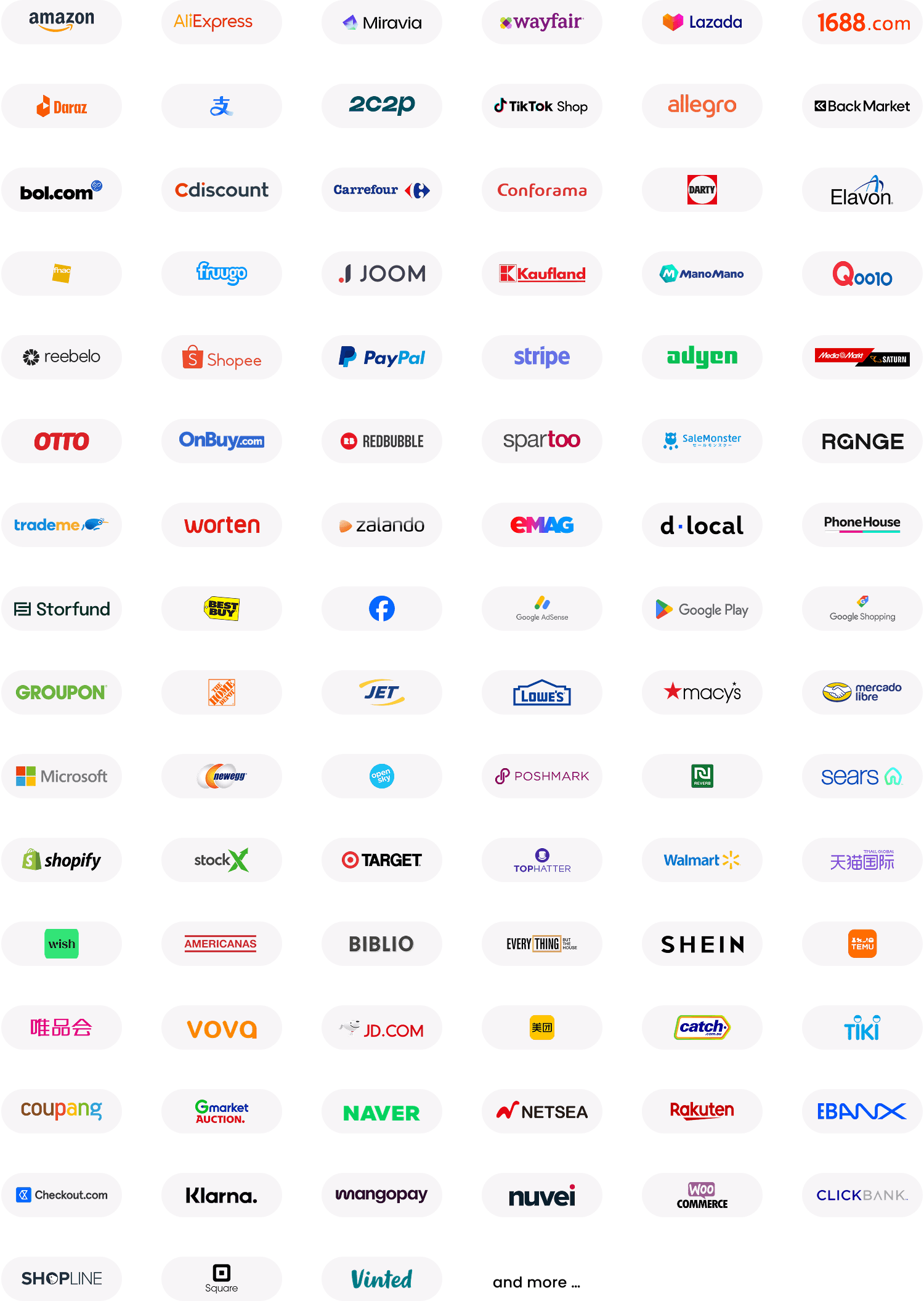
Collect from 130+ marketplaces and payment gateways: Add your World Account receiving details to Upwork, Fiverr, Stripe, Amazon, Shopify and others as the payout destination. Platform payouts settle in the original currency.
Hold foreign currency without forced conversion: USD stays in USD, GBP stays in GBP, until you choose to convert. No automatic conversion to SGD at an unfavourable rate.
Convert on your terms: Move between USD, SGD, GBP, EUR, CNH and other supported currencies at competitive rates. Forward contracts also let you lock in a future conversion rate, subject to eligibility.
Pay directly from your foreign currency balance: The World Card is a Mastercard-powered card linked to your account. Use it for USD-billed tools, SaaS subscriptions, ad platforms or supplier payments directly from your USD balance, with no FX fee when sufficient balance is held in the supported currency. Up to 20 cards can be issued per account at no additional cost, with cashback on eligible spending (Terms and Conditions Apply).
Zero fees on account opening, holding balances and receiving funds. Fully online setup with no branch visits.
For freelancers with a steady stream of international income, this setup replaces several of the costs that bank transfers and gateway conversions impose by default.
FAQs
1. Do freelancers need a business bank account in Singapore?
Not strictly required for sole proprietors in the early stages. Many freelancers use a personal account for freelance income when they’re starting out. As income grows, business bank accounts make it easier to separate business and personal finances, present a professional setup to clients, and prepare for tax filing. Registered businesses (Pte Ltd, LLP) do need a business account.
2. Do freelancers need to register for GST in Singapore?
Freelancers only need to register as a GST registered company if their taxable turnover exceeds SG$1 million in a 12-month period. Below that threshold, GST registration is voluntary. If you register, you charge GST on your invoices and file quarterly returns with IRAS.
3. What is the cheapest way for Singapore freelancers to receive international payments?
For regular international income, a multi-currency account typically offers the lowest total cost. Receiving fees are usually zero, and you avoid forced conversion to SGD at the bank’s rate. For occasional large one-off payments, a direct wire transfer may still make sense if the client prefers it, as long as the fixed fees are a smaller percentage of the payment.
4. Can I receive foreign currency into my Singapore bank account?
Yes, but your bank will usually convert the foreign currency to SGD at its exchange rate on arrival unless you hold a specific foreign currency account with that bank. If you want to receive and hold USD, GBP or EUR without forced conversion, a multi-currency account with foreign currency receiving details is usually the simpler setup.
Disclaimer: The information contained is general only and largely our views. Before acting on the information you should consider whether it is appropriate for you, in light of your objectives, financial situation or needs. Although information has been obtained from and is based upon multiple sources the author believes to be reliable, we do not guarantee its accuracy and it may be incomplete or condensed. All opinions, estimates, mentioned products/services and referenced material constitute the author’s own judgement as of the date of the briefing and are subject to change without notice. WorldFirst shall not be responsible for any losses or damages arising from your reliance of such information.