





























We take a look at what wire transfers for Singapore businesses–what they cost, how long they take, and alternatives for to save more of your margins
Key takeaways
- A wire transfer is an electronic payment that moves funds between bank accounts, typically through the SWIFT network for international transfers.
- International wire transfers from Singapore usually take 1 to 5 business days and cost around SGD 10 to SGD 40 per transfer, plus FX markup and intermediary bank fees.
- Multi-currency accounts help businesses avoid double conversion by letting them send from existing foreign currency balances.
- Forward contracts let Singapore businesses lock in exchange rates for future wire transfers, subject to eligibility.

For Singapore businesses handling international payments to suppliers, contractors or overseas branches, the wire transfer is still the default route for larger-value transactions. It’s reliable, well-established, and accepted virtually everywhere, which makes it the right choice when the payment has to arrive at a specific recipient on a specific day.
The trade-off is cost. Standard wire transfers come with sending fees, intermediary bank deductions and FX markups that quickly add up on regular cross-border payments. This guide covers how wire transfers work, what they typically cost from Singapore, how long they take, and the alternatives available for businesses making frequent international payments.
What is a wire transfer?
A wire transfer is an electronic payment that moves money from one bank account to another. It is processed as an individual instruction between banks, with the funds settled directly into the recipient’s account.
The term is often used interchangeably with bank wire transfer, telegraphic transfer or TT.
Wire transfers can be domestic (within Singapore) or international (across borders). Domestic transfers in Singapore are more commonly handled through FAST, PayNow or GIRO. International transfers are handled through SWIFT.
How does a wire transfer work?
International wire transfers rely on the SWIFT (Society for Worldwide Interbank Financial Telecommunication) network, a messaging system that connects banks in more than 200 countries. SWIFT doesn’t move money itself. It transmits payment instructions between banks, which then settle the funds using their own correspondent banking relationships.
The process looks like this:
- Sender initiates the transfer by providing the recipient’s bank details, including name, account number, bank name, address, and SWIFT/BIC code. For some countries, an IBAN (International Bank Account Number) is also required.
- Sending bank verifies the transaction and converts the funds to the destination currency if required.
- SWIFT message is transmitted to the recipient’s bank, usually via one or more intermediary (correspondent) banks.
- Intermediary banks process the payment through the chain. Each may deduct a fee.
- Recipient’s bank credits the funds to the recipient’s account after any receiving fees are applied.
What is the information needed for a wire transfer
To initiate an international wire transfer, you typically need:
- Recipient’s full name as it appears on their bank account
- Recipient’s bank account number
- Recipient’s bank name and address
- SWIFT/BIC code of the recipient’s bank
- IBAN (for transfers to Europe, UAE and some other countries)
- Recipient’s residential or business address
- Purpose of the payment (often required for compliance and reporting)
- Amount and currency
How long does a wire transfer take?
Timelines vary by destination, currency and whether the transfer uses local payment rails or the SWIFT network.
| Destination | Typical wire transfer time |
| Within Singapore | Same day via FAST or PayNow; 1 to 2 days via wire |
| United States | 1 to 5 business days |
| United Kingdom | 1 to 5 business days |
| EU (SEPA) | 1 to 2 business days |
| China | 1 to 3 business days |
| Australia | 1 to 5 business days |
| UAE | 1 to 7 business days |
There are several factors that can affect the timing:
- Weekends and public holidays in either country can delay settlement
- Cut-off times at the sending bank determine whether a payment goes out that day
- Compliance checks on larger transfers or to high-risk destinations can add days
- Intermediary banks in the SWIFT chain can slow processing, especially for less common currency corridors
- Correct details matter. Errors in SWIFT codes or account numbers lead to delays or returned payments
How much does a wire transfer cost?
The total cost of a wire transfer from Singapore comes from several components:
- Sending bank fee
- Receiving bank fee
- Intermediary (correspondent) bank fees
- FX markup (when currency conversion is involved)
- Inward wire transfer fee
ACH vs wire transfer
ACH (Automated Clearing House) is a US-based payment network for batch-processed bank-to-bank transfers. It’s not available for cross-border payments from Singapore, but Singapore businesses selling into the US or paying US contractors sometimes receive or send ACH payments through intermediary providers.
| Wire transfer | ACH | |
| Speed | Same day to 5 days | 1 to 3 business days |
| Fees | Higher (SGD 10 to SGD 40+) | Lower (often free or under SGD 5) |
| Coverage | Global via SWIFT | US domestic only |
| Reversibility | Generally irreversible | Can be reversed within limited windows |
| Best for | High-value, time-sensitive, international payments | Recurring, lower-value US domestic payments |
For Singapore businesses, ACH typically comes into play when a US customer pays by ACH into a USD receiving account, or when paying US suppliers who prefer ACH over wire.
Alternatives to wire transfers
For Singapore businesses making frequent international payments, standard wire transfers aren’t always the most efficient route. A few alternatives worth knowing:
- Local payment rails like SEPA (for EUR), FPS (for GBP), ACH (for USD) and others settle faster and cheaper than SWIFT when the recipient’s bank supports them
- Multi-currency accounts let businesses hold foreign currency balances and send from them directly, avoiding conversion at the point of payment
- Payment providers offering local-rail routing can combine the global reach of SWIFT with the speed and cost of local payment networks
The right fit depends on how often you pay, which currencies you handle most, and whether your recipients can accept local rail payments in their market.
How WorldFirst supports international payments for Singapore businesses
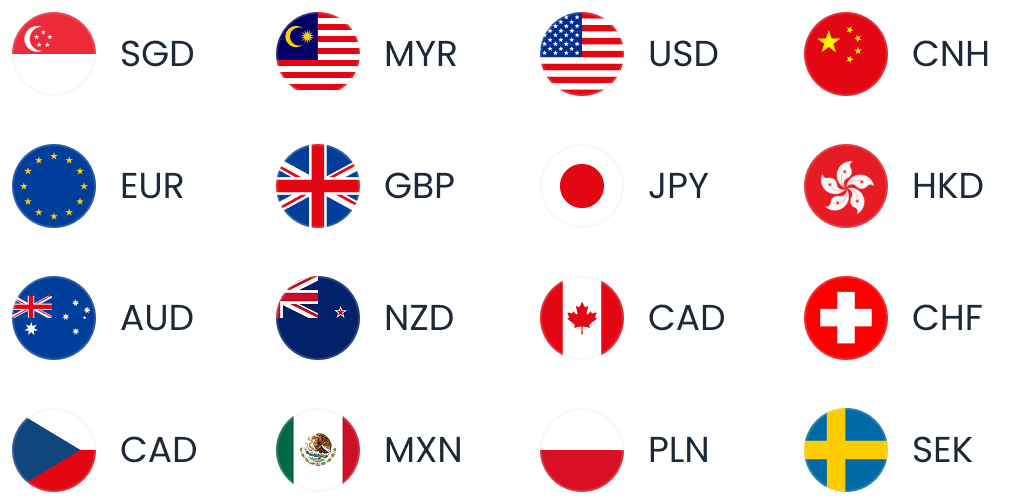
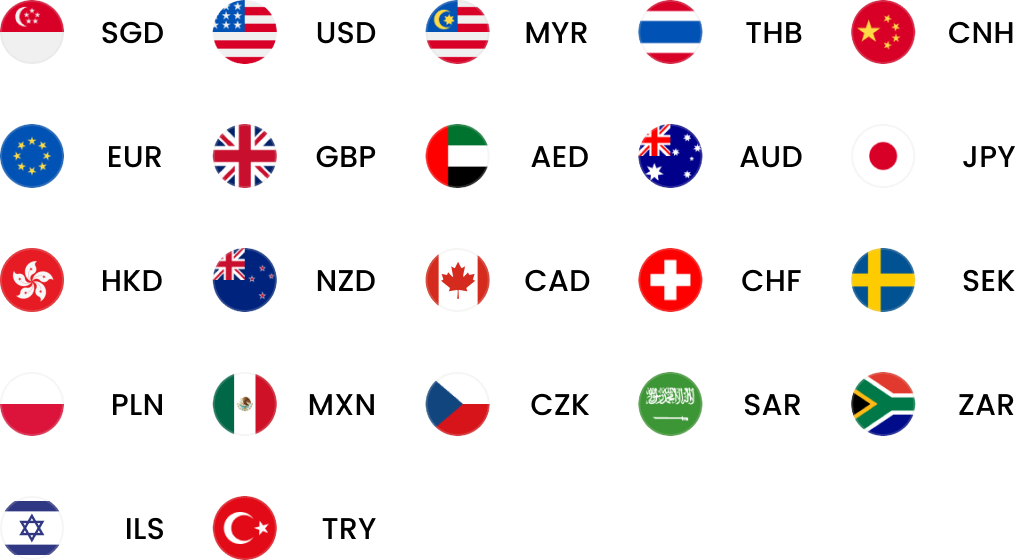
The World Account from WorldFirst is a multi-currency account that lets Singapore businesses send and receive funds in 20+ currencies, including SGD, USD, GBP, EUR, CNH, HKD, JPY, AUD and NZD. For international payments, the account offers several features that cut the cost and complexity of traditional wire transfers.
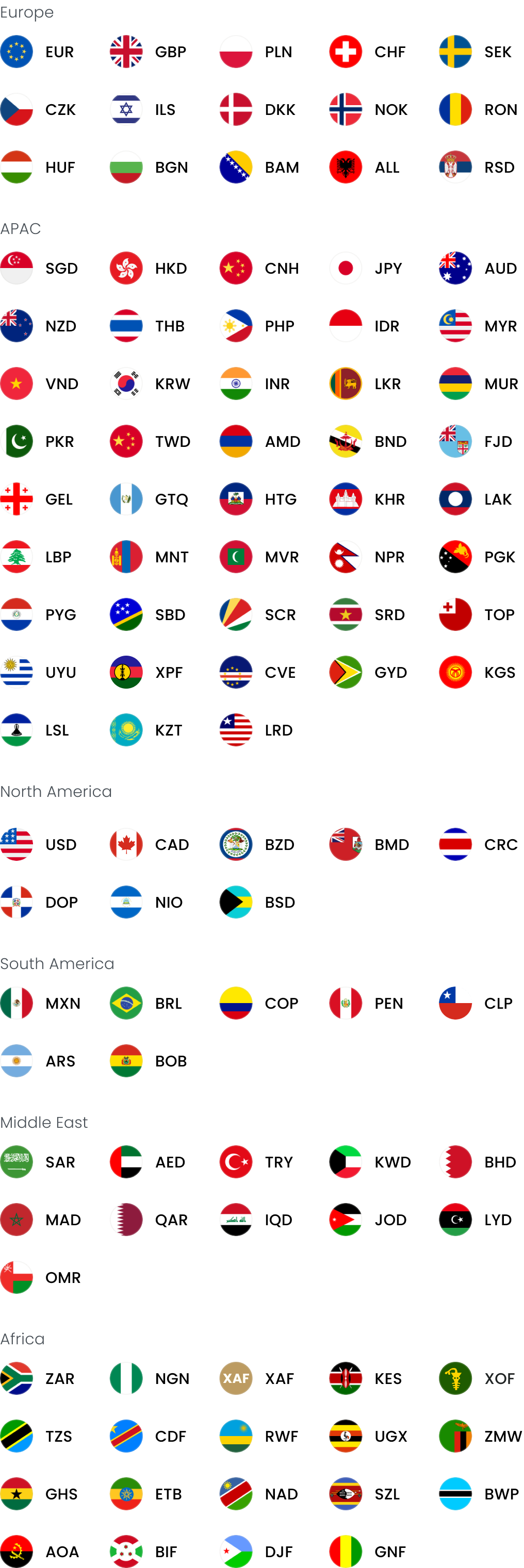
- International transfers in 100+ currencies to 200+ countries and regions, with competitive exchange rates shown before the conversion runs
- Same-day or next-day settlement on many corridors, depending on the destination and currency
- Send from collected balances without double conversion. If you’ve collected USD revenue from international customers or marketplaces, you can pay USD suppliers directly from that USD balance, skipping the SGD-to-USD conversion that a standard wire would trigger
- Forward contracts to lock in exchange rates on future payments, subject to eligibility. Useful for businesses with predictable supplier payment cycles who want to protect margins against currency movement
- Bulk payments to pay multiple suppliers, contractors or vendors in a single upload rather than one transfer at a time
- World Pay for 1688.com, the authorised international payment provider for 1688.com, letting Singapore businesses pay 1688 suppliers directly in CNH
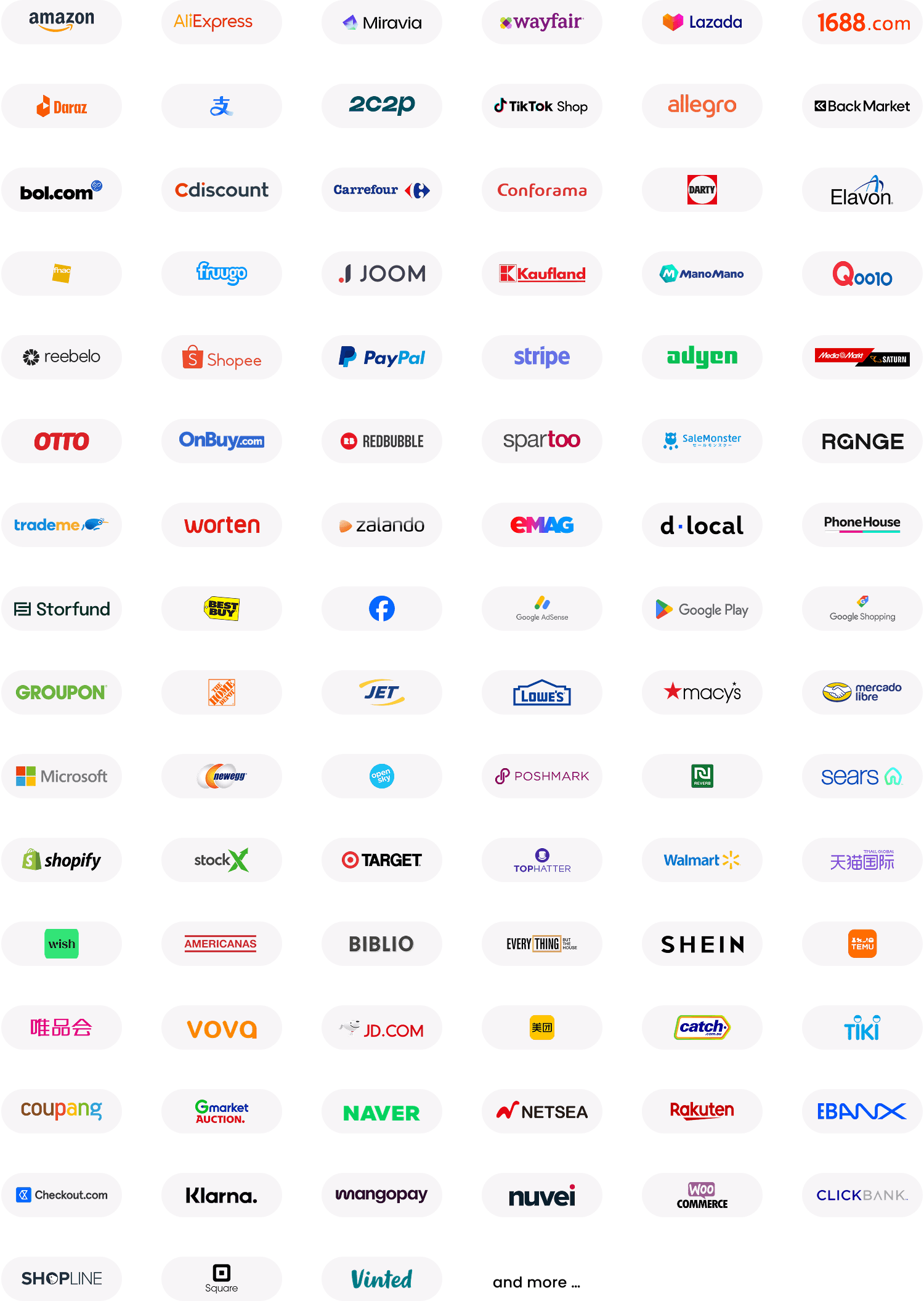
- Collect from 130+ marketplaces and payment gateways including Amazon, Shopify, Stripe and Etsy
- The World Card, a Mastercard-powered business payment card supporting payments in 150+ currencies with no fees when paying in any of the 15 supported currencies (with sufficient balance held in that currency). Up to 20 cards per account at no additional cost. Cashback on eligible spending (Terms and Conditions Apply).
- Zero fees on account opening, holding balances and receiving funds
FAQs
1. How long does an international wire transfer from Singapore take?
International wire transfers from Singapore typically take 1 to 5 business days depending on the destination country, currency and intermediary banks involved. Transfers to Europe via SEPA can arrive within 1 to 2 days, while transfers to less common currency corridors can take up to a week.
2. Can I send a wire transfer to China?
Yes. Wire transfers to China are supported through the SWIFT network. Payments typically take 1 to 3 business days to arrive. For sellers paying Chinese suppliers specifically on 1688.com, World Pay from WorldFirst allows direct CNH payments without needing a Chinese bank account.
3. Are wire transfers safe?
Wire transfers are considered one of the more secure electronic payment methods because they are processed through regulated banking channels with identity verification, encryption and compliance screening. The main risk is that wire transfers are generally irreversible once settled, so verifying recipient details before sending is important.
Disclaimer: The information contained is general only and largely our views. Before acting on the information you should consider whether it is appropriate for you, in light of your objectives, financial situation or needs. Although information has been obtained from and is based upon multiple sources the author believes to be reliable, we do not guarantee its accuracy and it may be incomplete or condensed. All opinions, estimates, mentioned products/services and referenced material constitute the author’s own judgement as of the date of the briefing and are subject to change without notice. WorldFirst shall not be responsible for any losses or damages arising from your reliance of such information.