


















Products
About WorldFirst
Resources
More brands of Ant International
This country is supported by WorldFirst affiliates, Zyla
We provide coverage in South Asia and Middle East: servicing 210+ countries and territories.
WorldFirst Home > blog > International Transactions > How to use Alipay & WeChat Pay in Singapore
You’ve probably already got Alipay or WeChat Pay on your phone from your last supplier visit to Guangzhou or Yiwu. What you may not have sorted out is whether either app can actually help with the recurring supplier payments your business depends on.
If you’re an established importer moving goods (and money) between Singapore and China regularly, that distinction matters.
Singapore’s total merchandise trade hit SG$1,397.7 billion in 2025, with mainland China consistently among its largest trading partners. At the same time, mainland China was Singapore’s top source of international visitors in 2024, with 3 million-plus visitors crossing over, many of them Singapore-based traders making supplier visits alongside holidaymakers.
That two-way flow of people and goods is exactly why Alipay and WeChat Pay acceptance in Singapore has grown, and why understanding their limits matters if you’re the one paying invoices back to Shenzhen or Ningbo.
This guide walks you through setting up and using both wallets in Singapore and China, and explains their limitations once your trade becomes more frequent.
Open a World Account to manage recurring China supplier payments alongside your everyday Alipay and WeChat Pay spending.
Alipay is a standalone payment and lifestyle app built by Ant Group, with over 1 billion registered users. It covers everything from retail payments to bill splitting, flight bookings and hotel check-ins, and it’s the app most Chinese consumers reach for first when a merchant only displays one QR code.
WeChat Pay is embedded inside WeChat, the messaging app built by Tencent, and reports 1.3 billion monthly active users. Because it lives inside a chat app already used for work and social communication, it tends to feel more integrated for day-to-day person-to-person transfers, red packets and quick in-store scans.
Read more:
Yes, but acceptance is skewed toward merchants who serve Chinese tourists, not a general-purpose alternative to Singapore’s domestic rails. You should treat both wallets as a travel convenience layered on top of how you already pay locally.
Alipay launched in Singapore in 2015 and is now widely accepted online and in stores. WeChat Pay arrived later, starting with roughly 600 local retail outlets in 2018 and growing to more than 100,000 merchants today, according to figures from Weixin.
Acceptance has broadened further through Alipay+, a network connecting 18 international e-wallets and bank apps to merchants across Singapore, now accepted at more than 500 FairPrice Group outlets, including supermarkets, convenience stores and food courts.
Alipay+ is also integrated with SGQR, Singapore’s unified payment QR code co-owned by MAS and IMDA, extending acceptance to hawker centres islandwide, taxis and attractions.
Keep in mind that most of these QR codes are designed for visitors with Chinese bank accounts linked to their wallets. If you’ve only linked an internationally issued card, some merchants’ QR codes may not process the payment reliably.
Both wallets are straightforward to set up before a supplier trip, and neither requires a Chinese bank account or local SIM card anymore.
Here’s what to expect once you’re set up and spending in China:
Read more:
Yes, for a trader who travels regularly, carrying both is the safer bet, since roughly 99% of merchants that accept one also accept the other, but the remaining overlap gap is exactly where a single-wallet traveller gets stuck.
Some smaller vendors in China, particularly in markets and wholesale districts you might visit as an importer, only display one QR code at the counter. If you’ve only set up WeChat Pay and the stall only takes Alipay, you’re stuck asking around for cash or a workaround mid-negotiation. Having both installed removes that friction entirely.
Otherwise, each has its own edge depending on what you’re doing:
You avoid the fee mainly by understanding what triggers it: the 3% charge applies to personal transfers above RMB 200, not to standard merchant payments.
Here’s how to keep costs down in practice:
Read more: 8 benefits of foreign exchange risk management for businesses
They’re consumer wallets first, and every design choice, from transaction ceilings to compliance checks, reflects that. Neither platform was built with recurring wholesale supplier payments in mind, and trying to force that use case creates real friction for an established importer.
The limits alone rule them out quickly:
They also don’t offer batch payment tools, supplier-level reconciliation, or a multi-currency balance you can hold and draw down against as orders come in.
WorldFirst sits alongside Alipay within the same Ant International group, and its World Account is purpose-built for exactly the gap Alipay and WeChat Pay leave open.
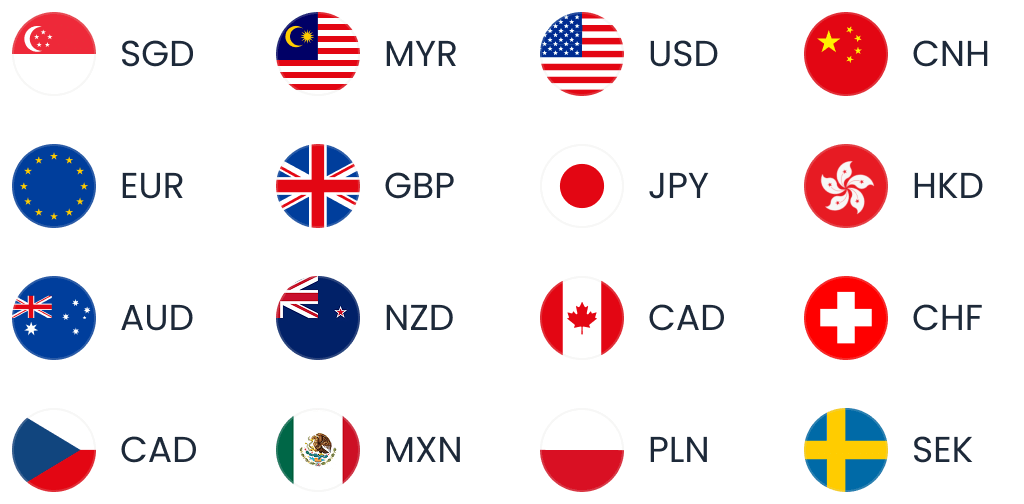
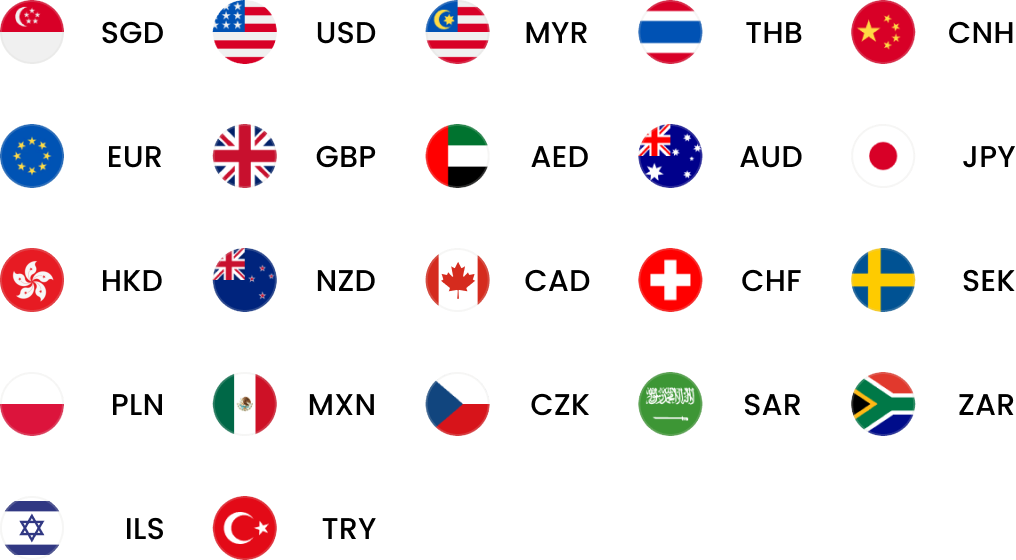
It’s a multi-currency business account holding 20+ currencies including SGD, USD, EUR, GBP and CNH, with no ongoing account fees and full cost visibility before you send a transfer.
Because it supports CNH settlement directly, you avoid the double-conversion that happens when SGD routes through USD before reaching CNH via a correspondent banking chain, a hidden cost that rarely shows up until you compare invoices carefully.
Checked against WorldFirst and third-party sources as of the current publication date.
| Feature | Alipay | WeChat Pay | World Account |
| Primary use | Consumer retail, travel | Consumer retail, social payments | Business supplier payments |
| Fee on personal transfers | 3% above RMB 200 | 3% above RMB 200 | No ongoing account fees |
| Annual limit (foreign users) | US$50,000 | RMB 65,000 | No fixed consumer-style cap |
| CNH settlement | Not applicable | Not applicable | Direct CNH settlement supported |
| 1688 integration | No | No | Yes, via 1688 World Pay |
| Reconciliation tools | No | No | Multi-currency account visibility |
| Regulatory status | Ant Group consumer wallet | Tencent consumer wallet | MAS-licensed payment institution |
WorldFirst is not a bank. It is MAS-licensed under the Payment Services Act for account issuance, domestic and cross-border money transfers, and e-money issuance, and has supported over 1.5 million businesses since 2004.
If you need integrated trade financing or a working relationship that spans lending and cash management, a bank still has a genuine role in your setup. What WorldFirst changes is the supplier-payment aspect, where speed, CNH visibility and fee transparency tend to matter more than a full banking relationship.
Open a World Account to start paying Chinese suppliers in CNH while keeping your Alipay and WeChat Pay set up for everything else.
You can use it in Singapore, but acceptance is limited and uneven. Merchant QR codes across Singapore were primarily designed for visitors carrying a linked Chinese bank account, so if you’ve only linked an internationally issued card, some merchants’ codes may not process the payment reliably.
Yes. Since 2023, WeChat Pay has accepted internationally issued Visa, Mastercard and Diners Club cards, so you no longer need a Chinese bank account or local SIM to use it.
You don’t, but it’s useful to have both. Roughly 99% of merchants that accept one also accept the other, but some vendors, particularly smaller stalls or specific regions, only display a QR code for one platform.

Sources:
© WorldFirst 2026, All rights reserved.

How to redeem:
How to redeem:
How to redeem:
How to redeem: