





























A quick guide to the differences between CNH and CNY, and how each fits into the workflow when paying Chinese suppliers from Singapore
Key takeaways
- CNY and CNH are two forms of the Chinese Renminbi (RMB), representing the onshore and offshore versions of the Yuan
- CNY is used within Mainland China and is managed by the People’s Bank of China, while CNH is traded freely in offshore markets including Hong Kong, Singapore, and London
- Within China, CNY and CNH are exchanged at a 1:1 ratio, but their exchange rates against other currencies can differ slightly based on market supply and demand
- WorldFirst supports a CNH local currency account, allowing Singaporean businesses to hold CNH balances and make CNH payments at competitive exchange rates
If you’ve handled business payments to China, you have likely come across the three terms RMB, CNY, and CNH used somewhat interchangeably. They all signify China’s currency, but they don’t all mean the same thing and the distinction matters for how Singapore businesses actually move funds in and out of China.
Renminbi (RMB) is the official name of China’s currency, Yuan. CNY and CNH are two versions of the Yuan, representing onshore and offshore trading respectively. The reason for the split goes back to how China has gradually opened its currency to international trade while keeping tight control over the domestic side.
This guide breaks down what CNH and CNY are, how they differ, why China has two currencies in the first place, and how Singapore businesses can use CNH local currency accounts to pay Chinese suppliers in a more predictable way.
What is Renminbi (RMB)?
Renminbi means “the people’s currency” in Mandarin. It is the official currency issued by the People’s Bank of China and was introduced in 1948 to unify a Chinese economy that had previously operated with different regional currencies.
The Yuan is the unit of Renminbi. The symbol ¥ represents it, and the ISO currency code for the onshore version is CNY. RMB is sometimes used as an umbrella term that covers both the onshore (CNY) and offshore (CNH) versions, though it isn’t itself an official ISO currency code.
What is CNY?
CNY is the ISO code for the onshore Chinese Yuan, the version of the Renminbi used within Mainland China. All domestic transactions in China, including supplier-to-customer payments within the country and salaries paid to local workers, are settled in CNY.
But access to the CNY market is restricted. The People’s Bank of China sets a daily reference exchange rate and allows the currency to move within a controlled trading band. Foreign businesses without an entity in Mainland China face limits on how they can buy, sell or hold CNY.
What is CNH?
CNH is the version of the Chinese Yuan that trades in offshore markets outside Mainland China. The “H” originally stood for Hong Kong, which remains the largest offshore CNH market, but CNH also trades in Singapore, London, New York, Sydney, and other international financial centres.
CNH was introduced in 2010 following a clearing agreement between the People’s Bank of China and the Hong Kong Monetary Authority. Unlike CNY, the CNH exchange rate is determined by market supply and demand. This means Singapore businesses can hold, buy and sell CNH like any other freely traded international currency.
CNH vs CNY: Key differences at a glance
| CNY (onshore Yuan) | CNH (offshore Yuan) | |
| Trading location | Mainland China only | International markets including Hong Kong, Singapore, London, New York |
| Controlled by | People’s Bank of China | Market supply and demand |
| Exchange rate model | Managed within a daily trading band | Floats freely against other currencies |
| Primary use | Domestic transactions within Mainland China | Cross-border trade and international investment |
| Access for foreign businesses | Restricted | Open |
What is the exchange rate between CNH and CNY?
Inside Mainland China, CNH and CNY trade at a 1:1 ratio. So, one CNY equals one CNH.
The difference shows up when either currency is converted against a third currency such as SGD, USD or EUR. Because CNY is managed within a daily trading band and CNH floats freely, the two can trade at slightly different rates against other currencies on the same day. The gap is usually small but can widen during periods of market stress.
Why does China have two currencies?
China’s dual-currency system reflects a balance between two competing aims: maintaining tight control over domestic capital flows and opening up the currency to international trade and investment.
Before China became a global manufacturing hub, the Renminbi was largely closed to international markets. As trade volumes grew through the early 2000s, the Chinese government faced pressure to allow international businesses to settle trade in Renminbi rather than relying on USD as an intermediary.
CNH was created as a parallel version of the Yuan that international businesses could hold, trade and use for cross-border settlement, while CNY continued to operate as the strictly managed domestic currency.
What CNH means for Singapore businesses paying Chinese suppliers
For Singapore businesses sourcing from China, the choice of currency matters more than it might seem. Paying in SGD or USD typically means the supplier converts the funds to CNY on arrival, often at a rate they don’t fully control, with conversion fees applied along the way. The supplier may build a buffer into the quoted price to account for that exchange rate risk.
Paying directly in CNH means the supplier receives the funds in their working currency without an extra conversion, which can lead to:
- Transparent pricing: Suppliers quote in their home currency without building in an FX risk buffer
- Strong relationships: Paying in the supplier’s preferred currency reduces friction and can support negotiation flexibility
- Wide supplier access: Some Chinese suppliers, particularly smaller manufacturers and 1688.com sellers, prefer or require CNH-denominated payments
- Fast settlement: CNH payments through specialist providers can clear faster than SGD or USD wires, which often route through intermediary banks before reaching the supplier
The only catch is that, to pay in CNH, Singapore businesses usually need a foreign currency account that supports CNH balances.
How WorldFirst supports CNH payments to China
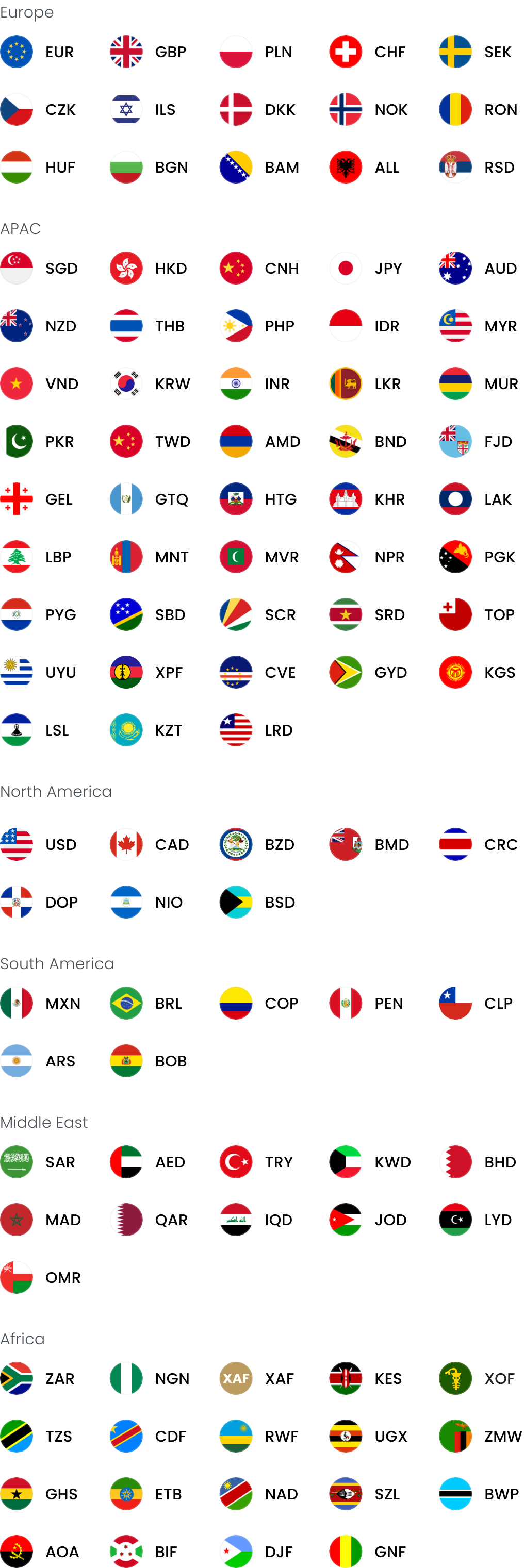
The World Account by WorldFirst is a multi-currency account that lets Singapore businesses hold balances in 20+ currencies, including SGD, USD, EUR, GBP and CNH. You can receive funds from marketplaces and payment gateways into local currency accounts, hold them in the original currency without forced conversion, and use it to pay overseas suppliers directly.
For Singapore importers and e-commerce sellers paying Chinese suppliers, the World Account makes it possible to:
- Hold CNH balances in the same account that holds SGD, USD, EUR and other currencies
- Pay suppliers in CNH directly from the account, avoiding the double conversion
Use World Pay, the authorised international payment provider for 1688.com, to pay 1688 suppliers without opening a Chinese bank account - Make same-day or next-day supplier payments to China at competitive exchange rates (cut-off times apply)
- Convert between currencies when the rate suits, rather than at whatever rate applies on the day of payment
The World Account also supports payments in 100+ currencies across 200+ countries and regions, and collects funds from 130+ global marketplaces and payment gateways including Amazon, Shopee, and Lazada.
FAQs
What is the difference between RMB, CNY, and CNH?
Renminbi (RMB) is the official name of China’s currency. CNY is the ISO code for the onshore version of the Yuan, used within Mainland China. CNH is the market code for the offshore version of the Yuan, used in international trade and settled in markets outside Mainland China.
Why does the CNH exchange rate differ from the CNY rate?
CNY is managed by the People’s Bank of China within a daily trading band, while CNH floats freely on offshore markets based on supply and demand. The two currencies generally hold the same value at 1:1, but their rates against third currencies such as SGD or USD can differ slightly day-to-day.
Do Singapore businesses need a Chinese bank account to pay suppliers in CNH?
No. Singapore businesses can pay Chinese suppliers in CNH through a foreign currency account or a multi-currency account that supports CNH balances, such as the World Account by WorldFirst. A local Chinese bank account is not required.
This article is intended for informational purposes only and does not constitute legal advice or professional advice. This article should not be regarded as constituting an offer or a solicitation to buy or sell any regulated or financial products or services. WorldFirst makes no representations or warranties regarding the accuracy, completeness, or applicability of the content, and readers are encouraged to consult with legal professionals or other professionals for advice tailored to their specific situation. WorldFirst does not guarantee the accuracy and completeness of this article and expressly disclaims any and all liability to any person in respect of the consequences of anything done or omitted to be done wholly or partly in reliance on this article.


![Revolut Business Card review Singapore [2027]: Features, fees & more](https://mdn.marmot-cloud.com/worldfirst/sites/9/2026/09/20261001002258848-300x200.webp)